Source Winter Genuine Leather Trousers for Work, Travel, and Daily Wear
Compare 30 listings for Winter Genuine Leather Trousers featuring polyester, PU leather, and windproof options. Buyers can evaluate sizes, customization, and OEM services from suppliers in Jiangxi, China to find suitable casual or workwear pants.
Key considerations
Products List


High Quality Winter Warm Adults Pants Casual Down Pants Winter Trousers
$10.00 - $18.00
MOQ: 1000 piece
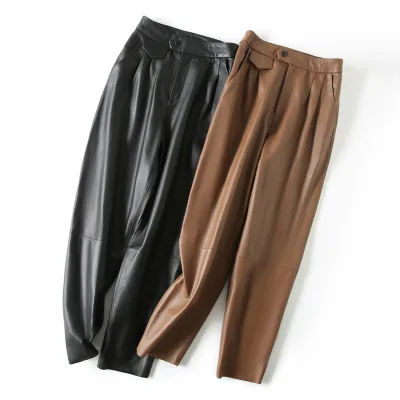
Ladies Outdoor Legging Trousers Fashion Womens Genuine Sheepskin Leather Pants
$55.00 - $79.00
MOQ: 1 pieces
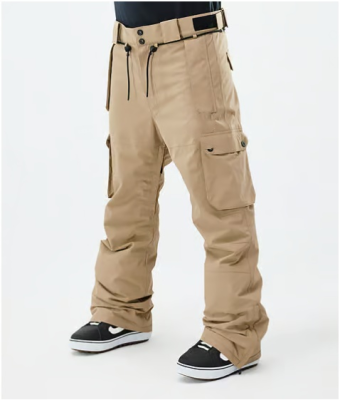

Autumn and Winter New Solid Color PU Leather Pants Sexy Women's Trousers
$10.00 - $12.00
MOQ: 200 Pieces

Autumn New Bright Color PU Leather Personalized Tights Trousers Casual Trousers
$10.00 - $12.00
MOQ: 200 Pieces


Autumn and Winter Hot Sale Fashion Slim PU Leather Trousers Multi-Pocket Suit
$10.00 - $12.00
MOQ: 200 Pieces


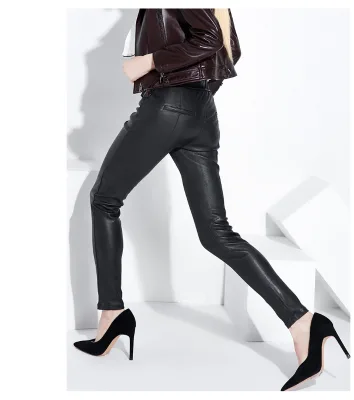


Cowhide Leather Clothing Distributor Pants PU Leg Loose Office Trousers
$10.00 - $40.00
MOQ: 100 Pieces


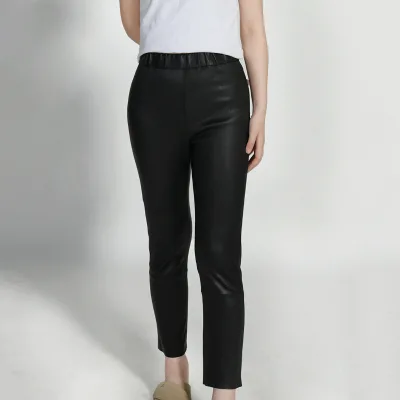
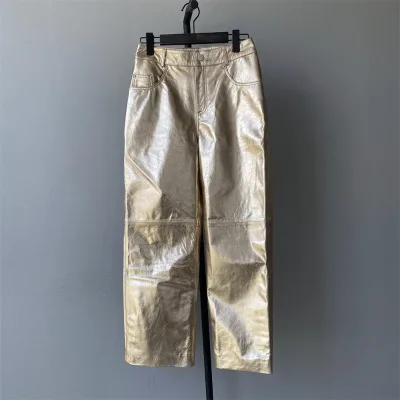
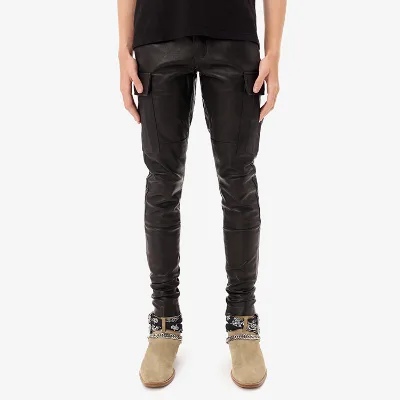


Comprehensive Sourcing Guide
Strategic Sourcing Guide for Winter Genuine Leather Trousers
Understanding Product Specifications and Material Variations
When sourcing Winter Genuine Leather Trousers, buyers must navigate a complex landscape of material definitions and technical specifications. The core keyword implies a garment constructed primarily from genuine leather, yet market listings often reveal a spectrum of material compositions that may include blends or synthetic alternatives. In the observed product data, specific entries list materials such as "Polyester," "Polyester / Nylon," and notably "PU Leather." While PU Leather is a synthetic polymer, it is frequently marketed alongside genuine leather options to provide similar aesthetic qualities at different price points. A critical distinction for the procurement specialist is to verify whether the "genuine leather" claim refers to full-grain, top-grain, or split leather, as these terms dictate durability, breathability, and cost.
The technical specifications for winter trousers extend beyond the primary material. The observed data indicates that fabric weight can vary significantly, with some entries noting a weight of 120 grams, which is typically associated with lightweight linings or outer shells rather than heavy winter leather. For winter applications, the thickness and insulation are paramount. Buyers should look for specifications regarding "Seamless Fusing," which is listed as "Yes" in certain product profiles, indicating a construction method that enhances durability and water resistance by eliminating traditional stitching lines where moisture could penetrate. Additionally, the "Waist Type" is often specified as "Mid," which influences the fit and comfort profile for the intended user demographic.
Size availability is another critical specification. While some listings show a standard range of S, M, L, and XL, others expand to include extended sizes such as 2XL through 10XL. This variability suggests that suppliers may cater to different market segments, from standard adult sizing to plus-size markets. The "Fit Type" is generally described as "Regular," but buyers must confirm if the leather is treated for stretch or if it requires a break-in period. The "Length" is often specified as "Long," which is essential for winter trousers to ensure adequate coverage over footwear and to provide better protection against wind and cold.
Compliance, Certification, and Safety Standards
Navigating the compliance landscape for winter leather goods requires a rigorous approach to verifying safety and quality standards. While the supplied context lists several standards such as ISO 9001, ISO 20471, EN 342, and EN 343, these are categorized as low-confidence background information. This means that buyers cannot assume a specific supplier automatically holds these certifications without direct verification. ISO 9001 relates to quality management systems, while ISO 20471 pertains to high-visibility clothing, which is less relevant for standard winter trousers unless they are intended for industrial safety use. EN 342 and EN 343 are European standards for protective clothing against cold and water, respectively.
For winter leather trousers, the primary compliance focus should be on the material's performance against environmental factors. The observed product attributes mention features like "Waterproof," "Windproof," and "Water Resistant." To validate these claims, buyers should request test reports that align with recognized standards for water penetration and wind resistance. The material technology listed includes options like "Cordura," "WindStopper," and "Waterproof 10,000mm." These are specific performance metrics that indicate the fabric's ability to withstand water pressure and wind chill. A buyer must verify if the genuine leather component is treated with these technologies or if they apply only to the lining or outer shell.
Furthermore, the "Supply Type" is noted as "Oem Service," indicating that many suppliers operate as original equipment manufacturers. This implies that the supplier may not have their own brand certifications but rather adheres to the buyer's required standards. Buyers should explicitly request documentation confirming that the leather sourcing complies with environmental regulations and animal welfare standards, as these are increasingly critical in global supply chains. The "Label" attribute mentions acceptance of OEM/ODM or specific brand names, which suggests flexibility in branding but also necessitates clear agreements on who holds the liability for compliance.
Cost Drivers and Pricing Dynamics
The pricing structure for Winter Genuine Leather Trousers is influenced by a multitude of factors, ranging from raw material costs to manufacturing complexity. The observed price range in the market data spans from $0.5 to $161.9, a variance that highlights the diversity of product quality and specification levels. The lower end of this spectrum likely corresponds to PU leather or synthetic blends, while the higher end reflects genuine leather with advanced technical features. It is crucial for buyers to understand that a low unit price does not necessarily indicate a better deal if the material quality or durability is compromised.
Material composition is a primary cost driver. Genuine leather is inherently more expensive than synthetic alternatives due to the tanning process and the scarcity of high-quality hides. The observed data includes materials like "PU Leather" and "Polyester," which are significantly cheaper but may not offer the same thermal insulation or longevity as genuine leather. Additionally, the "Fabric Weight" and "Thickness" contribute to material costs; heavier, thicker leather suitable for harsh winter conditions will command a higher price.
Manufacturing techniques also impact the final cost. The "Technics" listed as "Woven" or "Seamless Fusing" represent different production methods. Seamless fusing, while offering superior water resistance, may require more advanced machinery and labor, potentially increasing the unit cost. The "Printing Methods," such as "Silk Screen Printing," add another layer of cost if custom branding or patterns are required. Furthermore, the "Customization" availability allows for tailored designs, which often incurs additional setup fees and higher per-unit costs compared to standard stock items.
The "MOQ" (Minimum Order Quantity) is another significant factor in cost dynamics. The observed MOQ range spans from 1 to 1000 units. Suppliers with lower MOQs may charge a premium per unit to cover setup costs, while those requiring higher volumes, such as the noted 200PCS MOQ, can offer more competitive pricing. Buyers must balance their order volume against their budget constraints. If the order quantity is low, the unit price will likely be higher, and the buyer may need to absorb the cost of customization or sample development.
Typical Applications and Use Cases
Winter Genuine Leather Trousers are designed for a variety of applications, ranging from casual fashion to specialized outdoor activities. The "Type" is frequently categorized as "Casual Clothes," indicating their primary use in everyday wear during colder months. The "Style" often includes "Hoody" variations, which provide additional head protection against wind and rain, making them suitable for urban environments where weather conditions can be unpredictable. The "Pattern" types, such as "Quilted Jacket" or "Solid," suggest that these trousers can be styled to match various fashion trends, from classic solid colors to more textured, insulated designs.
Beyond casual wear, the technical features observed, such as "Windproof," "Waterproof," and "Breathable," make these trousers suitable for outdoor activities. The "Feature" list includes "Eco-Friendly" and "Lightweight," which are increasingly important for consumers who prioritize sustainability and comfort during movement. The "Season" attribute specifies "Winter" and "Spring / Autumn," confirming their versatility across transitional and cold weather periods. For users requiring high visibility or specific safety gear, the mention of standards like EN 343 suggests that some suppliers may offer versions suitable for work environments, although this would require specific verification.
The "Available Quantity" and "Selling Units" being listed as "Single item" indicate that these products are often sold individually, allowing for flexibility in sizing and customization. This is particularly useful for buyers sourcing for specific demographics, such as "Plus Size" users, where the standard sizing may not suffice. The "Logo position" on the "Right Leg" and the "Decoration" via "Pockets" highlight the functional and aesthetic aspects of the design, catering to users who need storage solutions while maintaining a sleek profile.
Supplier Evaluation and Verification Protocols
Evaluating suppliers for Winter Genuine Leather Trousers requires a multi-faceted approach that goes beyond simple price comparison. The "Place of Origin" is identified as "Jiangxi, China," which is a known manufacturing hub for textiles and apparel. However, the "Location" data also includes general references to "China," necessitating that buyers verify the specific factory location to ensure logistical feasibility and to assess local labor conditions. The "Brand Name" attribute, "per your request," indicates that many suppliers are OEM-focused, meaning they manufacture products for other brands. This requires a thorough vetting process to ensure the supplier has the capacity to meet the buyer's quality standards and branding requirements.
Buyers should prioritize suppliers who demonstrate transparency in their "Material Technology" and "Product Standard." The presence of specific technologies like "Cordura" or "WindStopper" should be verified through third-party testing reports. Additionally, the "Customized" nature of the "Product Packing" and "Product Standard" suggests that suppliers are flexible, but this flexibility must be managed through clear contracts and quality assurance protocols. The "7 days sample order lead time" is a positive indicator of responsiveness, but buyers should confirm if this applies to all customization levels or only standard samples.
The "Type of Transportation" options, including "by Express," "by Air," and "by Sea," offer flexibility in logistics. Buyers should evaluate the supplier's ability to handle different shipping methods based on their urgency and budget. The "Single package size" of 60X40X1.5 cm and "Single gross weight" of 0.700 kg are critical for calculating shipping costs and storage requirements. These dimensions suggest that the product is packaged efficiently, but buyers should verify if these figures apply to bulk orders or single units, as packaging can vary significantly with volume.
Quality Control and Long-Term Procurement Strategies
Implementing a robust quality control (QC) strategy is essential for ensuring the consistency and durability of Winter Genuine Leather Trousers. The "Seamless Fusing" feature, if present, should be inspected for adhesion strength and resistance to delamination, especially after exposure to moisture. Buyers should establish clear acceptance criteria for the "Fabric Weight" and "Thickness," ensuring that the product meets the specified 120 grams or other required metrics. The "Front Style" of "Pleated" and the "Decoration" via "Pockets" should be checked for symmetry and stitching quality, as these are common points of failure in mass-produced garments.
Long-term procurement considerations involve building a sustainable relationship with suppliers who can scale production while maintaining quality. The "Supply Type" of "Oem Service" implies a partnership model where the buyer and supplier work closely on design and production. Buyers should negotiate terms that include regular quality audits and the right to reject non-conforming batches. The "Customization" aspect allows for product differentiation, but it also introduces complexity. Buyers should ensure that the supplier has the capacity to handle custom orders without compromising lead times or quality.
The "Lead Time" for sample orders is noted as 7 days, which is a good benchmark for initial development. However, for bulk production, buyers should establish realistic timelines based on the "MOQ" and the complexity of the order. The "Available Quantity" of 1 suggests that some suppliers may have limited stock, which could impact availability for large orders. Buyers should secure production capacity early to avoid delays. Finally, the "Eco-Friendly" feature, if claimed, should be verified through certifications or documentation to ensure that the sustainability claims are legitimate and not merely marketing rhetoric. By adhering to these rigorous standards, buyers can secure high-quality Winter Genuine Leather Trousers that meet both functional and aesthetic requirements.
FAQs
What materials are used for winter trousers?
Products are constructed from Polyester, Nylon, or PU Leather. Some listings specify advanced material technologies like Cordura or WindStopper for enhanced performance in cold conditions.
Can I customize the logo and branding?
Yes, customization is available for logos, colors, and packing. Suppliers accept OEM or ODM requests, allowing you to place logos on the right leg or use your own brand name.
What is the minimum order quantity required?
The minimum order quantity ranges from 1 to 1000 units depending on the supplier. Some specific listings require a minimum of 200 pieces for standard orders.
How long does it take to receive samples?
Sample orders can be supported with a lead time of 7 days. This allows buyers to verify quality and specifications before committing to larger production runs.
Which sizes are available for these trousers?
Available sizes include S, M, L, XL, and extended options up to 10XL. The fit type is generally regular, with some listings specifying a mid-waist type for comfort.
Are the trousers waterproof and windproof?
Yes, many listings feature waterproof, windproof, and water-resistant properties. Specific technologies like Waterproof 10,000mm and Windbloc are cited to ensure protection against harsh winter weather.