Anti-Pilling Cashmere Polo Suppliers and Manufacturers
Source 22 verified suppliers for Anti-Pilling Cashmere Polo shirts. Compare dimensions like lead times, MOQs, certifications, and response rates. Review product specs and request quotes directly from manufacturers in China; review the available evidence before requesting comparable quotations from suitable candidates.
Suppliers List
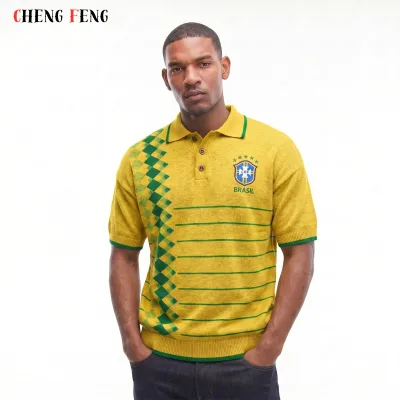
Dongguan Chengfeng Clothing Co., Ltd.
- Verified by TüVRheinland
- Manufacturer, Trading Company
- Lead time30 days
- Avg. response≤ 3h
Main productsMen's Sweater, Knitwear, Dresses, Cardigan
Main marketsNorth America(40%), Northern Europe(20%), Africa(10%)

Wfs Cashmere Industry Co., Ltd
- Verified by CTI
- Combined
- China Shandong
- Lead time15 days
- Avg. response≤ 15h
Main productsCashmere Sweater, Women's Sweater, Men's Sweater, Cashmere Beanie, Cashmere Scarf, Child Sweater, Knitwear
Main marketsSouth America,Africa,East Asia(Japan/ South Korea),Europe,Australia,North America


Men's Pure Cashmere Pullover Solid Color Polo Neck Cashmere Short or Long Sleeve
$35.00
MOQ: 100 Pieces


Suning County Xiangbird Clothing Co., Ltd.
- Verified by SGS
- Combined
- China Hebei
- Lead time30 days
- Avg. response≤ 3h
Main productsT-Shirt, Hooded Sweatshirt, Seluar Jeans, Pakaian Pelindung Matahari
Main marketsDomestic

- Verified by SGS
- Combined
- China Sichuan
- Lead time15 days
- Avg. response≤ 2h
Main productsCashmere Sweater, Baby Sweater, Wool Sweater, Cotton T Shirt, Organic Cotton Garments, Cashmere Pants, Cashmere Scarf, Baby Knitwear, Baby Blankets, Kids Sweaters
Main marketsEast Asia(Japan/ South Korea),Domestic,Europe,Australia,North America

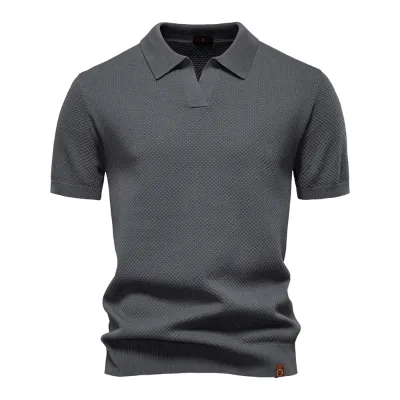
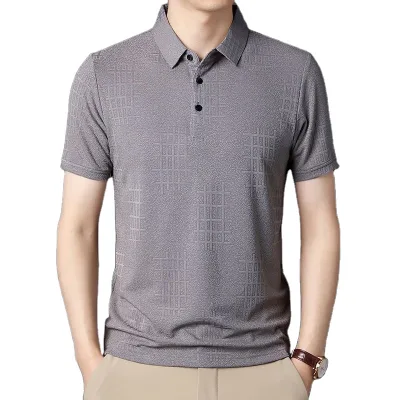
16 Gauge Knitting Thinner Silk Cashmere Cotton Cashmere Summer Polo T Shirt.
$20.00 - $30.00
MOQ: 2 pieces


Worsted Cashmere 16 Gauge Knitted Oversize Thin Polo Shirt for Men in Summer.
$36.00 - $48.00
MOQ: 2 pieces

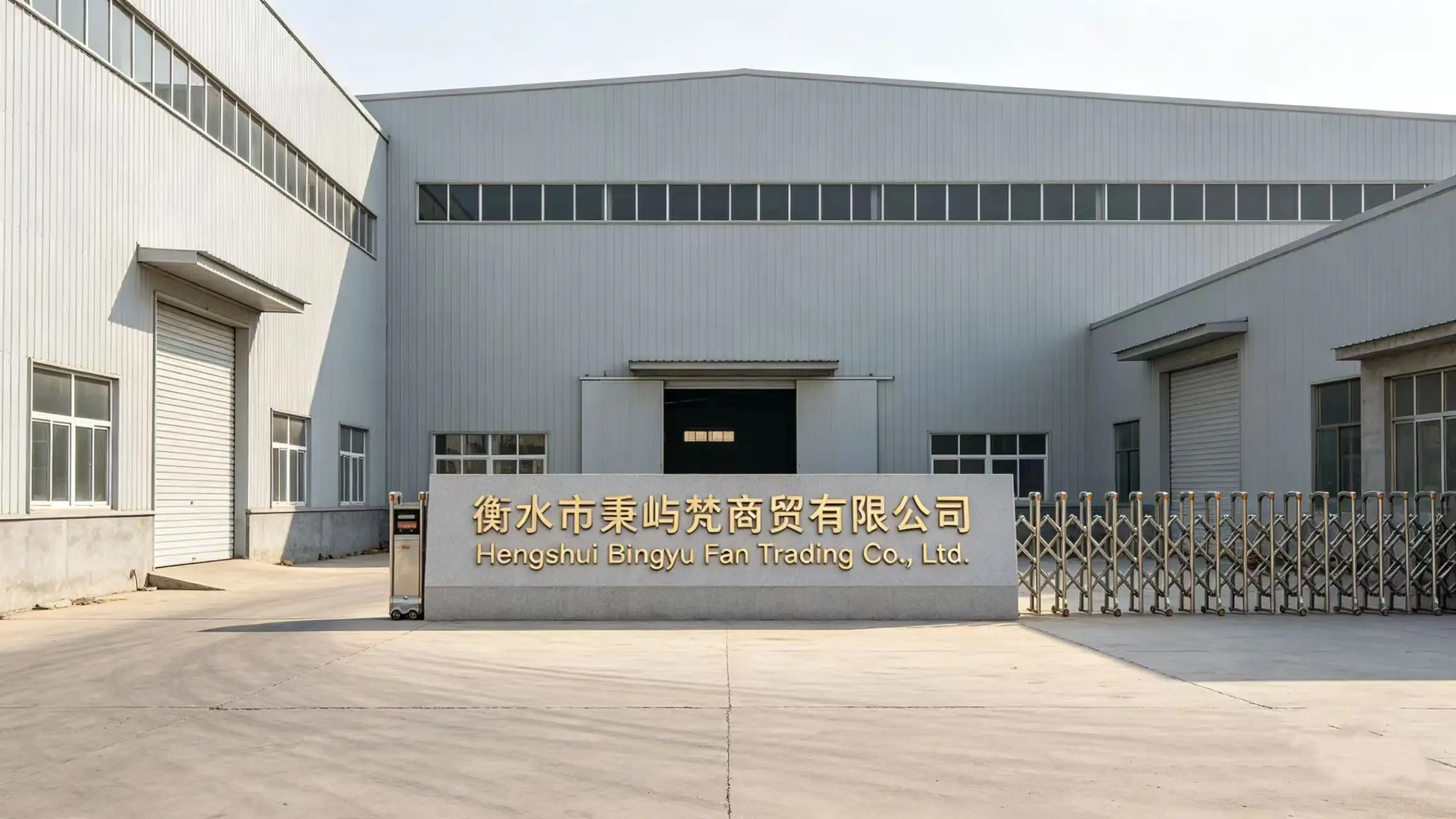
Hengshui Bingyufan Trading Co., Ltd.
- Trading Company
- Hebei, China
- Lead time5 days
- Avg. response≤ 1h
Main productsCashmere Sweater,Cashmere Scarf,Genuine fur top,Cashmere quilt,Cashmere Hat
Main marketsNorth America(30.00%), Eastern Europe(13.00%), Southeast Asia(10.00%), South America(10.00%), Central America(7.00%), Southern Europe(7.00%), Northern Europe(7.00%), Western Europe(5.00%), Oceania(5.00%), South Asia(2.00%), Domestic Market(1.00%), Mid East(1.00%), Eastern Asia(1.00%), Africa(1.00%)

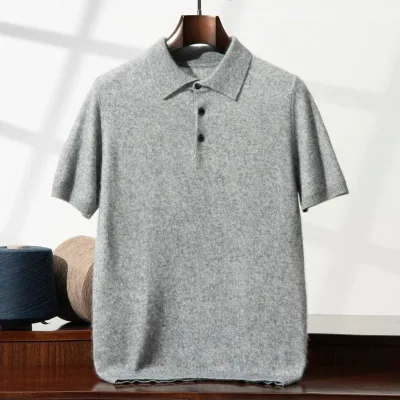
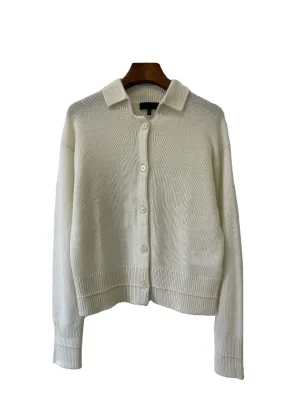
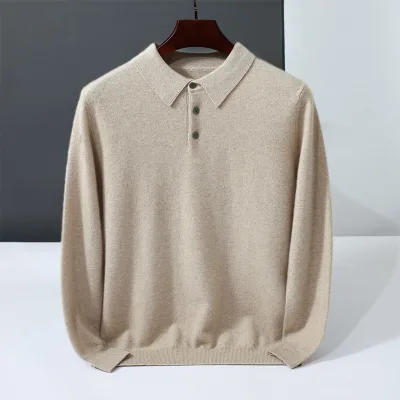
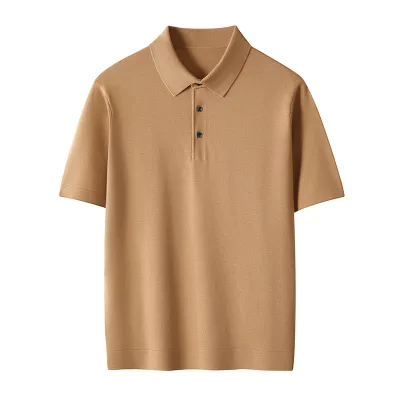
Women's Short Sleeved Lapel Blue and Pink Color Matching Business Casual Knitted Cashmere Polo Shirt
$25.00 - $32.00
MOQ: 2 pieces

Zhongshan K & P Knitting Co., Ltd.
- Verified by SGS
- Combined
- China Guangdong
- Lead time15 days
- Avg. response≤ 1h
Main productsSweater, Knitwear
Main marketsEurope,Australia,North America

Custom Long Sleeve Sweater Sport Golf 2025 Autumn Winter Luxury Men's Cashmere Polo Shirt
$48.00 - $50.00
MOQ: 100 pieces

Guangzhou Jinxilai International Trade Co., Ltd.
- Manufacturer, Trading Company
- Guangdong, China
- Lead time14 days
- Avg. response≤ 3h
Main productsBoxer,Vest,Polo,T-shirt,Men's Underwear
Main marketsSouth America(20.00%), Southeast Asia(15.00%), North America(15.00%), Africa(12.00%), Central America(10.00%), Mid East(10.00%), South Asia(10.00%), Eastern Europe(8.00%)

Zhousi (Shenzhen) Clothing Co., Ltd.
- Verified by CTI
- Trading Company
- China Guangdong
- Lead time23 days
- Avg. response≤ 1h
Main marketsDomestic


Premium Anti-Wrinkle Cotton-Polyester Polo Shirt for Daily Wear Polo Shirt
$12.90 - $15.80
MOQ: 20 Pieces

Guangdong Mingyang Garment Industry Co., Ltd.
- Verified by BV
- Combined
- China Guangdong
- Lead time23 days
- Avg. response≤ 2h
Main productsGarment, Office Equipment, Bags & Gifts, Sports Fitness and Leisure, Toys, Uniform, Clothing Accessories, Workwear, Jacket, Outdoor Clothing
Main marketsSouth America,Southeast Asia/ Mideast,Europe,Australia


Chiffon Solid Color Slightly Dropped Shoulders Anti-Wrinkle High-End Seamless Polo Shirt
$1.99 - $4.99
MOQ: 50 Pieces
Guangzhou Mansion Clothing Co., Ltd.
- Verified by TüVRheinland
- Trading Company
- Lead time7 days
- Avg. response≤ 2h
Main productsT-shirts, POLO Shirt, Hoodies, Vest, Jacket
Main marketsNorth America(25%), Eastern Europe(10%), Northern Europe(10%)
Dongguan C-Ray Headwear Co., Ltd.
- Verified by SGS Group
- Manufacturer, Trading Company
- Lead time15 days
- Avg. response≤ 3h
Main productsClothes, Caps, Hats, Bags
Main marketsNorth America(45%), Oceania(20%), Western Europe(20%)
Inner Mongolia Field Textile Products Co., Ltd.
- Verified by TüVRheinland
- Trading Company
- Inner Mongolia, China
- Lead time40 days
- Avg. response≤ 3h
Main productsCashmere Scarf, Cashmere Shawl, Wool Scarf, Cashmere Sweater, Wool Sweater
Main marketsNorth America(40%), Oceania(20%), Eastern Asia(20%)

Guangzhou Jinhui Clothing Co., Ltd.
- Verified by SGS
- Trading Company
- China Guangdong
- Lead time15 days
- Avg. response≤ 4h
Main productsWorkwear, Scholl Uniform, Polo Shirt, Work Uniform, Sport Wear, Security Guard Uniform, Medical Scrub, Hunting Clothes, Tactical Uniform
Main marketsDomestic
Yiwu D-Create Clothing Co., Ltd.
- Verified by SGS Group
- Manufacturer, Trading Company
- Lead time7 days
- Avg. response≤ 3h
Main productsT-Shirts, Men's Hoodies & Sweatshirts, Bucket Hats, Men's Polo Shirts, Men's Shorts
Main marketsNorth America(50%), Oceania(30%), Western Europe(20%)
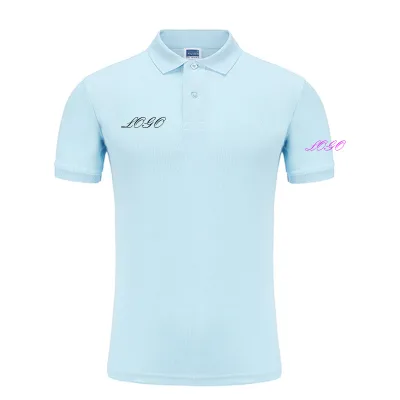
200gsm Cotton Polo for Men and Women Summer Light Weight Embroidery Polo Shirts
$3.60 - $4.20
MOQ: 2 pieces

Guangzhou Colorful Clothing Co., Ltd.
- Verified by SGS
- Combined
- China Guangdong
- Lead time15 days
- Avg. response≤ 4h
Main productsT Shirt, Polo Shirt, Work Uniform, School Uniform, Restaurant Staff Uniform, Security Guard Uniform, Jackets, Pants, Shirts, Hoodies
Main marketsAfrica,Southeast Asia/ Mideast,Australia,North America


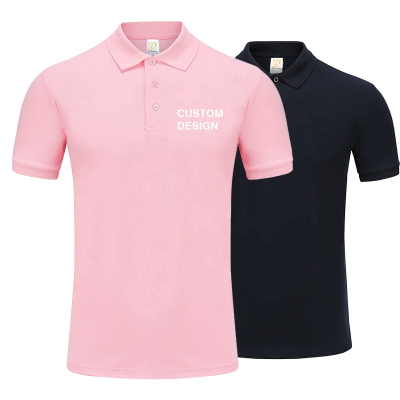
Men's Polyester Cotton Polo Shirt Anti Wrinkle Embroidered Short Sleeve Knit Wear
$4.99 - $6.99
MOQ: 100 Pieces

Hangzhou Aofeng Clothing Co., Ltd.
- Verified by TüVRheinland
- Manufacturer, Trading Company
- Lead time0 days
- Avg. response≤ 10h
Main productsT-Shirt, Gym-Vest, Hoodie, Trousers, Chiffon And Shirt
Main marketsDomestic Market(45%), North America(35%), South Asia(10%)
Shenzhen Gold-White Collar Garments Co., Ltd.
- Manufacturer
- Guangdong, China
- Lead time15 days
- Avg. response≤ 2h
Main productst-shirt,shirt,hoodie,Polo shirt,suit
Main marketsSouth Asia(7.69%), Southern Europe(7.69%), Northern Europe(7.69%), Central America(7.69%), Western Europe(7.69%), Eastern Asia(7.69%), Mid East(7.69%), Oceania(7.69%), Africa(7.69%), Southeast Asia(7.69%), Eastern Europe(7.69%), South America(7.69%), North America(7.69%)

Guangzhou Yabin Textile and Clothing Co., Ltd.
- Verified by TUVRHEINLAND
- Combined
- China Guangdong
- Lead time23 days
- Avg. response≤ 1h
Main productsShirt, Suit, Suit Set, Men Shirt, Hoodie, Jacket, Work Uniform, Polo Shirt, T Shirt, School Uniforms
Main marketsDomestic

Lightweight Summer Polo Shirt - Anti-Static and Wrinkle-Resistant Design
$14.99 - $15.99
MOQ: 100 Pieces

Lightweight Summer Polo Shirt - Anti-Static and Wrinkle-Resistant Fabric
$14.99 - $15.99
MOQ: 100 Pieces


Yancheng City Zhou Chi Imp. & Exp. Co. Ltd.
- Verified by TUVRHEINLAND
- Trading Company
- China Jiangsu
- Lead time23 days
- Avg. response≤ 12h
Main productsApparel, T Shirt, Hoodies, Shorts, Leggings, Jackets, Woven Shirts
Main marketsSoutheast Asia/ Mideast,Europe,North America
Dongguan Fnjia Knitwear Co., Ltd.
- Verified by SGS Group
- Manufacturer, Trading Company
- Lead time15 days
- Avg. response≤ 2h
Main productsChristmas Sweaters, Sweaters, T-shirts, Hoodies, Women Dresses
Main marketsEastern Europe(30%), Western Europe(30%), North America(20%)
Jiangxi Huadu Clothing Co., Ltd.
- Manufacturer, Trading Company
- Jiangxi, China
- Lead time15 days
- Avg. response≤ 4h
Main productsT shirt,Tank Top,Hoodie,Jogger,Short
Main marketsNorth America(70.00%), Northern Europe(5.00%), South America(5.00%), Southern Europe(2.00%), Eastern Europe(2.00%), Central America(2.00%), Western Europe(2.00%), Eastern Asia(2.00%), Mid East(2.00%), Oceania(2.00%), Africa(2.00%), Southeast Asia(2.00%), Domestic Market(1.00%), South Asia(1.00%)
Dongyang Yinxin Apparel Co., Ltd.
- Verified by TüVRheinland
- Trading Company
- Lead time90 days
- Avg. response≤ 2h
Main productsMen's T-Shirts, Women's T-Shirts, Men's Hoodies, Women's Hoodies
Main marketsNorth America(50%), Western Europe(10%), South America(5%)


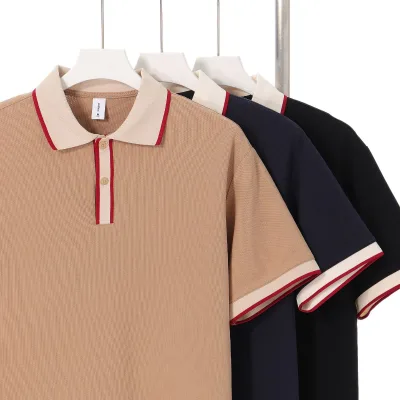
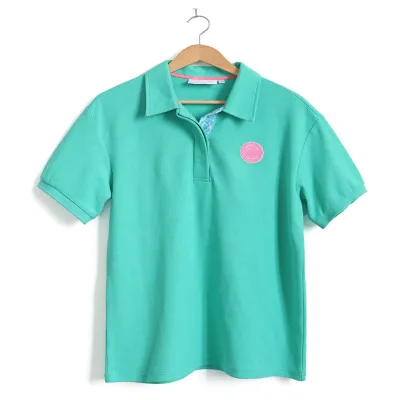
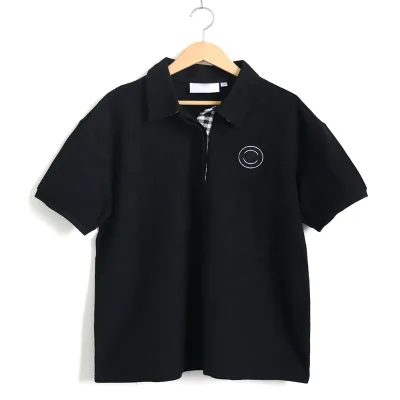
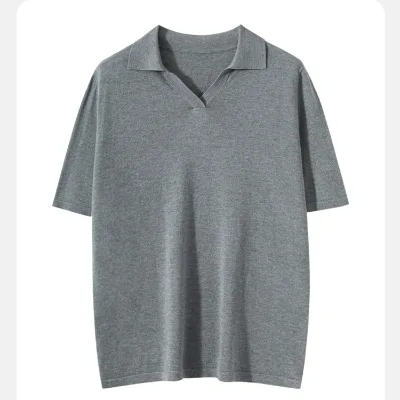






Comprehensive Sourcing Guide
Anti-Pilling Cashmere Polo Supplier Concentration and Factory Types
The current supplier landscape for Anti-Pilling Cashmere Polo reveals a mix of manufacturer and trading company entities, with some operating as combined entities to offer broader service ranges. Evidence indicates that production capabilities often include sample processing, graphic processing, and customized on-demand services, suggesting a flexible manufacturing base. While specific factory clusters are not universally confirmed in the provided data, some results point to origins in Guangdong, China, and other regions like Shandong and Hebei. Buyers should verify the specific location of each supplier to understand the local supply chain dynamics, as these regions may have distinct advantages in knitwear production. The presence of both manufacturers and trading companies means buyers must distinguish between direct factory sources and intermediaries to ensure accurate pricing and communication.
Factory types vary significantly in their specialization, with some focusing on men's sweaters, knitwear, and cardigans, while others offer a broader range including cashmere beanies and scarves. The main products listed often include cashmere sweaters, men's sweaters, and various knitwear items, indicating that many suppliers have established expertise in this specific fabric category. When evaluating potential partners, it is crucial to confirm whether the supplier's primary focus aligns with high-quality cashmere production. Some suppliers may list cashmere as a material option alongside wool, cotton, and acrylic, which requires careful verification to ensure the specific anti-pilling treatment is applied to the cashmere component. Understanding the supplier's core product mix helps in assessing their technical proficiency with the specific fabric requirements of anti-pilling cashmere polo shirts.
How to Verify Anti-Pilling Cashmere Polo Suppliers
Verification of supplier credibility relies heavily on third-party audit reports and system certifications rather than self-declared claims. Available data shows that some suppliers hold TüVRheinland verification status, while others are verified by CTI or SGS. These external validations provide a baseline for assessing the supplier's operational integrity and quality control systems. Buyers should prioritize suppliers with these specific verification badges, as they indicate that an independent body has inspected the facility. It is important to note that not all suppliers in the search results display a system certification, and some may list "NIL" for certifications. In such cases, buyers must request direct proof of quality management systems or recent audit reports before proceeding with any order.
Beyond verification badges, the response time and lead time data offer insights into a supplier's operational efficiency and reliability. Current observations indicate response times ranging from 3 to 14.59 hours, with lead times varying between 15 and 30 days. A faster response time often correlates with better communication channels and a more agile production schedule, which is critical for custom orders. Buyers should compare these metrics across different suppliers to identify those that can meet tight deadlines. Additionally, the availability of sample processing and graphic processing capabilities suggests that suppliers with these capacities may be better equipped to handle custom design requests. Verifying these operational metrics ensures that the supplier can deliver the anti-pilling cashmere polo shirts within the required timeframe and quality standards.
What to Compare Across Anti-Pilling Cashmere Polo Suppliers
When comparing suppliers, key dimensions include lead time, minimum order quantity (MOQ), response speed, and established capabilities. The data shows lead times ranging from 15 to 30 days, with some suppliers offering a 7-day sample order lead time support. MOQs vary significantly, with some suppliers requiring as few as 20 units, while others set a minimum of 100 units. Buyers must align these requirements with their inventory needs and budget constraints. Response times also differ, with some suppliers responding within 3 hours and others taking up to 14.59 hours. A shorter response time can be a significant advantage in resolving design queries or addressing production issues quickly.
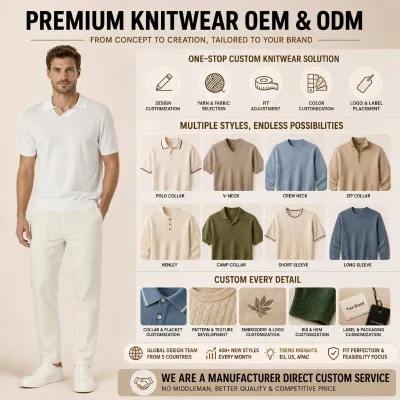
Material composition and customization options are another critical area for comparison. Suppliers offer materials ranging from pure cashmere to blends with wool, cotton, and acrylic, with some providing custom material options. The ability to customize patterns, colors, and logo positions is a key differentiator. Some suppliers support OEM and ODM services, allowing for deep customization of the anti-pilling cashmere polo shirts. Buyers should evaluate the specific customization capabilities against their brand requirements. Additionally, the range of main products offered, such as men's sweaters, cardigans, and knitwear, indicates the supplier's breadth of expertise. Comparing these factors helps buyers select a supplier that can deliver the exact specifications required for their anti-pilling cashmere polo line.
Common Anti-Pilling Cashmere Polo Sourcing Risks
One significant risk in sourcing anti-pilling cashmere polo is the inconsistency in material quality and the effectiveness of anti-pilling treatments. While some suppliers list cashmere as a primary material, others offer blends that may not meet the desired quality standards. The presence of "NIL" certifications for some suppliers raises concerns about their adherence to quality control protocols. Buyers must verify the specific anti-pilling treatment process used by each supplier to ensure the final product meets durability expectations. Without clear evidence of treatment efficacy, there is a risk of receiving products that pill quickly, leading to customer dissatisfaction and potential returns.
Another risk involves the variability in lead times and production capacity. While some suppliers offer a 15-day lead time, others may require up to 30 days, which can impact inventory planning and market responsiveness. The lack of standardized lead times across suppliers makes it challenging to predict delivery schedules accurately. Additionally, the MOQ requirements can pose a financial risk for smaller buyers who may not have the capital to meet high minimum order quantities. Suppliers with higher MOQs may also have less flexibility in accommodating rush orders or small batch customizations. Buyers should carefully assess these risks and negotiate terms that mitigate potential delays and financial burdens.
Anti-Pilling Cashmere Polo Regional Sourcing and Logistics
Regional sourcing plays a crucial role in determining the efficiency and cost-effectiveness of the supply chain. Evidence points to production locations in Guangdong, China, as well as Shandong and Hebei provinces. These regions are known for their textile manufacturing capabilities, but the specific advantages of each location may vary. Buyers should investigate the logistics infrastructure in these regions to understand shipping times and costs. For instance, suppliers in Guangdong may have better access to international ports, potentially reducing shipping times to global markets. However, the lack of detailed location data for all suppliers means buyers must verify the specific origin of each product to make informed decisions.
Logistics considerations also include packaging and handling standards. Some suppliers use carton packaging, while others may have different packing methods. The single package size and gross weight data provided can help buyers estimate shipping costs and storage requirements. For example, a single package size of 30.1x26.1x3.6 cm and a gross weight of 0.2 kg indicate a compact and lightweight product, which may reduce shipping costs. Buyers should compare these logistics metrics across suppliers to optimize their supply chain. Additionally, the availability of sample processing and graphic processing capabilities can influence the logistics of custom orders, as these services may require additional handling and time.
Anti-Pilling Cashmere Polo Commercial Terms and Order Planning
Commercial terms for anti-pilling cashmere polo vary significantly, with price ranges from $5.00 to $35.00 per unit depending on the supplier and product specifications. Some suppliers offer a price range of $10.90 to $19.90, while others have a fixed price of $35.00. Buyers must carefully evaluate these pricing structures against their budget and quality expectations. The MOQ requirements also play a critical role in order planning, with some suppliers requiring as few as 20 units and others setting a minimum of 100 units. Understanding these terms helps buyers plan their inventory and cash flow effectively. Additionally, the availability of sample order lead time support can be a valuable asset for buyers testing new designs before committing to larger orders.
Order planning should also consider the customization options and production capabilities of each supplier. Suppliers offering OEM and ODM services provide greater flexibility for custom designs, which can be essential for brands seeking unique anti-pilling cashmere polo shirts. The ability to customize patterns, colors, and logo positions allows buyers to create products that align with their brand identity. However, these customization options may come with higher MOQs or longer lead times. Buyers should balance the desire for customization with the practical constraints of their order planning. By carefully reviewing the commercial terms and production capabilities, buyers can develop a robust sourcing strategy that meets their specific needs for anti-pilling cashmere polo shirts.
FAQs
What is the price range for Anti-Pilling Cashmere Polo shirts?
Prices for these garments typically range from $5.00 to $35.00 per unit depending on material purity and customization. Basic knitted options start around $5.00, while pure cashmere pullovers can reach $35.00. Buyers should verify specific unit costs based on order volume and selected fabric weight.
What is the minimum order quantity for custom cashmere polos?
Minimum order quantities vary by supplier and product type. Some manufacturers accept orders as low as 20 pieces for blended knitwear, while others require 100 pieces for pure cashmere items. Buyers must check individual product listings to confirm the exact MOQ applicable to their specific customization needs.
How long does production take for cashmere polo orders?
Standard lead times for these orders generally range from 15 to 30 days. Some suppliers offer faster sample processing within seven days, but bulk production typically requires two to four weeks. Buyers should confirm exact delivery schedules with the supplier before finalizing payment terms.
Are these suppliers verified for quality and safety standards?
Many suppliers hold third-party verifications such as TüVRheinland, CTI, or SGS. Some also possess CE system certifications. Buyers should look for these verification badges on product pages to ensure the manufacturer meets international quality and safety standards for textile production.
What customization options are available for cashmere polo shirts?
Suppliers offer extensive customization including OEM and ODM services. Buyers can choose custom materials like wool, cotton, or cashmere, and select from various patterns such as striped or solid colors. Logo placement is flexible, and technical options include embroidery, printing, or yarn dyeing for unique designs.
Where are these cashmere polo manufacturers located?
Manufacturers are primarily located in China, specifically in regions like Guangdong and Shandong. These areas are known for strong textile infrastructure. Buyers can filter search results by these locations to find suppliers with established supply chains and efficient logistics for international shipping.