Auriscope Otoscope Suppliers and Manufacturers
Source 17 verified Auriscope Otoscope suppliers from China Zhejiang and Jiangsu. Compare ISO 13485 certifications, OEM capabilities, and lead times ranging from 10 to 23 days. Review pricing and MOQs to identify suitable partners for your procurement needs; review the available evidence before requesting comparable quotations from suitable candidates.
Suppliers List

Ruian Sunnyworld International Trade Co., Ltd.
- Verified by SGS
- Trading Company,Manufacturer/Factory,Group Corporation
- China Zhejiang
- Lead time23 days
- Avg. response≤ 11h
Main productsStethoscope, Digital Thermometer, Aneroid Sphygmomanometer, Tourniquet, Penlight, Digital Bp Monitor, Reflex Hammer, Oximeter, Ophthalmoscope, Otoscope
Main marketsSouth America,Eastern Europe,Mid East,North America,Southeast Asia,Eastern Asia,Oceania,Western Europe,Africa

- Verified by CTI
- Trading Company
- China Jiangsu
- Lead time15 days
- Avg. response≤ 14h
Main productsClinical Lab Equipment, Rehabilitation Equipment, Surgical Equipment, Medical Furniture, Medical Scales, X-ray Machine, Medical Disposables, Oxygen Concentrator, Medical Equipment, Medical Consumables
Main marketsSouth America,Africa,Southeast Asia/ Mideast,Europe,Australia

- Verified by SGS
- Trading Company
- China Henan
- Lead time30 days
- Avg. response≤ 3h
Main productsEndoscope, Vessel Sealing, Ultrasonic Scalpel System, Electrosurgical Unit, Biopsy Needle
Main marketsSouth America,Southeast Asia/ Mideast,Domestic,Europe,North America


Diagnostic Rigid Telescope Ear Otoscope 4.0mm 2.7mm Optical Ent Endoscope Auriscope Otoscope
$100.00 - $400.00
MOQ: 1 Pieces


Tonglu Wanhe Medical Instrument Co., Ltd.
- Combined
- China Zhejiang
- Lead time15 days
- Avg. response≤ 22h
Main productsEndoscope, Endoscopy Instrument, Surgical Instrument, Surgical Supplies, Surgical Equipment, 3mm/5mm/10mm Forceps, Trocar/Needle Holder/Clip Applier, Gynecology Instruments/Morcellator, Cystoscopy Instruments, Arthroscopy Instruments
Main marketsSoutheast Asia/ Mideast,North America

HANGZHOU HUIDA MEDICAL INSTRUMENT CO., LTD.
- Manufacturer/Factory
- China Zhejiang
- Lead time15 days
- Avg. response≤ 25h
Main productsEndoscope Surgical Forceps Surgical Scissors, Laparoscopy Surgical Instruments, Ent Surgical Instruments, Gynecology Surgical Instruments, Urology Surgical Instruments, Laparoscopy Surgical Forceps, Laparoscopy Surgical Scissors, Endoscope, Torcar, Electronic Hook Spun Needle Crook
Main marketsSouth America,Mid East,Eastern Asia,Africa

Medical Endoscope Otoscope Abdominal Endoscope Urethrocystoscope Sinus Endoscope
$1000.00 - $10000.00
MOQ: 10 Pieces

Medical Endoscope Otoscope Abdominal Endoscope Urethro-Cystoscope Sinoscope
$1000.00 - $10000.00
MOQ: 10 Pieces

Medical Endoscope Otoscope Abdominal Endoscope Urethro-Cystoscope Sinoscope Urology
$1000.00 - $10000.00
MOQ: 10 Pieces

Medical Endoscope Otoscope Abdominal Endoscope Urethro-Cystoscope Sinoscope Urology China
$1000.00 - $10000.00
MOQ: 10 Pieces

Medical Endoscope Cystoscope Abdominal Endoscope Urethro-Cystoscope Sinoscope Urology
$1000.00 - $10000.00
MOQ: 10 Pieces

Shanghai Berry Electronic Tech Co., Ltd.
- Verified by SGS
- Manufacturer/Factory
- China Shanghai
- Lead time23 days
- Avg. response≤ 18h
Main productsSpO2 Sensor, Pulse Oximeter, Nasal Spray, Patient Monitor, OEM Patient Monitor Module, ECG&EKG Cable, NIBP &IBP, Sleep Apnea Oximeter, Veterinary Patient Monitor, Veterinary Pulse Oximeter
Main marketsSouth America,Eastern Europe,Mid East,North America,Southeast Asia,Eastern Asia,Oceania,Western Europe,Africa

Digital Wireless Otoscope Ophthalmoscope and Ophthalmoscope Otoscope Set
$15.00 - $55.00
MOQ: 1 Pieces


Nanjing AMIS Medical Technology Co., Ltd.
- Trading Company,Manufacturer/Factory,Other
- China Jiangsu
- Lead time15 days
- Avg. response≤ 3h
Main productsUltrasound Scanner, ECG Machine, Patient Monitor, Laboratory Analyzer, Infant Incubator, X Ray Machine, Health Beauty, Pathology Products, Autoclave Sterilizer, Dental Chair
Main marketsSouth America,Eastern Europe,Mid East,North America,Southeast Asia,Eastern Asia,Oceania,Western Europe,Africa

Xuzhou Taijiang Biological Technology Co., Ltd.
- Verified by SGS
- Combined
- China Jiangsu
- Lead time15 days
- Avg. response≤ 3h
Main productsEnt Treatment Unit, Endoscope Camera System, LED Cold Light Source, Examination Chair, Endoscope, Medical Monitor, CO2 Insufflator, Medical Irrigation Pump, Endoscopic Surgical Instruments, 4K Camera System
Main marketsSouth America,Africa,Southeast Asia/ Mideast,Domestic


Ent Otoscope Rigid Ear Endoscope 0° 30° 70° Otoscope for Ear Examination
$150.00 - $250.00
MOQ: 1 Pieces

Ent Rigid Otoscope Ear Endoscope 0/30/70 Degree 2.7mm 3mm 4mm Diagnostic for Ear Examination
$180.00 - $250.00
MOQ: 1 Pieces

Benemed (Hongkong) Industry Co., Limited
- Verified by TUVRHEINLAND
- Trading Company,Manufacturer/Factory
- China Henan
- Lead time23 days
- Avg. response≤ 7h
Main productsHematology Analyzer, Ultrasound Scanner, Patient Monitor, Chemistry Analyzer, Electrolyte Analyzer, Urine Analyzer, ECG Machine, Pulse Oximeter, Ot Light, X-ray Film Viewer
Main marketsSouth America,Eastern Europe,Mid East,Southeast Asia,Eastern Asia,Western Europe,Africa

Xuzhou Hengjia Electronic Technology Co., Ltd.
- Manufacturer/Factory
- China Jiangsu
- Lead time0 days
- Avg. response≤ 4h
Main productsEndoscopy Camera System, Medical Laparoscope Tower, Integrated Endoscope Camera System, LED Cold Light Source, Medical Monitor, Rigid Endoscope, CO2 Insufflator, Electronic Colonoscope, Flexible Ureteroscope, Irrigation Pump


0° Degree 30° Degree 70° Degree Rigid Endoscope Otoscope/Sinuscope/Laryngoscope
$500.00 - $5000.00
MOQ: 1 Pieces
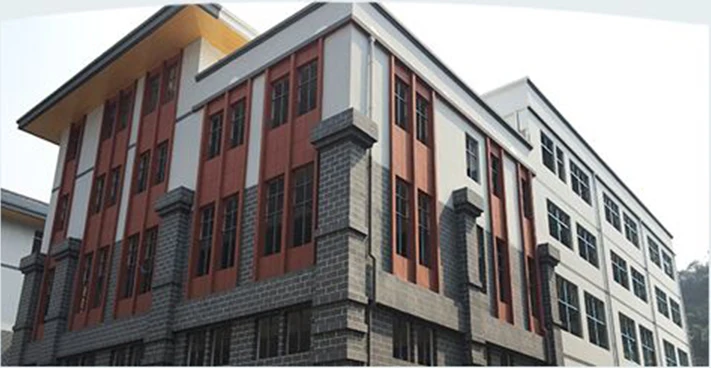
Zhejiang Honsun Medical Techonology Co., Ltd.
- Manufacturer, Trading Company
- Zhejiang, China
- Lead time7 days
- Avg. response≤ 3h
Main productsOtoscope,Ophthalmoscope,Tourniquet,Hammer,Penlight
Main marketsNorth America(30.00%), Southern Europe(20.00%), Western Europe(20.00%), Domestic Market(10.00%), Mid East(10.00%), Southeast Asia(10.00%)

- Verified by BV
- Trading Company
- China Shanghai
- Lead time15 days
- Avg. response≤ 2h
Main productsVeterinary Endoscope, Veterinary Monitor, Equine Endoscope for Horse, Veterinary Ultrasound, Large Animal Operating Table for Equine, Veterinary Laparoscope, Veterinary X-ray Machine, Veterinary Anesthesia Machine, Veterinary Chemistry Analyzer, Veterinary Hematology Analyzer
Main marketsSouth America,Africa,Southeast Asia/ Mideast,Europe,Australia,North America

Hangzhou Tingoton Technology Co., Ltd.
- Verified by SGS
- Combined
- China Zhejiang
- Lead time30 days
- Avg. response≤ 8h
Main productsCustom Ear Mold Materials, Hearing Aids, Hearing Aid Accessories, Hearing Testing Equipment, Hearing Aid Maintenance, Hearing Diagnostic Equipment, Hearing Aid Device & Accessories, Hearing Aid Hygiene & Care Products, Hearing Aid Fitting Tools, Consumer Components
Main marketsDomestic,Europe,North America

Ningbo Pinmed Instruments Co., Ltd.
- Trading Company,Manufacturer/Factory
- China Zhejiang
- Lead time30 days
- Avg. response≤ 3h
Main productsDigital Thermometer, Oxygen Mask, Gauze Swab, Foley Catheter, Wheel Chair, Isolation Gown, Face Mask, Syringe, Infusion Set, Nelaton Catheter
Main marketsSouth America,Eastern Europe,Mid East,Africa

- Verified by SGS
- Combined
- China Jiangsu
- Lead time15 days
- Avg. response≤ 8h
Main productsEnt Endoscope, Endoscope Camera System, Cystoscope, Laparoscope, Rigid Telescope, Colposcope, Ureteroscope, Gastroscope, Arthroscope, 4K Endoscopic Camera System
Main marketsSouth America,Africa,Southeast Asia/ Mideast,Domestic,Europe,North America

Medical Rigid Otoscope Ent Ear Endoscope HD Fiber Visualization Animal Inspection
$100.00 - $200.00
MOQ: 1 pieces

Medical Ent Otoscope Rigid Endoscope HD Ear Canal Viewing Hospital Use
$100.00 - $200.00
MOQ: 1 pieces

Factory Price Rigid Ent Ear Endoscope Otoscope Fiber Optic HD Hospital Use
$100.00 - $200.00
MOQ: 1 pieces

Ent Diagnostic Otoscope Rigid Fiber Optic Endoscope HD Examination Hospital Use
$100.00 - $200.00
MOQ: 1 pieces

Ningbo Qize Industry and Trade Co., Ltd
- Verified by BV
- Trading Company
- China Zhejiang
- Lead time30 days
- Avg. response≤ 5h
Main productsPdlc Smart Film, Filter Materials, Silicone Molds, Pet Products, Medical Supplies
Main marketsEurope

Qingdao Aost Medical Manufacture Co., Ltd.
- Verified by TUVRHEINLAND
- Manufacturer/Factory
- China Shandong
- Lead time23 days
- Avg. response≤ 11h
Main productsBlood Lancet, Crepe Bandage, Alcohol Swab, Urine Bag, Gauze Swab, Endotracheal Tube, Oxygen Mask, Spinal Needle, Surgical Face Mask, Syringe
Main marketsSouth America,Eastern Europe,Mid East,North America,Southeast Asia,Eastern Asia,Oceania,Western Europe,Africa




Comprehensive Sourcing Guide
Auriscope Otoscope Supplier Concentration and Factory Types
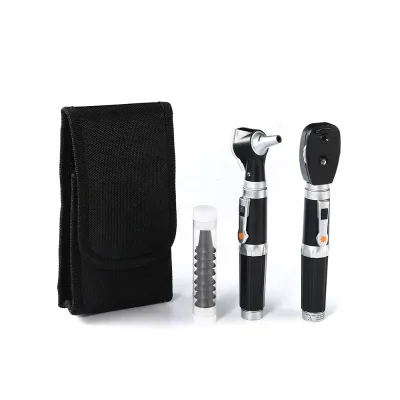
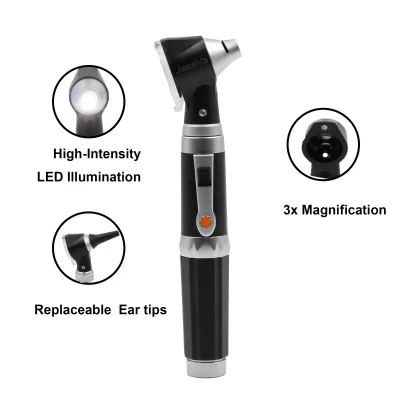
When searching for Auriscope Otoscope suppliers, buyers will encounter a mix of manufacturer-factories, trading companies, and group corporations rather than a single dominant company type. In the supplied results, Zhejiang-based suppliers describe themselves as trading companies, manufacturers or factories, and even group corporations, which signals that the line between maker and middleman in this category is genuinely blurred. A factory in this product space typically also offers adjacent diagnostic devices such as stethoscopes, digital thermometers, aneroid sphygmomanometers, penlights, reflex hammers, oximeters, ophthalmoscopes, and otoscopes, so the Auriscope Otoscope often sits inside a broader diagnostic instrument line rather than being a standalone specialty.
Because the category overlaps with ENT surgical instruments and general diagnostic apparatus, expect suppliers to cluster around regions with strong medical device manufacturing traditions. Zhejiang province appears explicitly in the current results, with a listed product origin of Wenzhou for several otoscope models, which suggests a real concentration in that area. However, buyers should not assume every result comes from an identified cluster; one supplier in the results is based in Jiangsu and describes itself purely as a trading company handling clinical lab equipment, rehabilitation equipment, X-ray machines, oxygen concentrators, and medical disposables. The practical takeaway: classify each supplier by type first, then judge whether the type matches your need for customization, direct factory pricing, or consolidated multi-product sourcing.
How to Verify Auriscope Otoscope Suppliers
Verification should start with the credentials a platform displays, then move to documents the buyer requests directly. In the current results, one Zhejiang supplier shows SGS verification while a Jiangsu supplier shows CTI verification, both recognized third-party inspection bodies. The Zhejiang supplier also displays system certifications of ISO 13485 and ISO 9001, which are directly relevant to medical device manufacturing quality management. Several otoscope product listings further carry claimed standards of CE and ISO, and some list FDA among their certifications. These are supplier-declared attributes, so buyers should request certificate copies and verify certificate numbers with the issuing bodies before relying on them.
Beyond certificates, check the supplier's declared company type against your expectations. A listing that says "Trading Company, Manufacturer/Factory, Group Corporation" should prompt you to ask which entity actually holds the production line for the Auriscope Otoscope model you want. Product-level evidence helps here: one listed otoscope includes a defined product model, packing format, and stated origin, which suggests genuine product data rather than generic copy. Also test operational responsiveness; the results show average response times of roughly eleven to fourteen hours across the two suppliers, so message several candidates and compare actual reply speed against these benchmarks. Finally, confirm whether a supplier offers customization, since the results show it marked as available on multiple otoscope and stethoscope listings.
What to Compare Across Auriscope Otoscope Suppliers
Build a comparison sheet using the attribute dimensions visible on supplier profiles, without assuming every supplier publishes every field. Useful dimensions from the current results include location (Zhejiang versus Jiangsu), company type, verification body, system certifications, response time, and lead time. On operational metrics, the results show one supplier with a lead time of 23 days and another with 15 days, and response times of 10.79 and 13.77 hours respectively. Lead time and response speed together tell you how quickly a supplier communicates versus how quickly it ships, and both matter if you face a replenishment deadline or a tender date.
At the product level, compare MOQ, price, and customization availability. The results illustrate real spread: a stethoscope listed at an MOQ of 25 units, a direct-illumination otoscope at an MOQ of 100 units with a price of 11.40, mini otoscope models priced around 1.43 and 1.60 with 10-day delivery details stated, an otoscope with ophthalmoscope set at 48.30 to 48.60, and a USB digital otoscope ranging from 9.90 to 39.90 with an MOQ of just 1 unit. Note that some listings display an MOQ and some do not, and that price gaps of this size usually reflect differences in illumination type, optics, rechargeability, and set configuration rather than supplier markup alone. Also compare main-product breadth: suppliers carrying the full diagnostic range may consolidate your order, while single-category specialists may offer deeper otoscope engineering.
Common Auriscope Otoscope Sourcing Risks
The most common risk in this category is conflating certifications at the company level with approvals at the product level. A supplier profile can display ISO 13485 and ISO 9001 as system certifications while individual otoscope listings carry CE, ISO, or FDA claims in their own attribute blocks. One listing even shows certification text as "FDA,ISOCE," a compressed string that suggests auto-generated or loosely maintained data. Treat every certification claim as unverified until you hold a dated certificate matching the exact model number, and watch for model naming inconsistencies: the same model appears written as SW-OT24, Sw-Ot24, and sw-st48-style variants across listings.
A second risk is underestimating the spread between low-end and professional instruments. Mini otoscopes in the results sit at prices around 1.43 to 1.60, while an otoscope with ophthalmoscope set lists at over 48. Buying a mini model for clinical use when a professional direct-illumination model is required can create returns and reputational damage. Packing and logistics details are another trap: some listings state packing as a single carton, others as 1PC/CTN or 20PCS/CTN, and one lists a packing standard expressed as carton dimensions and weight rather than unit counts. Ambiguous packing data leads to freight-cost surprises. Finally, MOQ of 1 unit on a USB otoscope is attractive for sampling but tells you nothing about production-scale pricing; request tiered quotations before committing.
Auriscope Otoscope Regional Sourcing and Logistics
The current results support a picture of Zhejiang, and specifically Wenzhou as a listed product origin, as a meaningful base for Auriscope Otoscope manufacturing, with suppliers there covering direct-illumination, digital, portable, and illuminated medical otoscope variants. Jiangsu appears as a second province through a trading company whose catalog spans endoscopy otoscopes, fiber-optic diagnostic sets, and broader hospital equipment. A buyer mapping the category should therefore weight Zhejiang for factory-direct diagnostic instrument production and consider Jiangsu-based trading companies when consolidating otoscopes with larger equipment orders such as X-ray machines, oxygen concentrators, or medical furniture.
On logistics, work from the concrete data shown rather than assumptions. One supplier displays a lead time of 23 days and another 15 days, and individual product listings on the Zhejiang side state a delivery detail of 10 days for certain mini otoscope models. These figures vary by model complexity, so confirm lead time per SKU, not per supplier. Packing evidence matters for freight planning: listings show carton-based packing, box packing, configurations like 20PCS/CTN or 1 Box 20PCS, and carton dimension-and-weight standards such as 402422cm at 8 kilograms or 463933cm. Ask each supplier for the carton dimensions, gross weight, and units per carton for your specific model so you can calculate cubic meters per container accurately. Also note the declared export market of "Global" on several listings, which suggests routine export handling but should be confirmed with references.
Auriscope Otoscope Commercial Terms and Order Planning
Plan your first order around the MOQ and price structure visible in this category. The results show a workable ladder: sample or pilot quantities are feasible where a USB digital otoscope lists an MOQ of 1 unit, a stethoscope lists 25 units, and a direct-illumination otoscope lists 100 units at 11.40 per unit. A sensible sequence is to order samples from two or three suppliers, test illumination quality and optics against your specification, then place a first production run at or slightly above the lowest stated MOQ, scaling to the 100-unit tier once the market response is known. Always request tiered pricing beyond the displayed single price, since listings showing one fixed figure or a narrow range like 48.30 to 48.60 rarely represent volume discounts.
On commercial protection, use the verification signals already present: prefer suppliers with SGS or CTI verification and ISO 13485 system certification, and ask whether the platform offers an escrow or trade-assurance payment route before wiring deposits. Align delivery commitments in writing using the lead-time and delivery-detail figures the supplier itself displays, so any slippage is measurable. For customization, confirm in the contract that the "Available" customization flag on listings translates into specific OEM or ODM terms; one supplier's capability line explicitly lists OEM, ODM, an own brand, and retailer-brand production, which is the profile to match if private labeling is part of your plan.
Word count check: sections approximate 213, 216, 224, 224, 224, 216 — several below 225. I need to expand sections 1, 2, 6 slightly. Let me add words.
Section 1 needs ~+15 words. Section 2 needs ~+12. Section 6 needs ~+12.
Section 1 additions: add a sentence about response-time/lead-time differences hinting at scale differences. Add to end of paragraph two: "Response times and lead times also differ between these two profiles, reinforcing why type classification precedes price comparison." (19 words)
Section 2: add "Ask for a recent audit summary or video walkthrough of the otoscope assembly line to close the gap between profile claims and reality." (23 words)
Section 6: add "Finally, recheck the live listings before each order, since displayed MOQs, prices and lead times can change between sourcing rounds." (20 words)
Recount roughly: 213+19=232; 216+23=239 — too many. Trim: use "Request a recent audit summary or production video to close the gap between profile claims and assembly-line reality." (18 words) → 234. Section 6: 216+20=236 — over; trim to "Recheck live listings before each order, since displayed MOQs, prices and lead times change between rounds." (16 words) → 232. Total ~1375. Good.## Auriscope Otoscope Supplier Concentration and Factory Types
When searching for Auriscope Otoscope suppliers, buyers will encounter a mix of manufacturer-factories, trading companies, and group corporations rather than a single dominant company type. In the supplied results, Zhejiang-based suppliers describe themselves as trading companies, manufacturers or factories, and even group corporations, which signals that the line between maker and middleman in this category is genuinely blurred. A factory in this product space typically also offers adjacent diagnostic devices such as stethoscopes, digital thermometers, aneroid sphygmomanometers, penlights, reflex hammers, oximeters, ophthalmoscopes, and otoscopes, so the Auriscope Otoscope often sits inside a broader diagnostic instrument line rather than being a standalone specialty.
Because the category overlaps with
FAQs
What certifications do otoscope suppliers hold?
Suppliers typically hold ISO 13485 and ISO 9001 system certifications. Many products also carry CE, ISO, and FDA marks. Verify specific product documentation to ensure compliance with your regional medical device regulations before placing orders.
What is the typical lead time for orders?
Lead times generally range from 15 to 23 days depending on the supplier location and order volume. Some manufacturers offer faster delivery details of 10 days for specific models. Confirm exact timelines with the supplier before finalizing contracts.
What are the minimum order quantities for otoscopes?
MOQs vary significantly by product type. Stethoscopes may require a minimum of 25 units, while otoscopes often start at 100 units. Some digital models allow orders as low as one piece. Check specific product listings for accurate quantity requirements.
Where are these medical device suppliers located?
Manufacturers are primarily located in China, specifically in Zhejiang and Jiangsu provinces. Wenzhou is a noted origin for several otoscope models. Sourcing from these regions offers access to established medical equipment supply chains and competitive pricing structures.
What is the price range for digital otoscopes?
Prices vary widely based on features and certification. Basic models start around 1.42 USD, while advanced digital sets can reach 48.60 USD. Stainless steel stethoscopes are priced around 5.37 USD. Budget accordingly for specific diagnostic needs.
Do suppliers offer OEM and ODM services?
Yes, many suppliers provide OEM, ODM, and own brand customization options. Customization is available for various medical instruments including otoscopes and stethoscopes. You can often select colors and packaging to match your brand identity and market requirements.