Compression Anti-Slip Ankle Socks Suppliers and Manufacturers
Compare 18 verified suppliers offering Compression Anti-Slip Ankle Socks with varying lead times, MOQs, and response speeds. Review locations in China Anhui, Shanghai, and Zhejiang to find options matching your customization and certification needs before requesting quotes; review the available evidence before requesting comparable quotations from suitable candidates.
Suppliers List

- Verified by CTI
- Trading Company
- China Anhui
- Lead time23 days
- Avg. response≤ 1h
Main productsFurniture, Home Furniture
Main marketsSoutheast Asia/ Mideast

Shanghai Jspeed Industry Co., Ltd.
- Verified by BV
- Trading Company
- China Shanghai
- Lead time60 days
- Avg. response≤ 3h
Main productsMen/Women Swimwear, Underwear, Bra, Socks, Men/Women Pants, Men/Women Jackets, Dress, Sportwear, Skirt, Shirt
Main marketsEurope

Sungnan Import & Export Co., Ltd.
- Verified by TUVRHEINLAND
- Combined
- China Zhejiang
- Lead time30 days
- Avg. response≤ 7h
Main productsScarf, Socks, China Scarf, Leggings, Hats, Bags, Gloves
Main marketsNorth America


Ankle Socks Compression Running Moisture Wicking Socks Low Cut Athletic Cushioned
$0.45 - $0.59
MOQ: 500 Pairs

$1.29 - $1.89
MOQ: 100 Pieces


- Verified by TUVRHEINLAND
- Trading Company,Manufacturer/Factory
- China Chongqing
- Lead time38 days
- Avg. response≤ 5h
Main productsBaseball Cap, Beanie Hat, Trucker Hat, Bucket Hat, Snapback Hat, Scarf, Gloves, Apron, Sock, T Shirt&Polo Shirt
Main marketsSouth America,Eastern Europe,Mid East,North America,Southeast Asia,Eastern Asia,Oceania,Western Europe,Africa

Nantong Bi'antong Textile Fabrics Trade Co., Ltd.
- Verified by SGS
- Trading Company
- China Jiangsu
- Lead time0 days
- Avg. response≤ 23h
Main productsCotton Socks, Hat, Scarf, Blanket, Knee Pad, Cap, Underwear, Wash Accessories, Fabric, Tool Bag


MOQ: 2000 Pieces

MOQ: 2000 Pieces

MOQ: 2000 Pieces
Foshan Qixiang Textile Co., Ltd
- Verified by TUVRHEINLAND
- Combined
- China Guangdong
- Lead time15 days
- Avg. response≤ 20h
Main productsSocks
Main marketsDomestic


Professional Compression Socks Elastic Pressure Ankle Support Moisture Wicking Athletic Socks
$1.47 - $1.70
MOQ: 360 Pairs

Foshan Youyan Clothing Co., Ltd.
- Combined
- China Guangdong
- Lead time30 days
- Avg. response≤ 8h
Main productsHeadband, Scrunchies, Hair Tie, Hair Clip, Hairband
Main marketsSouth America,Africa,Southeast Asia/ Mideast,East Asia(Japan/ South Korea),Domestic,Europe,Australia,North America

PUYANG SELFAIDING INDUSTRIAL CO., LTD.
- Verified by SGS
- Manufacturer
- China Henan
- Lead time15 days
- Avg. response≤ 2h
Main productsAdult Bib, Pet Pad, Underpad, Baby Bib, Protective Panties, Washable Sanitary Pad, Compression Stockings, Patient Care Clothing, Pet Nest, Pet Toy
- Verified by SGS
- Trading Company
- China Zhejiang
- Lead time15 days
- Avg. response≤ 15h
Main marketsEurope

$1.46 - $1.63
MOQ: 600 Pairs

$2.91 - $3.26
MOQ: 300 Pairs

$0.26 - $0.29
MOQ: 3500 Pairs

Ningbo Beiduoen Health Tech. Co., Ltd.
- Verified by CTI
- Combined
- China Zhejiang
- Lead time23 days
- Avg. response≤ 11h
Main productsKnee Support, Ankle Brace, Compression Arthritis Glove, Wrist Support, Waist Belt, Foot Care, Insoles, Toe Separator, Compresson Sock Glove Knee Brace, Copper Supports
Main marketsSouth America,Southeast Asia/ Mideast,Europe,Australia,North America

Zhuji Dongling Knitting & Textile Co., Ltd.
- Combined
- China Zhejiang
- Lead time30 days
- Avg. response≤ 5h
Main productsSocks, Man Socks, Lady Socks, Sport Socks, Baby & Kids Socks, Tights, Wristband, Non-Slip Socks, Mobile Phone Pouch, Hiking Socks
Main marketsAfrica,Europe,North America

PLANET (ANHUI) INTERNATIONAL CO., LTD.
- Verified by BV
- Combined
- China Jiangsu
- Lead time60 days
- Avg. response≤ 2h
Main productsBandage, First Aid Kits, Band Aid, Wound Dressing, Foot Patch, Knee Brace, Knee Support, Knee Pad, Adhesive Tape, Compression Stocks
Main marketsNorth America

Shenzhen Villsun Sports Technology Co., Ltd
- Verified by SGS
- Trading Company
- China Guangdong
- Lead time23 days
- Avg. response≤ 2h
Main productsFitness Equipment, Yoga Mats, Resistance Bands, Yoga Ball, Shin Guards, Knee Pads, Elbow Pads, Strength Fitness Equipment, Hand Grip, Yoga Wear
Main marketsSouth America,Southeast Asia/ Mideast,Europe,Australia,North America

YANCHENG HAPPYNESS IMP. AND EXP. CO. LTD
- Verified by SGS
- Trading Company
- China Jiangsu
- Lead time15 days
- Avg. response≤ 4h
Main productsCustom Slides Slippers, Custom Indoor Slippers, Custom Socks, Custom Caps, Custom Clothing, Custom Rainboots, Custom Winter Boots, Custom Shoes, Custom Slippers, Custom Flipflops
Main marketsSouth America,Africa,Southeast Asia/ Mideast,East Asia(Japan/ South Korea),Domestic,Europe,Australia,North America
Shijiazhuang Aofeite Imp & Exp Co., Ltd.
- Manufacturer, Trading Company
- Lead time旺季: "1 - 1000":30,"> 1000":"To be negotiated", 淡季: "1 - 1000":30,"> 1000":"To be negotiated"
Main productsBack support belt, Lumbar Support Belt, Knee pads, Ankle brace, Wrist guard
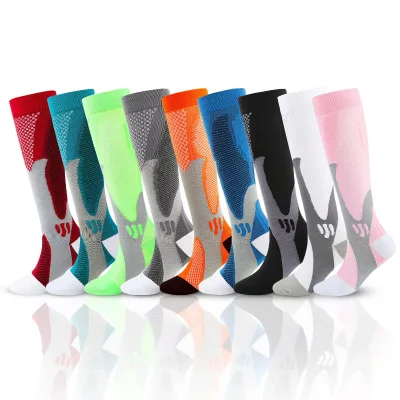
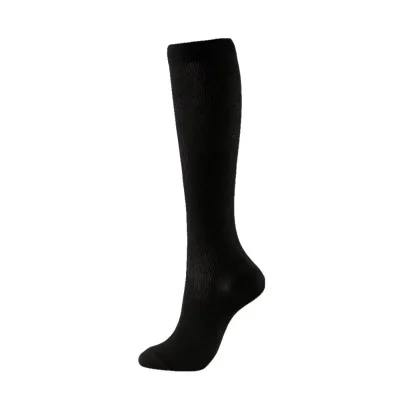
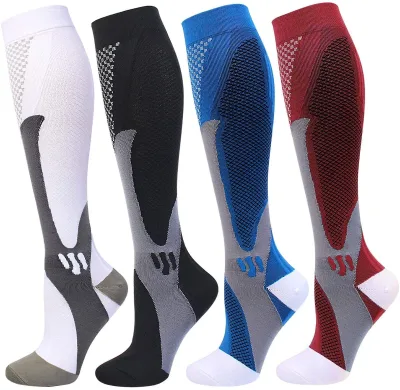
4 Pairs Anti-Bacterial Compression Socks for Men and Women 20-30 MmHg Compression Stockings
$1.15 - $1.35
MOQ: 400 pairs

Shijiazhuang Aofeite Imp & Exp Co., Ltd.
- Verified by SGS Group
- Manufacturer, Trading Company
- Lead time10 days
Main productsKnee Brace, Lumbar Support Belt
Main marketsNorth America(25%), Western Europe(20%), Eastern Europe(13%)
- Verified by CTI
- Trading Company
- China Zhejiang
- Lead time30 days
- Avg. response≤ 4h
Main productsSocks, Men Socks, Sports Socks, Cotton Socks, Custom Socks, Women Socks, Baby Socks, Grip Socks, Crew Socks, Dress Socks
Main marketsSoutheast Asia/ Mideast


$0.79 - $1.89
MOQ: 200 Pairs

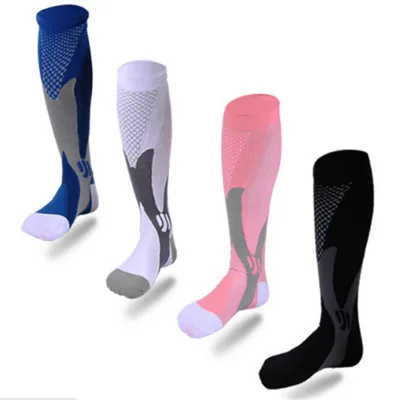
Super-Elite Basketball Ankle Sports Compression Cushion Socks with Logo Customize for Men and Women
$1.03 - $2.10
MOQ: 200 Pairs


Zhuji Juncai Knitting Co., Ltd.
- Verified by BV
- Trading Company
- China Zhejiang
- Lead time23 days
- Avg. response≤ 3h
Main productsSocks, Men's Socks, Women's Socks, Kids Socks, Infant Socks, Sports Socks, Soccer Socks, Basketball Socks, Fuzzy Socks, Trampoline Socks
Main marketsEurope,North America




Comprehensive Sourcing Guide
Compression Anti-Slip Ankle Socks Supplier Concentration and Factory Types
Current data indicates a concentration of suppliers in China Anhui, China Shanghai, and China Zhejiang, with specific facility types ranging from trading companies to combined entities. The Anhui-based suppliers identified operate as trading companies, often sourcing furniture and home furniture alongside textile products like compression socks. In contrast, the Shanghai location features a supplier with a broader product range including swimwear, underwear, and jackets, verified by BV, suggesting a diversified trading or manufacturing capability. The Zhejiang cluster presents a combined company type, verified by TÜV Rheinland, specializing in scarves, socks, and accessories. These regional clusters suggest that buyers can find specialized textile manufacturers in Zhejiang, while Anhui and Shanghai may offer broader trading networks that aggregate various textile goods.
When evaluating factory types, buyers must distinguish between pure manufacturers and trading companies based on the provided company_type data. The Anhui suppliers are explicitly listed as trading companies, which may imply they source from multiple factories rather than operating a single production line. The Shanghai supplier lists ODM and OEM capabilities, indicating a higher level of manufacturing control or direct factory partnership. The Zhejiang supplier is categorized as a combined entity, which often suggests a hybrid model of trading and light manufacturing. Buyers should verify if the supplier's main products align with their specific needs, as some listings show a primary focus on furniture or general apparel rather than specialized compression hosiery.
How to Verify Compression Anti-Slip Ankle Socks Suppliers
Verification status is a critical first step in assessing supplier reliability, with current results showing CTI, BV, and TÜV Rheinland as the primary verification bodies. The Anhui supplier holds a CTI verification, while the Shanghai entity is verified by BV, and the Zhejiang supplier carries a TÜV Rheinland certification. These third-party verifications provide a baseline of trust regarding the supplier's business license and operational legitimacy. However, the Zhejiang supplier lists system certification as NIL, which requires buyers to request specific quality management certificates directly rather than relying on a platform badge alone. Buyers should treat these verification labels as initial filters but must confirm the scope of the certification covers the specific compression sock production lines.
Beyond verification badges, response time and lead time data offer tangible metrics for supplier responsiveness and production capacity. The Anhui supplier demonstrates a rapid response time of 0.74 hours with a lead time of 23 days, suggesting high operational efficiency for standard orders. The Shanghai supplier shows a slower response time of 2.80 hours but a significantly longer lead time of 60 days, which may reflect complex customization or larger batch processing requirements. The Zhejiang supplier has a response time of 6.52 hours and a 30-day lead time, indicating a potentially slower communication loop but moderate production speed. Buyers should prioritize suppliers with response times under three hours for urgent inquiries and cross-reference lead times against their own inventory planning cycles to avoid stockouts.
What to Compare Across Compression Anti-Slip Ankle Socks Suppliers
Comparing suppliers requires a detailed analysis of product attributes, pricing structures, and minimum order quantities (MOQ) to ensure alignment with business goals. Product evidence reveals a wide variance in specifications, with some listings offering cotton materials and anti-bacterial features, while others specify firm compression levels or specific heights like ankle socks. Pricing ranges from as low as 0.50 to 20.00 per unit, with MOQs fluctuating drastically between 10 pairs and 500 pairs depending on the supplier and product model. For instance, one Shanghai supplier offers an MOQ of just 10 pairs, whereas the Zhejiang supplier requires 500 pairs for custom logo additions. Buyers must calculate the total landed cost, including shipping, rather than focusing solely on the unit price to determine true value.
Material composition and customization options are equally vital comparison points when selecting a compression sock supplier. The available product data highlights materials such as cotton and blends, with features like anti-slip, breathable, and eco-friendly properties. Customization is frequently listed as available, with some suppliers offering custom logos on packaging while others allow for pattern changes like polka dots or stripes. The Anhui supplier lists a specific model with high elasticity and anti-bacterial features, while the Shanghai supplier emphasizes waterproof and woven options. Buyers should request physical samples to verify the claimed elasticity and compression levels, as the text descriptions alone do not guarantee the performance required for athletic or medical use cases.
Common Compression Anti-Slip Ankle Socks Sourcing Risks
One significant risk involves the discrepancy between advertised product attributes and actual manufacturing capabilities, particularly regarding material quality and compression standards. While product evidence lists features like "High Elasticity" and "Firm" compression, these are self-reported attributes that may vary between production batches. The Zhejiang supplier lists a delivery time of 3-7 days in product details, which conflicts with the general lead time of 30 days, creating potential confusion about actual fulfillment speed. Buyers must verify if the short delivery window applies only to stock items or if it is a marketing claim that does not reflect the reality of custom orders. Relying solely on listed attributes without sample validation can lead to receiving products that fail to meet the intended compression or durability requirements.
Another critical risk is the inconsistency in packaging and shipping standards across different supplier types. The product evidence shows varied packing methods, ranging from OPP bags to cartons, with some suppliers specifying 25 pairs per poly bag while others use bulk carton packaging. This inconsistency can impact downstream logistics, especially if the buyer requires specific retail-ready packaging or if the compression socks are sensitive to crushing during transit. The Anhui supplier uses OPP bags, while the Shanghai supplier utilizes cartons, which may affect the unit cost and protection level. Buyers should explicitly define packaging requirements in the purchase order to avoid receiving goods in unsuitable containers that could damage the product or increase handling costs at the destination.
Compression Anti-Slip Ankle Socks Regional Sourcing and Logistics
Sourcing from China Anhui, Shanghai, and Zhejiang offers distinct logistical advantages and challenges based on the supplier's location and infrastructure. Anhui, identified as a trading hub, may offer competitive pricing but could involve longer transit times if the actual factory is located further inland. Shanghai, a major port city, likely provides faster access to international shipping routes, which is beneficial for the supplier with a 60-day lead time and ODM capabilities. The Zhejiang cluster, known for textile manufacturing, might offer shorter production cycles but requires careful coordination due to the combined company type and potential for mixed product lines. Buyers should assess the proximity of the supplier to major ports to minimize inland freight costs and ensure timely delivery of bulk orders.
Logistics planning must account for the specific lead times and response speeds associated with each region to maintain supply chain stability. The Anhui supplier's 23-day lead time and rapid 0.74-hour response suggest a streamlined process for standard orders, making it suitable for replenishment stock. Conversely, the Shanghai supplier's 60-day lead time indicates a need for advanced planning, particularly for custom designs or large volume orders. The Zhejiang supplier's 30-day lead time and slower 6.52-hour response time require buyers to initiate orders well in advance and maintain clear communication channels. Buyers should factor in these regional differences when setting safety stock levels and negotiating delivery schedules to prevent disruptions in their own sales cycles.
Compression Anti-Slip Ankle Socks Commercial Terms and Order Planning
Commercial terms vary significantly among suppliers, with payment methods and packaging specifications playing a crucial role in order planning. The Zhejiang supplier explicitly lists payment options such as TT and PayPal, while other suppliers may have different terms not fully detailed in the current data. Packaging requirements, such as the 25 pairs per poly bag standard mentioned for the Zhejiang supplier, must be confirmed before finalizing the order to ensure compatibility with the buyer's distribution channels. Buyers should also verify if the supplier offers escrow services or other payment protections, as the current data does not explicitly confirm escrow availability for all listed entities. Clear agreement on these terms prevents disputes and ensures smooth transaction processing.
Order planning must integrate the diverse MOQs and pricing tiers to optimize inventory investment and cash flow. With MOQs ranging from 10 pairs to 500 pairs, buyers can start with small test orders from suppliers like the Shanghai entity to validate product quality before committing to larger volumes. The price range of 0.50 to 20.00 per unit suggests that buyers should negotiate based on volume tiers, as higher quantities may unlock lower price points. Additionally, the availability of customization options, such as custom logos or specific patterns, should be factored into the timeline, as these processes often extend the lead time beyond the standard production window. Strategic order planning involves balancing the need for variety with the efficiency of bulk purchasing to maximize profitability.
FAQs
What are the typical lead times for compression socks?
Lead times vary by supplier location and order volume. Suppliers in Anhui report a 23-day lead time, while those in Shanghai may require up to 60 days. Zhejiang suppliers often list a 30-day window. Buyers should confirm specific timelines based on the selected manufacturer and order quantity before finalizing purchases.
What is the minimum order quantity for these socks?
Minimum order quantities differ significantly across the supplier base. Some manufacturers accept orders as low as 10 pairs, while others require 200 pairs or 500 pairs. Buyers must check the specific product listing to determine the exact MOQ, as it depends on the supplier type and the customization options selected for the order.
Are these socks available in unisex sizes?
Yes, many listed compression socks are designed for unisex use. Product attributes frequently specify the gender as unisex, catering to both men and women. Sizes often range from 22 to 24 cm in foot length, with some options extending to size 41-46. Buyers should verify the specific size chart for their target demographic.
What materials are used for anti-slip compression socks?
Common materials include cotton and blends of cotton with polyester. Some products highlight high elasticity and breathable features suitable for outdoor or athletic use. While cotton is prevalent, specific product standards may vary. Buyers should review the material composition listed for each item to ensure it meets their comfort and durability requirements.
Do suppliers offer customization for these socks?
Customization is widely available across the supplier results. Many listings explicitly state that custom logos or designs can be added to the packaging or the product itself. Buyers can often request specific patterns, colors, or branding. It is essential to confirm customization details and any associated costs with the supplier before placing an order.
What certifications do the suppliers hold?
Several suppliers hold third-party verification certifications such as CTI, BV, and TÜV Rheinland. These verifications indicate that the suppliers have undergone specific quality or safety assessments. However, not all suppliers list system certifications, so buyers should verify the specific certification status of the manufacturer they choose to ensure compliance with their standards.
How fast do suppliers typically respond to inquiries?
Response times vary among the suppliers, ranging from under one hour to over six hours. Some suppliers in Anhui show a response time of 0.74 hours, while others in Zhejiang may take 6.52 hours. Buyers seeking quick communication should prioritize suppliers with lower response time metrics to ensure efficient order processing and support.