Indoor Thermohygrometer with Data Lock Suppliers And Manufacturers
Source 13 verified suppliers for Indoor Thermohygrometer with Data Lock units. Compare grounded dimensions including China Guangdong location, ISO9001:2015 certification, and pricing from $3.00 to $6.30. Review response times and MOQs to identify the right partner; review the available evidence before requesting comparable quotations from suitable candidates.
Suppliers List

Shenzhen Bestone Industrial Co. Ltd.
- Verified by SGS
- Trading Company
- China Guangdong
- Lead time15 days
- Avg. response≤ 11h
Main productsDigital Infrared Thermometer and Thermometer, Anemometer Sound Level Meter, Ultrasonic/Coating Thickness Gauge, Vibration Meter / Hardness Tester, Laser Distance Meter Roughness Meter, Moisture Meter Push-Pull Force Gauge, Lux/Luminance Meter Glossmeter Colorimeter, Tachometer Endoscope Stroboscope, Earth Resistance /Voltage Insulation Tester, Gas Detector / Refractometer
Main marketsSouth America,Africa,Southeast Asia/ Mideast,East Asia(Japan/ South Korea),Europe,North America

Digital Indoor High Precision Temperature Sensor Hygrometer Thermometer with Time Display
$4.00 - $5.00
MOQ: 100 Pieces


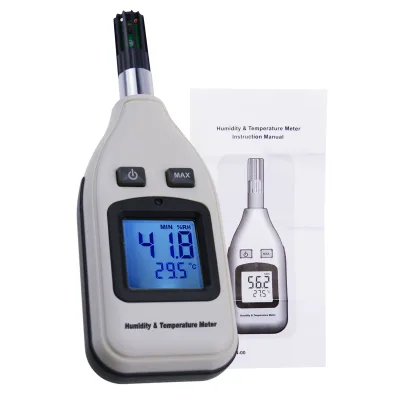
New Portable Indoor Thermometer Handheld Digital Temperature Humidity Meter Hy-8
$3.00 - $4.00
MOQ: 100 Pieces

Shenzhen Goldgood Instrument Limited
- Verified by SGS
- Manufacturer
- China Guangdong
- Lead time15 days
- Avg. response≤ 5h
Main productscrafting premium-grade instruments, including precision meat thermometers, hygrometer thermometers, environmental measurement tools
Main marketsEurope,North America


Indoor Digital LCD Thermometer Hygrometer Humidity Temperature Meter Thermo Hygrometer
$5.03 - $6.30
MOQ: 200 Pieces

High Accuracy Indoor Temperature and Humidity Meter Digital Thermo-Hygrometer
$5.03 - $6.30
MOQ: 200 Pieces

Accurate Digital Hygrometer Indoor Thermometer Humidity Gauge Indicator Room Thermometer
$4.70 - $5.20
MOQ: 200 Pieces


Xi'an Lonn M&E Equipment Co., Ltd.
- Verified by TUVRHEINLAND
- Combined
- China Shaanxi
- Lead time30 days
- Avg. response≤ 4h
Main productsClamp Meter, Laser Distance Meter, Coating Thickness Gauge, Gas Analyzer, Mass Flowmeter, Digital Food Thermometer, Hygrometer Thermometer, Wireless Bluetooth Thermometer, Weather Station, pH Meter
Main marketsEurope,North America


Temperature Humidity Monitor Meter for Home with Time Display Thermometer Digital Indoor Hygrometer
$2.50 - $3.50
MOQ: 500 Pieces


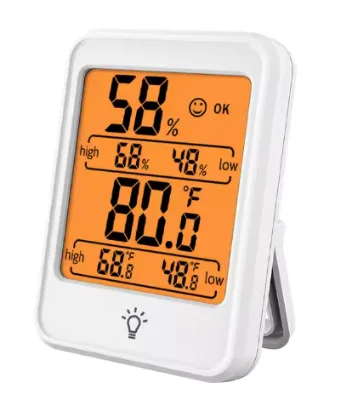
Digital Hygrometer Indoor Thermometer Room Hygrometer Humidity Meter with Comfort Indicator
$3.35 - $4.76
MOQ: 1000 Pieces

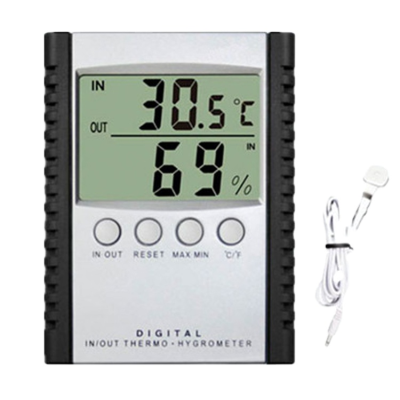
Indoor Room Digital Thermometer Hygrometer Meter for Temperature and Humidity
$1.60 - $2.70
MOQ: 100 Pieces


TZONE DIGITAL TECHNOLOGY CO., LTD.
- Combined
- China Guangdong
- Lead time23 days
- Avg. response≤ 4h
Main productsGPS Tracker, GPS, Tracking Software
Main marketsSouth America,Africa,Southeast Asia/ Mideast,East Asia(Japan/ South Korea),Europe,Australia,North America


$42.00 - $45.00
MOQ: 1 Pieces


- Verified by TUVRHEINLAND
- Trading Company,Manufacturer/Factory
- China Hunan
- Lead time38 days
- Avg. response≤ 12h
Main productsMicrocope Centrifuge Water Bath Heating Mantel, Shaker Stirrer Incubator and Oven Freezer Aas, Autoclave &Sterilizer Water Distiller pH Meter, Spectrophotometer Viscometer Balance&Scale HPLC, Lab Glassware; Electrophoresis Suction Machine, ECG Thermometer Ultrasound Scanner, Operating Table Lamp Bed Wheel Chair, Infusion Oxygen Concentrator Cylinder, X-ray Machine Hematology Analyzer, Human Models Medical Disposable
Main marketsSouth America,Eastern Europe,Mid East,North America,Southeast Asia,Eastern Asia,Oceania,Western Europe,Africa

Digital Indoor Hygrometer Hydrometer Temperature Thermometer Humidity Meter Thermohygrometer
$2.00 - $3.00
MOQ: 50 Pieces


$2.00 - $4.00
MOQ: 50 Pieces
- Verified by TüVRheinland
- Trading Company
- Lead time25 days
- Avg. response≤ 3h
Main productsCentrifuge, Microscope, Autoclave, Incubator, Spectrophotometer
Main marketsAfrica(50%), North America(20%), South America(20%)

Shenzhen Yowexa Measurement Technology Co., Ltd.
- Verified by SGS
- Manufacturer/Factory
- China Guangdong
- Lead time23 days
- Avg. response≤ 12h
Main productsCoating Thickness Gauge, Data Logger, Temperature Humidity Monitor, Air Quality Monitor, Thermometer, Yw Meter
Main marketsSouth America,Eastern Europe,North America,Southeast Asia

Indoor Temperature Humidity Meter Room LCD Electronic Digital Thermometer Hygrometer
$63.60 - $84.80
MOQ: 1 Pieces

Yem-40c Indoor Room Digital Thermometer Hygrometer with Temperature Humidity CO2 Monitoring
$62.40 - $83.20
MOQ: 1 Pieces


Digital Large LCD Hygrometer Thermometer Indoor Humidity Temperature Meter
$33.10 - $42.40
MOQ: 1 Pieces

$42.60 - $56.80
MOQ: 1 Pieces

Indoor Multifunctional CO2 Sensor Digital Thermometer Hygrometer with Over-Limit Alarm
$71.30 - $91.20
MOQ: 1 Pieces
Shenzhen Kerui Smart Technology Co., Ltd.
- Manufacturer, Trading Company
- Guangdong, China
- Lead time15 days
- Avg. response≤ 4h
Main productsAlarm System,Doorbell,Detector,Chime,Door Alarm
Main marketsDomestic Market(38.00%), North America(38.00%), Eastern Europe(12.00%), Western Europe(12.00%)

Dongguan Manjianghong Electronics Co., Ltd.
- Manufacturer, Trading Company
- Guangdong, China
- Lead time15 days
- Avg. response≤ 2h
Main productsCLOCK,thermometer,Smart socket,Weather clock,Food thermometer
Main marketsWestern Europe(17.00%), North America(17.00%), Northern Europe(17.00%), Eastern Europe(14.00%), Central America(14.00%), South America(13.00%), Mid East(4.00%), Southern Europe(4.00%)

Shenzhen Toprie Electronics Co., Ltd.
- Verified by SGS
- Manufacturer
- China Guangdong
- Lead time15 days
- Avg. response≤ 4h
Main productsPressure Sensor, Power Meter, Sensor, Temperature Sensor, Level Transmitter, Paperless Recorder, Iiot Gateway, Data Logger, Data Acquisition Module, Liquid Level Sensor
Main marketsEurope,North America
Shanghai Total Industrial Co., Ltd.
- Verified by SGS
- Manufacturer/Factory
- China Shanghai
- Lead time0 days
- Avg. response≤ 24h
Main productsFeeder Clamp, Weather Shield Enclosure, Rubber Grommet, Hoisting Grip, Cable Entry, Flexible Jumper Cable, Cablen Ties, Terminal Lugs, Conduit and Fittings, Hole Saw
- Trading Company
- Hong Kong S.A.R.
- Lead time5 days
- Avg. response≤ 6h
Main productsAir Quality Monitor,Thermometer,Water Quality Meter,Gem Tester,Measuring Instruments
Main marketsSouth Asia(10.00%), Northern Europe(10.00%), Central America(10.00%), Western Europe(10.00%), Eastern Asia(10.00%), Mid East(10.00%), Southeast Asia(10.00%), Eastern Europe(10.00%), South America(10.00%), North America(10.00%)
Shenzhen Oway Technology Co., Ltd.
- Verified by TüVRheinland
- Trading Company
- Lead time30 days
- Avg. response≤ 2h
Main productsThermometer, Digital Scale, Water Quality Tester, Timer
Main marketsWestern Europe(24%), South America(11%), Oceania(11%)
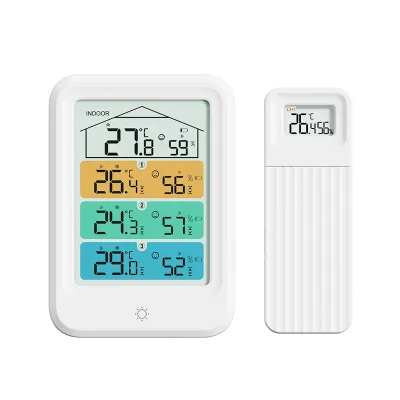
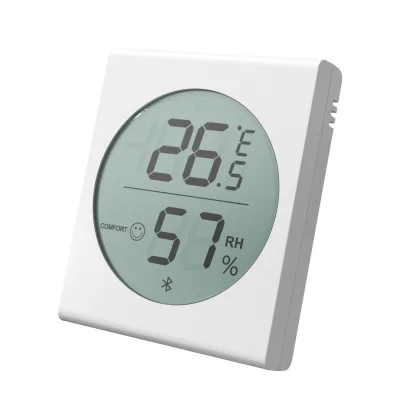
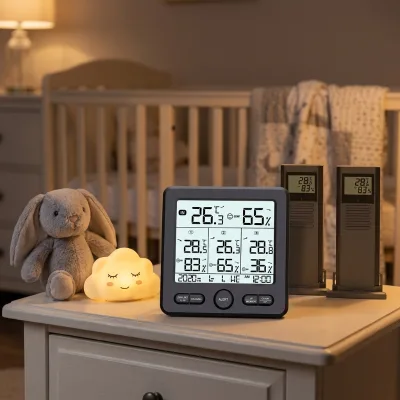
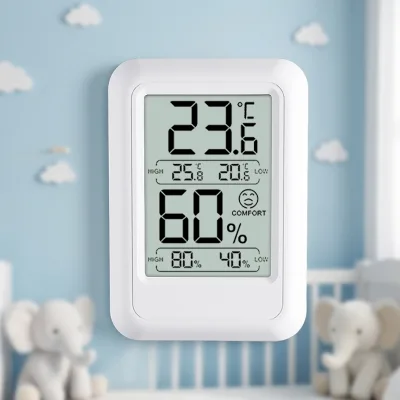


Comprehensive Sourcing Guide
Indoor Thermohygrometer with Data Lock Supplier Concentration and Factory Types
The available data indicates a concentration of suppliers operating from China Guangdong, a region known for its dense electronics manufacturing ecosystem. This location serves as a primary hub for producing digital instruments, including the specific indoor thermohygrometers with data lock capabilities. Buyers observing this geographic clustering should recognize that Guangdong-based entities often integrate component sourcing with final assembly, which can streamline the supply chain for precision measurement tools. However, the specific nature of these entities varies significantly between trading companies and manufacturers. Some listed profiles identify as trading companies, acting as intermediaries that aggregate products from various factories, while others claim direct manufacturing capabilities with in-house research and development.
Distinguishing between these company types is critical for understanding the supply chain structure. Trading companies may offer a broader portfolio of testing instruments, such as anemometers and vibration meters, alongside thermohygrometers, whereas manufacturers often focus on specific production lines like the ODM and OEM capabilities noted in the data. The presence of both types in the results suggests that buyers must verify the actual production source. While some suppliers list certifications like ISO9001:2015 and ISO14001:2015, which are typical for established manufacturers, others rely on third-party verification services like SGS. Buyers should not assume that a trading company listing a specific model number implies direct factory ownership, nor should they assume a manufacturer lacks the flexibility to handle custom branding requests.
How to Verify Indoor Thermohygrometer with Data Lock Suppliers
Verification of supplier credentials requires a rigorous examination of the provided data points, particularly regarding company type and external certifications. The data shows that some suppliers hold SGS verification status, which serves as a third-party validation of their business legitimacy. Additionally, specific manufacturers list system certifications such as ISO9001:2015 and ISO14001:2015, indicating adherence to quality and environmental management standards. Buyers must cross-reference these claims by requesting physical copies of the certificates and verifying their validity through the issuing bodies. It is essential to confirm that the certification applies to the specific facility producing the thermohygrometers, as corporate-level certifications do not always guarantee factory-level compliance for every product line.
Beyond certifications, the response time and product evidence provide tangible metrics for assessing supplier reliability. The observed response times vary, with some suppliers showing a response time of approximately 4.12 hours, while others report around 10.62 hours. A faster response time often correlates with a more active sales team and better communication channels, which is vital for resolving technical queries about data lock features. Furthermore, buyers should scrutinize the product attributes listed, such as the specific model numbers like HY-6 or DT-89, and the detailed specifications regarding temperature ranges and humidity accuracy. Ensuring that the product evidence matches the buyer's technical requirements, such as the ability to display data in Celsius or Fahrenheit, is a fundamental step in verifying that the supplier can deliver the exact instrument needed.
What to Compare Across Indoor Thermohygrometer with Data Lock Suppliers
When evaluating multiple suppliers, the primary comparison points should include lead times, minimum order quantities, and pricing structures. The data reveals a lead time of 15 days for certain suppliers, which serves as a benchmark for production scheduling. Buyers must compare this against their own inventory needs and delivery deadlines. Minimum order quantities also vary significantly, with some listings indicating an MOQ of 100 units, while others require 200 or even 500 units. This variation directly impacts the initial capital outlay and inventory risk. A supplier with a lower MOQ might be preferable for testing the market, whereas a higher MOQ could offer better economies of scale for large-scale distribution.
Pricing and customization options form another critical layer of comparison. The observed price ranges for similar digital thermohygrometers span from approximately $3.00 to $6.30 per unit, depending on the model and specifications. Buyers should analyze whether the lower price points correspond to standard models or if they include specific features like data locking and high-accuracy sensors. Additionally, the availability of customization, such as OEM branding or specific packaging requirements, should be verified. Some suppliers explicitly state that customization is available, while others may have rigid product standards. Comparing the total cost of ownership, including shipping and potential tariffs, alongside the unit price, will provide a clearer picture of the financial viability of each supplier option.
Common Indoor Thermohygrometer with Data Lock Sourcing Risks
One significant risk involves the discrepancy between claimed capabilities and actual product specifications. The data shows various models with different temperature ranges, such as -10°C to 50°C or -20°C to 70°C, and varying humidity accuracies. A buyer might assume all listed thermohygrometers share the same performance metrics, but the specific model number often dictates the actual capabilities. If a supplier promises a specific data lock feature or accuracy level without explicitly listing it in the product attributes, there is a risk of receiving a product that does not meet the intended application standards. This mismatch can lead to operational failures in environments where precise environmental monitoring is critical.
Another risk pertains to the reliability of the supply chain and the consistency of the product origin. While the data indicates a strong presence of suppliers from China Guangdong, the distinction between trading companies and manufacturers can introduce variability in quality control. Trading companies may source from different factories for different orders, leading to inconsistencies in build quality or component sourcing. Furthermore, the lack of explicit information regarding escrow services or specific payment protections in the provided facts means buyers must independently verify these terms. Without clear escrow arrangements, there is a financial risk if the supplier fails to deliver or if the goods do not match the agreed-upon specifications upon arrival.
Indoor Thermohygrometer with Data Lock Regional Sourcing and Logistics
The concentration of suppliers in China Guangdong offers logistical advantages due to the region's mature infrastructure for exporting electronic goods. This hub provides access to efficient ports and established freight forwarding networks, which can facilitate the timely shipment of instruments like digital thermohygrometers. Buyers sourcing from this region should anticipate standard transit times that align with the observed 15-day lead time, though actual shipping duration will depend on the destination country and the chosen freight method. Understanding the local logistics ecosystem allows buyers to better estimate the total time from order placement to delivery, ensuring that inventory replenishment cycles are not disrupted.
However, buyers must also consider the potential complexities of international shipping and customs clearance. While the data confirms the origin as China, it does not specify the specific port of loading or the packaging standards used for international transport. Some product attributes mention packaging types like blister packs or color boxes, but the outer carton specifications, such as the dimensions 530230290 mm, vary by model. These variations can affect shipping costs and the number of units that fit into a container. Buyers should verify the packaging details with the supplier to optimize container utilization and minimize freight expenses. Additionally, understanding the regional trade agreements and tariff structures applicable to Guangdong exports is essential for accurate cost forecasting.
Indoor Thermohygrometer with Data Lock Commercial Terms and Order Planning
Commercial terms regarding payment and order planning must be carefully aligned with the supplier's stated capabilities and the buyer's financial constraints. The data indicates that some suppliers require a minimum order quantity of 100 units, while others set the bar at 200 or 500 units. This threshold dictates the initial order volume and influences the unit price, as larger orders often secure lower price points within the observed ranges of $3.00 to $6.30. Buyers should plan their orders to meet these MOQs while balancing the need for product variety and the risk of overstocking. Negotiating flexible terms for the first order can help mitigate the risk of committing to a large volume before establishing a reliable supply relationship.
Response time and communication protocols are also vital components of commercial planning. The observed response times, ranging from roughly 4 hours to over 10 hours, indicate the level of responsiveness a buyer can expect. A supplier with a faster response time is better equipped to handle urgent inquiries, resolve technical issues, and provide updates on production status. Buyers should establish clear communication channels and set expectations for response times in their initial negotiations. Furthermore, verifying the availability of after-sales support and warranty terms is crucial. Since the data does not explicitly detail warranty periods, buyers must confirm these terms to ensure protection against defective units, especially given the precision nature of the instruments being sourced.
FAQs
What is the typical lead time for indoor thermohygrometers?
The typical lead time for these instruments is 15 days. This duration applies to standard orders from suppliers in China Guangdong. Buyers should confirm specific timelines based on their order volume and customization needs before finalizing purchases.
What are the minimum order quantities for these devices?
Minimum order quantities vary by supplier and model, ranging from 100 to 500 pieces. Some models require 200 units while others start at 100. Buyers must check the specific product listing to verify the exact MOQ required for their order.
Do suppliers offer customization for these thermohygrometers?
Yes, customization is available for many indoor thermohygrometer models. Suppliers provide options for branding and specific feature adjustments. Buyers should verify the extent of customization capabilities directly with the supplier to ensure their specific requirements can be met.
What certifications do these products typically hold?
Products often carry CE and ROHS certifications. Some suppliers also hold ISO9001:2015 and ISO14001:2015 system certifications. Buyers should request proof of these certifications to ensure the instruments meet required safety and quality standards for their market.
What is the price range for digital indoor thermohygrometers?
Prices generally range from 3.00 to 6.30 USD per unit. The final cost depends on the specific model, accuracy, and order quantity. Buyers should compare multiple listings to find the best price that fits their budget and quality expectations.
Where are these thermohygrometers manufactured?
These instruments are manufactured in China, specifically in the Guangdong region. This location is a major hub for electronic component production. Buyers should verify the origin details on each product page to confirm the manufacturing location for their specific order.
How quickly do suppliers typically respond to inquiries?
Response times vary, with some suppliers replying within 4 hours and others taking up to 11 hours. Faster response times are often associated with verified suppliers. Buyers should expect a range of response speeds depending on the specific supplier selected.