Industrial Electrical Cable Ties Suppliers and Manufacturers
Compare 27 verified suppliers of Industrial Electrical Cable Ties based on location, lead times, certifications, and response times. Review product specifications like fire ratings and materials before contacting factories for quotes; review the available evidence before requesting comparable quotations from suitable candidates.
Updated
Suppliers List

Yueqing Xinxing Cable Accessories Co., Ltd.
- Verified by BV
- Manufacturer/Factory
- China Zhejiang
- Lead time15 days
- Avg. response≤ 15h
Main productsCable Tie, Stainless Steel Cable Tie, Metal Zip Tie, Stainless Steel Barb Lock Cable Tie, Metal Cable Tie, Cable Marker, Stainless Steel Fastening Tools, Stainless Steel Bands, Polyester Coated Stainless Steel Cable Tie, Full Coated Coated Tie
Main marketsSouth America,Eastern Europe,Mid East,North America,Southeast Asia,Eastern Asia,Oceania,Western Europe,Africa

Zhejiang Deyan Electric Co., Ltd
- Verified by SGS
- Combined
- China Zhejiang
- Lead time30 days
- Avg. response≤ 4h
Main marketsDomestic

Yueqing Lianshun Electric Co. Ltd
- Verified by TUVRHEINLAND
- Combined
- China Zhejiang
- Lead time15 days
- Avg. response≤ 12h
Main productsTerminal, Connector, Electrical Terminal, Cable, Solar Connector
Main marketsDomestic
Zhejiang Chengcheng Plastic Co., Ltd.
- Verified by TüVRheinland
- Manufacturer, Trading Company
- Lead time10 days
- Avg. response≤ 1h
Main productsNylon Cable Ties, Wire Tubes, Stainless Steel Cable Ties, Steel Nail Clips, Nylon Clips
Main marketsNorth America(20%), Domestic Market(20%), South America(10%)

Suzhou Pinzhixin Technology Co., Ltd.
- Trading Company
- China Jiangsu
- Lead time0 days

Changhong Plastics Group Imperial Plastics Co., Ltd.
- Verified by TUVRHEINLAND
- Combined
- China Zhejiang
- Lead time30 days
- Avg. response≤ 6h
Main productsCable Tie, Cable Clip, Terminal, Tie Mounts, Cable Tie Holders, Wiring Ducts, Wire Connectors, Terminal Blocks, Cable Glands, Spiral Wrapping Bands
Main marketsEurope
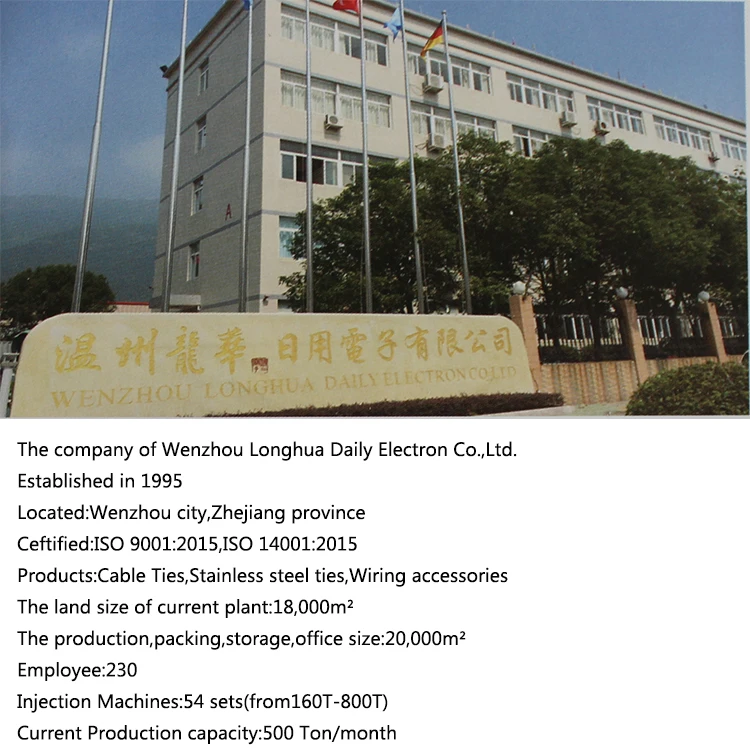
Wenzhou Longhua Daily Electron Co., Ltd.
- Manufacturer, Trading Company
- Zhejiang, China
- Lead time30 days
- Avg. response≤ 11h
Main productsnylon Cable ties,stainless cable ties,plastic jerry can,expand nail,magic ties
Main marketsNorth America(32.00%), Western Europe(26.50%), Eastern Europe(9.20%), South America(6.00%), Mid East(5.50%), Southern Europe(5.00%), Eastern Asia(4.00%), Domestic Market(4.00%), Southeast Asia(2.80%), Northern Europe(2.00%), South Asia(1.20%), Africa(1.10%), Central America(0.50%), Oceania(0.20%)
Dongguan Boling Plastics Products Co., Ltd.
- Manufacturer, Trading Company
- Guangdong, China
- Lead time15 days
- Avg. response≤ 6h
Main productsNylon Cable Tie,Cable Clip,Cable Clamp,Trapezoidal Cable Tie
Main marketsDomestic Market(30.00%), Southeast Asia(8.00%), Eastern Europe(8.00%), North America(7.00%), Mid East(5.00%), South America(5.00%), Eastern Asia(5.00%), Western Europe(5.00%), Central America(5.00%), Northern Europe(5.00%), Southern Europe(5.00%), South Asia(5.00%), Oceania(4.00%), Africa(3.00%)
Anhui Angke New Materials Co., Ltd.
- Verified by TüVRheinland
- Manufacturer, Trading Company
- Lead time45 days
- Avg. response≤ 5h
Main productsNylon Cable Ties
Main marketsNorth America(20%), Southeast Asia(20%), Mid East(15%)
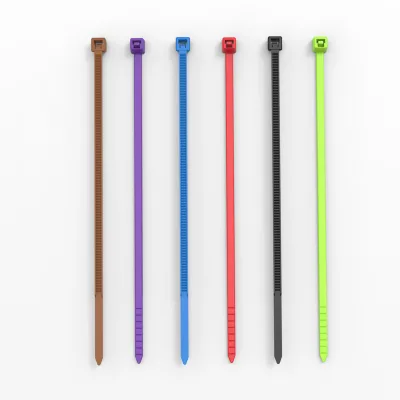
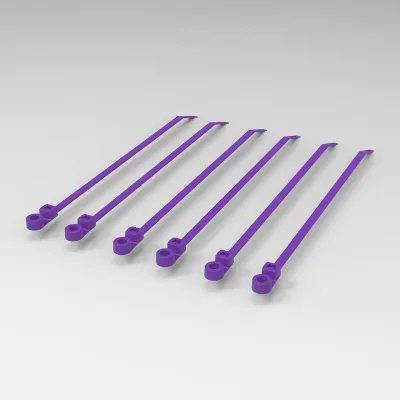
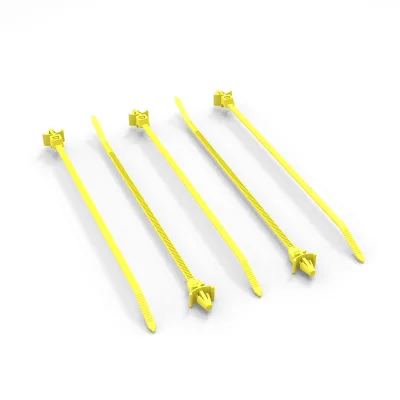
$1.3434 - $1.5499
MOQ: 1 bags
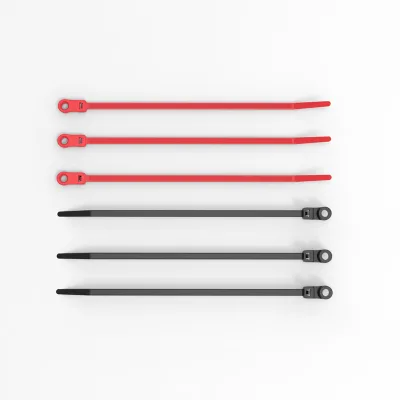
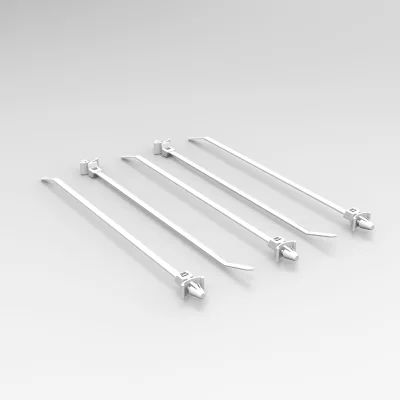
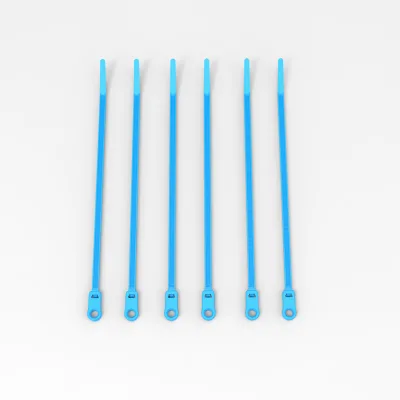
Yueqing Yage Precision Plastic Co., Ltd.
- Manufacturer, Trading Company
- Zhejiang, China
- Lead time15 days
- Avg. response≤ 2h
Main productscable ties,distribution box
Main marketsDomestic Market(50.00%), Mid East(10.00%), Southeast Asia(10.00%), Northern Europe(5.00%), South Asia(5.00%), North America(5.00%), Africa(5.00%), Western Europe(4.00%), Eastern Asia(4.00%), Southern Europe(2.00%)

Zhejiang Qianqian Electric Co., Ltd.
- Manufacturer
- Zhejiang, China
- Lead time30 days
- Avg. response≤ 1h
Main productsautomotive cable ties,air conditioning cable tie,car zip tie,car wire clips,car cable clamp
Main marketsDomestic Market(30.00%), North America(15.00%), Western Europe(15.00%), Oceania(10.00%), Southern Europe(5.00%), Central America(5.00%), Mid East(5.00%), South Asia(5.00%), Africa(5.00%), South America(3.00%), Eastern Europe(2.00%)

Yueqing Haitai Plastics Manufacture Co., Ltd.
- Manufacturer
- China Zhejiang
- Lead time30 days
- Avg. response≤ 19h
Main productsCable Tie / Cable Tie Mount
Main marketsSouth America,Southeast Asia/ Mideast,East Asia(Japan/ South Korea),Domestic,Europe,North America

Zhejiang Jiuhong Electric Co., Ltd.
- Manufacturer, Trading Company
- Zhejiang, China
- Lead time15 days
- Avg. response≤ 5h
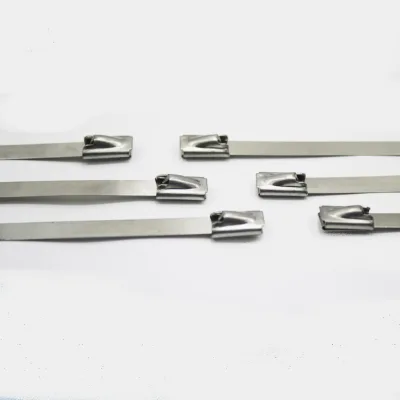
Main productsStainless Steel Cable Tie, Cable Tie, PVC Coated Stainless Steel Cable Tie, Stainless Steel Epoxy Coated Cable Tie, Stainless Steel Cable Tie Tool
Main marketsDomestic Market(30.00%), Oceania(20.00%), Southeast Asia(20.00%), North America(10.00%), Western Europe(10.00%), Northern Europe(10.00%)
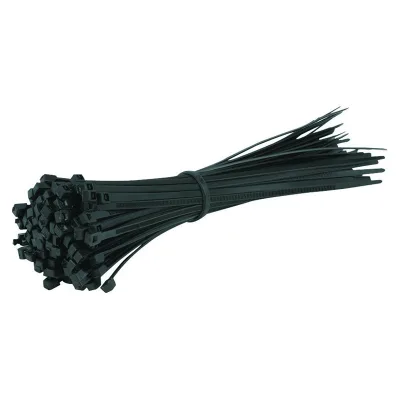
Extra Long 4.8mmx350m Black Plastic Cable Ties Zip Ties for Efficient Organization
$0.58 - $0.67
MOQ: 1000 bags

Zhejiang Jiuhong Electric Co., Ltd.
- Verified by BV
- Combined
- China Zhejiang
- Lead time15 days
- Avg. response≤ 6h
Main productsStainless Steel Cable Ties, PVC Coated Stainless Steel Ties, Stainless Steel Strapping Band, Cable Glands, Nylon Cable Ties, Cable Clips, Cable Marking, Wiring Duct, Stainless Steel Buckles, Flexible Metal Conduit
Main marketsSouth America,Africa,Southeast Asia/ Mideast,East Asia(Japan/ South Korea),Domestic,Europe,Australia,North America
Shenzhen Xichuan New Materials Co., Ltd.
- Trading Company
- Guangdong, China
- Lead time10 days
- Avg. response≤ 5h
Main productsCable Tie, Cable Ties Mount, Cable Clip, Cable Duct, Cable Joint
Main marketsCentral America(30.00%), North America(30.00%), Northern Europe(20.00%), South Asia(10.00%), Eastern Europe(10.00%)

Wenzhou Mogen Electric Co., Ltd.
- Verified by TUVRHEINLAND
- Combined
- China Zhejiang
- Lead time15 days
- Avg. response≤ 3h
Main productsTerminal Block, Terminals, Insulated Terminals, Cable Ties, Cable Lug, Terminal Ends, Connectors, Wire Joints, Power Fitting, Nylon Cable Ties
Main marketsSoutheast Asia/ Mideast
Yueqing Xinghua Ge Plastic Co., Ltd.
- Manufacturer, Trading Company
- Zhejiang Province, China
- Lead time0 days
- Avg. response≤ 1h
Main productsinjection moiolding machine,Injection molding auxiliary equiepment,stainless steel cable tie,cable tie,raw material
Main marketsSoutheast Asia(23.00%), Eastern Asia(19.00%), South America(17.00%), North America(15.00%), Eastern Europe(12.00%), Western Europe(7.00%), Mid East(4.00%), South Asia(3.00%)

- Manufacturer/Factory,Group Corporation,Other
- China Zhejiang
- Lead time0 days
- Avg. response≤ 25h
Main productsDropout Fuse, Insulators, Poleline Hardwares, Arrester, LV Fuses, Distribution Box, Plugs&Sockets, Disconnector Switches, Junction Boxes, Fuse Links
Main marketsSouth America,Eastern Europe,Mid East,North America,Southeast Asia,Eastern Asia,Oceania,Western Europe,Africa
Zhejiang Niuli Electric Co., Ltd.
- Manufacturer, Trading Company
- Lead time旺季: "1 - 200000":5,"> 200000":"To be negotiated", 淡季: "1 - 200000":5,"> 200000":"To be negotiated"
- Avg. response≤ 2h
Main productsCable Tie; Cable Sleeve; Cable Clips; Soldering Wires; Cable Gland
Zhejiang Hantu Electric Co., Ltd.
- Manufacturer, Trading Company
- Zhejiang, China
- Lead time20 days
- Avg. response≤ 3h
Main productsSMART MCB/RCBO/AFDD,Smart Power Distribution Box,SMART SWITCH,AFDD Demonstration Device,RC Demonstration Device
Main marketsDomestic Market(30.00%), Eastern Asia(20.00%), Southeast Asia(15.00%), Mid East(10.00%), Central America(5.00%), Western Europe(5.00%), Eastern Europe(5.00%), Africa(5.00%), South America(2.00%), Southern Europe(2.00%), South Asia(1.00%)
Anhui Yushun Plastic Co., Ltd.
- Manufacturer, Trading Company
- Anhui, China
- Lead time15 days
- Avg. response≤ 1h
Main productsnylon cable tie,nylon cable clips,car nylon cable tie,Self Locking Stainless Steel Cable Tie,Flame Retardent Fireproof Nylon Cable Tie
Main marketsSouth America(14.00%), North America(14.00%), Central America(10.00%), Western Europe(10.00%), Southern Europe(10.00%), Northern Europe(10.00%), Eastern Europe(10.00%), Mid East(6.00%), Oceania(5.00%), Domestic Market(3.00%), Eastern Asia(2.00%), South Asia(2.00%), Africa(2.00%), Southeast Asia(2.00%)

Hangzhou Gordon Electric Co., Ltd.
- Trading Company
- Zhejiang, China
- Lead time10 days
- Avg. response≤ 7h
Main productscable ties,cable glands,corrugated pipe,cable lugs,cable accessorics
Main marketsNorth America(37.00%), Mid East(20.00%), Southeast Asia(10.00%), South America(10.00%), Northern Europe(5.00%), Southern Europe(5.00%), Western Europe(5.00%), Eastern Europe(5.00%), South Asia(2.00%), Central America(1.00%)

Yueqing Reachee Electric Co., Ltd
- Trading Company
- China Zhejiang
- Lead time0 days
- Avg. response≤ 2h
Main productsDC Box, DC Fuse, AC Voltage Regulator, Solid State Relay, Fuse Clips, Copper Braided Wire, Copper Busbar, Disconnector, Load Break Switch, Stainless Steel Cable Ties

Wenzhou Zhechi Electric Co., Ltd.
- Trading Company,Manufacturer/Factory
- China Zhejiang
- Lead time23 days
- Avg. response≤ 15h
Main productsCable Gland, Cable Tie, Terminal Block, Termian, Power Cabinet, Smart Switch, Pedal Switch, Waterproof Box
Main marketsSouth America,North America,Oceania,Western Europe

Zhejiang Caneasy Plastic Co., Ltd.
- Verified by SGS
- Combined
- China Zhejiang
- Lead time30 days
- Avg. response≤ 3h
Main productsNylon Cable Ties, Stainless Steel Cable Tie, Cable Clip, Expand Plugs, Tie Mounts, Cable Markers Strips, Cable Markers, Spiral Wrapping Bands, Wire Connectors, Cord Bushing
Main marketsEurope,North America
- Verified by TüVRheinland
- Manufacturer, Trading Company
- Lead time30 days
- Avg. response≤ 1h
Main productsNylon Cable Tie, Stainless Steel Tie, Cable Clip
Main marketsWestern Europe(18%), South America(15%), Mid East(10%)
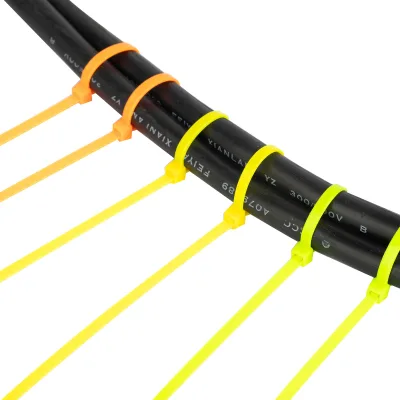
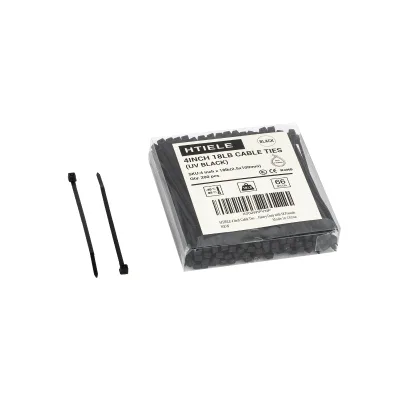
4.8*300 Best Price Releasable and Reusable Nylon Cable Ties,Plastic Tie Straps,Plastic Wire Tie
$0.80 - $0.99
MOQ: 1000 bags
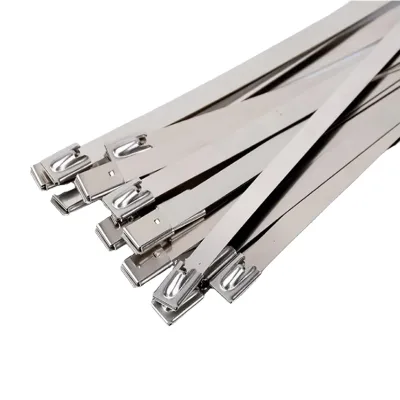
High Performance 2022 Top Quality Cable Tie for Automobile,self -ocking Lock Nylon 66 Cable Tie
$0.30 - $0.41
MOQ: 1000 bags
Anhui Xutai Electrical Co., Ltd.
- Verified by TüVRheinland
- Manufacturer, Trading Company
- Lead time20 days
- Avg. response≤ 4h
Main productsCable Ties, Cable Sleeves, Stainless Steel Cable, Tiles Leveling Systems
Main marketsDomestic Market(45%), Central America(25%), North America(10%)


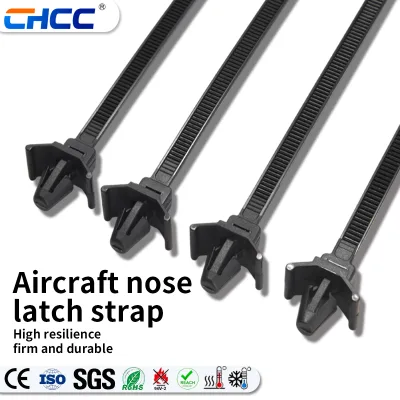
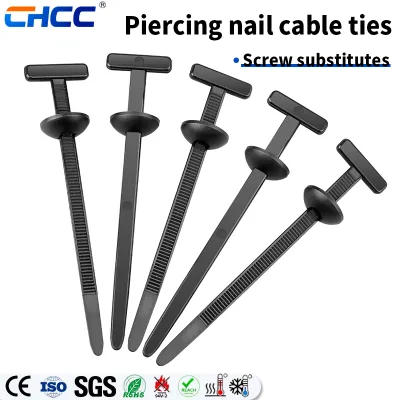


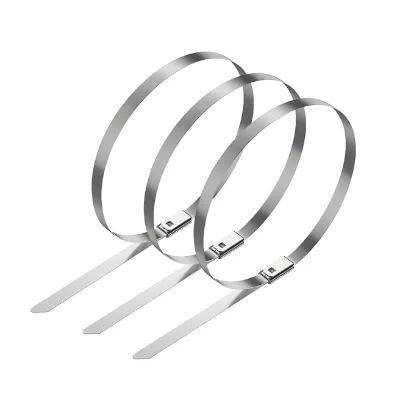
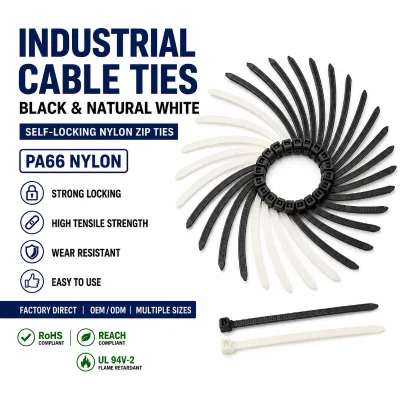
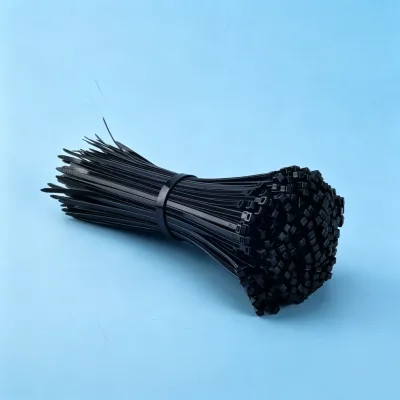

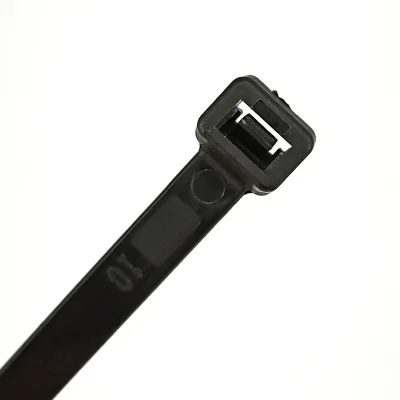










Comprehensive Sourcing Guide
Industrial Electrical Cable Ties Supplier Concentration and Factory Types
The Industrial Electrical Cable Ties market features a diverse mix of manufacturing entities, ranging from specialized factories to combined trading operations. Current data indicates that suppliers are concentrated in specific manufacturing hubs, with Zhejiang, China, emerging as a notable location for production facilities. This geographic clustering suggests a mature supply chain ecosystem where raw materials, such as stainless steel and nylon, are readily accessible, allowing for efficient production workflows. Buyers evaluating this sector should recognize that the presence of a factory in Zhejiang often correlates with established infrastructure for both metal and polymer processing, which is critical for producing high-quality cable ties that meet rigorous industrial standards. Understanding this concentration helps in assessing the logistical feasibility of sourcing from this region, as it implies a higher density of potential partners and potentially faster access to sample materials for quality verification.
Supplier types vary significantly, influencing the nature of the engagement and the flexibility of the supply chain. The observed results include pure manufacturers and factories, which typically offer direct control over production processes and quality assurance. These entities often provide OEM and ODM services, allowing buyers to customize products with their own branding or specific technical requirements. Additionally, there are combined entities that operate as both manufacturers and trading companies, offering a broader range of products beyond just cable ties, such as terminals, connectors, and solar connectors. This hybrid model can be advantageous for buyers seeking a one-stop solution for multiple wiring accessories, as it simplifies procurement logistics. However, it is essential to distinguish between these types to understand who holds the actual manufacturing capability and who acts as an intermediary, as this distinction impacts pricing structures, communication efficiency, and the ability to resolve production-related issues directly.
How to Verify Industrial Electrical Cable Ties Suppliers
Verification is a critical step in ensuring the reliability and legitimacy of Industrial Electrical Cable Ties suppliers. Buyers should prioritize suppliers who have undergone third-party verification processes, as these provide an independent assessment of the company’s operational capabilities and business legitimacy. In the current market, various verification badges are available, including BV, SGS, and TÜV Rheinland. These certifications indicate that the supplier has met specific criteria regarding their business operations, factory conditions, and product quality management systems. For instance, a supplier verified by SGS or TÜV Rheinland suggests a higher level of scrutiny and adherence to international standards, which can reduce the risk of engaging with fraudulent or substandard manufacturers. Buyers should actively look for these verification marks on supplier profiles and understand that while verification is a strong positive indicator, it should be complemented with other due diligence measures to form a complete picture of the supplier’s reliability.
Beyond verification badges, system certifications are crucial for assessing a supplier’s commitment to quality and environmental standards. Many industrial cable tie manufacturers hold ISO 9001 or ISO 9000 certifications, which demonstrate their adherence to quality management principles. Some suppliers may also possess ISO 14001:2015 certificates, indicating their focus on environmental management, which is increasingly important for global supply chains. Additionally, product-specific certifications such as CE, RoHS, CCC, and SGS are often listed in product attributes, signaling compliance with regional safety and environmental regulations. Buyers should carefully review these certifications to ensure they align with their target market’s requirements. It is also important to note that some suppliers may list multiple certifications, so verifying the validity and scope of each certificate through the issuing body is recommended. This thorough verification process helps mitigate risks associated with non-compliant products and ensures that the supplier can consistently deliver goods that meet international quality benchmarks.
What to Compare Across Industrial Electrical Cable Ties Suppliers
When evaluating multiple suppliers for Industrial Electrical Cable Ties, several key dimensions must be compared to identify the most suitable partner. One of the primary factors is the supplier’s response time, which indicates their efficiency in communication and problem-solving. Data shows that response times can vary significantly, with some suppliers responding within a few hours, while others may take longer. A faster response time is often indicative of a more responsive and customer-centric organization, which can be crucial for resolving urgent issues or negotiating terms. Additionally, lead times are a critical metric for planning production schedules and inventory management. Suppliers may offer different lead times, ranging from as short as 15 days to 30 days or more, depending on the complexity of the order and current production capacity. Buyers should compare these lead times against their project deadlines to ensure timely delivery and avoid production delays.
Another important aspect to compare is the Minimum Order Quantity (MOQ) and pricing structure. MOQs can vary widely, with some suppliers requiring as few as 10 units for certain products, while others may have MOQs of 100 or 1000 units. This variation allows buyers with different volume requirements to find suppliers that match their scale. Pricing is also a key differentiator, with costs ranging from as low as $0.02 to over $0.86 per unit, depending on the material, size, and customization options. Buyers should analyze the price-to-value ratio, considering factors such as material quality, certification status, and service level. Furthermore, the range of main products offered by each supplier should be evaluated. Some suppliers specialize exclusively in cable ties, while others offer a broader portfolio including terminals, connectors, and other wiring accessories. This breadth of product offering can influence the buyer’s decision, especially if they are looking for a consolidated supplier for multiple components. Comparing these dimensions holistically helps in selecting a supplier that aligns with both technical and commercial requirements.
Common Industrial Electrical Cable Ties Sourcing Risks
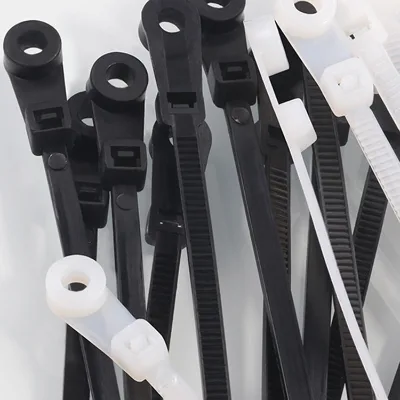
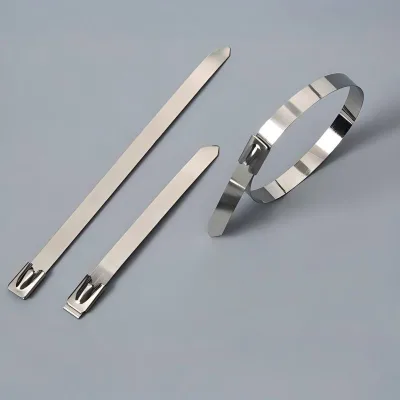
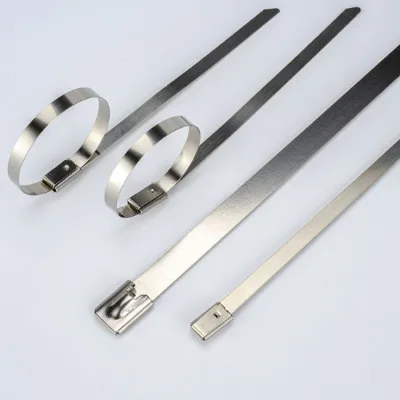
Sourcing Industrial Electrical Cable Ties involves several potential risks that buyers must be aware of and mitigate. One significant risk is the variability in product quality and material composition. Cable ties can be made from various materials, including stainless steel, nylon, and polyester-coated stainless steel, each with different properties and applications. Buyers must ensure that the specified material matches their operational requirements, such as temperature resistance, UV stability, and corrosion resistance. For instance, nylon cable ties may have an operating temperature range of -30°C to 80°C, while stainless steel options offer higher strength and durability. Misalignment between the specified material and the actual product delivered can lead to premature failure and safety hazards. Therefore, it is essential to verify material specifications through product attributes and, if necessary, request samples for testing before placing large orders.
Another risk is the discrepancy between advertised certifications and actual compliance. While suppliers may list certifications such as CE, RoHS, or ISO 9001, buyers should verify the authenticity and scope of these certifications. Some suppliers might claim certifications that are not applicable to the specific product or may have expired. Additionally, there is a risk related to customization capabilities. While many suppliers offer OEM and ODM services, the quality of customization can vary. Buyers should assess the supplier’s ability to handle custom labels, packaging, and specific product dimensions. Inadequate customization can lead to branding issues or logistical challenges. Furthermore, the risk of supply chain disruptions cannot be ignored. Factors such as raw material shortages, production bottlenecks, or logistical delays can impact lead times. Buyers should maintain open communication with suppliers and have contingency plans in place to mitigate these risks, ensuring a stable and reliable supply of Industrial Electrical Cable Ties.
Industrial Electrical Cable Ties Regional Sourcing and Logistics
Regional sourcing plays a pivotal role in the logistics and cost structure of Industrial Electrical Cable Ties. As noted, a significant concentration of suppliers is located in Zhejiang, China, a region known for its robust manufacturing infrastructure. Sourcing from this region can offer advantages in terms of cost efficiency and production capacity, given the established supply chains for raw materials like stainless steel and nylon. However, buyers must also consider the logistical implications of sourcing from this location. Shipping times, customs clearance procedures, and import duties can impact the overall cost and delivery timeline. Understanding the specific logistics requirements for importing from Zhejiang is essential for accurate cost estimation and planning. Buyers should work with freight forwarders who have experience in handling goods from this region to ensure smooth transportation and compliance with international trade regulations.
In addition to Zhejiang, buyers may encounter suppliers from other regions, each with its own logistical profile. The diversity of supplier locations means that buyers have the flexibility to choose based on their specific logistical needs and preferences. For example, sourcing from a supplier closer to the buyer’s location can reduce shipping times and costs, while sourcing from a major manufacturing hub like Zhejiang may offer better pricing and a wider selection of products. Buyers should evaluate the trade-offs between cost, lead time, and logistical complexity when selecting a sourcing region. It is also important to consider the supplier’s experience in international shipping and their ability to handle documentation and compliance requirements. By carefully assessing the regional logistics landscape, buyers can optimize their supply chain, reduce risks, and ensure the timely delivery of Industrial Electrical Cable Ties to their operations.
Industrial Electrical Cable Ties Commercial Terms and Order Planning
Commercial terms and order planning are critical components of a successful sourcing strategy for Industrial Electrical Cable Ties. Buyers should carefully review the payment terms, delivery conditions, and warranty policies offered by suppliers. Common payment terms may include upfront deposits, letters of credit, or escrow services, each with its own risk profile and financial implications. Escrow services can provide an additional layer of security by holding funds until the buyer confirms receipt and quality of the goods. Delivery conditions, such as FOB, CIF, or DDP, determine who is responsible for shipping costs and risks during transit. Buyers should choose terms that align with their logistical capabilities and risk tolerance. Additionally, understanding the supplier’s warranty and return policies is essential for managing potential quality issues. Clear commercial terms help in avoiding disputes and ensuring a smooth transaction process.
Order planning involves determining the appropriate order quantities, frequency, and inventory management strategies. Based on the observed MOQs, which can range from 10 to 1000 units, buyers should align their order sizes with their consumption rates and storage capacity. For high-volume users, placing larger orders less frequently may be more cost-effective, while smaller, more frequent orders may be suitable for those with limited storage or variable demand. Buyers should also consider the supplier’s production capacity and lead times when planning orders. Suppliers with shorter lead times, such as 15 days, offer greater flexibility for just-in-time inventory management, while those with longer lead times, such as 30 days, require more advanced planning. By integrating commercial terms with effective order planning, buyers can optimize their supply chain, reduce costs, and ensure a consistent supply of Industrial Electrical Cable Ties to support their operations.
FAQs
What certifications do industrial cable ties have?
Manufacturers typically provide CE, ISO, RoHS, and SGS certifications for their products. Some suppliers also hold ISO 9001 or ISO 14001 system certifications. Verify specific product labels to ensure compliance with your regional safety and environmental standards before placing bulk orders.
What is the typical lead time for orders?
Production lead times generally range from 15 to 30 days depending on the supplier and order volume. Some factories offer faster turnaround for standard items, while custom OEM orders may require additional processing time. Confirm the exact schedule with the supplier before finalizing payment terms.
What is the minimum order quantity for ties?
Minimum order quantities vary significantly, often starting at 100 pieces for specific models or up to 1000 pieces for bulk industrial supplies. Some suppliers accept lower MOQs for premium or customized items. Check the specific product listing to determine the exact threshold for your required quantity.
What materials are used for these cable ties?
Common materials include nylon for standard electrical applications and stainless steel for high-strength or corrosive environments. Some products feature polyester coatings or metal-detectable properties. Select the material based on your specific temperature, UV, and chemical resistance requirements for the installation site.
How quickly do suppliers respond to inquiries?
Response times vary, with some suppliers replying within a few hours and others taking up to 15 hours. Faster response rates often indicate active sales teams ready to assist with technical specifications. Prompt communication helps clarify customization options and shipping details efficiently.
Can suppliers provide OEM or custom branding?
Many manufacturers offer OEM and ODM services, allowing for custom branding, packaging, and specific product dimensions. Customization options include unique colors, lengths, and locking mechanisms. Confirm availability and any additional costs for custom orders directly with the supplier to ensure your specific requirements are met.