Insulated Felt Wine Holder Bag Suppliers and Manufacturers
Source an Insulated Felt Wine Holder Bag from 29 listed suppliers by comparing location, lead time, MOQ, price range, certifications and customization support such as logo printing. Review supplier types and product specifications side by side, then shortlist and contact manufacturers directly to request samples and quotes.
Suppliers List

- Manufacturer/Factory
- China Fujian
- Lead time30 days
- Avg. response≤ 23h
Main productsBag, Polyester Bag, Promotion Gift, School Bag, Outdoor Backpack, Backpack, Rucksack, Laptop Bag, Yoga Bag, Sport Bag
Main marketsSouth America,Eastern Europe,Mid East,North America,Southeast Asia,Eastern Asia,Oceania,Western Europe,Africa

Xiamen Top Green Bags Co., Ltd.
- Verified by SGS
- Trading Company,Manufacturer/Factory
- China Fujian
- Lead time45 days
- Avg. response≤ 5h
Main productsCooler Bags, Sports Bags, Apron, Promotional Bag, Waist Bag, Shoulder Bag, Travel Bags, Cosmetic Bag, Laptop Bag, Pencil Bag
Main marketsSouth America,Eastern Europe,North America,Southeast Asia,Eastern Asia,Oceania,Western Europe,Africa


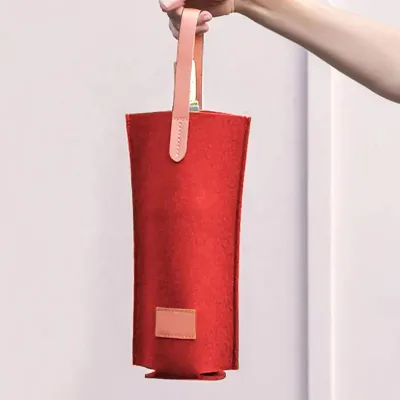
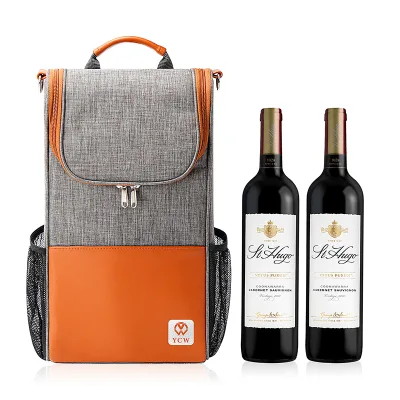
Fashionable Design Wine Bottle Cooler Holder Insulated Single Wine Tote Bag
$0.92 - $2.00
MOQ: 500 Pieces


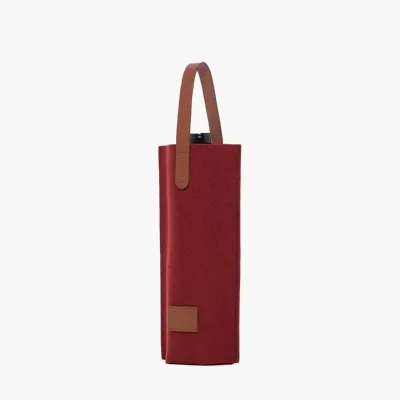
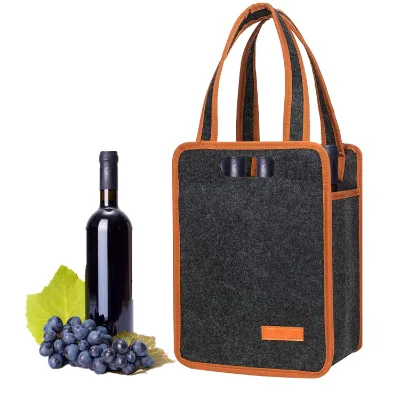
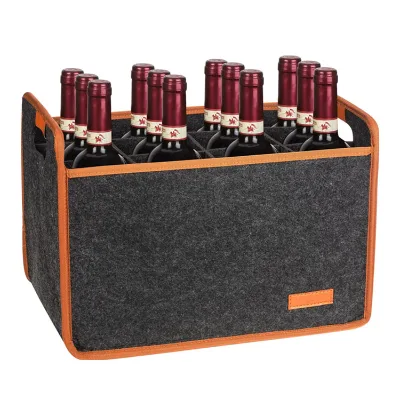
Customized Felt Fabric Wine Storage Bag High Quality Gift Wine Packing Bag
$0.95 - $1.35
MOQ: 500 Pieces

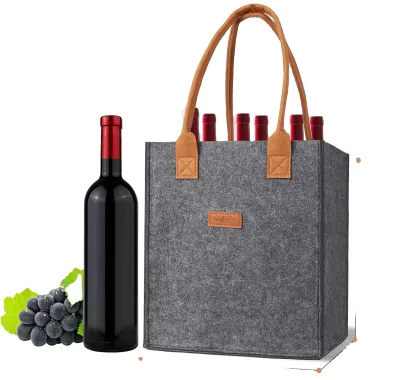
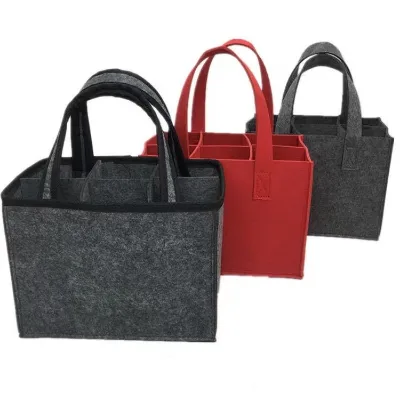
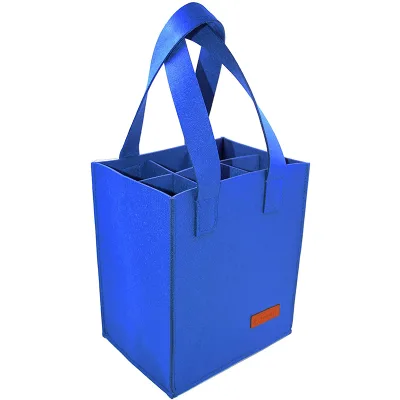
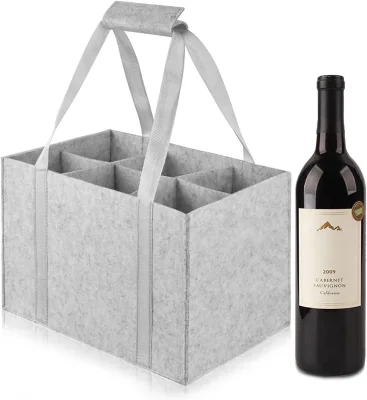
Felt Bag Wine Holder Beer Bottle Tote Bag Bottle Carrier with 6 Bottles Divider Washable Grey
$0.86 - $1.12
MOQ: 500 Pieces

Hebei Walutz Import and Export Trading Co., Ltd
- Verified by SGS
- Trading Company
- China Hebei
- Lead time15 days
- Avg. response≤ 1h
Main productsFelt Bags, Wool Dryer Balls, Felt Polishing Products, Felt Letter Board, Industrial Felt, Christmas Gifts, Felt Diaper Bags, Felt Storage Bags, Felt Organizer Bags, Household Felt
Main marketsSouth America

$1.50 - $2.20
MOQ: 500 Pieces

Portable Wine Gift Bag Wine Beer Storage Box Felt Wine Bottle Bag with Handle
$1.20 - $2.10
MOQ: 500 Pieces

Wholesale Felt Wine Bottle Bag Divided Wine Tote Bag High Quality Hanging Felt Tote Bag
$1.20 - $2.10
MOQ: 500 Pieces

High Quality Portable Felt Single Wine Bag Storage Basket Wine Gift Basket Wine Bottle Divider Bag
$0.50 - $1.20
MOQ: 500 Pieces

Reusable Felt Bag Wine Holder Beer Bottle Shopping Tote Bag Bottle Carrier with 9 Bottles
$1.20 - $2.10
MOQ: 500 Pieces

$0.50 - $1.20
MOQ: 500 Pieces

XinMao Packaging Products Dongguan Co., Ltd.
- Verified by SGS
- Manufacturer
- China Guangdong
- Lead time15 days
- Avg. response≤ 9h
Main productsNeoprene Bag, Laptop Sleeve, Bottle / Can Cooler, Phone / Camera Bag, Ice / Lunch Bag, Key Chain / Glasses Holder, Neoprene Gloves, Shopping Bag, Cosmetic/Pennies/Stationery Pouch, Felt Bag
Main marketsEurope,Australia

Environmentally Friendly and Durable Felt Wine Bottle Bag Durable Use Felt Wine Bottle Bag
$0.54 - $0.86
MOQ: 500 Pieces

Durable Use Felt Wine Bottle Bag Customizable Felt Wine Holder Wine Tote Bag Felt Bottle Bag
$0.47 - $0.60
MOQ: 500 Pieces

Stylish Customized Wholesale Waterproof Carrier Bottle Bag with Insulation for Wine Cooler Sleeve
$0.40 - $0.61
MOQ: 500 Pieces

High-Quality Customized Wholesale Waterproof Carrier Bottle Bag for Wine Cooler Sleeve
$0.40 - $0.61
MOQ: 500 Pieces
- Verified by SGS Group
- Manufacturer, Trading Company
- Lead time15 days
- Avg. response≤ 3h
Main productsNeedle Punched Felt, Wool Felt, Felt Sheet, Felt Coaster, Felt Bags
Main marketsDomestic Market(40%), North America(9%), Eastern Europe(8%)

- Verified by CTI
- Manufacturer/Factory
- China Fujian
- Lead time23 days
- Avg. response≤ 6h
Main productsTrolley Luggage, Travel Bags, School Bag, Cooler Bag, Special Backpack, Delivery Bag, Picnic Bag, Hunting Bag, Duffel Bag, Rolling Bag
Main marketsMid East,North America,Southeast Asia,Western Europe


Portable Protective Insulated Padded Thermal Single Bottle Wine Carrier Bag
$6.59 - $13.59
MOQ: 1000 Pieces


Soft Beverage Wine Cooler Bag Eco-Friendly Insulated Cooler Bag for Camping Beach
$3.99 - $6.88
MOQ: 500 Pieces

XIAMEN J-MAX INDUSTRY AND TRADE CO., LTD.
- Trading Company,Manufacturer/Factory
- China Fujian
- Lead time45 days
- Avg. response≤ 7h
Main productsSustainable Bags, Foldable Bags, Shopping Bags, Cooler Bags, Travel Bags, Backpack, ...etc
Main marketsSouth America,Eastern Europe,Mid East,North America,Southeast Asia,Eastern Asia,Oceania,Western Europe


Single Bottle Cooler Wine Tote Bag with Shoulder Strap Insulated Padded Thermal Wine Carrier Bag
$1.21 - $1.72
MOQ: 500 Pieces
Beijing Ulike Technology Co., Ltd.
- Trading Company,Manufacturer/Factory
- China Beijing
- Lead time23 days
- Avg. response≤ 7h
Main productsHome Storage, Laundry and Kitchen Products
Main marketsSouth America,Mid East,North America,Southeast Asia,Eastern Asia,Western Europe


Custom High Quality Six Bottles Tote Felt Wine Bags Wine Bags for Wine Bottles Felt Gift Bag
$1.18 - $1.58
MOQ: 1000 Pieces
Nangong Huizhong Felt Products Co., Ltd.
- Verified by SGS Group
- Manufacturer, Trading Company
- Lead time30 days
- Avg. response≤ 2h
Main productsFelt, Felt Bags, Wool Felt, Felt Pads, Industrial Felt
Main marketsNorth America(30%), Central America(10%), Domestic Market(10%)
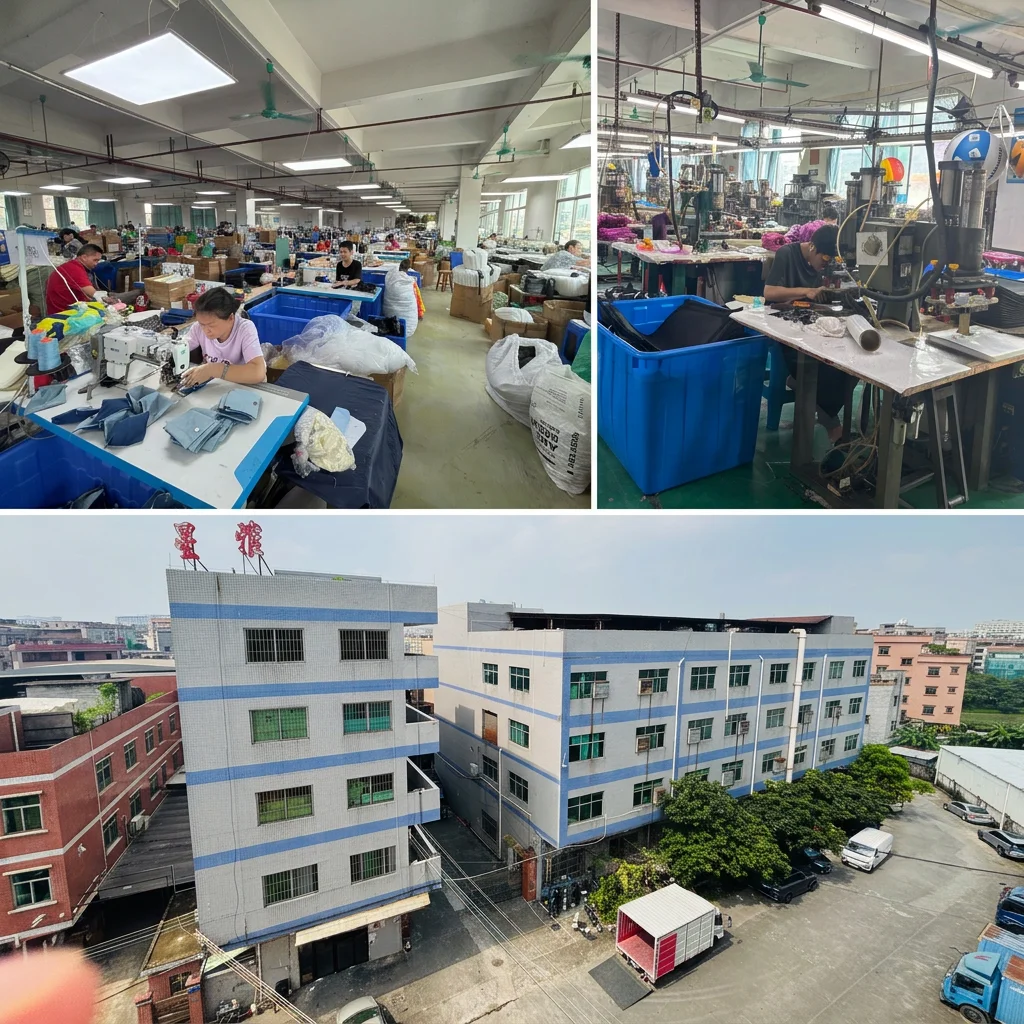
Dongguan Shingya Industrial Co., Ltd.
- Manufacturer, Trading Company
- Guangdong, China
- Lead time7 days
- Avg. response≤ 1h
Main productsShingya Handbags For Women,Women's Shoulder Bags,Polyester Lining Handbags,Women's Tote Bags,Student Backpack
Main marketsWestern Europe(22.0%), Northern Europe(22.0%), Southern Europe(17.0%), South America(10.0%), North America(10.0%), Eastern Asia(8.0%), Eastern Europe(3.0%), Domestic Market(2.0%), South Asia(2.0%), Oceania(2.0%), Southeast Asia(2.0%)
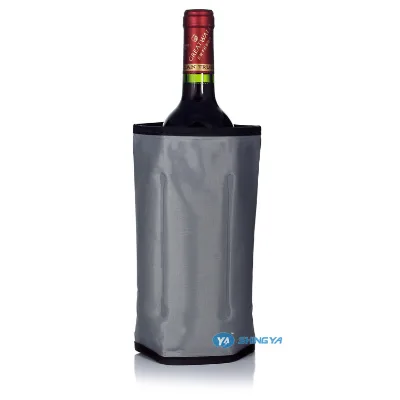
Polyester Wine Cooler Bag Tote Wine Cup Holder Cold Cup Holder Wine Cooler Bag with Gel Inside
$1.38 - $1.83
MOQ: 1 pieces
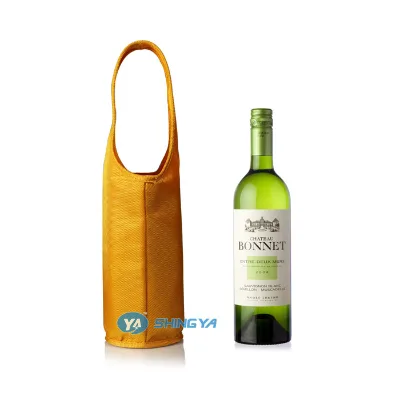
Wholesale Insulated Portable Nylon Cool Bag Wine Bottle Bag Single Bottle Cooler Wine Bag
$1.64 - $2.25
MOQ: 1 pieces
Quanzhou Boenly Trade Co., Ltd.
- Trading Company,Manufacturer/Factory,Group Corporation
- China Fujian
- Lead time23 days
- Avg. response≤ 8h
Main productsTool Bag, Fishing Bag, Gun Pistol Bag, Backpack, Large Wheeled Bags, Outdoor Bag, Racket Bag, Sports Bag, Hunting Bag, Bag's Accessories
Main marketsSouth America,Eastern Europe,Mid East,North America,Southeast Asia,Eastern Asia,Oceania,Western Europe,Africa


3 Bottle Wine Carrier Bag Wine Insulated Cooler Bag Wine Tote Bag with Single Shoulder
$5.20 - $9.50
MOQ: 200 Pieces

QUANZHOU DANKIN IMP AND EXP CO., LTD.
- Manufacturer/Factory
- China Fujian
- Lead time45 days
- Avg. response≤ 2h
Main productsBackpack, Cooler Bag, Tool Bag, Laptop Bag, Gun Bag, Travel Bag, Hiking Bag, Tennis Bag, Running Bag, Diaper Bag
Main marketsSouth America,Eastern Europe,Mid East,North America,Southeast Asia,Eastern Asia,Oceania,Western Europe,Africa

Dongguan Prosperity Sports Goods Co., Ltd.
- Verified by SGS
- Trading Company,Manufacturer/Factory
- China Guangdong
- Lead time23 days
- Avg. response≤ 3h
Main productsEVA Case, EVA Tool Bag, EVA Pouch, Neoprene Can Cooler, Knee Support, Laptop Bag, Neoprene Lunch Bag, Neoprene Beer Cooler, Ankle Support, Waterproof Dry Bag
Main marketsSouth America,Eastern Europe,Mid East,North America,Southeast Asia,Eastern Asia,Oceania,Western Europe,Africa
Hebei Warner Felt Technology Co., Ltd.
- Manufacturer, Trading Company
- Hebei, China
- Lead time5 days
- Avg. response≤ 2h
Main productsFelt,Wool Felt,Felt Bag,wool dryer ball,Industrial Felt
Main marketsEastern Europe(35.0%), Oceania(15.0%), Western Europe(10.0%), Northern Europe(5.0%), Mid East(5.0%), North America(5.0%), Southern Europe(5.0%), Southeast Asia(5.0%), Eastern Asia(3.0%), Domestic Market(3.0%), South Asia(3.0%), Central America(2.0%), South America(2.0%), Africa(2.0%)

Sinopromotion Products Co., Ltd.
- Verified by BV
- Trading Company
- China Zhejiang
- Lead time30 days
- Avg. response≤ 8h
Main productsPromotional Pen, Ball Pen, Promotional Gifts, Stationery, Promotional Bag, Stainless Steel Mug, USB Flash
Main marketsSouth America,Africa,Southeast Asia/ Mideast,Europe,North America
Shenzhen Babai Leather Co., Ltd.
- Verified by SGS Group
- Manufacturer, Trading Company
- Lead time30 days
- Avg. response≤ 2h
Main productsCooler Bag, Sports Bag, Travel Bag, Pet Bag, Diaper Backpacks
Main marketsNorth America(40%), Western Europe(20%), Oceania(11%)

Guangzhou Fu Li Ya Industry Co., Ltd.
- Verified by TUVRHEINLAND
- Combined
- China Guangdong
- Lead time30 days
- Avg. response≤ 10h
Main productsShopping Bag, Promotional Bag, Canvas Bag, Polyester Bag, Cotton Bag, Tote Bag, Non Woven Bag, Garment Bag, Cooler Bag, Hand Bag
Main marketsEurope,North America

Fuzhou Haomin Imp. & Exp. Co., Ltd.
- Verified by SGS
- Manufacturer/Factory
- China Fujian
- Lead time23 days
- Avg. response≤ 4h
Main productsBackpacks, Beach Bags, School Bags, Shopping Bags, Canvas Bags, Sports Bags, Cosmetic Bags, Pet Bags, Cotton Bag, Travel Bag
Main marketsSouth America,Eastern Europe,Mid East,North America,Southeast Asia,Eastern Asia,Oceania,Western Europe,Africa
Hangzhou Initi Imp&Exp Co., Ltd.
- Verified by SGS
- Combined
- China Zhejiang
- Lead time30 days
- Avg. response≤ 7h
Main productsTote Bag, Cotton Bag, Canvas Bag, Drawstring Bag, Garment Bag, Cooler Bag, Cosmetic Bag, Shaker Bottle, Felt Bag, Corduroy Bag
Main marketsSoutheast Asia/ Mideast,East Asia(Japan/ South Korea),Europe,Australia,North America
Shenzhen Brightwell Sports Goods Co., Ltd.
- Manufacturer, Trading Company
- Guangdong, China
- Lead time15 days
- Avg. response≤ 3h
Main productsCosmetic Bag,Tote Bag,Laptop Bag,Backpack,Travel Bag
Main marketsNorth America(50.0%), Mid East(10.0%), Western Europe(10.0%), Northern Europe(5.0%), Southern Europe(5.0%), Oceania(5.0%), South America(5.0%), Eastern Asia(3.0%), Southeast Asia(3.0%), Domestic Market(2.0%), Eastern Europe(2.0%)
Wenzhou Hongdong Crafts Co., Ltd.
- Trading Company
- Zhejiang, China
- Lead time10 days
- Avg. response≤ 1h
Main productsNon-woven bags,Cotton bags,Canvas bags,Jute bags,Paper bags
Main marketsCentral America(100.0%), Eastern Asia(100.0%), Domestic Market(100.0%), Mid East(100.0%), South Asia(100.0%), Africa(100.0%), Southeast Asia(100.0%), Eastern Europe(100.0%), South America(100.0%), Northern Europe(100.0%), Western Europe(25.0%), Oceania(25.0%), Southern Europe(25.0%), North America(25.0%)

Xiamen Ederbou Industry&Trade Co., Ltd.
- Verified by CTI
- Combined
- China Fujian
- Lead time30 days
- Avg. response≤ 7h
Main productsCooler Insulated Bags, Backpacks, Delivery Bags, Travel Bags, Sports Bags, Picnic Bags
Main marketsSouth America,Southeast Asia/ Mideast,East Asia(Japan/ South Korea),Europe,Australia,North America

Custom Durable Insulated Cup Sleeve Wine Cooler Bag with Adjustable Straps
$4.98 - $6.00
MOQ: 300 Pieces

Custom Logo Durable Insulated Cup Sleeve Wine Cooler Bag with Adjustable Straps
$4.98 - $6.00
MOQ: 300 Pieces

- Verified by TUVRHEINLAND
- Trading Company
- China Guangdong
- Lead time23 days
- Avg. response≤ 5h
Main productsTumbler, Heat Press, T Shirt Printing Machine, Decal Paper, Photo Panel, MDF Sublimation Blanks, Sublimation Blanks, T Shirts, Sublimation Ink, 3D Sublimation Machine
Main marketsSouth America,Africa,Others(foreignTradeCapacity.exportBusinessCapacityMarketOther),East Asia(Japan/ South Korea),Europe,Australia,North America

Heat Sublimation Printing Wine Bags Neoprene Wine Bottle Holder Wine Cooler Bag
Contact supplier
MOQ: 100 Pieces

Promotional Custom Neoprene Wine Tote Bag, Wine Bottle Sleeve, Insulated Cooler Bag
Contact supplier
MOQ: 100 Pieces
Nanchang Qianti Packaging Co., Ltd
- Verified by TUVRHEINLAND
- Manufacturer/Factory
- China Jiangxi
- Lead time15 days
- Avg. response≤ 3h
Main productsShopping Bag, Custom Logo Bag, Canvas Cotton Bag, Non Woven Bag, Paper Bag, Kraft Paper Bag, Jute Bag, Cooler Bag, Drawstring Bag, Christmas Gift Bag
Main marketsSouth America,Eastern Europe,Mid East,North America,Southeast Asia,Oceania,Western Europe,Africa


$0.80 - $2.00
MOQ: 200 Pieces

$0.80 - $2.00
MOQ: 200 Pieces

$0.80 - $2.00
MOQ: 200 Pieces

Laizhou Pairuike Crafts Co., Ltd.
- Manufacturer/Factory
- China Shandong
- Lead time45 days
- Avg. response≤ 3h
Main productsBusiness Scope: Processing and Selling Hand-Wove, PLA Non Woven Bag, RPET Woven Bag, PP Woven Bag, Lamination Non Woven Bag, Non Woven Bag
Main marketsSouth America,Eastern Europe,Mid East,North America,Southeast Asia,Eastern Asia,Oceania,Western Europe,Africa
Xiamen Flywon Import & Export Co., Ltd.
- Verified by TüVRheinland
- Trading Company
- Lead time35 days
- Avg. response≤ 2h
Main productsCooler Bag, Luggage, Backpack, Travel Bag, Laptop Bag
Main marketsNorth America(35%), Eastern Europe(25%), Western Europe(15%)
Hangzhou Happyway Imp and Exp Co., Ltd.
- Verified by CTI
- Trading Company
- China Zhejiang
- Lead time30 days
- Avg. response≤ 4h
Main productsWine Tool, Wine Opener, Wine Stopper, Champagne Stopper, Ice Bucket, Dropstop Disc, Wine Aerator, Wine Box/Wine Tote
Main marketsSouth America,Europe,North America

Wine Beer Tote Cooler Bag Beer Wine Cover Leather Felt Wine Gift Tote Bottle Bags
$1.85 - $1.99
MOQ: 500 pieces


Quanzhou Chaumet Bags Co., Ltd.
- Verified by BV
- Trading Company,Manufacturer/Factory
- China Fujian
- Lead time60 days
- Avg. response≤ 6h
Main productsSports Bag, Outdoor Bag, Pet Carrier, Diaper Bag, Cooler Bag/Food Delivery Bag, Waterproof Bag, Custom Bags
Main marketsSouth America,Eastern Europe,North America,Oceania,Western Europe


3 Bottle Wine Tote Bag Aluminum Padded Wine Cooler Bag with Corkscrew Opener
$2.98 - $5.83
MOQ: 500 Pieces

Custom Logo Insulated Wine Cooler Bag Portable Cooler Tote Bag for Travel
$3.55 - $5.68
MOQ: 500 Pieces

Shanghai Touch Industrial Development Co., Ltd.
- Verified by TUVRHEINLAND
- Combined
- China Shanghai
- Lead time15 days
- Avg. response≤ 4h
Main productsInstant Hot Pack, Hot Cold Pack, Gel Eye Mask, Gel Ice Pack, Gel Bottle Cooler, Instant Ice Pack, Hand Warmer, Heat Pack, Cooling Scarf, Gel Beads
Main marketsSouth America,Others(foreignTradeCapacity.exportBusinessCapacityMarketOther),Southeast Asia/ Mideast,East Asia(Japan/ South Korea),Domestic,Europe,Australia,North America


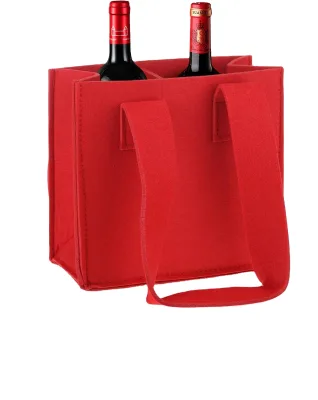






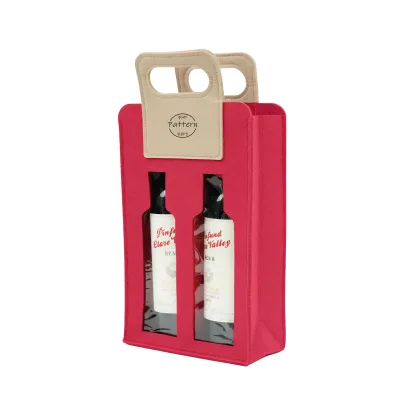


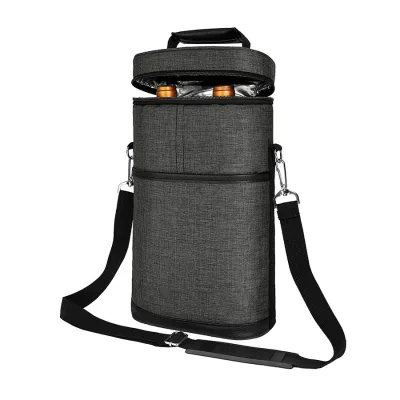
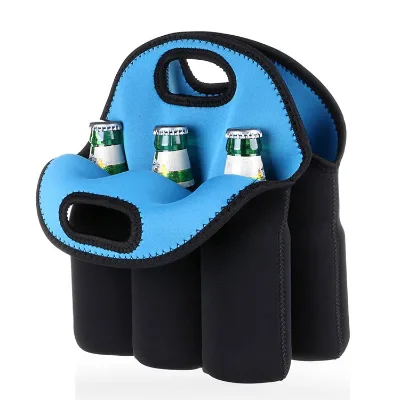


Comprehensive Sourcing Guide
Insulated Felt Wine Holder Bag Supplier Concentration and Factory Types
Current data indicates a concentration of manufacturing activity in China, specifically within the Fujian and Hebei provinces. Suppliers in these regions list felt bags, wool products, and various promotional items as their primary output, suggesting a specialized cluster for textile-based wine carriers. While some entities operate strictly as manufacturers, others function as trading companies that also maintain factory capabilities. This dual structure means a single supplier profile may display both manufacturing and trading attributes, requiring buyers to distinguish between direct production and intermediary sales. The presence of specific product evidence, such as felt wine bags with six-bottle dividers, confirms that these regions possess the necessary industrial capacity for this niche.
Buyers should verify the actual factory type by examining the company classification field rather than assuming based on product variety. Some suppliers explicitly state they are manufacturers, while others list themselves as trading companies or a hybrid of both. This distinction impacts the supply chain, as manufacturers often control the production process directly, whereas trading companies may source from multiple factories. The evidence shows that main products frequently include a broad range of bags, from school bags to promotional gifts, indicating that felt wine holders are often part of a larger portfolio rather than a sole specialization. Understanding this mix helps in assessing whether a supplier can prioritize your specific order or if they are a generalist distributor.
How to Verify Insulated Felt Wine Holder Bag Suppliers
Verification begins with checking for recognized system certifications such as BSCI, ISO 9000, ISO 9001, SEDEX, and ISO 14000. These credentials provide a baseline for social compliance and quality management systems, which are critical for international trade. Some suppliers in the results have been verified by third-party agencies like SGS, adding a layer of confidence regarding their business legitimacy. Buyers must confirm that these certifications are current and applicable to the specific product line, as a general factory certification does not guarantee the quality of a specific insulated wine bag. The presence of these labels should be cross-referenced with the supplier's profile to ensure they are not merely claimed but actively held.
Beyond certifications, response time and verification status offer immediate indicators of supplier reliability. Data shows response times varying significantly, with some suppliers responding within hours while others take days. A faster response time often correlates with better communication channels and operational efficiency. Buyers should also look for verification badges that indicate the supplier has undergone a physical or document audit. It is essential to request proof of these credentials directly, as the presence of a badge on a listing does not always guarantee the specific product meets the required standards. Always ask for the latest audit report to ensure the supplier's claims about their facilities and processes are accurate and up to date.
What to Compare Across Insulated Felt Wine Holder Bag Suppliers
When evaluating potential partners, compare lead times, minimum order quantities, and response speeds to determine fit for your project timeline. Lead times in the observed data range from 30 to 45 days, which is a significant variance that can impact your inventory planning. Minimum order quantities also differ, with some suppliers requiring 500 units while others may have lower thresholds. Response times, measured in hours, vary from under five hours to over twenty hours, influencing how quickly you can resolve issues or request samples. These operational metrics are crucial for aligning supplier capabilities with your specific business needs and delivery schedules.
Product specifications and pricing structures provide another layer of comparison for making an informed decision. Materials range from polyester to neoprene and non-woven fabrics, each offering different insulation properties and durability. Prices observed in the data span from approximately $0.50 to $6.00 per unit, depending on the material, customization level, and order volume. Buyers should compare the cold retention times, which vary from 2-3 hours to 4-6 hours, to ensure the product meets functional requirements. Additionally, check if customization is available for logos or colors, as this affects the final unit cost and the ability to brand the product effectively for your market.
Common Insulated Felt Wine Holder Bag Sourcing Risks
One primary risk involves the discrepancy between product descriptions and actual material quality, particularly regarding insulation performance. Some listings claim waterproof features while others explicitly state the product is not waterproof, creating confusion about the bag's suitability for outdoor or wet conditions. Buyers must verify the specific waterproof rating and cold retention time for each model, as these attributes are not uniform across all suppliers. Relying solely on marketing keywords like "insulated" without checking the technical specifications can lead to receiving products that fail to keep beverages cool for the required duration.
Another significant risk is the variability in production capacity and the potential for delays due to high demand or supply chain disruptions. While some suppliers list a lead time of 30 days, others indicate 45 days, and this can fluctuate based on order volume and raw material availability. The presence of multiple product lines, such as aprons and cosmetic bags, suggests that felt wine holders may not be the sole focus of production, potentially leading to prioritization issues. Buyers should assess the supplier's ability to handle their specific order volume without compromising quality or delivery dates, and consider requesting a trial order to validate their production consistency before committing to a large-scale purchase.
Insulated Felt Wine Holder Bag Regional Sourcing and Logistics
Sourcing from China, specifically Fujian and Hebei, offers access to established manufacturing clusters but introduces specific logistical considerations. The concentration of suppliers in these regions means that shipping routes and freight costs are generally optimized for this area, yet buyers must account for the distance and transit time involved. The origin of the products is consistently listed as China, which simplifies customs documentation but requires careful planning for import duties and taxes in the destination country. Understanding the regional logistics network helps in estimating the total landed cost and ensuring timely delivery to your warehouse or distribution center.
Buyers should also consider the impact of regional specialization on product variety and customization options. Suppliers in Hebei, for instance, focus heavily on felt products, which may offer a wider range of designs and colors specific to that material. In contrast, Fujian suppliers may offer a broader mix of bag types, including polyester and neoprene options. This regional difference allows buyers to select a supplier based on their specific material preference and design requirements. However, it is essential to verify the exact production location for each order, as some trading companies may source from different factories within the same region, potentially affecting quality control and consistency.
Insulated Felt Wine Holder Bag Commercial Terms and Order Planning
Commercial terms regarding payment, escrow, and order planning are critical for mitigating financial risk and ensuring smooth transactions. While specific escrow details are not always visible in the initial data, buyers should prioritize suppliers who offer secure payment methods to protect their capital. Minimum order quantities, such as the 500-unit threshold observed, must be factored into the initial budget and sales projections. Buyers need to calculate the total cost per unit, including shipping and duties, to ensure the final price remains competitive in their target market. Understanding these financial terms early prevents unexpected costs that could erode profit margins.
Order planning must account for the full production cycle, from sample approval to final delivery. With lead times ranging from 30 to 45 days, buyers should initiate the ordering process well in advance of their sales season to avoid stockouts. The availability of customization, such as logo printing and color selection, adds time to the production schedule and should be included in the timeline. Buyers should also plan for potential quality checks and inspections before shipment to ensure the products meet their standards. By carefully mapping out the timeline and commercial requirements, buyers can manage their inventory effectively and maintain a reliable supply chain for insulated felt wine holder bags.
FAQs
What materials are used for insulated wine bags?
Suppliers offer bags made from polyester, neoprene, and non-woven fabrics. Polyester options provide durability for outdoor use, while neoprene ensures better insulation for cold times up to six hours. Non-woven materials are often used for promotional events and are fully customizable with logos.
How long does it take to receive orders?
Lead times vary between 30 and 45 days depending on the supplier and order volume. Some manufacturers in Fujian and Hebei regions can deliver within 30 days, while others may require up to 45 days for production and shipping. Always confirm the specific timeline before placing an order.
What is the minimum order quantity for these bags?
The minimum order quantity typically starts at 500 pieces for most insulated wine holders. Some suppliers may offer lower quantities for specific models, but 500 is the standard threshold for wholesale pricing. Buyers should verify the exact MOQ with the supplier before finalizing the purchase agreement.
Are these bags waterproof and reusable?
Waterproof capabilities depend on the material; non-woven options are waterproof, while felt and some polyester bags are not. Most bags are designed as reusable items rather than disposable. Neoprene bags offer excellent insulation and durability, making them suitable for repeated use in various settings like picnics or promotions.
Can I customize the design and logo?
Customization is available for most products, including logo printing and color selection. Suppliers offer offset printing and heat transfer processes to apply designs. Buyers can choose from various colors and patterns, ensuring the bags meet specific branding needs for exhibitions, promotions, or corporate gifts.
What certifications do the suppliers hold?
Many suppliers hold certifications such as BSCI, ISO 9001, ISO 14000, and SEDEX. These ensure compliance with international standards for quality and ethical manufacturing. Some suppliers are also verified by SGS, providing an additional layer of trust regarding product safety and production processes for bulk orders.
Where are the manufacturers located?
Manufacturers are primarily located in China, specifically in Fujian and Hebei provinces. These regions are known for producing a wide range of bags and promotional items. Buyers can expect products to originate from these areas, with some specific models listing Xiamen as the point of origin.