Insulated Wine PVC Cooler Bag Suppliers and Manufacturers
Source 22 verified suppliers for Insulated Wine PVC Cooler Bag options. Compare lead times, MOQs, certifications, and response rates to find the right partner. Contact suppliers directly to request samples and pricing details; review the available evidence before requesting comparable quotations from suitable candidates.
Suppliers List

Xiamen Lemay Trading Co., Ltd.
- Trading Company,Manufacturer/Factory,Other
- China Fujian
- Lead time23 days
- Avg. response≤ 2h
Main productsHyration Pack, Water Bladder, Dry Bag, Self-Inflatable Mattress, Outdoor Furniture, Camping Equipment, Quick Tent, Insulation Bag, Gym Protection, Sports
Main marketsSouth America,Eastern Europe,Mid East,North America,Southeast Asia,Eastern Asia,Oceania,Western Europe,Africa

- Verified by CTI
- Manufacturer/Factory
- China Fujian
- Lead time23 days
- Avg. response≤ 6h
Main productsTrolley Luggage, Travel Bags, School Bag, Cooler Bag, Special Backpack, Delivery Bag, Picnic Bag, Hunting Bag, Duffel Bag, Rolling Bag
Main marketsMid East,North America,Southeast Asia,Western Europe


Soft Beverage Wine Cooler Bag Eco-Friendly Insulated Cooler Bag for Camping Beach
$3.99 - $6.88
MOQ: 500 Pieces


Xiamen Daysun Industrial Co., Ltd.
- Verified by SGS
- Trading Company
- China Fujian
- Lead time30 days
- Avg. response≤ 4h
Main productsBackpack, Travel Bag, Sports Bag, Laptop Bag, Shopping Bag, Cosmetic Bag, Cooler Bag, RPET Bag, Clothing, Neoprene Case
Main marketsEurope,Australia,North America

Shanghai Touch Industrial Development Co., Ltd.
- Verified by TUVRHEINLAND
- Combined
- China Shanghai
- Lead time15 days
- Avg. response≤ 5h
Main productsInstant Hot Pack, Hot Cold Pack, Gel Eye Mask, Gel Ice Pack, Gel Bottle Cooler, Instant Ice Pack, Hand Warmer, Heat Pack, Cooling Scarf, Gel Beads
Main marketsSouth America,Others(foreignTradeCapacity.exportBusinessCapacityMarketOther),Southeast Asia/ Mideast,East Asia(Japan/ South Korea),Domestic,Europe,Australia,North America

QUANZHOU DANKIN IMP AND EXP CO., LTD.
- Manufacturer/Factory
- China Fujian
- Lead time45 days
- Avg. response≤ 3h
Main productsBackpack, Cooler Bag, Tool Bag, Laptop Bag, Gun Bag, Travel Bag, Hiking Bag, Tennis Bag, Running Bag, Diaper Bag
Main marketsSouth America,Eastern Europe,Mid East,North America,Southeast Asia,Eastern Asia,Oceania,Western Europe,Africa

- Manufacturer/Factory
- China Fujian
- Lead time30 days
- Avg. response≤ 22h
Main productsBag, Polyester Bag, Promotion Gift, School Bag, Outdoor Backpack, Backpack, Rucksack, Laptop Bag, Yoga Bag, Sport Bag
Main marketsSouth America,Eastern Europe,Mid East,North America,Southeast Asia,Eastern Asia,Oceania,Western Europe,Africa
Ningbo Hifel Commodity Co., Ltd
- Verified by SGS
- Trading Company
- China Zhejiang
- Lead time30 days
- Avg. response≤ 5h
Main productsWater Bottle, Food Container, Cooler Bag, Card, Sport Bottle, Stainless Steel Tumbler, Outdoor Product, Pet Product, Organizer, Food Serve Tray
Main marketsSouth America,Southeast Asia/ Mideast,Europe,Australia,North America
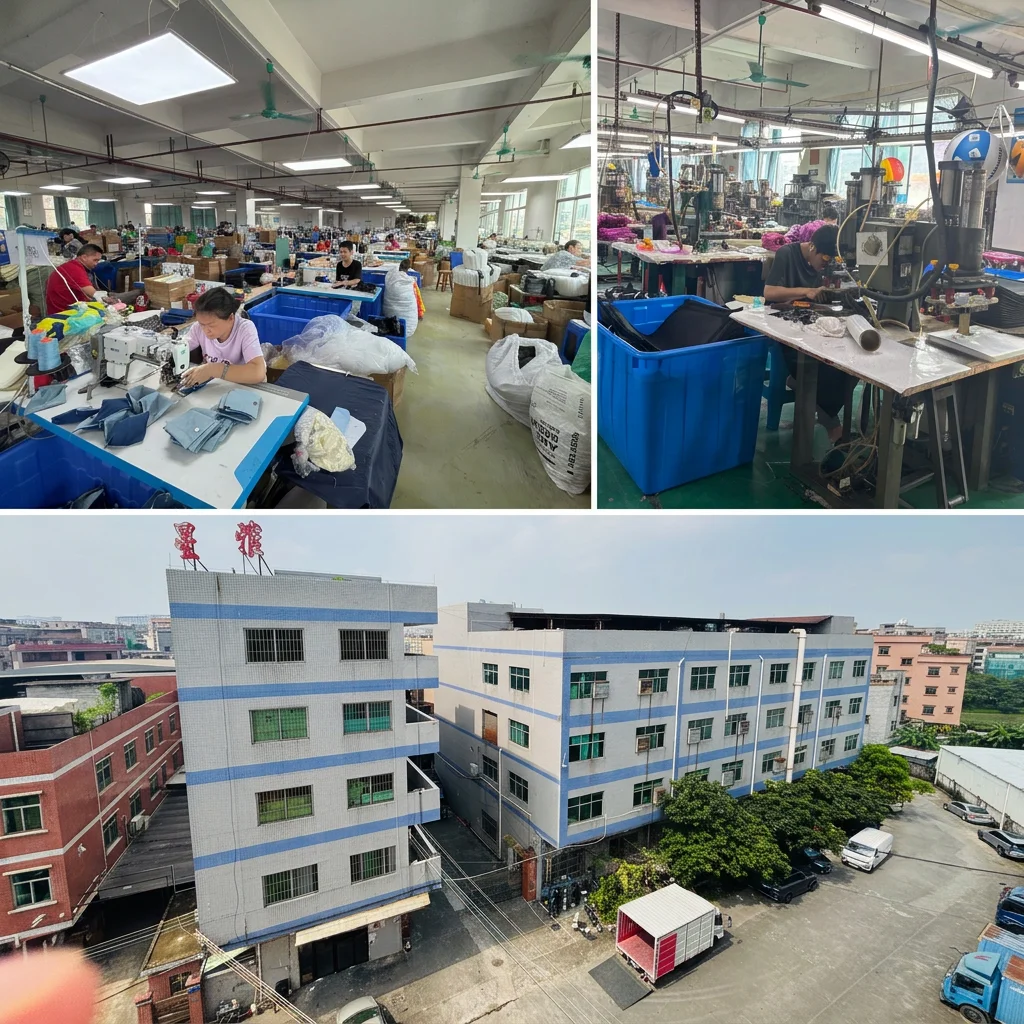
Dongguan Shingya Industrial Co., Ltd.
- Manufacturer, Trading Company
- Guangdong, China
- Lead time7 days
- Avg. response≤ 1h
Main productsShingya Handbags For Women,Women's Shoulder Bags,Polyester Lining Handbags,Women's Tote Bags,Student Backpack
Main marketsWestern Europe(22.00%), Northern Europe(22.00%), Southern Europe(17.00%), South America(10.00%), North America(10.00%), Eastern Asia(8.00%), Eastern Europe(3.00%), Domestic Market(2.00%), South Asia(2.00%), Oceania(2.00%), Southeast Asia(2.00%)
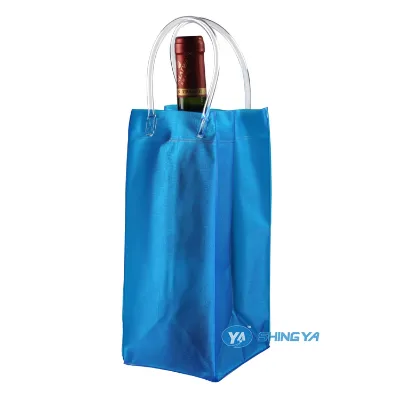
Single Portable Pvc Wine Ice Cooler Bag for Promotion Single Collapsible Wine Cooler Bag
$0.41 - $0.82
MOQ: 1 pieces
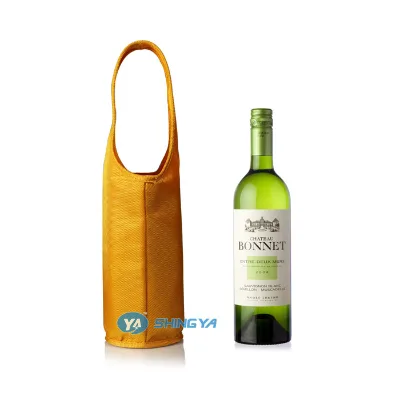
Wholesale Insulated Portable Nylon Cool Bag Wine Bottle Bag Single Bottle Cooler Wine Bag
$1.63 - $2.24
MOQ: 1 pieces
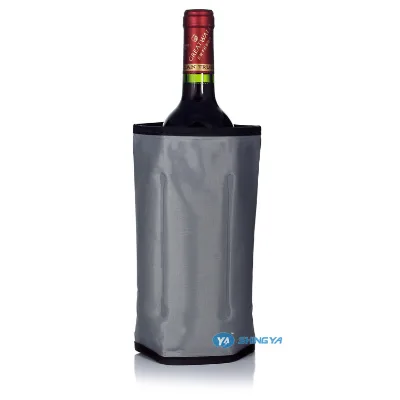
Polyester Wine Cooler Bag Tote Wine Cup Holder Cold Cup Holder Wine Cooler Bag with Gel Inside
$1.37 - $1.82
MOQ: 1 pieces
Yiwu G&M Import and Export Co., Ltd
- Verified by SGS
- Trading Company
- China Zhejiang
- Lead time15 days
- Avg. response≤ 1h
Main productsCooler Bags, Cosmetic Bags, Travel Bags, Backpacks, Evening Bags, Takeaway Bags, Nonwoven Bags, Travel Storage Bags
Main marketsEurope,North America

Large Capacity Leakproof Waterproof Insulated Removable Portable Outdoor Wine Lunch Cooler Bag
$3.79 - $4.19
MOQ: 1000 Pieces

Custom Promotional Insulated Leakproof 4-Bottle Portable Picnic Wine Cooler Bag
$1.89 - $2.59
MOQ: 1000 Pieces

Custom Design Insulated Leakproof Waterproof Portable Promotional Travel Picnic Wine Cooler Bag
$2.49 - $2.99
MOQ: 1000 Pieces

$1.89 - $2.59
MOQ: 1000 Pieces

Custom Logo 2 Bottle Insulated Leakproof Waterproof Portable Picnic Travel Gift Wine Cooler Bag
$2.29 - $2.89
MOQ: 1000 Pieces

ANHUI GOOD LUCK INDUSTRIAL CO., LTD.
- Verified by BV
- Trading Company
- China Anhui
- Lead time15 days
- Avg. response≤ 3h
Main productsCosmetic Bag, Backpack, Lunch Bag, Cooler Bag, Shopping Bag, Diaper Bag, Sports Bag, Handbag, Beach Bag, Make up Bag
Main marketsSouth America,Africa,Southeast Asia/ Mideast,East Asia(Japan/ South Korea),Domestic,Europe,Australia,North America


Gel Wine Cooler Sleeve PVC Hand-Held Outdoor Picnic Insulated Ice-Cooling Bottle Bag
$0.68 - $1.35
MOQ: 50 Pieces
Shenzhen Gymtion Industrial Co., Ltd
- Verified by SGS
- Trading Company,Manufacturer/Factory
- China Guangdong
- Lead time23 days
- Avg. response≤ 5h
Main productsTote Bag, Shopping Bag, Clear Bag
Main marketsEastern Europe,Mid East,North America,Oceania,Western Europe

Home Use Reusable Insulated Cooler Bag Wine Bottle Cooler Bag for Picnic
$5.50 - $5.80
MOQ: 500 Pieces


Wuhan Eco Faith Packing Co., Ltd.
- Manufacturer/Factory
- China Hubei
- Lead time23 days
- Avg. response≤ 8h
Main productsFabrics Drawstring Bag, Cotton Bags, Satin Bag, Velvet Bag, Organza Bag, Jute Bag, Jewelry Bag, Non-Woven Bag, Thermal Bag, Gift Box
Main marketsSouth America,Eastern Europe,Mid East,North America,Southeast Asia,Eastern Asia,Oceania,Western Europe,Africa

Huizhou Green Foil Insulation Co., Ltd.
- Verified by BV
- Combined
- China Guangdong
- Lead time15 days
- Avg. response≤ 2h
Main productsCooler Bag, Gift Bag, Gift Box, Insulated Bag, Color Printed Box, Jewelry Box, Paper Bag, Paper Box, Packaging Box, Insulated Mailer
Main marketsEast Asia(Japan/ South Korea),Europe,North America


Thermal Lining Rigid Cardboard Wine Cooler Bag for 6 Bottles for Outdoor Activities
$0.65
MOQ: 3000 Pieces


Wenzhou Guanmin Import and Export Co., Ltd.
- Verified by BV
- Trading Company,Manufacturer/Factory
- China Zhejiang
- Lead time120 days
- Avg. response≤ 6h
Main productsShopping Bag, Cooler Bag, Notebook, Pen, Color Pencil, Lanyard, Beach Ball, Umbrella, Sunshade, Air Freshener
Main marketsSouth America,Eastern Europe,Mid East,North America,Southeast Asia,Eastern Asia,Western Europe

Xiamen Top Green Bags Co., Ltd.
- Verified by SGS
- Trading Company,Manufacturer/Factory
- China Fujian
- Lead time45 days
- Avg. response≤ 4h
Main productsCooler Bags, Sports Bags, Apron, Promotional Bag, Waist Bag, Shoulder Bag, Travel Bags, Cosmetic Bag, Laptop Bag, Pencil Bag
Main marketsSouth America,Eastern Europe,North America,Southeast Asia,Eastern Asia,Oceania,Western Europe,Africa


Outdoor Waterproof Insulated Cooler Picnic Travel Bags with Wine Bottle Holders
$4.50 - $5.80
MOQ: 500 Pieces

Custom Portable 2-Bottle Wine Cooler Bag Leakproof Insulated Canvas Carrier for Picnics
$2.00 - $2.80
MOQ: 500 Pieces

Shanghai David International Trade Co., Ltd.
- Verified by TUVRHEINLAND
- Combined
- China Shanghai
- Lead time15 days
- Avg. response≤ 7h
Main productsPromotional Gifts, Gift Sets, Tshirts, Hats, Hot Packs, Hot Cold Packs, Ice Packs, Bags, Umbrellas, Water Bottles
Main marketsSouth America,Africa,Southeast Asia/ Mideast,East Asia(Japan/ South Korea),Domestic,Europe,Australia,North America

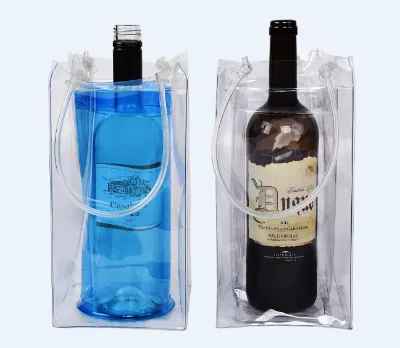
Portable PVC Wine Ice Bag Wine Pouch Cooler Bag with Handle Ice Bag for Wine Bottle
$0.63 - $0.68
MOQ: 1000 Pieces

Transparent Bottle Carrier PVC Ice Cooler Wine Beer Gel Cooler Bag for Wine Bottle
$0.63 - $0.68
MOQ: 1000 Pieces
Hangzhou Happyway Imp and Exp Co., Ltd.
- Verified by CTI
- Trading Company
- China Zhejiang
- Lead time30 days
- Avg. response≤ 5h
Main productsWine Tool, Wine Opener, Wine Stopper, Champagne Stopper, Ice Bucket, Dropstop Disc, Wine Aerator, Wine Box/Wine Tote
Main marketsSouth America,Europe,North America

Xiamen Ederbou Industry&Trade Co., Ltd.
- Verified by CTI
- Combined
- China Fujian
- Lead time30 days
- Avg. response≤ 6h
Main productsCooler Insulated Bags, Backpacks, Delivery Bags, Travel Bags, Sports Bags, Picnic Bags
Main marketsSouth America,Southeast Asia/ Mideast,East Asia(Japan/ South Korea),Europe,Australia,North America

Custom Durable Insulated Cup Sleeve Wine Cooler Bag with Adjustable Straps
$4.98 - $6.00
MOQ: 300 Pieces

Custom Logo Durable Insulated Cup Sleeve Wine Cooler Bag with Adjustable Straps
$4.98 - $6.00
MOQ: 300 Pieces
- Verified by BV
- Trading Company
- China Fujian
- Lead time30 days
- Avg. response≤ 25h
Main productsBackpack Bag, School Bag, Travel Bag, Backpack, Waterproof Bag, Cooler Bag, Trolley Suitcase, Luaggage
Main marketsSouth America,Europe,North America

Guangzhou Fu Li Ya Industry Co., Ltd.
- Verified by TUVRHEINLAND
- Combined
- China Guangdong
- Lead time30 days
- Avg. response≤ 10h
Main productsShopping Bag, Promotional Bag, Canvas Bag, Polyester Bag, Cotton Bag, Tote Bag, Non Woven Bag, Garment Bag, Cooler Bag, Hand Bag
Main marketsEurope,North America

XinMao Packaging Products Dongguan Co., Ltd.
- Verified by SGS
- Manufacturer
- China Guangdong
- Lead time15 days
- Avg. response≤ 9h
Main productsNeoprene Bag, Laptop Sleeve, Bottle / Can Cooler, Phone / Camera Bag, Ice / Lunch Bag, Key Chain / Glasses Holder, Neoprene Gloves, Shopping Bag, Cosmetic/Pennies/Stationery Pouch, Felt Bag
Main marketsEurope,Australia

Durable Customized Wholesale Waterproof Carrier Bottle Bag Insulated Wine Cooler Sleeve
$0.40 - $0.61
MOQ: 500 Pieces

Wholesale Custom Neoprene Wine Cooler Sleeve - Waterproof Carrier Bottle Bag for Insulated Drinks
$0.50 - $0.81
MOQ: 500 Pieces

Sturdy Black Neoprene Wine Cooler Bag with Customizable Logo, Convenient Tool Bag
$2.24 - $2.66
MOQ: 500 Pieces
Nanchang Qianti Packaging Co., Ltd
- Verified by TUVRHEINLAND
- Manufacturer/Factory
- China Jiangxi
- Lead time15 days
- Avg. response≤ 3h
Main productsShopping Bag, Custom Logo Bag, Canvas Cotton Bag, Non Woven Bag, Paper Bag, Kraft Paper Bag, Jute Bag, Cooler Bag, Drawstring Bag, Christmas Gift Bag
Main marketsSouth America,Eastern Europe,Mid East,North America,Southeast Asia,Oceania,Western Europe,Africa


$0.80 - $2.00
MOQ: 200 Pieces


Comprehensive Sourcing Guide
Insulated Wine PVC Cooler Bag Supplier Concentration and Factory Types
The current supplier results indicate a concentration of manufacturers and trading companies located in Fujian, China, specifically within the Quanzhou area. This region serves as a primary hub for the production of insulated wine PVC cooler bags, leveraging local textile and plastic manufacturing ecosystems. The data shows that suppliers in this cluster offer diverse company types, ranging from pure trading companies to integrated manufacturers and factories. Some entities operate with their own brands, such as ENFUNG, while others focus strictly on OEM and ODM services. This mix allows buyers to access both branded inventory and custom manufacturing capabilities within a single geographic zone.
When evaluating the factory types in this cluster, buyers should note that some suppliers list BRC and GMP certifications, while others hold BSCI, TS 16949, and ISO 9001 credentials. The presence of CTI verification on certain profiles adds a layer of confidence regarding their operational standards. The main product lists for these suppliers often extend beyond wine coolers to include hydration packs, dry bags, and general outdoor furniture. This suggests that the factories possess versatile production lines capable of handling various insulated bag styles. Buyers seeking specific PVC materials should verify that the supplier's primary output includes the exact insulation and material specifications required for their target market.
How to Verify Insulated Wine PVC Cooler Bag Suppliers
Verification of suppliers for insulated wine PVC cooler bags requires a close examination of their listed certifications and verification statuses. The available data highlights specific credentials like BRC, GMP, BSCI, and ISO 9001, which indicate adherence to international quality and safety standards. Buyers must confirm that these certifications are current and relevant to food-grade or beverage storage applications, as some suppliers may hold general manufacturing certifications that do not cover product safety. Additionally, the presence of CTI verification on certain supplier profiles serves as a third-party validation of their business legitimacy and operational capacity.
Beyond certifications, buyers should assess the response time and sample lead times provided in the supplier profiles. The observed response times vary, with some suppliers showing a response time of 1.84 hours and others taking up to 5.90 hours. A faster response time often correlates with better communication channels and more active sales teams. Furthermore, the sample lead times listed, such as 7-10 days or 5-7 days, provide insight into the supplier's production flexibility. Buyers should request samples to verify the actual material quality, specifically the PVC composition and insulation density, ensuring the product meets the required cold retention times before committing to a larger order.
What to Compare Across Insulated Wine PVC Cooler Bag Suppliers
Comparing suppliers involves analyzing key operational metrics such as minimum order quantities, lead times, and pricing structures. The data reveals a wide range of MOQs, with some suppliers requiring 100 pieces while others set the bar at 500 or even 1000 pieces. This variation significantly impacts the initial investment and inventory risk for buyers. Pricing also fluctuates based on these volume thresholds, with some products listed at a fixed price point of 25.00, while others show a range from 2.40 to 13.59 depending on the specific model and customization level. Buyers must align their order volume with the supplier's MOQ to avoid unnecessary costs or order rejections.
In addition to volume and price, the technical specifications of the cooler bags must be compared across different suppliers. Attributes such as insulation material, bearing capacity, and cold retention time vary significantly. For instance, some bags offer high-density EVA insulation with a cold time of up to 36 hours, while others provide a shorter retention of 2-3 hours. The bearing capacity ranges from over 10 kg to 3-10 kg, and waterproof ratings are consistently noted as waterproof or leakproof. Buyers should create a comparison matrix to evaluate these technical parameters against their specific use cases, ensuring the selected supplier can meet the functional requirements for wine transport, beach outings, or camping scenarios.
Common Insulated Wine PVC Cooler Bag Sourcing Risks
One significant risk in sourcing insulated wine PVC cooler bags is the inconsistency in product specifications and material quality. While many suppliers claim their products are waterproof and leakproof, the actual performance can vary based on the manufacturing process. Some products list a cold retention time of 36 hours, whereas others only guarantee 4-6 hours. This discrepancy can lead to customer dissatisfaction if the product fails to maintain the required temperature for the intended duration. Buyers must rigorously test samples to validate these claims, as the supplier's listed attributes may not always reflect the final product's performance under real-world conditions.
Another critical risk involves the reliability of lead times and the ability to scale production. The observed lead times in the data are around 23 days, but this can fluctuate based on order volume and raw material availability. Suppliers with higher MOQs, such as 1000 pieces, may face longer production queues or delays if they are managing multiple large orders simultaneously. Additionally, the reliance on OEM and ODM capabilities means that custom designs require additional time for tooling and approval. Buyers should plan for potential delays by ordering samples early and maintaining open communication with the supplier to track production progress and mitigate the risk of missed delivery dates.
Insulated Wine PVC Cooler Bag Regional Sourcing and Logistics
Sourcing from the identified cluster in Fujian, China, offers logistical advantages due to the region's established export infrastructure. The concentration of manufacturers in Quanzhou and Fujian facilitates efficient shipping and reduces the complexity of coordinating with multiple suppliers in different locations. The data confirms that the product origin is China, and specific locations like Quanzhou are mentioned, indicating a localized supply chain. This regional focus allows buyers to consolidate orders from multiple product lines, such as cooler bags and hydration packs, potentially reducing freight costs and simplifying customs clearance processes.
However, buyers must account for the specific logistics requirements associated with PVC and insulated products. The weight and dimensions of the cooler bags, such as the 4.2 kg weight for a 2-bottle carrier or the 0.35 kg weight for a 6-pack sleeve, influence shipping costs and packaging efficiency. The packing methods, ranging from carton boxes to individual PP bags, also impact the volume and weight of the shipment. Buyers should verify the packing details with the supplier to ensure that the packaging is robust enough to protect the insulated bags during transit while optimizing the container load. Understanding these logistics factors is essential for accurate cost estimation and timely delivery to the destination market.
Insulated Wine PVC Cooler Bag Commercial Terms and Order Planning
Commercial terms for insulated wine PVC cooler bags vary significantly based on the supplier's size and production capacity. The data shows that some suppliers offer customization services, allowing buyers to add logos or specific designs, while others provide standard models. The sample times, ranging from 5-7 days to 7-10 days, are critical for the initial planning phase. Buyers should factor in these lead times when scheduling their product launches or seasonal inventory replenishment. Additionally, the availability of OEM and ODM services means that buyers can tailor the product to their brand, but this requires clear communication of design specifications and approval processes.
Order planning must also consider the pricing structure and payment terms associated with different order volumes. The price ranges observed, from 2.40 to 25.00, suggest that unit costs decrease with higher volumes, but the minimum order requirements can be substantial. Buyers should calculate the total landed cost, including shipping, duties, and taxes, to determine the true profitability of the product. Furthermore, the response times of suppliers, which can range from under 2 hours to nearly 6 hours, affect the speed of negotiation and order confirmation. Buyers should prioritize suppliers with faster response times to ensure a smoother transaction process and timely resolution of any issues that arise during the order fulfillment cycle.
FAQs
What is the minimum order quantity for insulated wine cooler bags?
Minimum order quantities vary by supplier and specific product model. Some listings require 100 pieces, while others set the threshold at 500 or 1000 units. Buyers should verify the exact MOQ for their selected item before placing an order to ensure compliance with supplier policies.
How long does it take to receive samples for these bags?
Sample lead times typically range from five to ten days depending on the supplier. Specific listings indicate sample times of seven to ten days or five to seven days. Buyers should confirm the exact duration with the manufacturer before requesting samples to plan their timeline effectively.
What materials are used to construct these insulated cooler bags?
Manufacturers use various materials including polyester, nylon, and PVC for these bags. Some products feature high-density EVA insulation to maintain cold temperatures. Buyers should check specific product attributes to confirm the material composition matches their durability and sustainability requirements for the intended use case.
Do these bags offer waterproof protection for wine and drinks?
Many listed products are explicitly described as waterproof and leakproof to protect contents. Specific attributes confirm 100% leakproof performance and resistance to punctures and abrasions. Buyers should verify the waterproof rating on individual product pages to ensure the bag meets their specific storage and transport needs.
What certifications do the manufacturers of these bags hold?
Suppliers may hold various system certifications such as BRC, GMP, BSCI, ISO 9001, and TS 16949. Verification status like CTI is also noted for some entities. Buyers should request current certification documents from the supplier to confirm compliance with relevant industry standards and safety regulations.
Where are these insulated cooler bags manufactured?
Products are primarily manufactured in China, with specific origins noted in Quanzhou and Fujian regions. The country of origin is consistently listed as China for the available listings. Buyers should confirm the specific factory location to assess logistics costs and shipping times for their target market.
What is the price range for bulk orders of these bags?
Unit prices vary based on specifications and order volume, ranging from approximately 2.40 to 25.00 dollars. Some specific models list prices between 6.59 and 13.59 dollars. Buyers should request a detailed quotation based on their required quantity and customization needs to determine the final cost.