Korean Version Woolen Crossbody Bag Suppliers and Manufacturers
Explore 17 verified suppliers offering Korean version woolen crossbody bags with diverse styles and materials. Compare response times, certifications like ISO 9001, and pricing to find the right partner. Contact suppliers directly to request samples or custom designs; review the available evidence before requesting comparable quotations from suitable candidates.
Suppliers List
Guangzhou Hecda Fashion Leather Co., Ltd.
- Verified by Intertek
- Manufacturer, Trading Company
- Lead time0 days
- Avg. response≤ 4h
Main productsHandbag, Shoulder Bag, Wallet, Crossbody Bag, Backpack
Main marketsWestern Europe(50%), South America(40%), Eastern Europe(10%)
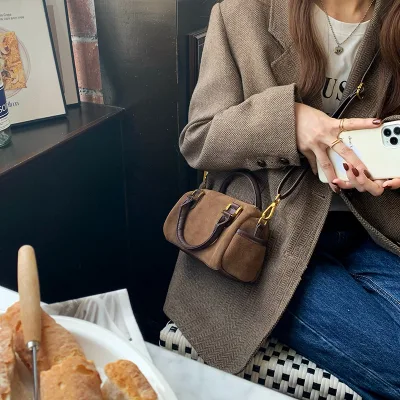
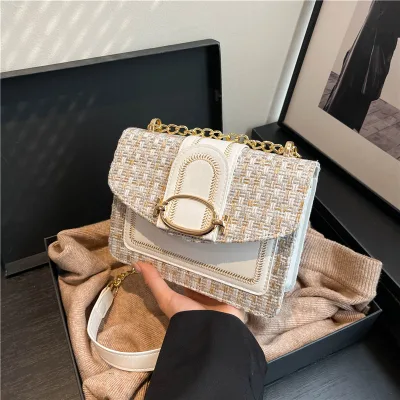
Hot-selling Korean-style Autumn and Winter New Retro Suede Versatile Crossbody Small Bag
$4.35 - $4.72
MOQ: 2 pieces
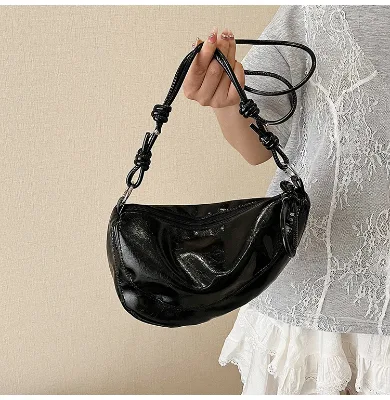
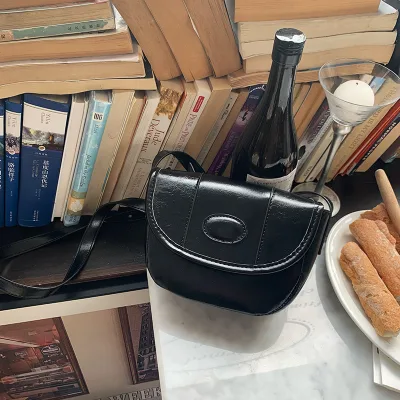

Shanghai Tuanjue Trading Co., Ltd.
- Trading Company
- China Shanghai
- Lead time0 days
- Avg. response≤ 25h
Main productsLadies' Bag

Shijiazhuang Green Dragon Trading Co., Ltd.
- Verified by TUVRHEINLAND
- Trading Company
- China Hebei
- Lead time15 days
- Avg. response≤ 9h
Main productsFashion Bags, Hand Bags, Shoulder Bag, Backpack, Shopping Bags, Wallet, Shoes, Belt
Main marketsNorth America
Zhengzhou Yunguang Technology Co., Ltd.
- Verified by TUVRHEINLAND
- Trading Company
- China Henan
- Lead time30 days
- Avg. response≤ 11h
Main marketsDomestic
Zhang Fan's Garments Store, Quanzhou Fengze District Quanxiu Street
- Trading Company
- China Fujian
- Lead time0 days
- Avg. response≤ 1h
Main productsShoe, Bag, Watch, Clothing, T-Shirt, Belt, Jewelry, Perfume, Down Jacket
Shenzhen Huiboxin Electronics Co., Ltd.
- Verified by Intertek
- Trading Company
- Lead time7 days
- Avg. response≤ 3h
Main productsBag and Luggage, Toy, Stationary, Silicone Mould, Water Bottle
Main marketsNorth America(15%), Southeast Asia(15%), South America(12%)
Yiwu Zhengshang International Trade Co., Ltd.
- Trading Company
- China Zhejiang
- Lead time0 days
- Avg. response≤ 16h

Korean Fashion Retro Style PU Crossbody Bag with Linen Texture, Daily Outdoor Shoulder Bag
$4.61 - $5.40
MOQ: 2 Pieces


Classic Korean Style Soft Canvas Crossbody Bag, Zipper Closure, Daily Casual, Shoulder Bag
$6.18 - $7.12
MOQ: 1 Pieces

Shenzhen Zhongchenghangye Technology Co., Ltd
- Verified by SGS
- Trading Company
- China Guangdong
- Lead time15 days
- Avg. response≤ 10h
Main productsPhone Case, Earphone, Hair Dryer, Phone Strap, Phone Pendant, Phone Charge, Phone Cable, Smart Watch, Curling Iron, Hair Straightener
Main marketsDomestic,Europe

Guangzhou Modicci Fashion Co., Limited
- Verified by SGS
- Trading Company,Manufacturer/Factory
- China Guangdong
- Lead time45 days
- Avg. response≤ 18h
Main productsHandbag, Backpack, Crossbody, Wallet, Clutch, Purse, Keyring, Jewellery Box, Card Holder, Laptop Backpack
Main marketsSouth America,Eastern Europe,Mid East,North America,Southeast Asia,Eastern Asia,Oceania,Western Europe,Africa

$6.00 - $10.00
MOQ: 200 Pieces


Guangzhou Zexin Leather Co., Ltd.
- Verified by SGS
- Combined
- China Guangdong
- Lead time30 days
- Avg. response≤ 13h
Main productsLadies Handbag, Handbag, Fashion Handbag, PU Handbag, Leather Handbag, Women Handbag, Fashion Bag, Designer Handbag, Lady Bag, Leather Bag
Main marketsDomestic,Europe,North America


New Arrival Classic Crossbody Bag Houndstooth Fabric Contrast PU Shoulder Strape
$8.00 - $15.00
MOQ: 300 Pieces


Shijiazhuang Dongcang Trading Co., Ltd.
- Verified by SGS
- Trading Company,Manufacturer/Factory
- China Hebei
- Lead time15 days
- Avg. response≤ 10h
Main productsHandbag, Shoulder Bag, Shoes, Clothes, Jewelry, Swimwear, Sunglasses
Main marketsSouth America,Eastern Europe,Mid East,North America,Southeast Asia,Eastern Asia,Oceania,Western Europe,Africa

Shenzhen Blue Color Technology Co., Ltd.
- Verified by SGS
- Trading Company,Manufacturer/Factory
- China Guangdong
- Lead time0 days
- Avg. response≤ 2h
Main productsWomen's Bag, Men's Bag, Travel Bags, Backpack Bag, Leather Belt, Wallet, Scarf, Cap
Main marketsSouth America,Eastern Europe,Mid East,North America,Southeast Asia,Eastern Asia,Oceania,Western Europe,Africa
Quanzhou Huian Shenhu Trading Co., Ltd.
- Trading Company
- China Fujian
- Lead time0 days
- Avg. response≤ 3h
Main productsShoes, Bags, Sunglasses, Jacket, Business, Hoodie, Watch, T-Shirt

Guangzhou CF Leather Co., Ltd.
- Verified by SGS
- Combined
- China Guangdong
- Lead time30 days
- Avg. response≤ 21h
Main productsBag, Luxury Handbag, Women Handbag, Handbag
Main marketsAfrica,Domestic,Europe

- Verified by SGS
- Manufacturer
- China Shanghai
- Lead time23 days
- Avg. response≤ 3h
Main productsScarf, Bag, Hat, Blanket, House Shoes, Indoor Slippers, Scarf & Warmth Set, Shawl, Hijab Headscarf, Cap
Main marketsEast Asia(Japan/ South Korea),Domestic,Europe,North America

Qingdao Sanliang Yipin Network Technology Co., Ltd
- Verified by SGS
- Manufacturer/Factory
- China Shandong
- Lead time30 days
- Avg. response≤ 14h
Main productsBag, Plush Toys, Clothes, Pet Accessories, Jewellery
Main marketsSouth America,Eastern Europe,Mid East,North America,Southeast Asia,Eastern Asia,Oceania,Western Europe,Africa

Jinjiang Jiaxing Supply Management Co., Ltd.
- Verified by TUVRHEINLAND
- Trading Company
- China Fujian
- Lead time30 days
- Avg. response≤ 1h
Main productsEVA Clogs, Flip Flop, Shoe Charms, Shopping Bags, Wristbands, Gifts, Promotional Gifts, Slipper, Sport Cap, Ball
Main marketsNorth America


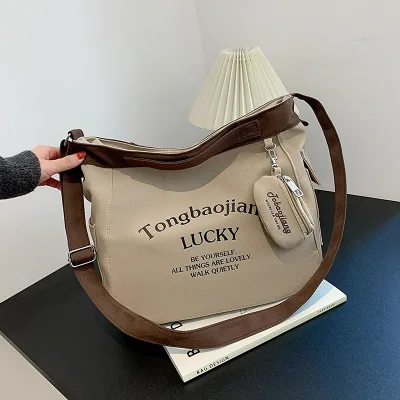


Comprehensive Sourcing Guide
Korean Version Woolen Crossbody Bag Supplier Concentration and Factory Types
The supplier pool for the Korean Version Woolen Crossbody Bag splits into two recognizable company types: manufacturers that produce bags in-house and trading companies that consolidate output from several workshops. In the current results, both types appear, and some listings combine the two roles, describing themselves as manufacturer and trading company at once. Manufacturer-type suppliers are generally the right first contact when you need custom woolen textures, bespoke hardware, or private-label branding, because they control sample processing, graphic processing, and made-to-order customization directly. Trading-company-type suppliers are useful when you want breadth across handbags, shoulder bags, wallets, crossbody bags, and backpacks without managing multiple factory relationships.
Location signals in the observed data point to Zhejiang, China as a declared place of origin for several crossbody and shoulder bag listings, and one trading company is based in Shanghai. Treat these as declared origin labels rather than proof of factory addresses, and confirm the actual production site during inquiry. To identify clusters beyond what is displayed, check where declared origins repeat across listings, ask suppliers which city their stitching and cutting workshops sit in, and request business licenses that name the manufacturing entity. A woolen crossbody listing may still be a PU or suede construction, so the cluster you target must match the actual material process, not just the product photo.
How to Verify Korean Version Woolen Crossbody Bag Suppliers
Start verification with the third-party checks that are already visible in supplier profiles, then confirm them independently. In the current results, at least one supplier carries an Intertek verification mark, and system certifications displayed include ISO 9001, sedex, ISO 14001, and ISO 45001. Do not assume every supplier on the page holds these credentials; each profile must be read individually. Ask any candidate supplier for certificate numbers and issuing bodies, then validate them against the certification body's own records rather than accepting a badge image. For sedex, request the facility's audit summary so you can see whether the factory or only the sales office was assessed.
Second, verify production capability in material-specific terms. Woolen crossbody bags demand fabric sourcing, lining matching, and pilling or abrasion considerations that differ from PU leather bags, and several observed listings are PU-based, so a woolen finish may be outsourced. Request a physical sample of the exact model, check the declared model number on the sample against the listing, and ask which operations are done in-house. Confirmed data points such as declared origin in Zhejiang, China should be cross-checked against the invoice entity. Finally, verify responsiveness under load: the observed profiles show response times ranging from about four hours to twenty-five hours, so send identical technical questions to several suppliers and compare reply quality, not just speed.
What to Compare Across Korean Version Woolen Crossbody Bag Suppliers
Build a comparison sheet from the attributes suppliers actually display, and record "not shown" where an attribute is missing rather than guessing. Useful dimensions include company type, location, main products, response time, lead time, MOQ, establishment year, escrow availability, and verification status. In the observed data, response times vary widely, from roughly four hours on one profile to twenty-five hours on a trading company profile, which matters when you are iterating samples on a seasonal item. Lead time is not consistently displayed, so treat it as a mandatory inquiry question. Main-product lines differ too: some profiles emphasize handbags, shoulder bags, wallets, crossbody bags, and backpacks, while others list ladies' bags narrowly.
Price and MOQ comparisons should use the concrete numbers shown on listings, with the caveat that they describe those listings only. Observed crossbody and shoulder bag listings span roughly 2.32 to 14.30 US dollars per unit, and MOQs range from as low as 2 pieces on one Korean-style crossbody model to 100 pieces on bucket-bag listings from a trading company. That spread tells you the page mixes low-MOQ stock sellers and higher-MOQ export sellers. Compare like with like: weight the MOQ against customization depth, check whether escrow or platform-protected payment is offered per supplier, and note that establishment year is often displayed but must not be assumed for every profile.
Common Korean Version Woolen Crossbody Bag Sourcing Risks
The most frequent risk in this category is material substitution. Listings observed here describe PU leather, suede-look finishes, and polyester or polyester-cotton linings, while your keyword targets woolen construction. A supplier may quote a woolen-look fabric that is actually brushed PU, which changes cost, hand feel, and pilling behavior. Counter this by specifying fiber content, pile height, and lining material in writing, requiring a pre-production sample signed off against the bulk order, and stating that any substitution voids acceptance. One observed listing also states the bag cannot be washed with water, a constraint worth flagging on your own product copy.
Second, beware of mismatched scale and seasonal timing. A Korean-style crossbody listing with an MOQ of 2 pieces is convenient for testing but may be stock goods with no customization path, while a 100-piece MOQ trading company may not hold woolen fabric in stock and will add a fabric procurement step to the lead time. Other recurring risks include size and capacity drift between sample and bulk, since observed capacity figures on similar listings vary from around 10 by 20 by 8 cm to 28 by 6 by 16 cm, and closure or hardware changes substituted silently. Finally, response-time gaps, up to a day in observed profiles, can stretch a seasonal production calendar; agree on reply-time expectations in the contract.
Korean Version Woolen Crossbody Bag Regional Sourcing and Logistics
Regionally, the declared origins visible in the current results concentrate in Zhejiang, China, with one Shanghai-based trading company also present. Zhejiang is a plausible base for bag production given the number of declared-origin listings, but you should still confirm whether the supplier's workshop is in the same province as the sales entity. Shanghai's role is more likely trade and export facilitation, given the profile is labeled a trading company with a broad ladies' bag range. Use this distinction to plan visits: factory audits belong at the cutting and stitching floor, while commercial negotiations can happen at either location.
Logistics planning for a woolen crossbody bag differs from PU bags in one practical way: woolen fabrics are more sensitive to moisture and compression, so carton specifications, desiccant use, and poly-bag wrapping deserve explicit agreement. Ask each supplier which port they habitually ship from, what the quoted terms include, and how the declared lead time, which is not shown on every observed profile, maps to production plus transit. For air freight samples, low-MOQ stock items ship fastest; for bulk, align the production start with fabric arrival. Also confirm who handles export documentation, since trading companies often manage customs while manufacturers may expect your forwarder to coordinate pickup from Zhejiang.
Korean Version Woolen Crossbody Bag Commercial Terms and Order Planning
Commercial terms should be nailed down per supplier, because the observed profiles differ sharply. One Korean-style crossbody model shows a unit price band of roughly 4.35 to 4.72 US dollars with an MOQ of 2 pieces, another bright-surface crossbody lists around 2.32 to 2.60 dollars, a retro PU shoulder bag sits near 3.90 to 4.27 dollars, and trading-company bucket and crossbody models run from about 10.00 to 14.30 dollars with a 100-piece MOQ. These bands imply different business models: low-MOQ stock purchase versus negotiated bulk production. Decide which model fits your launch plan, then negotiate price steps, tiered MOQs, and tooling or sample fees accordingly.
Order planning should sequence a paid sample, a pre-production sample in the confirmed woolen material, then bulk with agreed inspection points. Because one observed listing cannot be washed with water, set packaging and care-label expectations early. Payment terms deserve the same scrutiny as price: check whether a supplier offers escrow or platform-protected payment, since only some profiles display it, and never wire full prepayment to an unverified entity. Build the calendar backward from your retail season using the supplier's quoted response time, which observed profiles place between roughly four and twenty-five hours, and lock lead time, penalty clauses, and QC acceptance criteria into the purchase contract before deposit.
FAQs
What is a Korean Version Woolen Crossbody Bag?
It is a compact crossbody bag styled after Korean fashion trends, typically featuring a soft woolen or wool-blend exterior with a slim, versatile silhouette. Many listings on this page also show PU-based designs marketed in the Korean retro style, so buyers should confirm the exact shell material, lining, and dimensions with each supplier before placing an order.
What price range should I expect for these bags?
Listed products in this category range from about $2.32 to $14.30 per unit, depending on size, material, and order quantity. Smaller Korean-style PU crossbody bags sit at the lower end, while larger handbag and bucket-bag styles command higher prices. Always request a current quotation, because prices vary with customization, materials, and volume.
What minimum order quantities apply to crossbody bags?
Minimum order quantities vary widely between suppliers on this page. Some listings allow orders as small as 2 pieces, which suits sampling and market testing, while other products require 100 pieces per order. Before committing, ask each supplier for the MOQ on your chosen model and whether sample orders are available at a different rate.
How quickly do suppliers in this category respond to inquiries?
Response times differ significantly between the companies listed here. One manufacturer-type supplier reports an average response time of about 4 hours, while a trading company in this group averages around 25 hours. If speed matters for your project, message several suppliers at once and compare their actual reply times before shortlisting.
Are there manufacturers and trading companies for these bags?
Yes, this page includes both manufacturers and trading companies, so you can choose based on your priorities. Manufacturers typically offer sample processing, graphic processing, and customized on-demand production, while trading companies may aggregate styles from multiple factories. Verify each company's type, production capacity, and quality-control setup directly before finalizing a supply agreement.
Which certifications should I look for when sourcing these bags?
Some suppliers in this category hold ISO 9001, ISO 14001, ISO 45001, and sedex certifications, and one supplier is verified by Intertek. These credentials signal quality management and ethical-audit readiness, but coverage varies by company. Always ask a specific supplier for valid, current certificates and confirm they apply to the factory producing your bags.
Can I get customized Korean-style crossbody bags with my own branding?
Customization is generally possible, as at least one listed manufacturer advertises sample processing, graphic processing, and customized on-demand services. Typical options include branding, materials, colors, and hardware changes. Expect customization to affect MOQ, unit price, and lead time, so request a detailed quotation and pre-production sample before confirming a bulk order.
Where are the suppliers for these bags located?
The suppliers on this page are based in China, with one trading company located in Shanghai and several product listings showing Zhejiang as the place of origin. Zhejiang is a well-known bag-producing region. Confirm the actual manufacturing site for your specific order, because production may occur in a different city from the sales office.