Labor Saving Hand Riveting Gun Suppliers and Manufacturers
Compare 22 verified suppliers of Labor Saving Hand Riveting Gun tools from China Hebei and Fujian. Review lead times, certifications, and pricing to source the right hand riveting equipment for your needs; review the available evidence before requesting comparable quotations from suitable candidates.
Suppliers List

Hebei Sinotools Industrial Co., Ltd.
- Verified by CTI
- Trading Company
- China Hebei
- Lead time30 days
- Avg. response≤ 5h
Main productsScrewdriver, Plier, Wrench, Hammer, Tape Measure, Pruning Shear, Knife, Tool Set
Main marketsEurope

Manual Professional Single Hand Riveting Gun Labor-Saving PVC Handle Rivet Gun
$2.15 - $2.26
MOQ: 1500 Pieces


- Verified by CTI
- Manufacturer/Factory
- China Fujian
- Lead time45 days
- Avg. response≤ 10h
Main productsTiming Tools, Hand Tools, Garage Equipment, Hydraulic Jacks, Tyre Changer, Lifts, Riveter, Impact Sockets, Drill Bits, Bead Seater
Main marketsSouth America,Eastern Europe,Mid East,Southeast Asia,Oceania,Western Europe


Riveter Hand-Operated Nail Gun Hand Riveting Gun with Door-Type Nails of 4-14mm.
$2.50 - $2.80
MOQ: 300 Pieces

Riveter Hand-Operated Nail Gun Hand Riveting Gun with Nails of 4-14mm, 10-12mm, 10-14mm.
$2.50 - $2.75
MOQ: 300 Pieces


Riveter Iron Single Handle Rivet Gun Hand Riveting Gun with Nozzles for 2.4mm/3.2mm/4mm 4.8mm Rivets
$3.00 - $10.00
MOQ: 300 Pieces


Hailin industrial and Industrial (Shanghai) Co., Ltd.
- Trading Company
- Shanghai, China
- Lead time30 days
- Avg. response≤ 5h
Main productsHydyaulic Tools,Hand Tools,Crimping Tools,Cable Cutter,Rebar tools
Main marketsNorth America(37.00%), Eastern Europe(29.00%), Western Europe(22.00%), Africa(11.00%), Domestic Market(1.00%)

Shandong Xiangqiu Truck Maintenance Equipment Co., Ltd.
- Verified by BV
- Manufacturer/Factory
- China Shandong
- Lead time23 days
- Avg. response≤ 5h
Main productsRiveting Machine, Brake Lining Remover, Bearing Oiler, Bearing Cleaning Machine, Tire Protection Trailer, Bearing Oiling Cleaning Machine
Main marketsSouth America,Eastern Europe,Mid East,North America,Southeast Asia,Eastern Asia,Oceania,Western Europe,Africa

FUZHOU CONIC INDUSTRIAL CO., LTD.
- Verified by BV
- Trading Company
- China Fujian
- Lead time23 days
- Avg. response≤ 16h
Main productsHand Tools, Hardware, Measuring Tools, Insulator, Cutting Tools, Vernier Caliper, Micrometer, Furniture
Main marketsSouth America,Africa,Southeast Asia/ Mideast,East Asia(Japan/ South Korea),Europe,Australia,North America


Factory Direct Sales Heavy Duty Manual Riveter Guns Hand Riveting Tool M3-M10 Hand Rivet Nut Gun
$17.00 - $34.00
MOQ: 50 Pieces

Hand Riveter with Damper Design Made From Die Cast Aluminum Alloy Rivet Gun
$0.10 - $5.45
MOQ: 500 Pieces

200mm Hand Riveter with 3-Jaw Includes 2.4mm, 3.2mm, 4.0mm, 4.8mm Nozzles
$1.00 - $5.00
MOQ: 100 Pieces

Ningbo Cloudtop Tools Co., Ltd.
- Trading Company,Manufacturer/Factory
- China Zhejiang
- Lead time30 days
- Avg. response≤ 10h
Main productsSpray Gun, Pneumatic Tool, Air Tool, Air Impact Wrench, Air Riveter, Air Sander, Air Nailer, Air Filter, Air Screwdriver, Air Ratchet Wrench
Main marketsSouth America,Eastern Europe,Mid East,North America,Southeast Asia,Eastern Asia,Oceania,Western Europe,Africa

Wenzhou Meters Int'l Trade Co., Ltd.
- Trading Company,Manufacturer/Factory
- China Zhejiang
- Lead time23 days
- Avg. response≤ 18h
Main productsHose Clamp, Utility Knife, Safety Products, Cutting Tools, Strike Tools, Fastening Tools, Safety Helmet, Hammer, Warming Tape, Plastic Injection
Main marketsSouth America,Eastern Europe,Mid East,North America,Southeast Asia,Eastern Asia,Oceania,Western Europe,Africa

Shanghai AMC International Trading Co., Ltd.
- Verified by BV
- Trading Company
- China Shanghai
- Lead time30 days
- Avg. response≤ 11h
Main productsHandware, Hinges, Hardware, Hand Tools, Tools, Hammer, Plier, Measuring Tape, Screwdriver, Screws
Main marketsSouth America,Africa,Europe,North America

Wuxi Mayshee Developing Company., Ltd
- Verified by SGS
- Trading Company,Manufacturer/Factory
- China Jiangsu
- Lead time23 days
- Avg. response≤ 8h
Main productsBlind Rivet, Rivet Nut, Semi-Tubular Rivet, Screws, Rivet, Rivet Gun, HSS Drill Bit, Huck Items
Main marketsEastern Europe,North America,Southeast Asia,Western Europe


Battery Power Portable Hand Held Pressure Adjustable Self-Piercing Riveting Gun
$1800.00 - $2500.00
MOQ: 1 Pieces


3 in 1 Hand Riveter Multi-Function Rivet Gun for Blind Rivet/ Insert Nut/Reaming Tools
$24.00 - $28.70
MOQ: 50 Pieces

Rivfast Machinery(Shanghai) Co., Ltd
- Verified by TUVRHEINLAND
- Trading Company,Manufacturer/Factory
- China Shanghai
- Lead time23 days
- Avg. response≤ 2h
Main productsRivet Gun, Cordless Paint Sprayer, Nail Gun, Power Tools, Air Tools
Main marketsSouth America,Eastern Europe,North America,Western Europe

Heavy Duty Manual Riveter Guns Hand Riveting Tool Hand Rivet Nut Gun Bt605
$28.80 - $32.00
MOQ: 10 Pieces

$36.20 - $38.80
MOQ: 5 Pieces


Durable Rivnut Tool Kit Non-Slip Hand Riveter Nut Gun Kit Easy for Your Work etc
$29.20 - $33.80
MOQ: 10 Pieces


Professional Riveting Machine Heavy Duty Rivet Gun Double Handle Rivet Nut Tool Bt605
$28.80 - $32.00
MOQ: 10 Pieces

Dongguan Co-Win Machinery Equipment Co.,Ltd
- Verified by CTI
- Manufacturer/Factory
- China Guangdong
- Lead time15 days
- Avg. response≤ 3h
Main productsFastener Insertion Machine, Riveting Machine, CNC Spinning Machine, Pneumatic Press Machine, Hydro Pneumatic Press Machine, Kf94 Mask Production Line, Punching Machine, Face Mask Machine, CNC Metal Spinning Machine, Pneumatic Riveting Machine
Main marketsSouth America,Eastern Europe,North America,Southeast Asia,Eastern Asia,Oceania,Western Europe,Africa


Automatic Electric Hydraulic Riveting Gun for Efficient and Accurate Riveting
$2490.00 - $2720.00
MOQ: 1 Pieces

Automated and Efficient Electro-Hydraulic Riveting Gun Riveting Tool
$2490.00 - $2720.00
MOQ: 1 Pieces


Shenzhen Alisi Electronic Technology Co., Ltd.
- Trading Company, Distributor/Wholesaler
- Guangdong, China
- Lead time3 days
- Avg. response≤ 2h
Main productselectron component,temperature controller,Auto parts,sensor,Wireless Controller
Main marketsSouth America(20.00%), Eastern Europe(20.00%), North America(15.00%), Western Europe(5.00%), Domestic Market(5.00%), South Asia(5.00%), Southern Europe(5.00%), Northern Europe(5.00%), Central America(5.00%), Eastern Asia(3.00%), Mid East(3.00%), Oceania(3.00%), Africa(3.00%), Southeast Asia(3.00%)
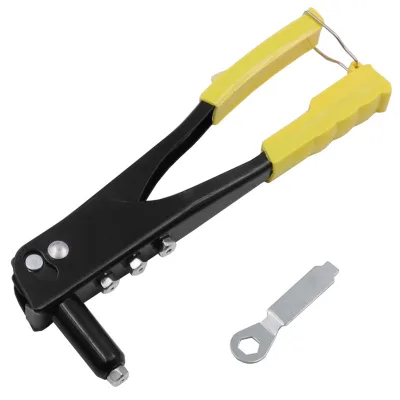
Manual riveting gun single-handle portable labor-saving core-pulling riveting gun
$1.55 - $1.86
MOQ: 20 Minimum
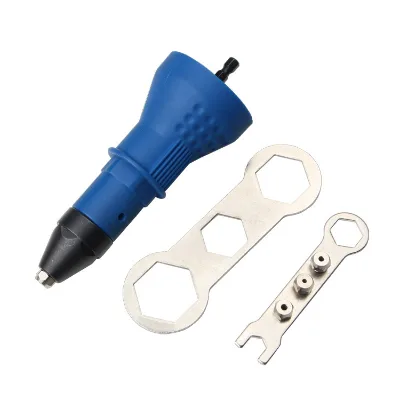

Heron Intelligent Equipment Co., Ltd.
- Combined
- China Guangdong
- Lead time45 days
- Avg. response≤ 8h
Main productsInverter Welding Machine, Butt Welding Machine, Capacitor Discharge Welder, Manual Integrated Welding Machine, Seam Welding Machine, Robotic Welder, Capacitor Discharge Welding Machine, Arc Welding Machine, Mfdc Welder, Robotic Working Cell
Main marketsSouth America,Southeast Asia/ Mideast,Europe,North America

Portable Hand Held Riveting Welding Machine
MOQ: 1 Pieces

High Quality 80t Riveting Machine
MOQ: 1 Pieces

Hipex Industrial Products Co., Ltd. Hunan
- Trading Company
- China Hunan
- Lead time23 days
- Avg. response≤ 25h
Main productsTools, Hand Tools, Architectural Hardware & Tools, Hardware & Tools, Decorating Tools
Main marketsSouth America,Others(foreignTradeCapacity.exportBusinessCapacityMarketOther),Europe

Ningbo Zhite Import and Export Co., Ltd.
- Verified by SGS
- Trading Company
- China Zhejiang
- Lead time15 days
- Avg. response≤ 4h
Main productsTool Set, Hardware Tool, Hand Tool, Hand Tools, Tooling Kit, Hardware Tools, Socket Set, Small Home Appliances, Air Fryer, Meat Grinder
Main marketsEurope

- Trading Company
- China Jiangsu
- Lead time30 days
- Avg. response≤ 9h
Main productsFastener Insertion Machine, Self Clinching Machine, Bending &Cutting, Hydraulic Steel Worker, Grinding Machine, Bending Tools, Press Brake, V-Cutting Machine, Corner Forming Machine, Hydraulic Ironworker
Main marketsSoutheast Asia/ Mideast,Domestic,Europe,North America

Lanxi Kingway International Trade Co., Ltd.
- Verified by TUVRHEINLAND
- Trading Company,Manufacturer/Factory
- China Zhejiang
- Lead time23 days
- Avg. response≤ 3h
Main productsRoofing Sheets, Doors, Iron Nails, Hinges, Paint Brush, Hand Tools, Locks, Measuring Tools, Hammers, Coffin Fitting
Main marketsSouth America,Eastern Europe,Mid East,North America,Southeast Asia,Eastern Asia,Africa


High Strength European Style Heavy Duty Hand Rivet Gun Manual Hand Riveting
$0.80 - $2.50
MOQ: 600 Pieces


Homemade Riveter Gun Manual Gun Easy-Taking Tracker Stapler Gun Manual Nail Driver
$0.80 - $2.50
MOQ: 600 Pieces

Suzhou Toryin Trading Co., Ltd.
- Trading Company
- Jiangsu, China
- Lead time30 days
- Avg. response≤ 4h
Main productsHand Tools,Car Tools,Outdoor Tools,Garden Tools,Kitchen Tools
Main marketsSouth America(21.00%), North America(18.00%), Western Europe(8.00%), Eastern Europe(8.00%), Southern Europe(7.00%), Domestic Market(7.00%), Central America(5.00%), Southeast Asia(5.00%), Northern Europe(5.00%), Africa(5.00%), South Asia(3.00%), Eastern Asia(3.00%), Mid East(3.00%), Oceania(2.00%)

- Verified by SGS
- Trading Company,Manufacturer/Factory
- China Jiangsu
- Lead time45 days
- Avg. response≤ 5h
Main productsTrowel, Pliers, Tool Set, Socket Set, Adjustable Wrench, Knife, Hand Saw, Safety Googles, Hammer, Shear
Main marketsSouth America,Eastern Europe,North America,Western Europe,Africa
Shandong Hanbang Tools Co., Ltd.
- Verified by SGS Group
- Trading Company
- Lead time15 days
- Avg. response≤ 2h
Main productsHand Tools, Power Tools, Welding Tools, Water Pump
Main marketsDomestic Market(45%), Southeast Asia(12%), Mid East(6%)
- Verified by CTI
- Trading Company,Manufacturer/Factory
- China Jiangsu
- Lead time38 days
- Avg. response≤ 18h
Main productsSafety Product, Safety Coverall, Safety Glasses, Safety Vest, Safety Helmet, Safety Gloves, Safety Shoes, Safety Goggles, Safety Harness, Safety Rain Boots
Main marketsSouth America,Eastern Europe,Mid East,North America,Southeast Asia,Eastern Asia,Oceania,Western Europe,Africa

Shaoxing Feida Nail Industry Co., Ltd.
- Combined
- China Zhejiang
- Lead time0 days
- Avg. response≤ 15h
Main productsStaples, Mattress Clips, Nail, C Ring Staples, Hog Ring Staples, Hog Ring Pliers, Air Hole, Pneumatic Gun, Takeover, Industrial Staples






Comprehensive Sourcing Guide
Labor Saving Hand Riveting Gun Supplier Concentration and Factory Types
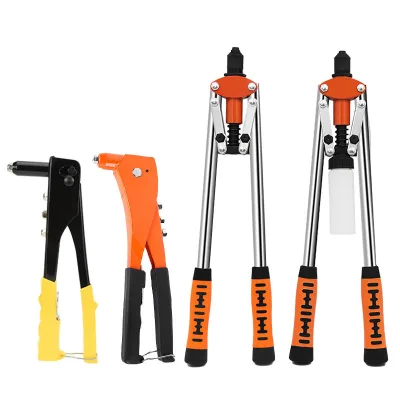
The Labor Saving Hand Riveting Gun category is served by a mix of manufacturers and trading companies, and understanding that split should shape how you shortlist. Some listings in this category come from factory-based operations that identify as manufacturers, while others are trading companies that consolidate hand tool assortments — screwdrivers, pliers, wrenches, hammers, tape measures, pruning shears, knives and complete tool sets — from multiple production sources. A trading company can be a practical choice if you want to bundle riveters with a broader hand tool program on one purchase order, whereas a factory route may give you more direct control over tooling, material selection and customization for a dedicated riveter line.
Geographic concentration matters here. Verified listings in this category point to supplier locations in Hebei and Fujian, which are plausible starting regions when you map the supply base, though you should not assume every capable supplier sits in those two provinces. One Hebei-based trading company source lists a 30-day lead time and ISO9001:2015 certification with CTI verification, while a Fujian-based factory lists a 45-day lead time and OEM capability with riveters among its main products. Treat those two profiles as a reminder that company type, province and listed lead times vary considerably, so cluster assumptions should be confirmed against each supplier's own disclosed facts rather than inherited from the category average.
How to Verify Labor Saving Hand Riveting Gun Suppliers
Verification begins with the attributes a supplier has actually disclosed, not the ones you hope exist. In this category, useful displayed signals include verification status, such as CTI verification, and system certification, such as an ISO9001:2015 certificate, which appeared on a Hebei trading company listing. Note that these are supplier-level attributes: a factory in Fujian serving the same product line may show OEM capacity and a factory company type without displaying the same certificate, so absence of a badge is not proof of a problem — it is a question to ask. Always request the certificate number and issuing body for any claimed ISO or product certification and confirm it is current.
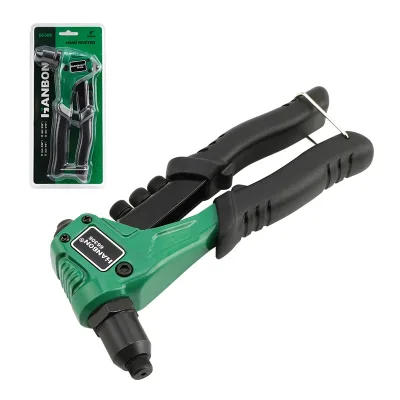
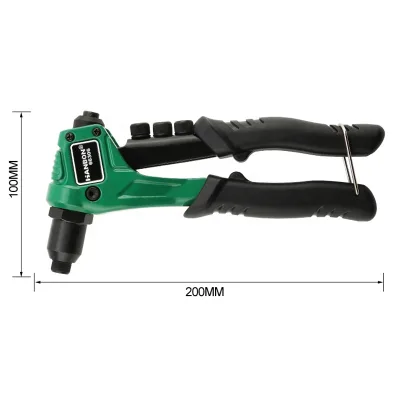
Second, verify through the product evidence itself. Listings in this category show detailed product records: model numbers such as P50306, P50301 and SXT-2010B, body materials like iron metal stamping, carbon steel or aluminium die-cast, net weights between roughly 390g and 610g, and packed dimensions. A supplier whose product pages specify rivet capacities (for example 2.4mm through 4.8mm rivets or M3–M6 nuts), packing formats and origin details demonstrates a level of documentation discipline worth testing further. Ask each candidate to state its company type (manufacturer or trading company), establishment year, and whether it permits a third-party audit or factory visit. Suppliers that resist basic verification requests, or whose answers contradict their own displayed attributes, should drop down your shortlist before any sample money is spent.
What to Compare Across Labor Saving Hand Riveting Gun Suppliers
Build a comparison table from the dimensions suppliers actually display, while remembering that not every supplier shows every attribute. Core comparables in this category include lead time, where observed figures range from 30 days at one supplier to 45 days at another — a fifteen-day spread that matters if you are timing a seasonal hand tool program. Response time is another visible metric, with recorded values around 4.50 and 9.43 hours; a supplier answering within half a working day will usually resolve specification questions faster during production. Company type, location (Hebei versus Fujian in current listings), and main product breadth are equally comparable and often explain pricing and flexibility differences.
Product-level comparisons should go deeper than headline prices. Current listings show hand riveters ranging from roughly USD 2.10 to 10.00 per unit depending on model, with MOQs such as 1,500 pieces on one sliding-card packed model and 300 pieces on another. Compare certification markings shown on products (RoHS, CE, ISO appear on several listings), power source (hand versus pneumatic), rivet or nut capacity, net weight, body material, handle finish, packing format and customization availability. Also weigh establishment year and escrow support where displayed, since longer operating history and protected payment channels both reduce counterparty risk. Rank suppliers on the combination — a slightly higher unit price with a lower MOQ, faster replies and clear certification data often beats the cheapest quote once landed cost and risk are counted.
Common Labor Saving Hand Riveting Gun Sourcing Risks
The most common risk is assuming product listing data equals production reality. A listing may advertise customization as available, but customization capability, tooling cost and minimum volumes for customized runs are separate commitments the supplier must confirm in writing. Similarly, certification text on a product page — RoHS, CE or ISO markings — should be matched with copies of actual certificates covering that specific model, because markings applied at the listing level do not automatically apply to your production batch. Another frequent trap is capacity mismatch: a supplier listing multiple riveter models at different price points and MOQs may be allocating production across several products, and your order may queue behind larger programs.
Quality and consistency risks concentrate in the details disclosed on product pages. Riveter models in this category differ in body material (iron stamping, carbon steel, aluminium die-cast), surface treatment (spray painting, plastic coating, chrome plating), handle cover material (dipped PVC) and net weight; a substitution of any of these between your approved sample and a later shipment changes both feel and durability. Weight is a useful practical check — several models list net weights around 390g to 610g, so weigh received goods against the sample. Also watch for scope creep in packaging: sliding card, blister card and color box are all cited packing formats, and switching format changes unit cost and retail readiness. Finally, lead-time drift is real — disclosed lead times of 30 and 45 days will stretch during peak season unless capacity is contractually committed.
Labor Saving Hand Riveting Gun Regional Sourcing and Logistics
Regional sourcing in this category should start from verified data rather than reputation alone. Current supplier results place active riveter sellers in Hebei and Fujian, with the Hebei source operating as a trading company carrying a broad hand tool range, and the Fujian source operating as a manufacturer/factory whose main products include riveters alongside timing tools, garage equipment, hydraulic jacks, tyre changers, lifts, impact sockets, drill bits and bead seaters. That Fujian profile suggests a supplier embedded in automotive and workshop equipment supply chains, which can be relevant if your riveter program must integrate with related tool categories. Where no location is displayed, ask the supplier directly for its registered province and factory address before assuming it belongs to a particular cluster.
Logistics planning should build from the packing data suppliers disclose. Listed packing sizes include dimensions such as 35×24×36cm, 35×21×35cm and 34×34×35cm, and one pneumatic-capable model ships 10 pieces per carton at 56×28×41cm with a net weight of 1.88kg per unit. Use these figures to estimate carton counts, container utilization and freight class before quoting, and ask each supplier for the exact master carton specification of the model you intend to buy, since packing varies by model even within one supplier. Disclosed lead times of 30 and 45 days should anchor your production calendar, with extra allowance for origin port conditions and inspection time. For mixed hand tool orders through a trading company, confirm consolidation and palletizing arrangements early.
Labor Saving Hand Riveting Gun Commercial Terms and Order Planning
Commercial terms should be negotiated against the disclosed benchmarks in this category rather than in a vacuum. Observed unit prices run from about USD 2.10–2.20 for a 10.5-inch pop rivet gun and USD 2.15–2.26 for a single-hand labor-saving model, up to USD 3.54–3.72 for an 8-inch model and USD 6.50–6.80 for an aluminium nut riveter, with a broader USD 3.00–10.00 range on an iron single-handle riveter. MOQs likewise vary sharply: 1,500 pieces on one card-packed model versus 300 pieces on another supplier's offering. Use these spreads to frame negotiations — quote anchors exist, but each model's certification marking, material and packing legitimately justify different price points.
Order planning should tie quantities to the supplier's confirmed lead time and your sell-through forecast. With lead times of 30 days (Hebei trading company) and 45 days (Fujian factory) currently displayed, plan reorder triggers at least one lead time ahead, and add buffer for inspection, customization approvals and holiday shutdowns at the origin. Confirm in writing the packing format (sliding card, blister card or color box), model number, certification markings, net weight tolerance and customization scope for every order. If escrow or other protected payment is offered on a platform, weigh it heavily for first orders, then transition to negotiated terms after a verified first shipment. Finally, lock sample-to-production consistency by retaining a sealed sample referencing the agreed model, weight and finish.
FAQs
What is the typical lead time for hand riveting guns?
The typical lead time for these tools is 30 days from order confirmation. Some manufacturers in Fujian may require up to 45 days for production. Buyers should confirm specific timelines with the supplier before placing an order to ensure timely delivery.
What are the minimum order quantities for rivet guns?
Minimum order quantities vary by supplier and product model. One listing requires 1500 units, while another accepts orders starting at 300 pieces. Buyers must check the specific MOQ for the desired model before finalizing their purchase agreement with the vendor.
Which certifications do these hand riveting guns hold?
Many products carry RoHS, CE, and ISO certifications. The manufacturing facility also holds an ISO9001:2015 system certificate. Buyers should verify that the specific batch meets these standards to ensure compliance with international safety and quality requirements for hardware tools.
Where are these hand riveting guns manufactured?
These tools are manufactured in China, specifically in Hebei and Fujian provinces. Some products list Ningbo as the origin point. Buyers should confirm the exact production location to understand shipping logistics and potential regional quality variations in the supply chain.
What is the price range for manual rivet guns?
Prices typically range from 2.10 to 10.00 US dollars per unit depending on the model. Basic hand riveters start around 2.10 dollars, while specialized aluminum nut riveters can cost up to 6.80 dollars. Bulk orders often influence the final unit price significantly.
How quickly do suppliers respond to inquiries?
Response times vary between 4.50 and 9.43 hours for most listed suppliers. Trading companies and manufacturers generally aim to reply within this window. Buyers should expect a response within a day but may need to follow up if the inquiry is complex.
Are customization options available for these tools?
Customization is available for many hand riveting gun models listed. Suppliers offer options for specific handle colors, body materials, and packaging types. Buyers should discuss their specific branding or design requirements directly with the manufacturer to confirm feasibility and additional costs.