Mixed Cotton Polyester Used Clothes Suppliers and Manufacturers
Discover 13 verified suppliers offering Mixed Cotton Polyester Used Clothes with ISO certifications and varied lead times. Compare response speeds, MOQs, and product conditions like Grade A or B before requesting quotes for container shipments; review the available evidence before requesting comparable quotations from suitable candidates.
Suppliers List

Guangdong Hissen Resources Recycling Co., Ltd.
- Verified by SGS
- Manufacturer/Factory
- China Guangdong
- Lead time15 days
- Avg. response≤ 9h
Main productsUsed Clothes, Used Shoes, Used Bags, Cotton Rags, Used Brand Shoes, Used Brand Bags, Used Summer Clothing, Used Winter Clothing, Second Hand Clothes, Used Brand Clothes
Main marketsSouth America,Mid East,Southeast Asia,Oceania,Africa

Guangzhou Hissen International Trade Limited Company
- Verified by BV
- Combined
- China Guangdong
- Lead time15 days
- Avg. response≤ 4h
Main productsUsed Clothes, Second Hand Clothes, Used Shoes, Second Hand Shoes, Used Brand Clothes, Used Brand Shoes, Used Bags, Second Hand Bags, Cotton Rags, Used Sneaker
Main marketsSouth America,Africa,Southeast Asia/ Mideast,Europe,North America


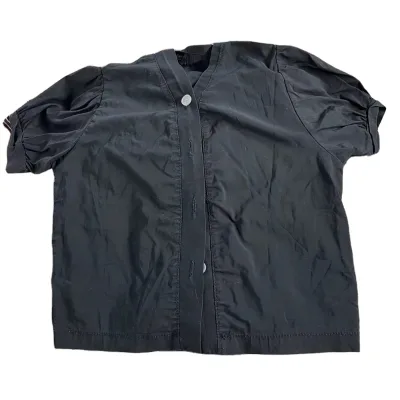
Mixed Branded Used Clothes Bundle in Zambian Bales, Outlet Style Used Clothes
$0.50 - $1.50
MOQ: 45 kg


Container Wholesale Second Hand Clothes Export to Africa Mixed Clothing Used Clothes
$0.50 - $1.50
MOQ: 45 kg


Huizhou Yijiayi Low Carbon Recycling Technology Co., Ltd.
- Verified by Intertek
- Manufacturer, Trading Company
- Lead time15 days
- Avg. response≤ 2h
Main productsUsed Clothes, Used Bag, Used Shoes

Wuhan Haisen Renewable Resources Co., Ltd.
- Verified by SGS
- Combined
- China Guangdong
- Lead time30 days
- Avg. response≤ 5h
Main productsUsed Clothes, Second Hand Clothes, Used Summer Clothes, Used Winter Clothes, Used Brand Clothes, Used Brand Shoes, Used Mixed Shoes, Used Mixed Bags, Used Brand Bags, Cotton Rags
Main marketsSouth America


Bulk China Wholesale Kids Used Clothing Bale of Clothes Mixed Children Used Clothing
$700.00 - $1500.00
MOQ: 10 Tons

Good Quality 2ND Hand Bale of Clothes Mixed Children Clothing Used Kids Clothes
$500.00 - $1200.00
MOQ: 10 Tons

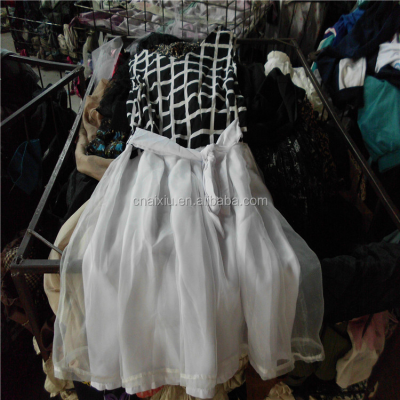
Cheap Price Used Long Dress Second Hand Bales Mixed Clothing Used Second Hand Children Clothes
$700.00 - $1500.00
MOQ: 10 Tons

Tianjin Beichen District Aixiu Clothes Factory
- Manufacturer
- Lead time旺季: , 淡季:
- Avg. response≤ 16h
Main productsused clothes,used shoes,used bags,used summer clothing,summer shoes

HASUN Mechanical & Electrical Equipment Co., Ltd.
- Verified by BV
- Trading Company,Manufacturer/Factory,Group Corporation
- China Guangdong
- Lead time23 days
- Avg. response≤ 19h
Main productsOptical Fiber Cable Machine, Fiber Optical Cable Machine, Indoor Optical Fiber Cable Machine, Outdoor Optical Fiber Cable Machine, Premise Optical Fiber Cable Machine, FTTH Fiber Cable Sheathing Line, Fiber Tight Buffering Line, Fiber Cable Secondary Coating Line, Optical Fiber Cable Sz Stranding Line, Fiber Cable Outer Sheathing Line
Main marketsSouth America,Eastern Europe,Mid East,North America,Southeast Asia,Eastern Asia,Oceania,Western Europe
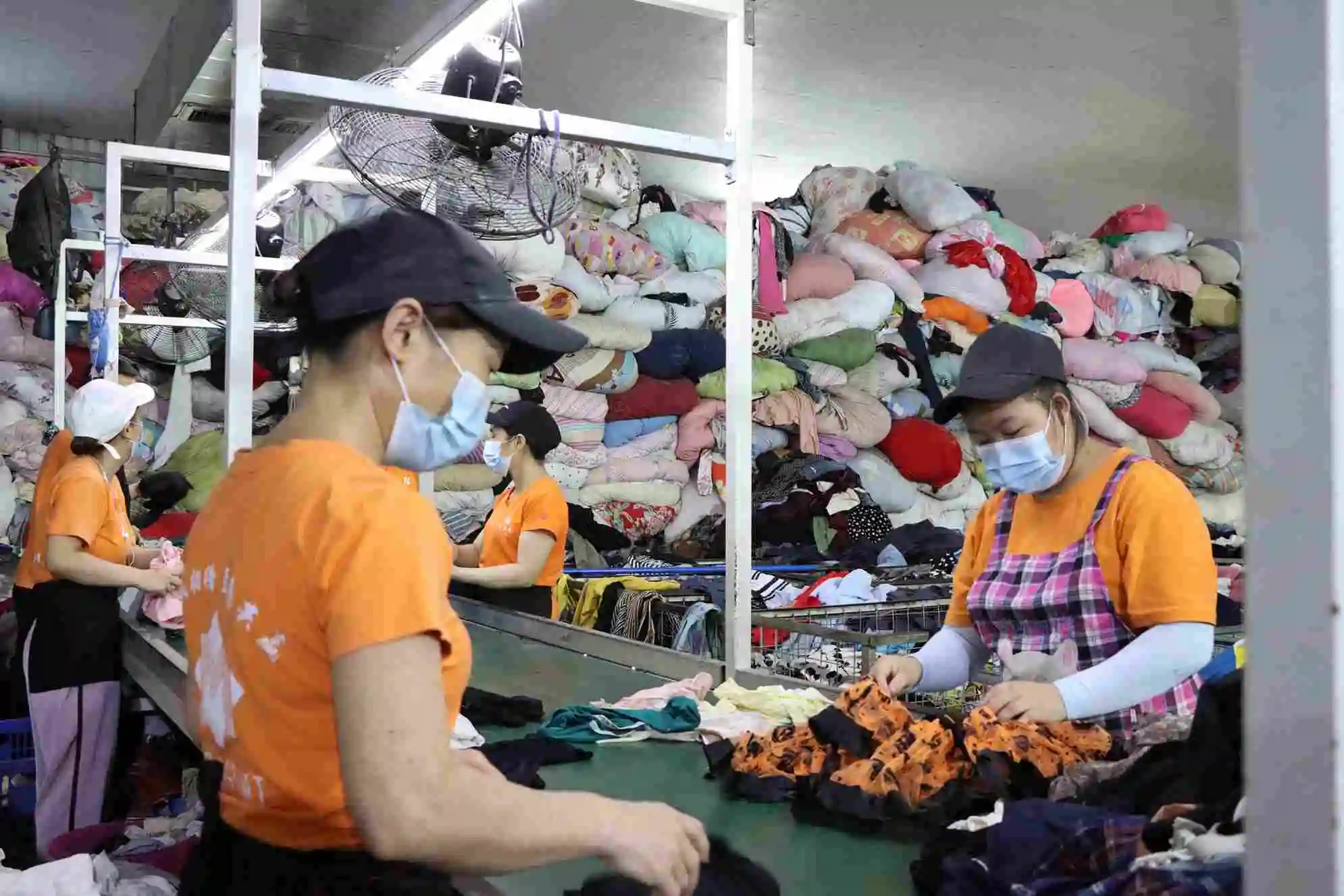
GUANGZHOU ZAGUMI TRADING CO., LIMITED
- Trading Company
- Hong Kong S.A.R.
- Lead time5 days
- Avg. response≤ 12h
Main productsUsed Clothes,Used Shoes,Used Bags,Mixed Rags,Credential Clothing
Main marketsAfrica(55.00%), Southeast Asia(15.00%), Mid East(10.00%), South America(10.00%), North America(5.00%), Eastern Europe(5.00%)
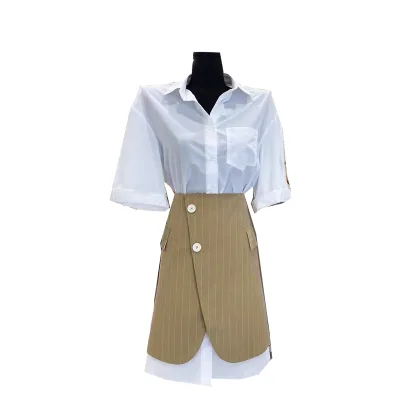
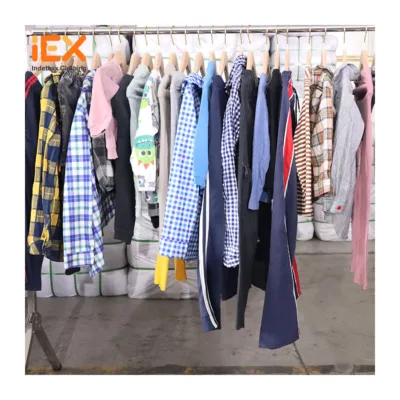
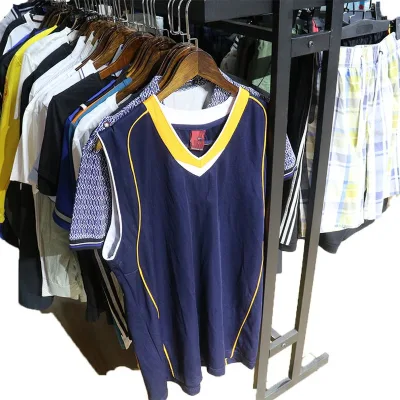
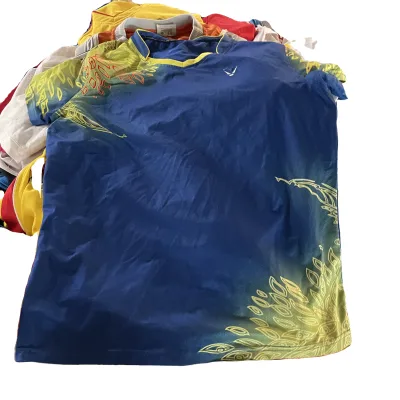
Good Price Popular Men Short Sleeve T-Shirt Secondhand Clothing Summer Used Clothes
$0.40 - $1.25
MOQ: 1000
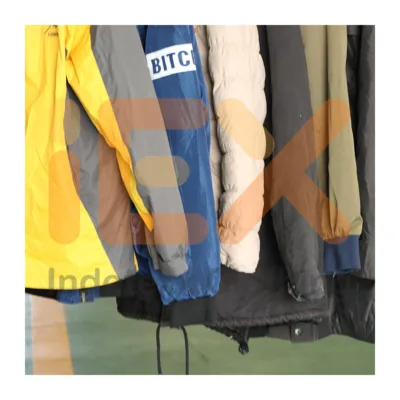
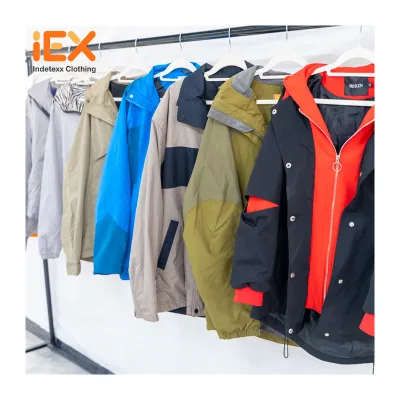
Second Hand Used Clothing Clean Polyester/Cotton 45-100kg/bale Wholesale in Uganda
$0.50 - $1.50
MOQ: 1000
Guangzhou Gracer Renewable Resources Co., Ltd.
- Verified by SGS Group
- Manufacturer, Trading Company
- Lead time3 days
- Avg. response≤ 4h
Main productsUsed Summer Clothes, Used Winter Clothes, Used Bags, Used Shoes, Recycled Textile Material
Main marketsAfrica(40%), Southeast Asia(35%), South America(10%)
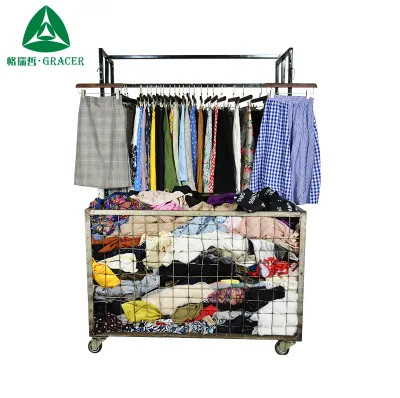
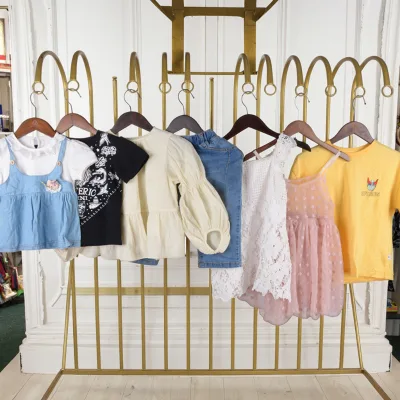
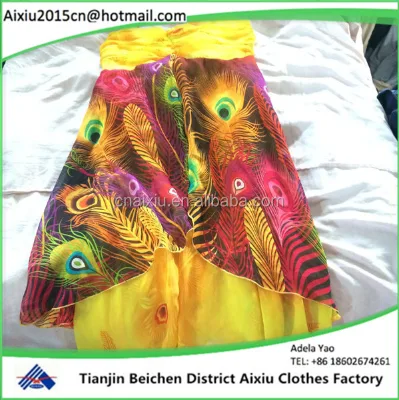
Mix Long and Mini Women Cloth Used Clothes Second Hand Clothing Skirt Used Clothing
$1.02 - $2.04
MOQ: 1 kilograms
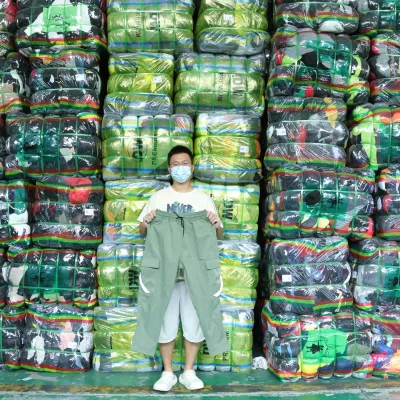
Shenyang Yuhong Xinpengyang Garment Factory
- Manufacturer
- Liaoning, China
- Lead time0 days
- Avg. response≤ 4h
Main productsMen's clothing of second-hand,Secondhand couture,Second-hand bag
Main marketsAfrica(60.00%), Southeast Asia(30.00%), Eastern Europe(5.00%), Mid East(5.00%)
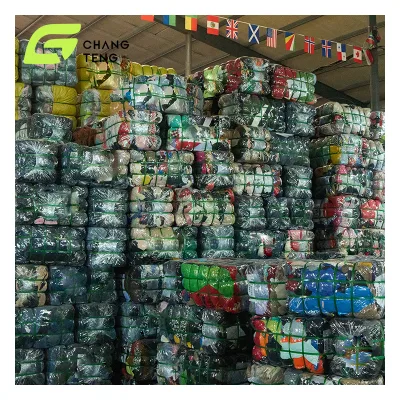
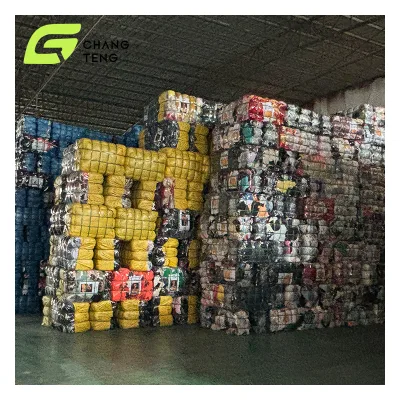
Zibo Changteng International Trading Co., Ltd.
- Verified by SGS Group
- Manufacturer, Trading Company
- Shandong, China
- Lead time15 days
- Avg. response≤ 3h
Main productsHome Furniture, Photography Services, Used Clothes

Wenzhou Hongyang Trading Co., Ltd.
- Verified by TUVRHEINLAND
- Manufacturer/Factory
- China Zhejiang
- Lead time23 days
- Avg. response≤ 12h
Main productsUsed Clothes, Used Shoes, Used Bags
Main marketsSoutheast Asia,Africa
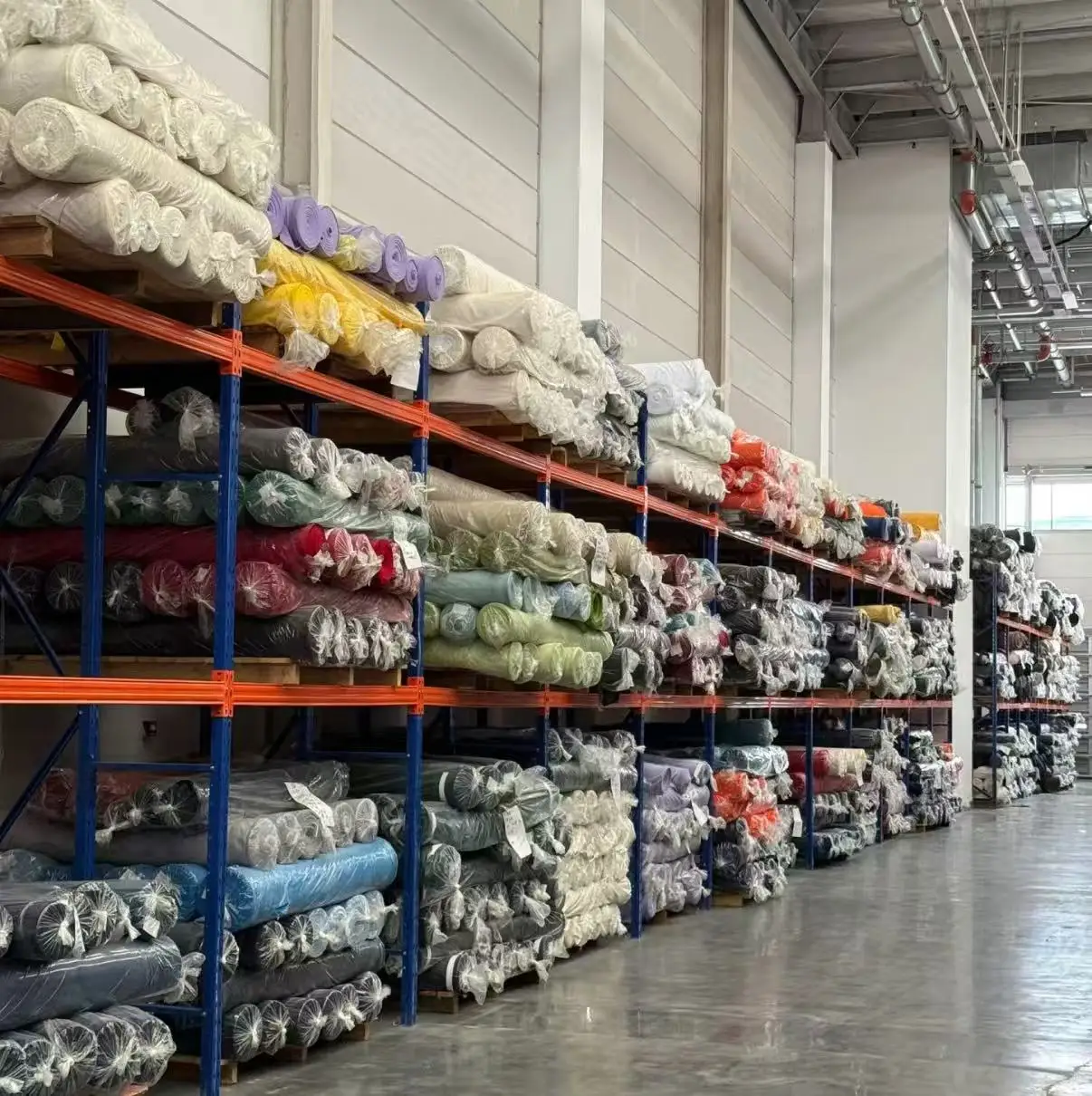
Fuzhou Jin 'an District Xiangqian Trading Co., Ltd.
- Trading Company
- Fujian, China
- Lead time15 days
- Avg. response≤ 4h
Main productsMixed and matched clothing,Stock clothing,Second-hand clothing,Mixed-style bags,Mixed-up shoes
Main marketsSoutheast Asia(20.00%), Northern Europe(20.00%), North America(20.00%), Central America(10.00%), South America(5.00%), South Asia(5.00%), Africa(1.00%), Mid East(1.00%)

Guangzhou Riching Renewable Resources Co., Ltd.
- Verified by SGS
- Combined
- China Guangdong
- Lead time30 days
- Avg. response≤ 9h
Main productsUsed Summer Clothes, Used Winter Clothes, Used Brand Clothes, Used Mixed Shoes, Used Brand Shoes, Used Kids Shoes, Used Football Shoes, Used Basketball Shoes, Used Mixed Bags, Used School Bags
Main marketsAfrica

Used Children Clothes and Second Hand Kids Clothes Children Used Clothing Bulk
$5.50 - $9.00
MOQ: 7000 Pairs


Wholesale of Mixed Sizes of Second-Hand Winter Children's Sweaters and Old Clothes
$1.30 - $1.50
MOQ: 450 kg

High Quality Hot Selling Second-Hand Hoodies Mixed Second-Hand Clothing Wholesale
$1.30 - $1.50
MOQ: 450 kg






Comprehensive Sourcing Guide
Mixed Cotton Polyester Used Clothes Supplier Concentration and Factory Types
Current data indicates that verified suppliers for Mixed Cotton Polyester Used Clothes are concentrated in China Guangdong, a region known for its extensive textile processing infrastructure. This location hosts a mix of manufacturer-factories and combined trading entities that handle the sorting, cleaning, and baling of second-hand apparel. The presence of ISO 9001 and ISO 14001 certifications among these facilities suggests a standardized approach to quality management and environmental compliance within the cluster. Buyers should prioritize facilities in this specific region when seeking suppliers with established export capabilities, as the local ecosystem supports the high-volume logistics required for containerized shipments.
The supplier landscape in this area includes entities classified as manufacturers, trading companies, or combined operations, each offering distinct advantages for different procurement strategies. Manufacturer-factories often provide direct access to their sorting lines and may offer OEM or ODM customization for packaging and branding, while combined entities might leverage broader networks to source diverse inventory. Some suppliers list an annual output capacity of up to 3000 containers, indicating significant scale, while others focus on monthly capacities of 100 containers. When evaluating potential partners, buyers must verify the specific company type to ensure alignment with their needs for either direct factory pricing or the flexibility of a trading company's broader product range.
How to Verify Mixed Cotton Polyester Used Clothes Suppliers
Verification of suppliers in the used clothing sector requires a multi-layered approach focusing on third-party audit reports and digital response metrics. Current records show that some suppliers hold verification status from major agencies such as SGS, BV, and Intertek, which serve as critical indicators of operational legitimacy. Buyers should request the latest audit reports to confirm that the supplier's physical premises and business practices match their claims. It is essential to cross-reference these certifications with the specific product attributes listed, such as the condition grade or material composition, to ensure the audit covers the exact inventory being sourced.
Beyond physical verification, digital engagement metrics provide immediate insight into a supplier's reliability and operational efficiency. Response times vary significantly across the market, with some suppliers demonstrating a response time of approximately 2 hours, while others may take nearly 9 hours to reply to inquiries. A faster response time often correlates with a more active sales team and better communication channels, which is vital for resolving issues regarding bale specifications or shipping schedules. Buyers should also check for the availability of customization services, as some verified suppliers explicitly state that logo and package customization are available, whereas others may not offer these value-added services.
What to Compare Across Mixed Cotton Polyester Used Clothes Suppliers
When comparing suppliers, buyers must analyze a wide range of operational dimensions including lead times, minimum order quantities, and pricing structures. Lead times for these goods can vary, with some suppliers indicating a standard processing period of 15 days, while others may have different schedules based on inventory availability. Minimum order quantities are another critical factor, ranging from single container requirements of 20FT or 40FT to specific bale counts. Some listings specify an MOQ of 10 units, while others require a minimum of 13,000 units or specific container loads, making it essential to align these thresholds with the buyer's storage and distribution capabilities.
Pricing and material composition also require careful comparison to ensure value and quality consistency. Price ranges for Mixed Cotton Polyester Used Clothes can span from $0.50 to $1.50 per unit, or $700 to $1,500 per container, depending on the grade and sorting criteria. Buyers should scrutinize the product attributes to confirm the material mix, which often includes cotton, linen, nylon, polyester, and spandex. Additionally, the condition of the goods, frequently described as "Clean / 90%" or "Grade A," must be verified against the price point. Comparing these factors across multiple suppliers helps identify those offering the best balance of cost, quality, and logistical terms for the specific market segment.
Common Mixed Cotton Polyester Used Clothes Sourcing Risks
One of the primary risks in sourcing used clothing involves the inconsistency of product quality and the potential for misrepresentation of material grades. While many suppliers claim their inventory is "Clean / 90%" or "Top Clean," the actual condition can vary significantly between bales, especially when dealing with mixed styles and seasons. Buyers face the risk of receiving goods that do not match the described gender, age group, or style, such as receiving winter clothing when summer items were expected. This discrepancy can lead to inventory mismatches and financial losses if the goods cannot be sold in the target market, making it crucial to request detailed photos or samples before committing to a large order.
Another significant risk relates to the reliability of shipping and the potential for delays in the logistics chain. Although some suppliers offer shipment terms like "Pil/ Msk 21 Days Rent-Free Period," actual transit times can be affected by port congestion, customs regulations, or carrier availability. The complexity of exporting used clothing, which often involves strict import regulations in destination countries, adds another layer of risk. Buyers must verify that the supplier has experience navigating these regulatory hurdles and can provide necessary documentation. Failure to account for these logistical variables can result in extended lead times and increased costs, undermining the profitability of the sourcing project.
Mixed Cotton Polyester Used Clothes Regional Sourcing and Logistics
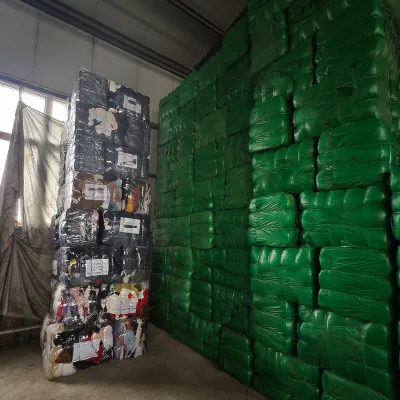
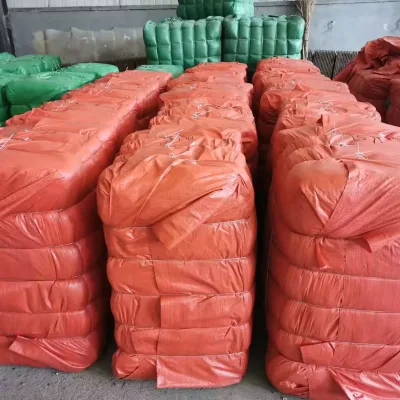
Sourcing from the China Guangdong region offers distinct logistical advantages due to its proximity to major ports and established export infrastructure. Suppliers in this area are well-positioned to handle the high-volume nature of used clothing exports, with capacities reaching up to 6000 tons per month. The region's concentration of manufacturers and trading companies facilitates efficient consolidation of mixed bales, ensuring that orders are packed according to specific weight standards, such as 45kg to 100kg per bale. This logistical efficiency is critical for maintaining the integrity of the mixed inventory during transit and ensuring that the goods arrive in the condition promised.
However, buyers must also consider the specific packaging and shipping requirements associated with regional sourcing. The standard packing dimensions for these bales are often around 38CM30CM70CM, which must be accounted for when calculating container utilization and freight costs. Some suppliers offer flexible packing options, allowing buyers to choose between different bale weights to optimize shipping efficiency. Additionally, the origin of the goods, typically listed as China, must be verified against the import regulations of the destination country. Buyers should ensure that the supplier can provide all necessary certificates and documentation to clear customs smoothly, avoiding potential delays or seizures at the port of entry.
Mixed Cotton Polyester Used Clothes Commercial Terms and Order Planning
Commercial terms for Mixed Cotton Polyester Used Clothes often include specific requirements regarding payment, customization, and order volume. Many suppliers offer customization options for logos and packaging, which can be a key differentiator for buyers looking to build a branded resale business. However, these services may come with additional costs or minimum order thresholds that must be factored into the overall budget. Buyers should clarify the terms for customization early in the negotiation process to ensure that the final product meets their branding requirements without incurring unexpected expenses.
Order planning must also account for the seasonal nature of the inventory and the varying demand for different types of clothing. Suppliers often categorize their stock by season, including all seasons, spring, autumn, and winter, as well as by age group, such as babies, children, and adults. This segmentation allows buyers to target specific market segments but requires careful planning to ensure a balanced inventory mix. Buyers should also consider the annual output capacity of the supplier, which can range from 3000 containers to 100 containers per month, to ensure that the supplier can meet their volume requirements throughout the year. Proper planning and clear communication of these terms are essential for a successful sourcing relationship.
FAQs
What is the typical lead time for used clothing orders?
The typical lead time for these orders is 15 days. This duration allows suppliers to process and prepare the mixed bales for shipment. Buyers should confirm specific timelines with the supplier to ensure alignment with their inventory needs and delivery schedules.
What certifications do these suppliers hold?
Suppliers typically hold ISO 9001 and ISO 14001 system certifications. These credentials indicate adherence to quality management and environmental standards. Some suppliers also undergo verification by SGS, BV, or Intertek, providing additional assurance of their operational reliability and product consistency.
What is the minimum order quantity for mixed clothes?
The minimum order quantity is usually one 20-foot or 40-foot container. Some listings specify an MOQ of 10 or 45 units, but bulk container loads are standard. Buyers should verify the exact MOQ with the supplier to match their storage and sales capacity.
What is the price range for used clothing bales?
Prices generally range from $0.50 to $1500.00 per unit or container. The wide variance depends on the grade, material composition, and quantity ordered. Buyers should request detailed quotes to understand the specific pricing structure for their desired volume and quality tier.
What is the average response time of suppliers?
The average response time is approximately 2 to 8.90 hours. Faster response times, such as 2 hours, indicate high supplier availability. Buyers can expect quicker communication from suppliers with lower response metrics, facilitating faster negotiation and order processing.
What materials are included in the mixed clothes?
The mixed clothes typically include cotton, linen, nylon, polyester, and spandex. These materials are often blended to create versatile garments suitable for various seasons. Buyers can expect a mix of fabrics in the bales, catering to diverse consumer preferences and climate requirements.
Where are these suppliers located?
Suppliers are primarily located in China, specifically in the Guangdong region. This location is a major hub for textile manufacturing and trading. Buyers sourcing from this area benefit from established supply chains and efficient logistics networks for international shipping.