Mosquito Net Van Bug Screen Suppliers and Manufacturers
Compare 18 verified suppliers offering Mosquito Net Van Bug Screen products with varying lead times, MOQs, and locations. Review response times and certifications to select the right partner for your needs; review the available evidence before requesting comparable quotations from suitable candidates.
Suppliers List
Hangzhou Yonghua Sports Equipment Co., Ltd.
- Trading Company
- Zhejiang, China
- Lead time40 days
- Avg. response≤ 6h
Main productscar cover,electrical plug,boating cover
Main marketsNorth America(90.0%)
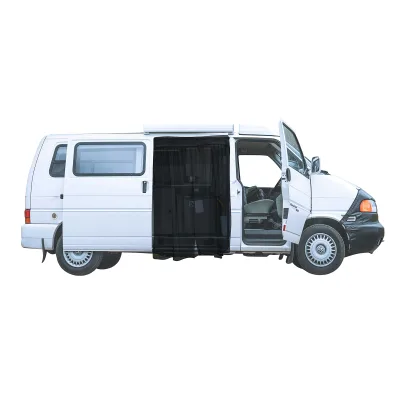
Van Bug Screen Mercedes Metris Van Bug Screen Campervans Magnetic Mosquito Net
$17.00 - $25.00
Moq: 200

Qinhuangdao Tongyu Building Material Co., Ltd.
- Trading Company,Manufacturer/Factory
- China Hebei
- Lead time23 days
- Avg. response≤ 3h
Main productsFiberglass Mesh, Fiberglass Self Adhesive Tape, Fiberglass Cloth, Fiberglass Roving, Fiberglass Yarn, Fiberglass Woven Fabric, Fiberglass Insect Screen
Main marketsSouth America,Eastern Europe,Mid East

Shijiazhuang Upright Technology Co.,Ltd.
- Verified by SGS
- Manufacturer/Factory
- China Hebei
- Lead time15 days
- Avg. response≤ 19h
Main productsDrip Tape, Drip Pipe, Spray Hose, Layflat Hose, LDPE Pipe, HDPE Pipe, Irrigation Fittings, Irrigation System
Main marketsSouth America,Eastern Europe,Mid East,North America,Southeast Asia,Eastern Asia,Oceania,Western Europe,Africa

Tianjin Jiegao Technology Develop Co., Ltd.
- Verified by TUVRHEINLAND
- Combined
- China Tianjin
- Lead time30 days
- Avg. response≤ 3h
Main productsAluminum Louver, Outdoor Roller Blinds, Fascia Roller Blinds, Louver Pergola, Retractable Louver
Main marketsSoutheast Asia/ Mideast,Europe,North America


Doors Retractable Plisse Insect Screen Door Plisse Bug Screen Pleated Mosquito Net
$10.00 - $20.00
Moq: 1


ANPING HUANSI WIRE MESH PRODUCTS CO., LTD.
- Verified by SGS
- Combined
- China Hebei
- Lead time15 days
- Avg. response≤ 3h
Main productsStainless Steel Wire Mesh, Decorative Metal Mesh, Conveyor Belt, Chain Conveyor, Wire Mesh Fence, Perforated Metal, Water Ripple Sheet, Steel Grating, Copper Wire Mesh, Stainless Steel Wire Rope Mesh
Main marketsNorth America

Shijiazhuang Amber Metal Products Co., Ltd.
- Verified by BV
- Trading Company
- China Hebei
- Lead time15 days
- Avg. response≤ 4h
Main productsStainless Steel Wire Mesh, Decorative Metal Mesh, Metal Mesh Curtain, Welded Wire Mesh, Wire Mesh Filter, Perforated Metal, Expanded Metal Sheet, Woven Wire Mesh
Main marketsEurope,North America

Qinhuangdao Priem Trading Co., Ltd
- Trading Company
- China Hebei
- Lead time23 days
- Avg. response≤ 24h
Main productsPleated Mesh Screen, Sea Foods, Folding PVC Partition Door, Security Mesh Screen, Security Lock, Plastic Roll, Building Material, Wool Pile Weather Strip, Magnet, Pleated Blind Fabric
Main marketsAfrica,Southeast Asia/ Mideast,Europe
Tianjin Xinhaohan Building Materials Technology Co., Ltd.
- Verified by SGS
- Trading Company
- China Tianjin
- Lead time30 days
- Avg. response≤ 2h
Main productsWire Mesh, Welded Wire Mesh, Stainless Steel Wire Mesh, Fence, Wire Mesh Machine, Wire Mesh Fence, Galvanzied Wire Mesh, Railing, Metal Mesh, Steel Wire Mesh
Main marketsAfrica

HEBEI INNOVAT BUILDING MATERIALS GROUP CO., LTD
- Group Corporation
- China Hebei
- Lead time98 days
- Avg. response≤ 7h
Main productsFiltration Products, Metal Fence, Guard Rail, Perforated Mesh, Plastic Mesh, Conveyer Belt, Wedge Wire Mesh, Decorative Mesh, Demister Pad, All Kinds of Wire Mesh Products
Main marketsSouth America,Eastern Europe,Mid East,North America,Southeast Asia,Eastern Asia,Oceania,Western Europe,Africa

Huimin County Naite Rope Net Co., Ltd.
- Combined
- China Shandong
- Lead time30 days
- Avg. response≤ 9h
Main productsShade Netting, Construction Net, Shade Net, Shade Sail, Fence Screen, Scaffolding Net, Safety Debris Net, Anti Hail Net, Insect Net, Olive Net
Main marketsSouth America,Africa,Southeast Asia/ Mideast,East Asia(Japan/ South Korea),Domestic,Europe,Australia,North America
Hengshui Jingwei Zongheng Import and Export Co., Ltd.
- Verified by BV
- Combined
- China Hebei
- Lead time30 days
- Avg. response≤ 1h
Main marketsEurope
Hebei Orangeton Import & Export Co., Ltd.
- Verified by SGS
- Combined
- China Hebei
- Lead time15 days
- Avg. response≤ 6h
Main productsNet
Main marketsNorth America

HAINING XIANG YU TECHNOLOGY CO., LTD
- Verified by SGS
- Trading Company,Manufacturer/Factory
- China Zhejiang
- Lead time0 days
- Avg. response≤ 25h
Main productsFlex Banner, PVC Tarpaulin, One Way Vision, Self Adhesive Vinyl, Color Stickers, Digital Printing
Main marketsSouth America,Eastern Europe,Mid East,North America,Southeast Asia,Eastern Asia,Oceania,Western Europe,Africa

Hebei Yongkun Metal Products Co., Ltd.
- Combined
- China Hebei
- Lead time15 days
- Avg. response≤ 5h
Main productsWedge Wire Screen, Gabion, Sintered Mesh, Knitted Mesh, Metal Conveyor Belt, Stainless Steel Wire Mesh, Filter Element, Mining Screen, Filter Disc, Perforated Sheet
Main marketsSouth America,Africa,Southeast Asia/ Mideast,East Asia(Japan/ South Korea),Europe,North America

Anping Yaqi Wire Mesh Products Co., Ltd.
- Verified by BV
- Manufacturer/Factory
- China Hebei
- Lead time90 days
- Avg. response≤ 4h
Main productsWelded Wire Mesh Panel, Chain Link Fence, Temporry Fence, 3D Curvy Wire Mesh Fence, Perforated Metal Mesh, 358 Anti-Climb Security Fence, Expanded Metal Mesh
Main marketsSouth America,Eastern Europe,Mid East,North America,Southeast Asia,Eastern Asia,Western Europe,Africa
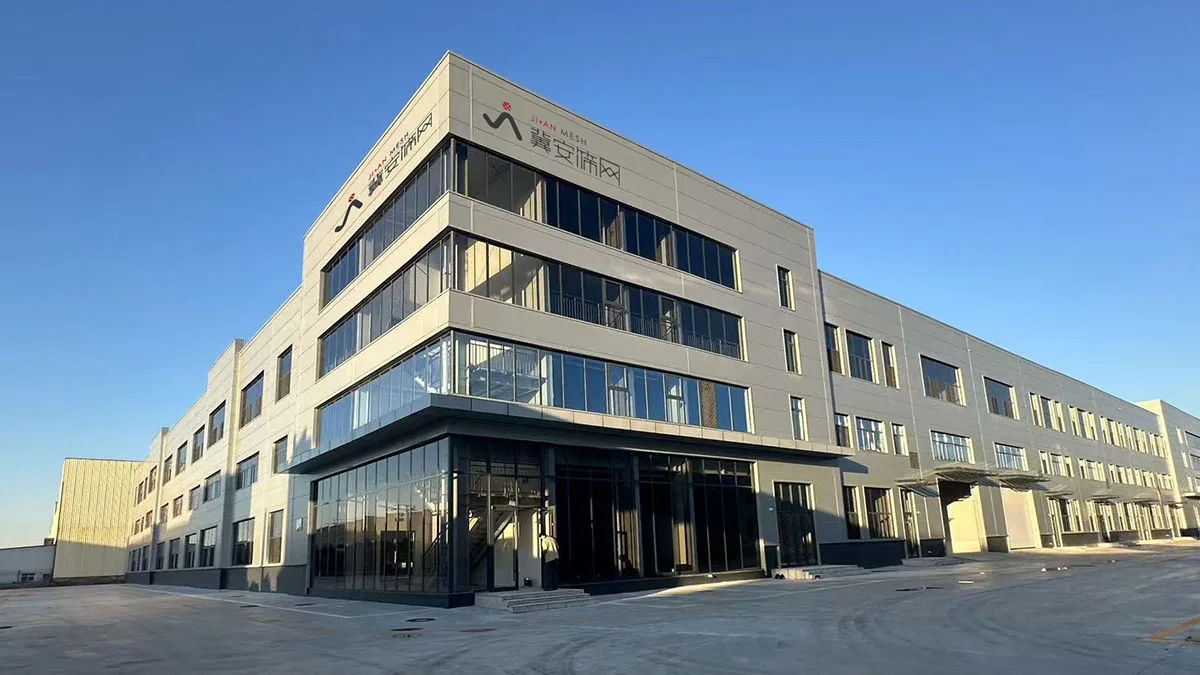
GUANGDONG JI AN MESH Co., Ltd.
- Manufacturer, Trading Company
- Guangdong, China
- Lead time0 days
- Avg. response≤ 2h
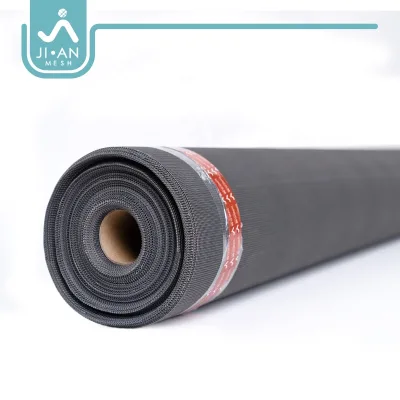
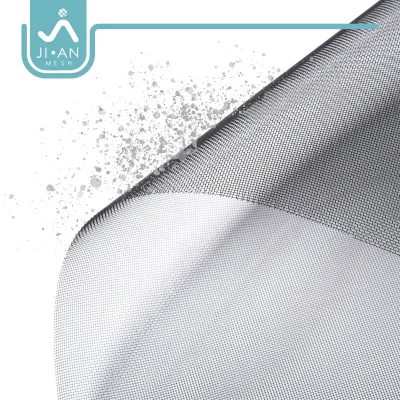
Main productsStainless Steel Screen,Folding Screen,Fiberglass Mesh,Anti Insect Net,Aluminum Wire Mesh
Main marketsDomestic Market(65.0%), Southeast Asia(10.0%), Eastern Asia(5.0%), Western Europe(3.0%), Northern Europe(3.0%), South Asia(2.0%), Africa(2.0%), Eastern Europe(2.0%), Southern Europe(2.0%), South America(2.0%), North America(1.0%), Central America(1.0%), Mid East(1.0%), Oceania(1.0%)

Hebei Majun Wire Mesh Co., Ltd.
- Verified by SGS
- Manufacturer
- China Hebei
- Lead time45 days
- Avg. response≤ 25h
Main productsStainless Steel Wire Mesh, Brass Galvanized Wire Mesh, Welded Wire Mesh, Window Screen, Fence, Conveyor Belt, Decorative Mesh, Pleating Machine, Aluminum Mesh, Bar Grating
Main marketsSoutheast Asia/ Mideast,East Asia(Japan/ South Korea),North America
Anping Yuda Wire Mesh Co., Ltd.
- Verified by SGS
- Combined
- China Hebei
- Lead time23 days
- Avg. response≤ 6h
Main productsExpanded Metal Mesh, Stainless Steel Mesh, Plastic Flat Net, Field Fence, Welded Wire Mesh
Main marketsDomestic




Comprehensive Sourcing Guide
Mosquito Net Van Bug Screen Supplier Concentration and Factory Types
When sourcing magnetic mosquito screens and bug nets for campervans, vans and motorhomes, buyers should first understand what kinds of companies appear in this category. The supplier results on this page include trading companies as well as combined trading-and-manufacturing operations, and one listing identifies itself as a pure manufacturer/factory. A Zhejiang-based trading company lists car covers, electrical plugs and boating covers among its main products while offering finished van bug screens in specific sizes, which signals a trading intermediary that sources from surrounding workshops rather than weaving or sewing in-house. A Hebei-based supplier lists fiberglass mesh, fiberglass cloth, fiberglass yarn and fiberglass insect screen as main products, indicating upstream mesh material production rather than finished vehicle accessories.
This distinction matters because product type maps onto supplier type. Finished magnetic screens for Sprinter, Transit, ProMaster and Metris-style vans are sewing-and-assembly products, while the mesh fabric itself is a woven textile input. Factories tend to control material quality and tooling; trading companies tend to offer broader size ranges, OEM branding and access to multiple workshops. Location evidence in this category points to Zhejiang for finished screens and Hebei for fiberglass mesh inputs, so a realistic supply chain may involve both provinces. Buyers should ask each candidate whether they sew, cut and magnetize in-house or subcontract, because that answer determines who controls tolerance, seam strength and consistency across repeat orders.
How to Verify Mosquito Net Van Bug Screen Suppliers
Verification starts with separating claims from evidence. The supplier results here show one Zhejiang trading company with a listed response time of about six hours and a lead time around 40 days, and a Hebei trading-and-manufacturing company reporting a response time of roughly 2.7 hours with a lead time near 23 days. A manufacturer/factory with SGS verification and ISO 9000/9001 and ISO 14000-series system certifications reports a response time of about 18.8 hours and a 15-day lead time. These displayed attributes are a starting point, not proof: response speed reflects sales-staffing, lead time may assume existing orders, and certification badges should be confirmed by requesting the certificate documents themselves, with scope, expiry date and certifying body checked.
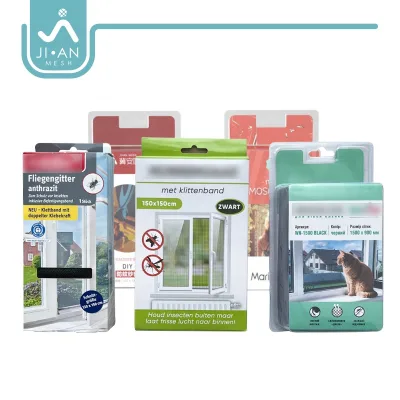
Buyers should verify fit with the actual product evidence. Listings in this category show concrete attributes worth confirming: place of origin stated as Zhejiang, China; supply ability of 10,000 pieces per month; model numbers in S, M and L sizes; single gross weights of 5.0 to 6.0 kg; ports of dispatch at Shanghai and Ningbo; and packaging by polybag or storage bag and box. One finished-screen listing also states a personalized-logo option, which indicates OEM capability. Request product samples in the exact size for the target van door opening, check magnet placement and mesh weave density against the supplied specification, and ask for the workshop's own quality checks. Any supplier that cannot document the attributes shown on its listing should be treated as unverified.
What to Compare Across Mosquito Net Van Bug Screen Suppliers
Comparison should be built on the dimensions the listings actually expose, without assuming every supplier displays every attribute. Lead time is a strong first filter: this page shows 15, 23 and 40 days across different suppliers, a spread wide enough to affect a launch calendar. Response time varies from under three hours to nearly nineteen hours, which matters when a sampling round involves dozens of small clarifications. MOQ differs sharply by product form: 200 pieces at $17–25 for one van bug screen, 300 pieces at $40–50 for a universal Sprinter-style screen, 100 pieces at $20–30 for a sliding-and-rear-door insect screen, and 30,000 square-unit MOQs typical of raw fiberglass mesh rolls. Matching MOQ to your sales volume is essential before negotiating.
Establishment year, escrow status and location should be compared wherever displayed, but never assumed — some listings show them and some do not. Main products are a quality proxy: a supplier whose catalog is dominated by fiberglass mesh and insect screening is closer to the material source, while a supplier selling car covers, plugs and boating covers is a generalist trader. Compare customization evidence too: one manufacturer listing states OEM research-and-development capability and customization available, with mesh counts from 10–100, sizes such as 2×100m and 3×50m, and colors including white, blue, green and gray. Build a comparison sheet from these attributes so differences are visible side by side.
Common Mosquito Net Van Bug Screen Sourcing Risks
The most common risk in this category is size mismatch. Van door openings vary across Sprinter, Transit, ProMaster and Metris models and across sliding-door versus rear-door configurations, and the listings here reflect that with model numbers in S/M/L and small/medium/large, plus a stated 71-inch by 59-inch panel. A screen cut for one door geometry will not seal magnetically on another, so buyers who order a "universal" size without checking their own measurements risk a full batch of unsellable stock. A second risk is magnet quality: listings describe premium polyester mesh fabric and magnetic attachment, but mesh weight, magnet strength and stitching density are not standardized across suppliers, and weak magnets or coarse weave show up only in physical samples.
Material substitution is a third risk. Raw mesh listings show fiberglass in plain weaving at 18×16, 17×15, 16×16, 18×18 and 20×20 meshes, while a finished-screen listing shows PE as the material — different polymers with different durability and UV behavior, so a supplier could swap material grades between the sample and the production run. MOQ inflexibility is another trap: minimums here range from 100 to 30,000 depending on product form, so testing with finished goods while planning bulk mesh purchases requires two different suppliers. Finally, long lead times on finished screens create inventory risk if demand forecasting is weak.
Mosquito Net Van Bug Screen Regional Sourcing and Logistics
The location evidence on this page supports a two-node supply picture. Finished magnetic van bug screens are listed with a place of origin in Zhejiang, China, with dispatch through Shanghai and Ningbo ports — two of the country's busiest container gateways, which is convenient for full-container and less-than-container shipments alike. Upstream fiberglass mesh and insect screening is associated with Hebei, where suppliers list fiberglass yarn, cloth, woven fabric, self-adhesive tape and insect screen as main products. Where no cluster is documented, buyers should identify concentrations themselves by filtering search results by province, counting how many candidate suppliers repeat in the same region, and confirming each location through business licenses rather than assuming.
Practical logistics planning should use the concrete packing data shown in the listings. Single package sizes of 25×25×15 cm and 73×25×27 cm, single gross weights of 5.0 and 6.0 kg, polybag or storage-bag-and-box packaging, and per-piece shipping as single items all determine how many units fit a carton and a container. Because one listing shows a 40-day lead time and another 15 days, sea freight planning should assume the longer documented figure and confirm the current value in writing. Air freight of finished screens is possible given their compact packaged dimensions, but sample shipments of 5–6 kg each add up quickly, so consolidating samples into one carton is more economical.
Mosquito Net Van Bug Screen Commercial Terms and Order Planning
Commercial terms in this category should be negotiated around the MOQ and price bands actually displayed. Finished magnetic screens show three pricing tiers: $17–25 at an MOQ of 200, $20–30 at an MOQ of 100, and $40–50 at an MOQ of 300. The price differences likely reflect size, materials and packaging, so buyers should request an itemized quotation that separates mesh, magnets, sewing, logo application and packaging costs before comparing headline prices. Raw fiberglass mesh carries a 30,000-unit minimum at $0.30–0.60, a fundamentally different order structure suited to manufacturers producing their own screens. Confirm whether quoted prices include the personalized-logo option one listing advertises, since branding often carries a setup cost.
Order planning should sequence the terms carefully. Start with a sample order at the lowest displayed MOQ, then negotiate price breaks for the second order rather than overcommitting at the first. Match payment structure to supplier type: an SGS-verified, ISO-certified manufacturer with a 15-day lead time may accept different terms than a small trading company, so verify each party's escrow and payment-protection status on the platform before wiring anything, as these attributes are displayed for some suppliers and not others. Build the calendar backwards from the longest documented lead time of 40 days plus sea transit, and lock re-supply dates in the contract. Finally, specify packaging — polybag versus storage bag and box — and carton markings in the purchase order to avoid disputes at destination.
FAQs
What is the price range for van bug screens?
Prices for van bug screens typically range from $17 to $50 per unit depending on the specific model and size. Some universal magnetic mosquito nets are priced between $20 and $30, while specialized screens for Sprinter vans can cost between $40 and $50. Buyers should check the specific product listing for exact pricing details.
What is the minimum order quantity for these products?
The minimum order quantity varies by product type. Van bug screens generally require a minimum order of 100 to 300 pieces. For example, some magnetic mosquito nets have an MOQ of 200 units, while others require 300 pieces. Fiberglass insect screens for windows have a much higher MOQ of 30,000 units.
Where are these mosquito net suppliers located?
Most suppliers for van bug screens and insect nets are located in Zhejiang, China. Some fiberglass mesh and window screen manufacturers are based in Hebei, China. The products are typically dispatched from ports such as Shanghai or Ningbo Port. Buyers should verify the specific location of the supplier for shipping logistics.
What materials are used for van bug screens?
Van bug screens are commonly made from premium polyester mesh fabric or magnetic materials. Window insect screens often use fiberglass or aluminum alloy. Some agricultural or garden nets are made from PE plastic. The material choice depends on the application, with polyester offering durability for campervans and fiberglass providing invisibility for windows.
What is the typical lead time for these orders?
Lead times vary significantly by supplier and product. Van bug screens typically have a lead time of around 40 days. Fiberglass mesh suppliers may offer a lead time of 23 days, while irrigation and PE net suppliers can deliver within 15 days. Buyers should confirm the exact lead time with the supplier before placing an order.
Are these suppliers verified or certified?
Some suppliers hold ISO certifications such as ISO 9001 and ISO 14001. Verification services like SGS are available for certain manufacturers. Buyers should check the supplier profile for specific certifications and verification status. Not all suppliers provide detailed certification information, so direct verification is recommended for quality assurance.