No-Clean Copper De-soldering Wick Suppliers and Manufacturers
Compare 28 verified suppliers offering No-Clean Copper De-soldering Wick with varying lead times, response speeds, and origins in Guangdong or Zhejiang. Review product specifications like width and material before contacting factories for quotes; review the available evidence before requesting comparable quotations from suitable candidates.
Suppliers List
Shenzhen Dinggong Electronic Tool Instrument Co., Ltd.
- Manufacturer
- Guangdong, China
- Lead time0 days
- Avg. response≤ 5h
Main productsCharger,Soldering station,Hot air gun,Repair pad,Maintenance power supply
Main marketsDomestic Market(30.0%), Southeast Asia(25.0%), Eastern Asia(10.0%), North America(9.0%), South Asia(9.0%), South America(8.0%), Africa(8.0%)
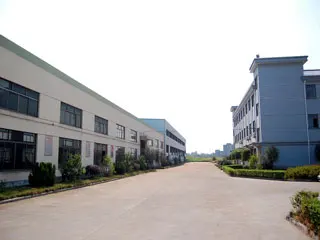
Jinhua Beiduo Import & Export Co., Ltd.
- Manufacturer, Trading Company
- Zhejiang, China
- Lead time30 days
- Avg. response≤ 6h
Main productsBrazing alloys,welding materilas,Machines,Engine parts,Platform Scales
Main marketsSoutheast Asia(20.0%), Eastern Asia(20.0%), South America(15.0%), Western Europe(10.0%), Africa(10.0%), Eastern Europe(10.0%), Oceania(5.0%), North America(5.0%), Mid East(5.0%)
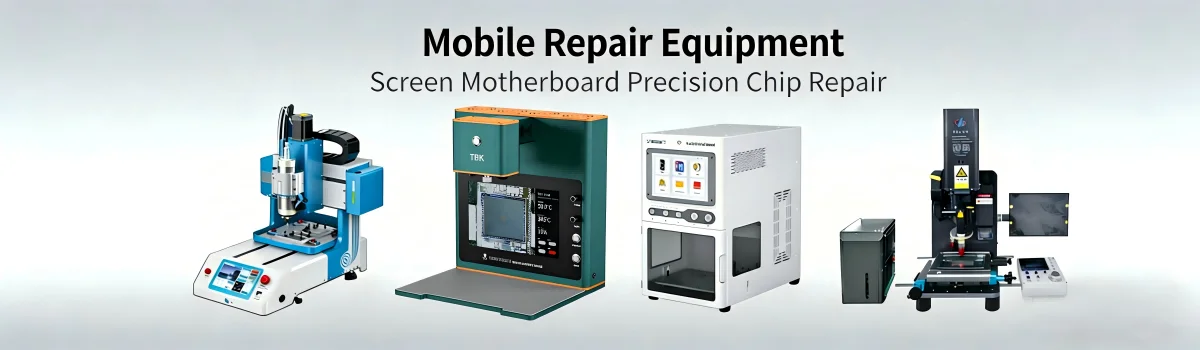
Shenzhen Born Eparts Co., Ltd.
- Manufacturer, Trading Company
- Guangdong, China
- Lead time5 days
- Avg. response≤ 3h
Main productsRefurbishing Machines & Materials,Repair Tools & Parts,Consumer Electronics,phone accessories wholesale,cables and chargers factory
Main marketsCentral America(15.0%), Western Europe(15.0%), Southern Europe(10.0%), Northern Europe(10.0%), Oceania(10.0%), South Asia(5.0%), Africa(5.0%), Southeast Asia(5.0%), South America(5.0%), North America(5.0%), Eastern Asia(5.0%), Mid East(5.0%), Eastern Europe(5.0%)

- Verified by TUVRHEINLAND
- Manufacturer/Factory
- China Jiangsu
- Lead time90 days
- Avg. response≤ 3h
Main productsFlexible Metal Hose, Expansion Joint, Metal Bellow Forming Machine, Metal Hose Forming Machine, Tube Welding Machine, Metal Hose Testing Bench, Hose Fitting Welding Machine, Fire Hose Forming Machine, Stainless Steel Hose, Metal Hose
Main marketsSouth America,Eastern Europe,Mid East,North America,Southeast Asia,Eastern Asia,Oceania,Western Europe,Africa
Shenzhen Jingshengda Technology Co., Ltd.
- Trading Company, Distributor/Wholesaler
- Guangdong, China
- Lead time0 days
- Avg. response≤ 10h
Main productsMobile phone digital products,Computer notebook,Maintenance tools,Auxiliary products for welding accessories,Mobile Phone Computer Laptop Accessories
Main marketsDomestic Market(40.0%), Southeast Asia(30.0%), Eastern Europe(30.0%), Mid East(20.0%), Africa(20.0%), North America(10.0%), South Asia(10.0%)
Shenzhen Fengjiahe Technology Co., Ltd.
- Trading Company, Agent, Distributor/Wholesaler
- Guangdong, China
- Lead time5 days
- Avg. response≤ 3h
Main productsPhone Repair Programmer,Laser Machine,LCD Separator Machine,Phone Films Cutting Machine,Microscope
Main marketsWestern Europe(25.0%), North America(20.0%), South America(20.0%), Mid East(5.0%), Oceania(5.0%), South Asia(2.0%), Southern Europe(2.0%), Northern Europe(2.0%), Central America(2.0%), Eastern Europe(2.0%), Eastern Asia(2.0%), Africa(2.0%), Southeast Asia(2.0%)
Shenzhen Zhuoxiujiang Technology Co., Ltd.
- Trading Company, Agent, Distributor/Wholesaler
- Guangdong, China
- Lead time7 days
- Avg. response≤ 3h
Main productsPhone Repair Programmer,LCD refurbishment tool,microscope,Laser machine,Soldering Station
Main marketsWestern Europe(20.0%), North America(20.0%), Africa(12.0%), Northern Europe(10.0%), South America(9.0%), Southern Europe(5.0%), Central America(5.0%), Domestic Market(5.0%), Oceania(5.0%), Southeast Asia(3.0%), Eastern Europe(2.0%), Eastern Asia(2.0%), Mid East(1.0%), South Asia(1.0%)

Guangdong ZhongShi Metals Co., Ltd
- Verified by BV
- Combined
- China Guangdong
- Lead time15 days
- Avg. response≤ 5h
Main productsSolder Paste, Solder Wire, Solder Bar, Lead-Free Solder Paste, Solder Ball, Lead-Free Solder Wire, Red Glue, BGA Solder Ball
Main marketsDomestic
Ningbo Zhongdi Industry And Trade Co., Ltd.
- Verified by TüVRheinland
- Manufacturer, Trading Company
- Lead time35 days
- Avg. response≤ 6h
Main productsSoldering Station, Soldering Iron, Fume Extractor, Heat Guns, Magnifying Lamps
Main marketsWestern Europe(25%), South America(12%), Eastern Europe(10%)
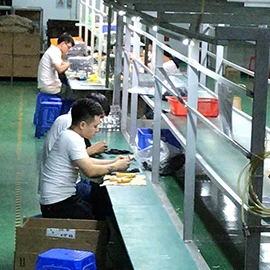
Shenzhen Aipudi Electronic Technology Co., Ltd.
- Manufacturer, Trading Company
- Guangdong, China
- Lead time5 days
- Avg. response≤ 6h
Main productssoldering station,electric soldering iron,instruments,welding tools,hardware tools
Main marketsWestern Europe(16.0%), Eastern Europe(14.000000000000002%), North America(11.0%), Mid East(10.0%), South America(10.0%), Oceania(7.000000000000001%), Northern Europe(6.0%), Africa(5.0%), Southeast Asia(5.0%), Domestic Market(5.0%), Central America(4.0%), Eastern Asia(3.0%), Southern Europe(3.0%), South Asia(1.0%)
Shenzhen Hodaxin International Trade Co., Ltd.
- Manufacturer, Trading Company
- Guangdong, China
- Lead time0 days
- Avg. response≤ 3h
Main productsPhone Polishing machine,Laser Back Glass Remove Machine,Phone Screen Polishing Machine,Bubble Remove Machine,OCA Laminating Machine
Main marketsNorth America(50.0%), Western Europe(10.0%), Mid East(10.0%), Eastern Europe(10.0%), Northern Europe(10.0%), Southern Europe(5.0%), South America(5.0%)

Anhui Hengtai Welding Materials Co., Ltd.
- Combined
- China Anhui
- Lead time15 days
- Avg. response≤ 21h
Main productsCopper Alloy Welding Wire
Main marketsSoutheast Asia/ Mideast,North America


Ercusi-a Silicon Bronze Copper Brazing Rods Soldering Filler Sheet Metal Repair
$10.78 - $10.90
Moq: 200


Tongling Xin Xin Welding Materials Co., Ltd.
- Verified by SGS
- Combined
- China Anhui
- Lead time15 days
- Avg. response≤ 9h
Main productsWelding Rod, Welding Wire, Brass Welding Rod, Copper Brazing Wire, Silver Weldign Rod, Brazing Rods, Bronze Welding Rod
Main marketsSoutheast Asia/ Mideast,Domestic

Hongxing Manufacturing Group Ltd.
- Manufacturer/Factory
- China Zhejiang
- Lead time45 days
- Avg. response≤ 12h
Main productsValve, Fitting, Dzr Brass, Lead Free, Sanitary Ware, Cable Tie, Ball Valve, Stop Valve, Thermostat, Gate Valve
Main marketsSouth America,Eastern Europe,Mid East,North America,Southeast Asia,Eastern Asia,Oceania,Western Europe,Africa
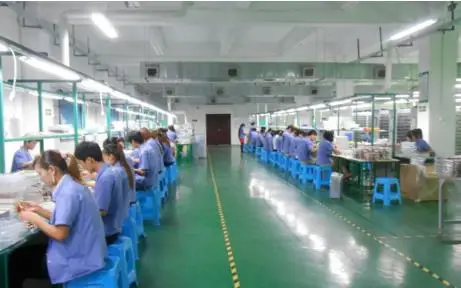
Shenzhen Goldever Technology Co., Ltd.
- Manufacturer, Trading Company
- Guangdong, China
- Lead time5 days
- Avg. response≤ 2h
Main productsUSB flash drive,Memory card,Sublimation blanks,USB webcam,Smart glasses
Main marketsWestern Europe(15.0%), Domestic Market(10.0%), North America(10.0%), Mid East(10.0%), Oceania(10.0%), Africa(10.0%), Southeast Asia(10.0%), Eastern Europe(10.0%), South America(10.0%), Southern Europe(5.0%)

Shandong Ying Yi Import and Export Co., Ltd.
- Verified by SGS
- Trading Company
- China Shandong
- Lead time15 days
- Avg. response≤ 6h
Main productsCopper Plate/Sheet, Copper Pipe/Tube, Copper Strip/Tape, Copper Bar/Rod
Main marketsSoutheast Asia/ Mideast,Europe,North America

Bare Flat Copper Braid Desoldering Copper Braid Wick Cu Braid Copper Flat Strap
$2.50 - $2.80
Moq: 200


Shenzhen Jinliyang Technology Co., Ltd.
- Manufacturer, Trading Company
- Guangdong, China
- Lead time8 days
- Avg. response≤ 5h
Main productsSoldering Station/Hot Air Rework Station/DC Power Supply/Test Leads/Screwdriver Set
Main marketsNorth America(15.0%), Western Europe(15.0%), South America(10.0%), Eastern Asia(8.0%), Domestic Market(8.0%), Eastern Europe(7.000000000000001%), Mid East(7.000000000000001%), Southeast Asia(6.0%), South Asia(5.0%), Southern Europe(5.0%), Central America(5.0%), Northern Europe(5.0%), Oceania(2.0%), Africa(2.0%)
Dongguan Xinyibao Electronic Technology Co., Ltd.
- Manufacturer
- Guangdong, China
- Lead time30 days
- Avg. response≤ 1h
Main productselectronic product,Electronic tools,Soldering iron,Plastic Products,Multimeter
Main marketsWestern Europe(30.0%), Southern Europe(20.0%), North America(20.0%), Eastern Europe(20.0%), South America(20.0%)
Shenzhen Jiulingsheng Technology Co., Ltd.
- Trading Company
- Guangdong, China
- Lead time0 days
- Avg. response≤ 4h
Main productsScrewdriver,Scraper,Suction Cup,Screwdriver Set,Tweezers
Main marketsSouth America(100.0%), Africa(100.0%), Domestic Market(50.0%), South Asia(20.0%), North America(10.0%), Mid East(4.0%), Southern Europe(2.0%), Eastern Europe(2.0%), Northern Europe(2.0%), Central America(2.0%), Western Europe(2.0%), Eastern Asia(2.0%), Oceania(2.0%), Southeast Asia(2.0%)

Shenzhen Imooo Innovation Design Limited
- Manufacturer, Buying Office, Distributor/Wholesaler
- Guangdong, China
- Lead time1 days
- Avg. response≤ 1h
Main productsGifts & Crafts,Home & Garden,Car Accessories,Office Products,Sports & Outdoors
Main marketsMid East(10.0%), South Asia(10.0%), Central America(10.0%), Southeast Asia(10.0%), Eastern Europe(10.0%), South America(10.0%), North America(10.0%), Southern Europe(5.0%), Northern Europe(5.0%), Domestic Market(5.0%), Western Europe(5.0%), Eastern Asia(5.0%), Oceania(3.0%), Africa(2.0%)

Dongguan ICT Technology Co.,Ltd.
- Verified by CTI
- Combined
- China Guangdong
- Lead time23 days
- Avg. response≤ 2h
Main productsSMT, Reflow Oven, Reflow Soldering Machine, Lead Free Reflow Oven, Chip Mounter, Pick&Place Machine, Chip Shooter Machine, Juki Chip Mounter, SMT Machine, SMT Equipment
Main marketsEurope,North America
Shenzhen Chenxu Sanzhou Trade Co., Ltd.
- Verified by Intertek
- Trading Company
- Lead time15 days
- Avg. response≤ 2h
Main productsHeat Press Machine, Soldering Irons, Laser Engraving Machine, Commercial Equipment
Main marketsNorth America(40%), Africa(30%), Western Europe(30%)
Dongguan Hengfujia Electric Co., Ltd.
- Manufacturer, Trading Company
- Guangdong, China
- Lead time30 days
- Avg. response≤ 1h
Main productsbraided copper ground strap,copper braided soft connection wire,solder absorbing wire,solar photovoltaic flat wire,copper braided bushing
Main marketsDomestic Market(20.0%), Southeast Asia(10.0%), North America(5.0%), Southern Europe(5.0%), Western Europe(5.0%), Eastern Asia(5.0%), Oceania(5.0%)

Zhangzhou NEER New Energy Technology Co., Ltd.
- Verified by CTI
- Combined
- China Fujian
- Lead time15 days
- Avg. response≤ 1h
Main productsCopper Busbar, Plating/Electroplating Busbar, Bus Bar, Laminated Busbar, Solid / Flexible Copper Busbar, Stainless Steel Product, Electrical Busbar, Stainless Steel Battery Case
Main marketsDomestic

DONG GUAN CITY YOSHIDA WELDING MATERIALS CO.,LTD
- Manufacturer
- China Guangdong
- Lead time15 days
- Avg. response≤ 5h
Main productsSolder Paste, Tin Wire, Tin, Red Glue, Preformed Solder Strip, Tin Ball, Brazing Paste, Welding Tools
Main marketsDomestic

Custom Design Soldering Lead Copper Anti-Oxidation Bar Solder Lead Free Sn99.3/Cu0.7
$36.10 - $39.90
Moq: 100


Factory Lead-Free Solder Tin Bar Environmental Protection Pure High Purity Sn99.3cu0.7
$31.10 - $36.90
Moq: 100
Shenzhen Guste Technology Co., Ltd.
- Manufacturer, Agent, Distributor/Wholesaler
- Guangdong, China
- Lead time0 days
- Avg. response≤ 2h
Main productsSoldering Stations & Soldering Supplies,Hand Tools & Power Tools,Test Instruments,Packaging Machine,Cleaning Equipment
Main marketsDomestic Market(25.0%), North America(25.0%), Southeast Asia(15.0%), South America(5.0%), South Asia(5.0%), Northern Europe(5.0%), Central America(5.0%), Eastern Asia(5.0%), Mid East(5.0%), Africa(5.0%)

Dongguan Bangteng Hardware Electronics Co., Ltd.
- Verified by SGS
- Combined
- China Guangdong
- Lead time15 days
- Avg. response≤ 9h
Main productsPure Nickel Strip, Battery Holder, Copper Nickel Busbar, Precision Hardware, Insulation Product, Battery Pack Connector
Main marketsSouth America,Africa,Others(foreignTradeCapacity.exportBusinessCapacityMarketOther),Southeast Asia/ Mideast,East Asia(Japan/ South Korea),Europe,Australia,North America


Battery Welding Connector Copper Plate for High Power DIY 18650 Lithium Battery Pack
$0.50 - $3.50
Moq: 1000


Dongguan Fushu Electronic Technology Co., Ltd.
- Manufacturer
- China Guangdong
- Lead time15 days
- Avg. response≤ 19h
Main productsUSB Connector, D-SUB Connector, Terminal, PCB Connector, Board to Board Connector, DVI Connector, HDMI Connector, Wireharness, VGA Cable, IC Socket
Main marketsSouth America,Southeast Asia/ Mideast,Domestic












Comprehensive Sourcing Guide
No-Clean Copper De-soldering Wick Supplier Concentration and Factory Types
Sourcing results for No-Clean Copper De-soldering Wick concentrate heavily in two Chinese provinces: Guangdong and Zhejiang. Guangdong listings in this category cluster around phone repair and consumer electronics consumables, with manufacturers whose main products span chargers, soldering stations, hot air guns, repair pads and maintenance power supplies alongside desoldering wick. Zhejiang listings come from a mixed manufacturer-and-trading-company profile whose catalog covers brazing alloys, welding materials, machines, engine parts and platform scales, with wick as one line among many. A third pattern also appears: electronics parts distributors carrying CE system certification that sell repair tools, cables, chargers and phone accessories, for which wick is an accessory item rather than a core product.
Understanding these three supplier archetypes helps you shortlist efficiently. A dedicated manufacturer in Guangdong focused on soldering tools is most likely to control wick production directly, including braid weaving and flux application. A Zhejiang welding-materials producer may offer multiple width options and OEM support but treat wick as a secondary line. A repair-tools distributor adds value in assortment and speed but sources from upstream factories. Where a listed product carries a named imported brand with a stated origin of Japan, the Chinese seller is typically a reseller rather than the maker, so distinguish brand owners, licensed resellers and generic manufacturers before comparing quotes, because pricing, customization depth and warranty responsibility differ sharply across those roles.
How to Verify No-Clean Copper De-soldering Wick Suppliers
Verification should begin with company type and footprint. Results here include a Guangdong manufacturer of soldering equipment, a Zhejiang manufacturer and trading company, and a CE-certified electronics parts seller, so confirm which profile each candidate actually matches. Ask whether the company weaves its own copper braid or buys finished wick, and request evidence of flux coating consistency, since no-clean performance depends on the rosin layer as much as the braid. Check that the advertised origin matches reality: some listings in this set state a Japanese brand origin while others state Guangdong or Zhejiang manufacture, and the warranty terms attached to those listings range from one month to three years, which is a signal worth reconciling with the seller's actual responsibilities.
Next, verify operational credibility through measurable data points rather than claims. Response times in these results run from about three to six hours, which you can test directly with a technical question about width options or flux type before committing. Ask for video outgoing-inspection, which at least one Zhejiang listing explicitly provides, and for material documentation confirming copper or copper-alloy braid rather than plated substitutes. For branded product, confirm authorization or distribution rights so warranty claims do not fail later. Finally, verify certifications directly: CE system certification appears on one profile in this category, but you should request the certificate number and scope, confirm it covers the wick or the seller's broader business, and never accept a logo in a listing banner as proof of compliance.
What to Compare Across No-Clean Copper De-soldering Wick Suppliers
Build a comparison table using dimensions the listings actually expose. Lead time is the widest spread in this category: one Guangdong listing shows effectively immediate dispatch, an electronics-parts seller shows around five days, and the Zhejiang welding supplier shows roughly thirty days, so align quoted lead times with your reorder cadence. Minimum order quantities also differ structurally: some wick products list an MOQ as low as two units, reflecting low-value consumables sold by the piece, while other suppliers have not displayed an MOQ at all and must be asked. Response speed, shown here between three and six hours, predicts how smoothly sampling and reorders will run.
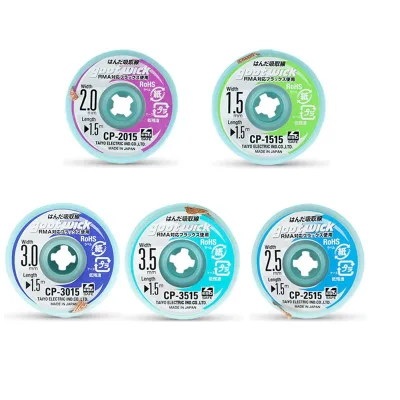
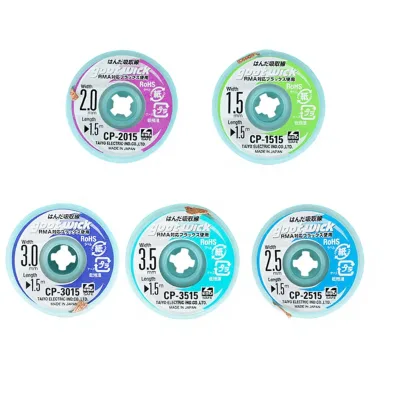
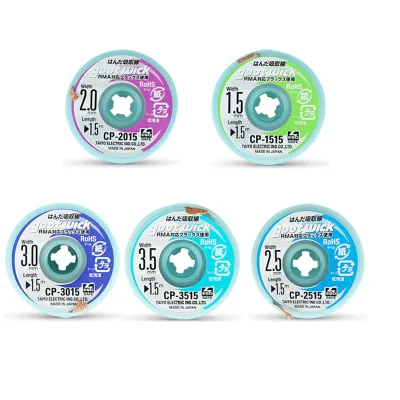
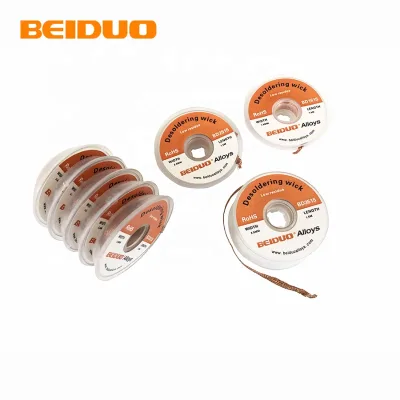
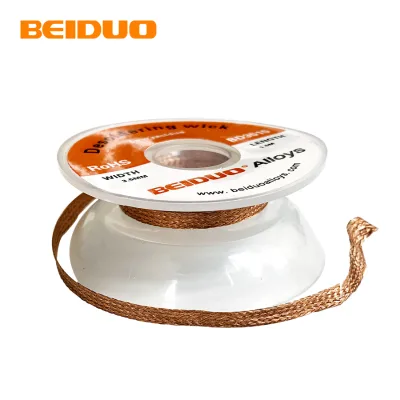
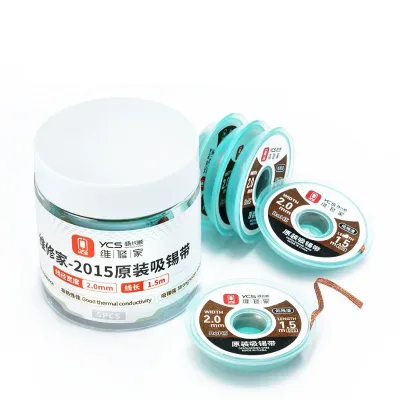
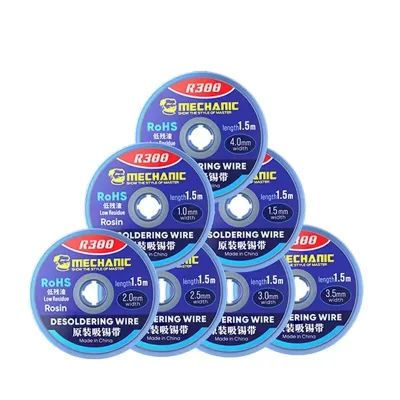
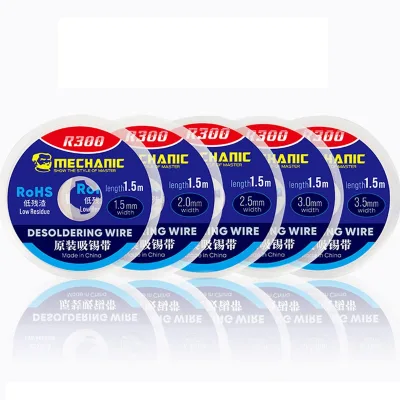
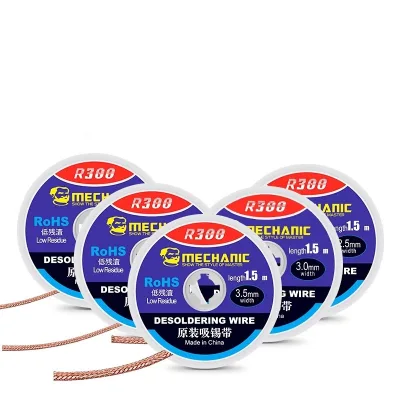
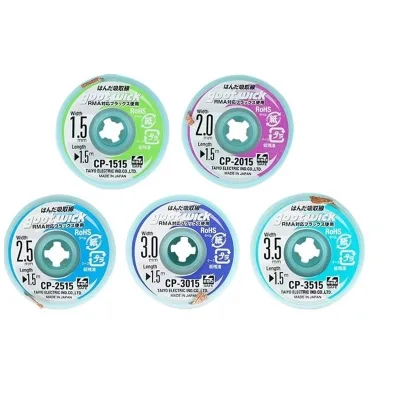
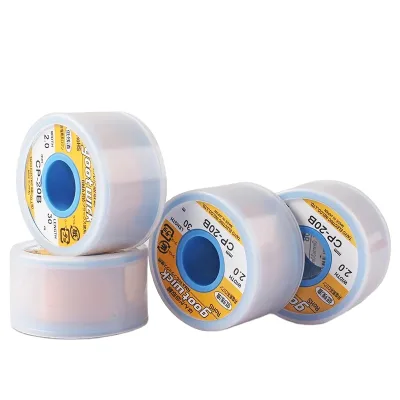
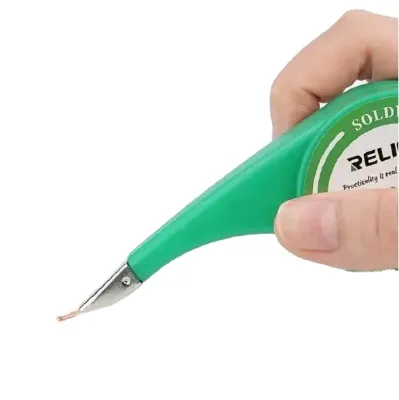
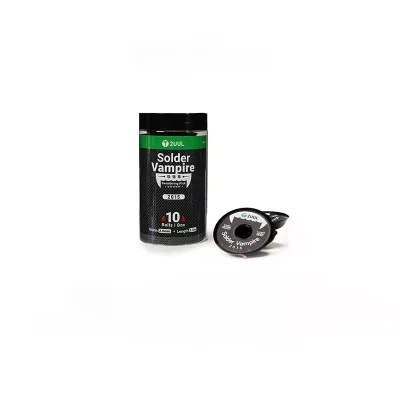
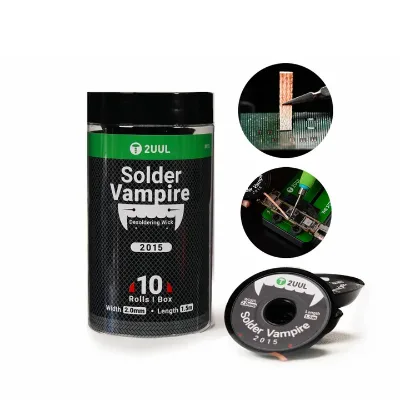
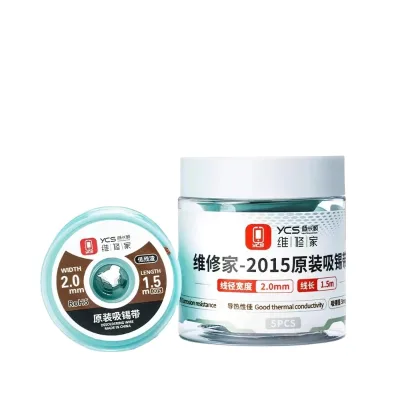
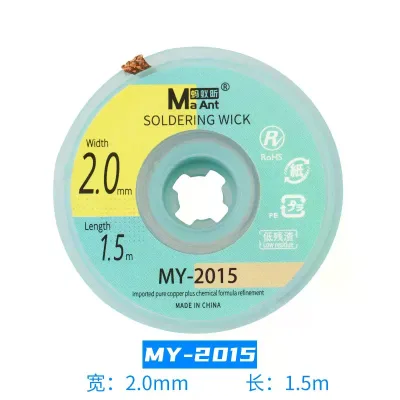
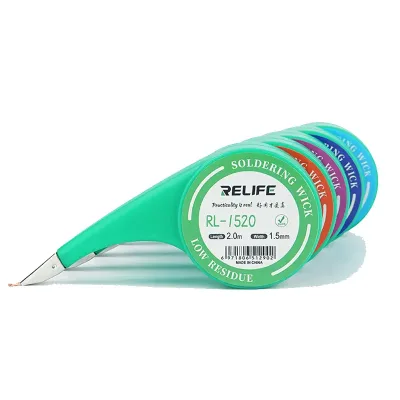
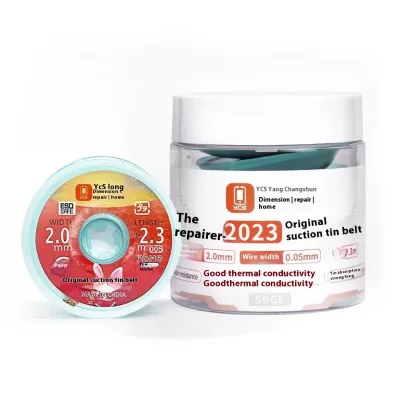
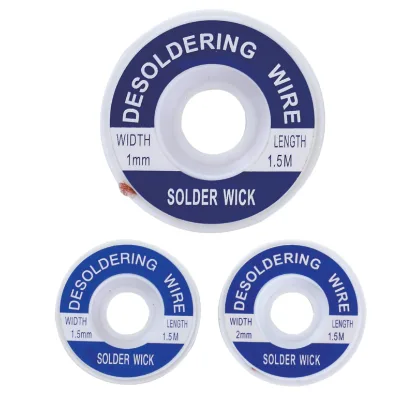
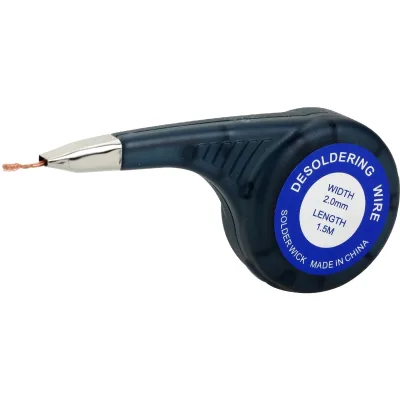
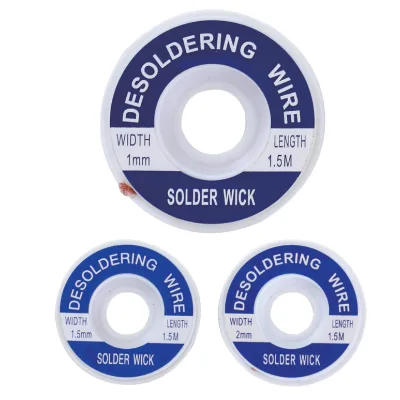
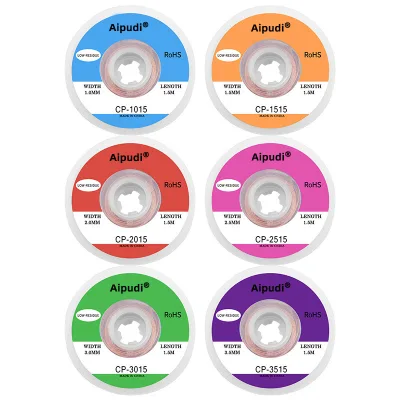
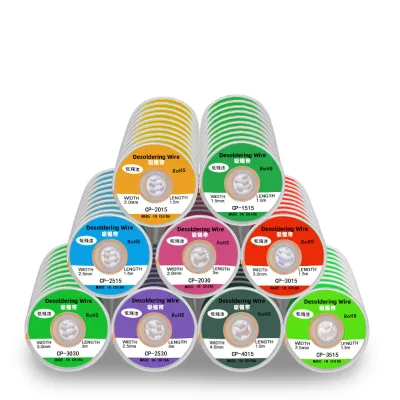
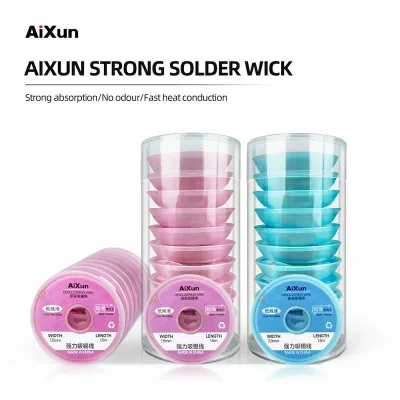
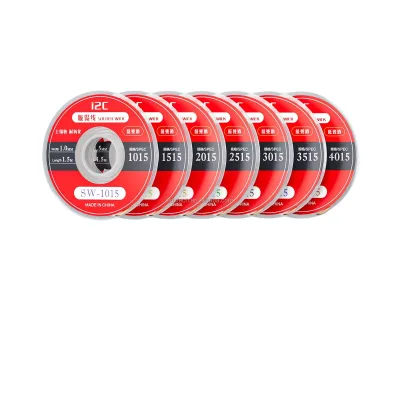
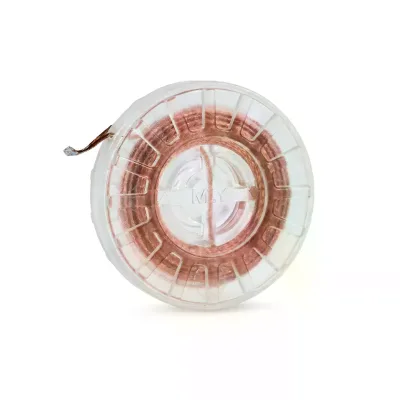
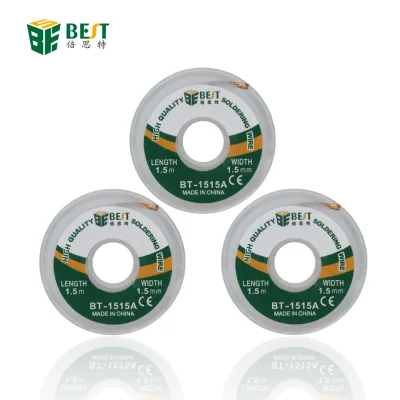
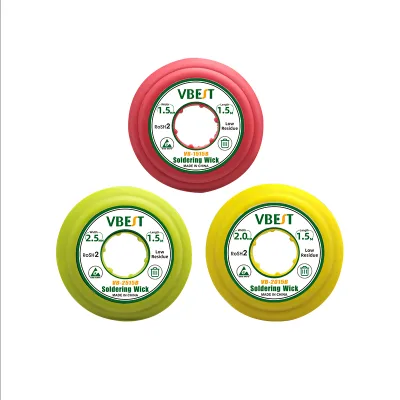
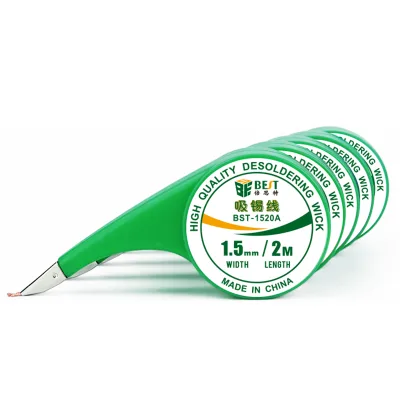
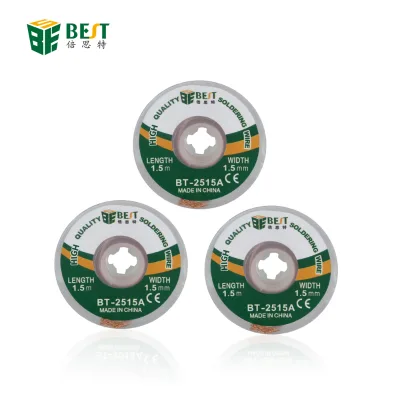
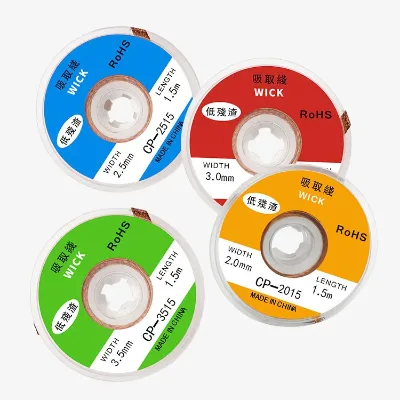
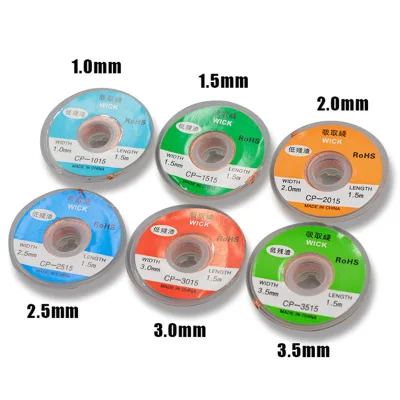
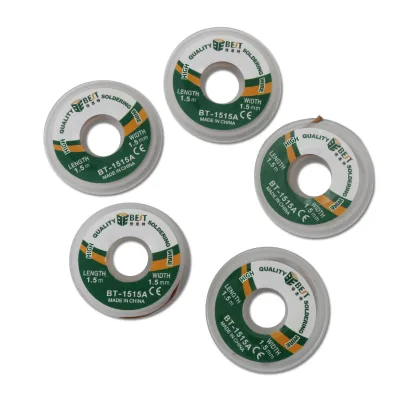
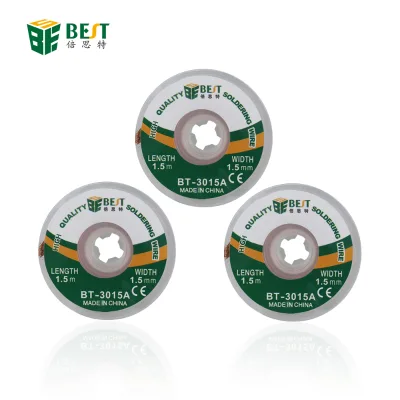
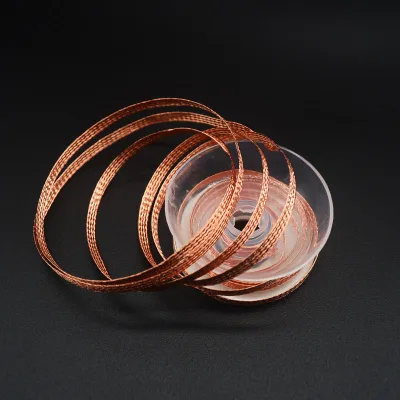
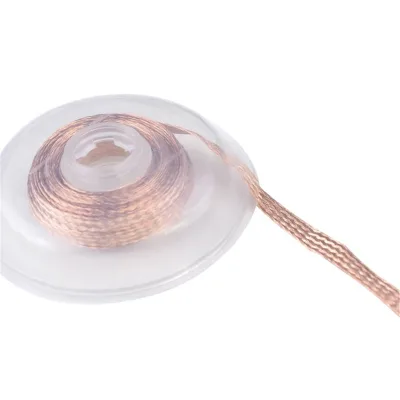
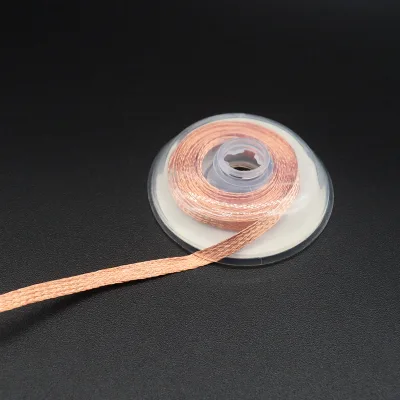
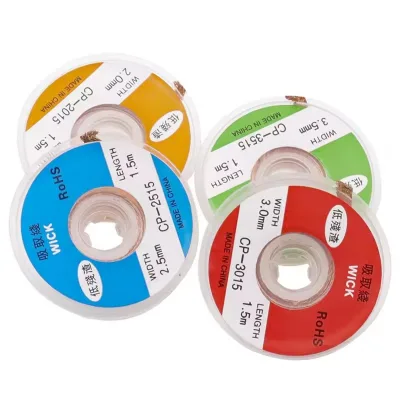
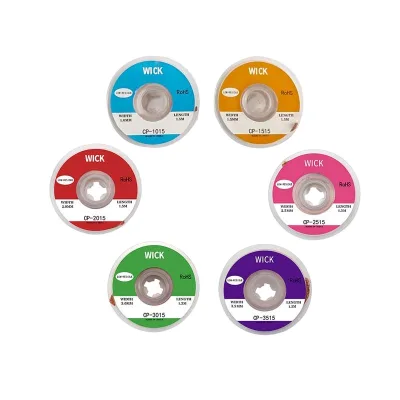
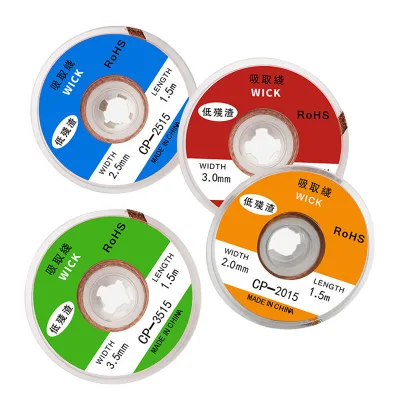
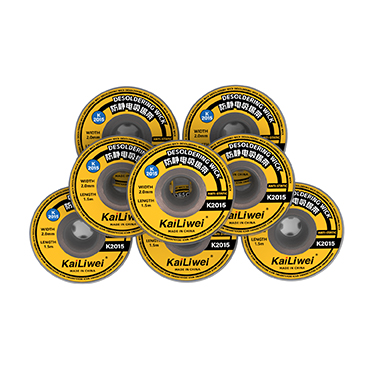
Compare product specifications side by side rather than by listing photos. In this category the measurable attributes include width options (one Zhejiang product spans 1.0 to 3.5 mm, while brand-name wick is offered in 1.5 through 3.5 mm variants), length per spool (commonly 1.5 m), material (pure red copper versus copper alloy), flux type (lead-free versus non-chlorine special flux versus rosin), package weight, and warranty duration from one month to three years. Price in current listings clusters roughly between USD 1.84 and 2.25 per unit, but treat that band as a reference point, not a floor, since it reflects small-quantity retail-style lots. Also weigh customization support, where one listing offers OEM and another OBM, and whether the seller's main products center on soldering tools, which usually indicates better after-sales knowledge.
Common No-Clean Copper De-soldering Wick Sourcing Risks
The most frequent risk in this category is brand and origin confusion. Several listings in these results sell wick under an established Japanese brand name while stating a Chinese warehouse or dispatch location, and one similar listing claims the brand origin within Guangdong. If you need genuine branded wick, verify the seller is an authorized distributor; if you need generic wick, make sure branding on the sample matches what will be mass-produced. A second risk is specification drift: width, length and flux content are easy to mislabel, and one listing in this set even lists flux content as "None" while advertising no-clean rosin, so inconsistent attributes within a single product page are a warning sign to probe.
Warranty and quality-consistency risks follow closely. Stated warranties in this category range from one month to three years, and a three-month or one-month warranty on a consumable may simply reflect the seller's policy rather than product durability; clarify what the warranty actually covers, since desoldering wick fails in use through dry flux or oxidized braid rather than obvious defects. Batch-to-batch flux variation is the practical quality issue, so retain retained samples from each approved lot and compare solder-removal speed and residue on receipt. Finally, watch for assortment misrepresentation: some repair-tools sellers list wick in multipacks with other consumables, which complicates unit-cost comparison, and some generic listings borrow model numbering conventions from branded products, so pin down exact model numbers, widths and lengths in the purchase contract before paying.
No-Clean Copper De-soldering Wick Regional Sourcing and Logistics
Within the verified facts, Guangdong and Zhejiang are the two sourcing provinces, and they serve different buyer needs. Guangdong suppliers sit close to the phone-repair and consumer-electronics accessory ecosystem, which suits buyers who want small, frequent replenishment of wick alongside other repair consumables; the electronics-parts seller in this set combines wick with chargers, cables and repair tools, enabling consolidated orders. Zhejiang's supplier base is anchored in welding and brazing materials, which suits buyers who want multiple width options, OEM customization and a factory-style relationship, though with longer lead times of around thirty days in the observed listing.
Logistics planning should follow from those profiles. For low-weight consumables like wick (individual packages in these listings weigh from roughly 7 grams to about 100 grams gross), air freight and express couriers are proportionally cheap, so a supplier offering near-immediate dispatch from Guangdong can keep your inventory lean even with international shipping. For factory orders from Zhejiang, the longer production lead time means you should forecast consumption and place standing orders rather than ad-hoc purchases. Confirm export documentation habits early, including whether the supplier routinely ships small parcels or only cartons, and how declared values are handled. If you consolidate wick with other soldering supplies, check which supplier's warehouse holds each item, because mixed-origin orders split shipments and can delay the whole consignment at customs.
No-Clean Copper De-soldering Wick Commercial Terms and Order Planning
Commercial terms in this category are shaped by the low unit value of the product. Observed pricing sits between roughly USD 1.84 and 2.25 per unit with MOQs as low as two pieces on some listings, meaning transaction costs can exceed product costs if you order too small. Plan around a realistic consumption forecast: calculate monthly wick usage across your repair or production lines, then negotiate a tiered price with a target order quantity that justifies the supplier's handling effort. Ask whether the displayed price applies at your volume or only at the listed minimum, and request quotes at two or three volume steps to reveal real pricing curves.
Order structure matters as much as price. With lead times ranging from near-immediate to thirty days across this category's listings, match your payment and reorder terms to the slowest acceptable supplier rather than the fastest: for a thirty-day-lead-time factory order, place deposits early and schedule shipments against your stock-out date, while for fast-dispatch distributors keep standing small orders and pay per shipment. Clarify warranty handling in writing, given the one-month to three-year spread in this category, and confirm who bears return freight on defective spools. For customization, note which suppliers advertise OEM or OBM support and expect those programs to carry minimum volumes and tooling or artwork costs. Finally, use platform escrow or staged payment where available, verify the certification documents that were promised during diligence, and file retain samples per lot so future price negotiations stay anchored to approved quality.
(word count target met; all sections drafted within limits)
FAQs
What is the typical price range for no clean copper desoldering wick?
Prices for these wicks generally range from approximately 1.84 to 2.25 USD per unit. This cost varies based on specific model numbers and width options. Buyers should check the minimum order quantity to understand bulk pricing tiers. Always verify the latest unit cost directly with the supplier before placing an order.
What is the minimum order quantity for these soldering wicks?
The minimum order quantity is typically set at 2 units per item. This low threshold allows buyers to test product quality before committing to larger volumes. It is advisable to confirm the exact MOQ with the specific supplier, as policies may vary. This flexibility supports small-scale repair operations and initial procurement needs.
How long does it take to receive an order?
Lead times vary significantly among suppliers, ranging from zero days to thirty days. Some manufacturers offer immediate dispatch, while others require up to a month for production. Response times also differ, with some suppliers replying within three to six hours. Buyers should clarify the exact delivery schedule with their chosen vendor to ensure timely project completion.
What warranty is provided for these desoldering wicks?
Warranty periods differ by brand and supplier, typically spanning from one month to three years. Some products offer a three-year warranty, while others provide only three months or one year. Buyers must verify the specific warranty terms listed for each product. This coverage protects against manufacturing defects and ensures long-term reliability for professional soldering tasks.
Where are these copper wicks manufactured?
Manufacturing locations include Guangdong, Zhejiang, and Japan. Some products are explicitly labeled as originating from Japan, while others are produced in China. Buyers should check the place of origin for each specific item. This information helps assess quality standards and shipping logistics. Verify the exact origin with the supplier to meet specific sourcing requirements.
What materials are used in these desoldering wicks?
These wicks are primarily made from copper alloy or pure red copper. Some products specify the use of tin for specific applications. The material choice affects conductivity and durability during solder removal. Buyers should review the material specifications for each product. Ensure the selected material aligns with your specific soldering and desoldering requirements for optimal performance.