Nightwolf Fuzz Overdrive Guitar Pedal Suppliers and Manufacturers
Compare 12 verified suppliers offering Nightwolf Fuzz Overdrive Guitar Pedal options with varying lead times, MOQs, and response speeds. Review product specs like material and customization before contacting factories in China or Hong Kong for quotes; review the available evidence before requesting comparable quotations from suitable candidates.
Updated
Suppliers List

Guangzhou Vines Musical Instruments Co., Ltd
- Verified by TUVRHEINLAND
- Trading Company
- China Guangdong
- Lead time15 days
- Avg. response≤ 8h
Main productsAcoustic Guitar, Electric Guitar, Classical Guitar, Electric Bass Guitar, Ukulele, Guitar Strings, Musical Instrument Accessories, Violin, Guitar Amplifier, Drum Piano
Main marketsAfrica,Europe,North America

- Trading Company
- Hong Kong S.A.R.
- Lead time30 days
- Avg. response≤ 1h
Main productsMusical Instrument Production,Trade in musical instruments,import and export trade,Integrated services,Product Sales
Main marketsDomestic Market(30.00%), South America(20.00%), North America(15.00%), Eastern Europe(10.00%), Southeast Asia(10.00%), Oceania(3.00%)
Shenzhen Coolmusic Tech Co., Ltd.
- Manufacturer
- Guagndong, China
- Lead time40 days
- Avg. response≤ 4h
Main productsBusking Amplifiers,Professional Multi-Instrument Amplifiers,Electronic Drum Amplifiers,Electric Guitar Amplifiers,Bass Amplifiers
Main marketsDomestic Market(37.00%), North America(32.00%), Western Europe(12.00%), Southeast Asia(8.00%), South America(3.00%), Northern Europe(2.00%), Eastern Asia(2.00%), Mid East(1.00%), Southern Europe(1.00%), Eastern Europe(1.00%), Central America(1.00%)
Shenzhen Deoukana Trading Co., Ltd.
- Manufacturer, Trading Company
- Guangdong, China
- Lead time10 days
- Avg. response≤ 4h
Main productsMen's Hoodies,Men's Sweater,Women Dresses
Main marketsEastern Europe(25.00%), North America(25.00%), Eastern Asia(15.00%), Western Europe(10.00%), South America(10.00%), Southern Europe(5.00%), Northern Europe(5.00%), Central America(5.00%)
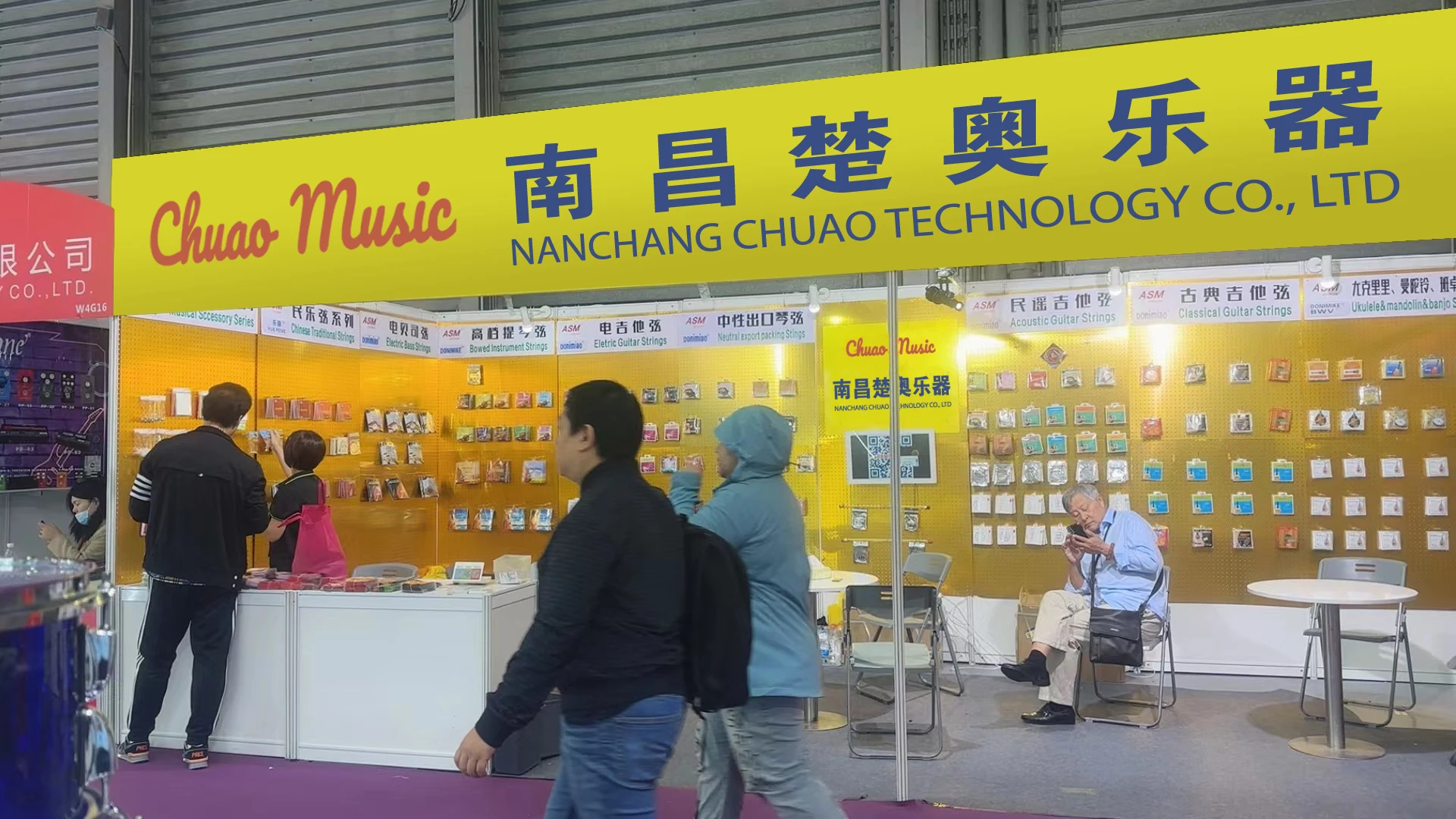
Nanchang Chuao Technology Co., Ltd.
- Trading Company
- Jiangxi, China
- Lead time7 days
- Avg. response≤ 1h
Main productsguitar,guitar accessories,drum,drumsticks,ukulele
Main marketsMid East(10.00%), Eastern Asia(10.00%), Africa(10.00%), Southeast Asia(10.00%), South Asia(10.00%), South America(10.00%), North America(10.00%), Central America(8.00%), Domestic Market(5.00%), Northern Europe(5.00%), Oceania(3.00%), Eastern Europe(3.00%), Southern Europe(3.00%), Western Europe(3.00%)
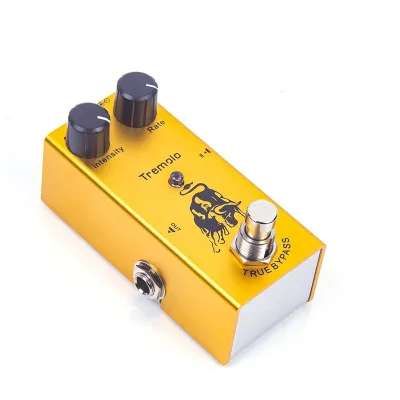
Factory Wholesale OEM Electric Guitar Effects Overdrive Classic Pedal
$8.2155 - $9.4491
MOQ: 10 pieces
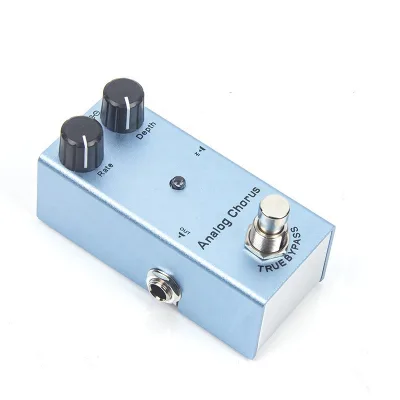
Electric Guitar Effects Pedals Mini DC 9V Vintage Overdrive Lead Electric Guitar Pedals Effects
$8.2155 - $9.4491
MOQ: 10 pieces
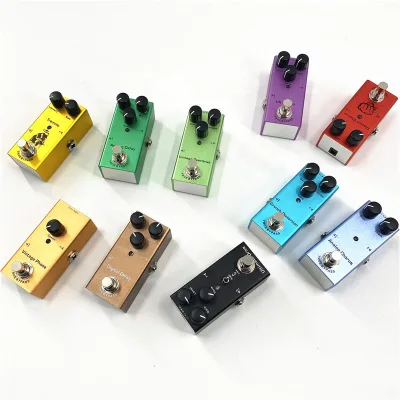
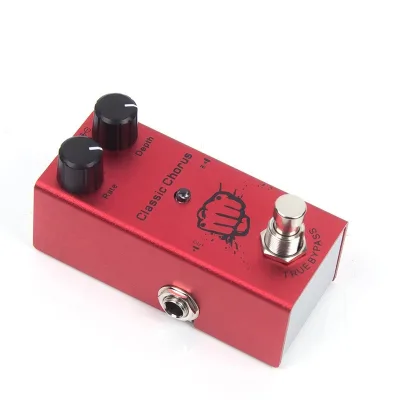
Shenzhen Casdony Technology Co., Ltd.
- Manufacturer, Trading Company
- Guangdong, China
- Lead time0 days
- Avg. response≤ 13h
Main productsguitar accessory,music toy,drum accessory,music effect,woodwind
Main marketsNorth America(35.00%), Domestic Market(10.00%), Northern Europe(10.00%), Central America(5.00%), Western Europe(5.00%), Eastern Europe(5.00%), Mid East(5.00%), Oceania(5.00%), Southern Europe(5.00%), Southeast Asia(5.00%), South Asia(3.00%), South America(3.00%), Eastern Asia(2.00%), Africa(2.00%)

Shenzhen Earsmate Science Technology Ltd
- Verified by SGS
- Trading Company
- China Guangdong
- Lead time15 days
- Avg. response≤ 2h
Main productsHearing Aids, Ear Hearing Aid, Bluetooth Hearing Aid, OTC Hearing Aids, Rechargeable Hearing Aid, Ite Hearing Aids, Digital Hearing Aid, Cic Hearing Aid, Blood Pressure Monitor, Guitar Effect Pedal
Main marketsAfrica,Southeast Asia/ Mideast,Europe,North America
- Trading Company
- Jilin, China
- Lead time30 days
- Avg. response≤ 7h
Main productsstrings instruments,wind instruments,toy,keyboard,percussion
Main marketsNorthern Europe(20.00%), Central America(20.00%), Western Europe(20.00%), Eastern Europe(20.00%), North America(20.00%)
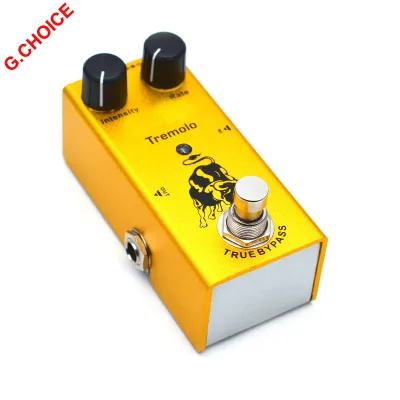
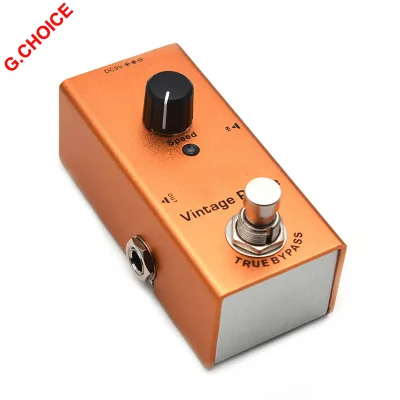
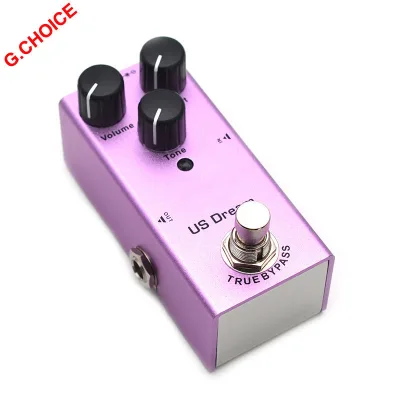
Quality Tremolo PEDAL for ELECTRIC GUITAR
$9.90 - $12.90
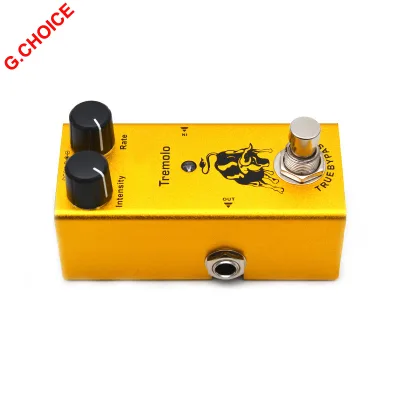
$6.5718 - $9.1392
MOQ: 2 pieces
Huizhou Guangli Runfa Musical Instrument Co., Ltd.
- Verified by SGS Group
- Manufacturer, Trading Company
- Lead time0 days
- Avg. response≤ 2h
Main productsElectric Guitar, Guitar, Ukulele, Kalimba, Musical Instrument Accessories
Main marketsDomestic Market(50%), Southeast Asia(15%), Eastern Asia(15%)

Dongyang Baby7 Crafts Co., Ltd.
- Manufacturer, Trading Company
- Zhejiang, China
- Lead time15 days
- Avg. response≤ 7h
Main productskorg,Yamahas,keyboard,Roland,piano
Main marketsSoutheast Asia(20.00%), South America(15.00%), North America(13.00%), Africa(10.00%), Central America(5.00%), Western Europe(5.00%), Eastern Asia(5.00%), Mid East(5.00%), Oceania(5.00%), Eastern Europe(5.00%), Domestic Market(3.00%), South Asia(3.00%), Southern Europe(3.00%), Northern Europe(3.00%)

Langfang Ruijian International Trade Co., Ltd.
- Trading Company
- China Hebei
- Lead time0 days
- Avg. response≤ 7h
Main productsPiano Floor Stand, Guitar Floor Stand, Piano Stool, Music Stand, Silent Drum Stand, Violin Stand, Pedal, Microphone Stand
Xinhua District Jingying Musical Instruments Firm
- Trading Company
- Hebei, China
- Lead time30 days
- Avg. response≤ 4h
Main productsmusical instruments,guitar and accessories,wind instruments,string instruments,mini instruments
Main marketsWestern Europe(30.00%), North America(30.00%), South Asia(5.00%), Northern Europe(5.00%), Central America(5.00%), South America(5.00%), Mid East(5.00%), Oceania(5.00%), Africa(5.00%), Eastern Europe(5.00%)






Comprehensive Sourcing Guide
Nightwolf Fuzz Overdrive Guitar Pedal Supplier Concentration and Factory Types
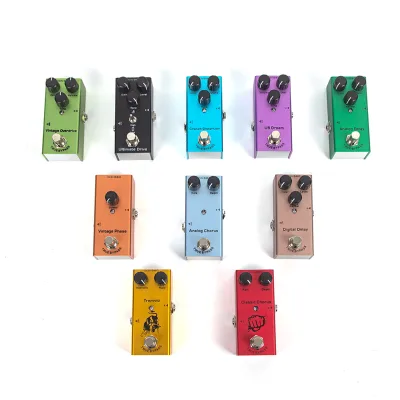
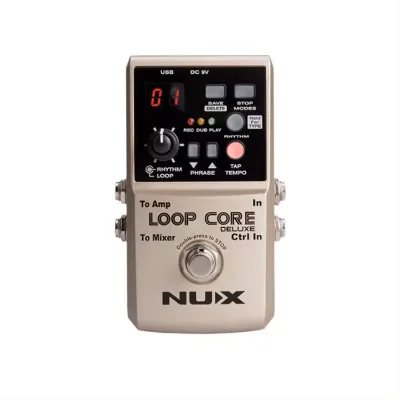
The current supplier landscape for guitar effects pedals shows a distinct concentration of manufacturing and trading entities within China, specifically in the Guangdong province. Data indicates that many suppliers listing products like electric guitar effect pedals and digital effect units originate from Guangzhou and other parts of Guangdong. This regional clustering suggests a mature supply chain for musical instrument accessories, where raw materials like metal and aluminum alloys are readily available for pedal construction. Buyers should prioritize verifying the specific city of origin, as some listings explicitly state Guangzhou while others simply list Guangdong or China, which may imply different logistical capabilities or factory tiers.
Regarding company structure, the available results reveal a mix of trading companies and manufacturers offering Original Design Manufacturing (ODM) and Original Equipment Manufacturing (OEM) services. Some suppliers explicitly state they possess their own brands and offer customization, while others function primarily as trading entities facilitating the import and export of musical instruments. When evaluating potential partners, it is crucial to distinguish between a factory that controls the production line and a trading company that aggregates products from multiple sources. The presence of ODM capabilities in the product attributes suggests that buyers seeking custom Nightwolf Fuzz Overdrive Guitar Pedal designs can find partners willing to develop unique specifications, provided the supplier's actual production capacity is verified through direct inquiry.
How to Verify Nightwolf Fuzz Overdrive Guitar Pedal Suppliers
Verification of supplier credibility relies heavily on third-party audit reports and response metrics rather than self-reported claims. In the current dataset, one supplier displays a TUVRHEINLAND verification status, which serves as a concrete indicator of a completed on-site audit or quality system review. Buyers should look for similar third-party verification badges or audit reports from recognized bodies before proceeding with large orders. The absence of such verification does not automatically disqualify a supplier, but it necessitates a more rigorous due diligence process, including requesting recent factory photos, video calls, and references from previous international clients to confirm operational legitimacy.
Response time is another critical metric for assessing supplier reliability and communication efficiency. The observed data shows response times varying significantly, with some suppliers indicating a response time of 7.25 hours while others report a response time of 1 hour. A faster response time often correlates with better customer service and a more active sales team, which is essential when discussing technical details for a Nightwolf Fuzz Overdrive Guitar Pedal. Buyers should test the responsiveness of potential suppliers by sending specific technical queries regarding customization options or material specifications. Consistent and prompt communication is a strong predictor of how well a supplier will handle post-order issues, such as quality control disputes or shipping delays.
What to Compare Across Nightwolf Fuzz Overdrive Guitar Pedal Suppliers
When comparing suppliers, the Minimum Order Quantity (MOQ) is a primary differentiator that impacts inventory strategy and cash flow. The data reveals a wide range of MOQs, with some suppliers requiring as few as 10 units, while others mandate orders of 500 or even 1000 pieces. For buyers testing the market or launching a new brand, suppliers with lower MOQs like 10 or 50 units offer a lower barrier to entry. Conversely, suppliers with higher MOQs may offer better unit economics but require a larger upfront investment. Buyers must align their order volume with their sales projections to avoid overstocking or facing prohibitive minimums that exceed their budget.
Lead time and pricing structure are equally vital factors in the comparison process. Lead times in the current results range from 15 days to 30 days, indicating variability in production scheduling and capacity. A shorter lead time of 15 days might be preferable for urgent restocking needs, whereas a 30-day lead time could be acceptable for planned seasonal launches. Pricing also varies significantly, with some products listed between $4.80 and $8.00, while others range from $13.50 to $28.00, and specialized digital units reaching up to $78.00. Buyers should compare these price points against the specified material quality, such as metal or aluminum alloy construction, and the included features like power supply types or specific effect modes to ensure they are comparing equivalent product tiers.
Common Nightwolf Fuzz Overdrive Guitar Pedal Sourcing Risks
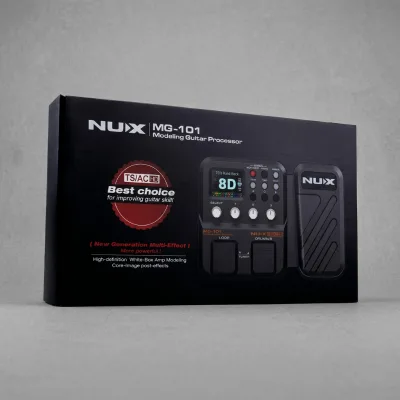
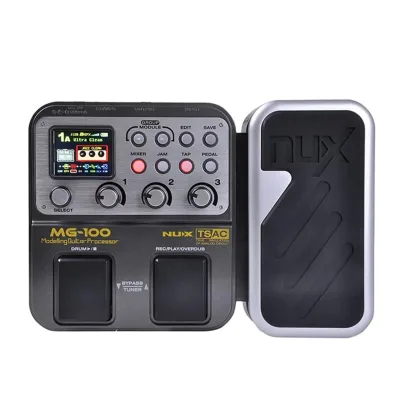
One significant risk involves the discrepancy between product descriptions and actual manufacturing capabilities, particularly regarding customization. While many suppliers list "OEM or ODM Are Welcome" and "Customization: Available," the actual ability to produce a specific Nightwolf Fuzz Overdrive Guitar Pedal design depends on their engineering resources. Some listings mention specific models like JDF or MG-101, but buyers must confirm if these are standard off-the-shelf items or if the supplier can modify them to meet unique branding or technical requirements. Relying solely on the "Customization" tag without verifying the supplier's R&D capacity can lead to delays or subpar prototypes that do not match the intended sound or aesthetic.
Another risk pertains to the lack of standardized certifications and quality assurance documentation. The current data shows that some suppliers have a system certification status listed as NIL, meaning no specific quality management system certification is publicly displayed. This absence of certification data makes it difficult to assess the consistency of their production processes. Without verified standards, there is a higher probability of receiving units with inconsistent soldering, faulty components, or packaging that does not meet safety standards. Buyers should explicitly request quality control reports, material safety data sheets, and evidence of testing for electrical safety, especially since these pedals involve electrical components and power supplies that must meet international safety regulations.
Nightwolf Fuzz Overdrive Guitar Pedal Regional Sourcing and Logistics
Geographic location plays a pivotal role in determining shipping costs and delivery timelines for guitar effect pedals. The majority of the observed suppliers are located in China, with specific mentions of Guangdong and Guangzhou as production hubs. Sourcing from this region typically involves sea freight for large orders, which aligns with the 15 to 30-day lead times observed, or air freight for smaller, urgent shipments. Buyers should calculate the total landed cost by factoring in the distance from the port of origin to their destination, as well as any potential tariffs or import duties associated with musical instruments and electronic accessories. Understanding the specific port of loading, such as Guangzhou or Shenzhen, helps in estimating transit times more accurately.
Logistics planning must also account for packaging specifications and weight constraints. Product attributes indicate that items are often packed in cartons or cases, with single package sizes ranging from 11x5x6 cm to 30x30x10 cm and weights varying from 135g to 1.5 kg. These dimensions are critical for calculating shipping volume and selecting the appropriate freight forwarder. For instance, a supplier with a single gross weight of 1.5 kg per unit will have different shipping economics compared to one with 140g units. Buyers should request detailed packing lists and carton dimensions to optimize container loading and minimize shipping costs, ensuring that the packaging is robust enough to protect the delicate electronic components during transit.
Nightwolf Fuzz Overdrive Guitar Pedal Commercial Terms and Order Planning
Commercial terms regarding payment and escrow are essential for mitigating financial risk during the sourcing process. While specific payment terms vary by supplier, the presence of escrow services or verified transaction platforms provides a layer of security for buyers. Buyers should prioritize suppliers who offer secure payment methods that hold funds until the goods are confirmed as received and meeting quality standards. It is also important to clarify the Incoterms, such as FOB or CIF, to understand who is responsible for insurance and freight costs at each stage of the journey. Clear agreement on these terms prevents unexpected costs and disputes that can arise from ambiguous shipping responsibilities.
Order planning must be synchronized with the supplier's production capacity and sample availability. Some suppliers indicate sample lead times of 7 to 15 days, which is a crucial factor for buyers needing to validate product quality before committing to a bulk order. Buyers should plan their timeline to include sufficient time for sample approval, potential revisions, and the subsequent mass production run. Additionally, understanding the supplier's capacity for handling large orders, such as those with MOQs of 1000 pieces, is necessary to ensure they can meet demand without compromising quality. A well-structured order plan that accounts for sample cycles, production lead times, and shipping durations will help maintain a steady supply chain for the Nightwolf Fuzz Overdrive Guitar Pedal.
FAQs
What is the price range for guitar effect pedals?
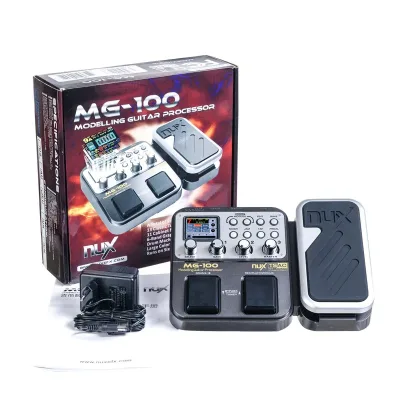
Prices for guitar effect pedals typically range from $4.80 to $78.00 depending on the model and features. Basic metal pedals start around $4.80, while advanced digital units like the NUX-MG101 cost approximately $70.00 to $78.00. Buyers should verify specific pricing for their required quantity and customization needs.
What is the minimum order quantity for these pedals?
Minimum order quantities vary significantly by supplier and product type. Some suppliers accept orders as low as 10 units for standard effects pedals. Others require bulk purchases starting at 500 pieces or even 1000 pieces for specialized models like the NUX-MG101. Always confirm the MOQ with the specific supplier before placing an order.
How long does production and delivery take?
Lead times generally range from 15 to 30 days for standard production runs. Some suppliers offer faster response times, averaging around one day for inquiries. Sample delivery may take 7 to 15 days. Buyers should confirm exact timelines with the supplier, as rush orders or custom OEM/ODM requests may extend these periods.
Can I customize the pedals with my own logo?
Yes, customization is widely available. Many suppliers explicitly state that OEM and ODM services are welcome. Buyers can often request custom logos, colors, and pattern changes on metal or aluminum alloy pedals. Packaging can also be customized to meet specific branding requirements, ensuring the final product aligns with your market identity.
Where are these guitar pedals manufactured?
Most guitar effect pedals are manufactured in Guangdong, China, with specific origins often listed as Guangzhou. Some suppliers are based in Hong Kong S.A.R. but still source production from mainland China facilities. Buyers should verify the exact place of origin on the product listing to understand logistics and shipping implications.
What materials are used in these effect pedals?
The majority of guitar effect pedals are constructed from durable metal or aluminum alloy. These materials ensure longevity and stable performance for various effects like overdrive, distortion, and delay. Some listings specify metal casings with specific weights around 135g to 140g. Buyers should check product attributes for exact material specifications.