Portable Electric Coffee Stove Suppliers and Manufacturers
Find 13 verified suppliers offering Portable Electric Coffee Stove options with varying lead times, certifications, and response speeds. Compare dimensions, power ratings, and MOQs to select the right factory for your needs; review the available evidence before requesting comparable quotations from suitable candidates.
Suppliers List

Zhejiang Haoda Electrical Appliance Co., Ltd.
- Combined
- China Zhejiang
- Lead time30 days
- Avg. response≤ 5h
Main productsFloor Cleaner, Deep Fryer, Infrared Ceramic Cooker, Electric Hotplate, Electric Buffet Warmer, Electric BBQ, Electric Chopper, Vacuum Cleaner, Air Fryer
Main marketsSoutheast Asia/ Mideast,Europe,North America

Zhongshan Longstar Electrical Appliance Co., Ltd.
- Verified by BV
- Combined
- China Guangdong
- Lead time30 days
- Avg. response≤ 6h
Main productsInduction Cooker, Infrared Cooker
Main marketsSoutheast Asia/ Mideast

Anhui Huining International Trade Co., Ltd.
- Verified by SGS
- Combined
- China Anhui
- Lead time30 days
- Avg. response≤ 4h
Main productsCoffee Maker, Commercial Water Boilers, Food Container, Plastic Cup, Thermostat, Disposable, Home Appliance, Electric Appliance, Kitchen Appliance, Home Appliance Parts
Main marketsSouth America,Africa,Southeast Asia/ Mideast,Europe,North America
Yiwu Max-Power technology Co.,Ltd
- Trading Company
- Zhejiang, China
- Lead time0 days
- Avg. response≤ 4h
Main productscar polishing machine,electric frying pan,electric hot pot,Hot Plate,Handheld Fan
Main marketsNorth America(40.00%), Northern Europe(30.00%), Mid East(30.00%)

- Combined
- China Guangdong
- Lead time23 days
- Avg. response≤ 23h
Main productsMetal Stamping Parts, Stamping Parts, Metal Sheet Parts, CNC Parts, Metal Spare Parts, Turning Parts, CNC Machining Parts, Laser Cutting Metal Parts, Metal Brackets, Pressed Parts
Main marketsSoutheast Asia/ Mideast,East Asia(Japan/ South Korea),Europe,Australia,North America

Suzhou Tuoshenghe Mechanical and Electrical Technology Co., Ltd.
- Verified by SGS
- Combined
- China Jiangsu
- Lead time15 days
- Avg. response≤ 6h
Main productsCamping Tent, Camping Stove, Alcohol Stove, Camping Table
Main marketsDomestic

- Verified by BV
- Trading Company
- China Fujian
- Lead time23 days
- Avg. response≤ 4h
Main productsMouth Care and Soap, Field Kitchen Trailer, Camping Tents, Boots and Shoes, Camo Uniform and Clothes, Outdoor Backpacks and Bags, Camouflage Net and Ghillie Suit, Blankets and Sleeping Bags, Canteens and Mess Tins, Tactical Helmet
Main marketsSouth America,Africa,Southeast Asia/ Mideast,East Asia(Japan/ South Korea),Europe,Australia,North America

Zhongshan Daofey Electrical Co., Ltd.
- Verified by TUVRHEINLAND
- Combined
- China Guangdong
- Lead time30 days
- Avg. response≤ 9h
Main productsInduction Cooker, Infrared Cooker, Built in Cooker, Induction Cooktop, Ceramic Cooker, Built Induction Cooker, Built Ceramic Cooker, Hot Plate
Main marketsOthers(foreignTradeCapacity.exportBusinessCapacityMarketOther),Europe


Portable Electric Induction Stove: High Efficiency Kitchen Appliance for Home
$35.00 - $40.00
MOQ: 400 Pieces


2000W 2200W Ceramic Infrared Cookware Electric Stove for Cooking Electric Cooker
$10.00 - $12.00
MOQ: 1000 Pieces


Difanmax Tech Lianyungang Co., Ltd.
- Verified by BV
- Manufacturer/Factory
- China Jiangsu
- Lead time23 days
- Avg. response≤ 3h
Main productsConsumer Electronics, Kinesiology Tape Adhesive Tapes, Industrial Tools, Home & Garden, Gifts & Crafts, Sport Products Entertainment, Health & Medical, Auto Parts E-Bike Auto Tools & Components, Clothes Apparel, Bicycle Hardware Laboratory Measuring Protective
Main marketsSouth America,North America,Southeast Asia,Oceania,Western Europe
Hangzhou Qianghua Cup Industry Co., Ltd.
- Verified by TüVRheinland
- Manufacturer, Trading Company
- Lead time15 days
- Avg. response≤ 2h
Main productsCeramic Mug, Glass Cup, Water Bottle, Thermos Series, Stylish Vase
Main marketsNorth America(25%), Eastern Europe(15%), South America(10%)

ZHONGSHAN AI LI PU ELECTRICAL APPLIANCE CO., LTD.
- Verified by TUVRHEINLAND
- Combined
- China Guangdong
- Lead time30 days
- Avg. response≤ 9h
Main productsInduction Cooker, Infrared Cooker, Halogen Cooker, Electric Pressure Cooker, Rice Cooker, Kettle, Commercial Induction Cooktop, Double Burns Induction Cooker, Double Burns Infrared Cooker, Four Burns Induction Cooker
Main marketsDomestic

Electric Induction Cooktop Portable Cooking Stove Single Burner Induction Cooker
$14.50 - $16.30
MOQ: 600 Pieces


ZHONG SHAN MEILONG ELECTRONIC CO.,LTD
- Verified by BV
- Combined
- China Guangdong
- Lead time30 days
- Avg. response≤ 2h
Main productsGas Stove, Range Hoods, Induction
Main marketsSouth America,Africa,Southeast Asia/ Mideast
Jiangmen SHT Metal Products Co., Ltd.
- Manufacturer
- China Guangdong
- Lead time30 days
- Avg. response≤ 2h
Main productsPizza Oven, BBQ Grill, Outdoor Kitchen, Gas Grill, Kitchen Cabinet, Barbecue Grill, Charcoal Grill, BBQ Gas Grill, Outdoor Grill, Gas Pizza Oven
Main marketsEurope,Australia,North America






Comprehensive Sourcing Guide
Portable Electric Coffee Stove Supplier Concentration and Factory Types
Suppliers listing portable electric coffee stoves and closely related electric hotplates, coil stoves and infrared ceramic cookers in this dataset are concentrated in China, with observed results pointing to Zhejiang and Guangdong provinces. Zhejiang-based listings in the results cover a broad small-kitchen-appliance range — floor cleaners, deep fryers, electric hotplates, electric BBQs, air fryers and electric stoves — which is typical of a combined manufacturer and trading operation (company type "Combined") using shared production lines or subcontracting. Guangdong results skew toward induction and infrared cookers, including ceramic-plate single-burner stoves that overlap functionally with a coffee stove. When results do not show a location, treat cluster identification as your own verification task: ask each candidate which city its factory sits in, whether the workshop produces electric heating appliances specifically, and how many years it has manufactured that line rather than reselling for another plant.
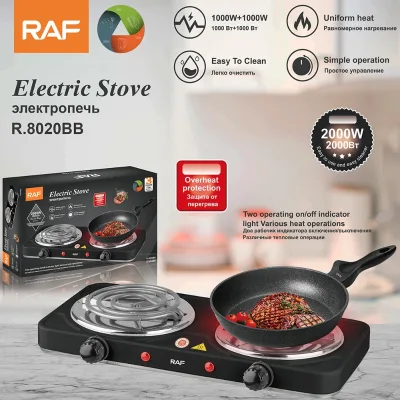
Factory types matter because a portable coffee stove is a heated-appliance assembly with a coil or infrared element, thermostat and housing. Some results show ODM and OEM capability, which signals engineering support for custom panels, voltages or branding. Others show product listings only. Distinguish manufacturers with heating-element experience from trading companies bundling catalog items; request workshop photos, sample references and a product specification sheet tied to a specific model number, such as the HD-series or LS-series model codes visible in listing data, before committing to samples.
How to Verify Portable Electric Coffee Stove Suppliers
Verification starts with the credentials actually displayed and the gaps you must fill yourself. In the observed results, one supplier type holds system certifications to ISO9001:2015 and ISO14001:2015, while another shows a system-certification field marked NIL but carries third-party verification through Bureau Veritas. Neither is a complete picture. An ISO pair tells you about management systems, not electrical safety of a specific stove model; a BV verification confirms a business entity existed and was inspected at some point, not that heating elements are reliable. Ask every candidate for product-level approvals — one listing shows ETL/GS/CB/CE/EMC/LVD/RoHS approvals and another shows CB, CE, EMC, Emf, GS, LFGB and RoHS marks — and request the certificate numbers so you can check them against the issuing bodies' databases.
Beyond paperwork, verify operational claims. If a profile states a response time (the observed figures are roughly four hours and six hours), test it yourself with a technical question about wattage tolerance or plug standards and measure the reply. Confirm the legal company name, factory address and export license through a third-party business check or an in-person or video audit. For a heated appliance, ask which model numbers were tested, which laboratories issued reports and whether test samples came from the same production line you would order from. Escrow or platform-protected payment availability is another displayed attribute worth checking per supplier rather than assuming.
What to Compare Across Portable Electric Coffee Stove Suppliers
Build a comparison sheet using the attributes that actually appear in supplier results, and leave blank cells where a supplier shows nothing rather than guessing. Useful displayed dimensions here include location, main products, company type, system certifications, third-party verification, response time, lead time, ODM/OEM capacity and per-listing MOQ and price ranges. In the observed data, one supplier shows a 30-day lead time and MOQs of 500 to 1,000 pieces depending on the model, while another shows MOQs of 2,000 pieces; these differences directly affect how much inventory you must commit for a first order. Response times of roughly four versus six hours matter when you are iterating on samples or resolving a shipment problem.
Also compare product-level facts rather than marketing claims. One electric infrared ceramic cooker listing specifies 220–240V at 1200W plus 800W (or 120V variants), tempered glass panel, stainless steel body and packaging of five pieces per carton; a hotplate listing specifies 1000W and different carton quantities. Compare voltage options against your market, carton packing against your freight plan, and container-loading figures against your volume. Do not treat a missing attribute as a negative in itself — ask for it — but do weigh a supplier whose listings are consistently detailed and specific against one whose data is thin, because specification discipline usually reflects production discipline too.
Common Portable Electric Coffee Stove Sourcing Risks
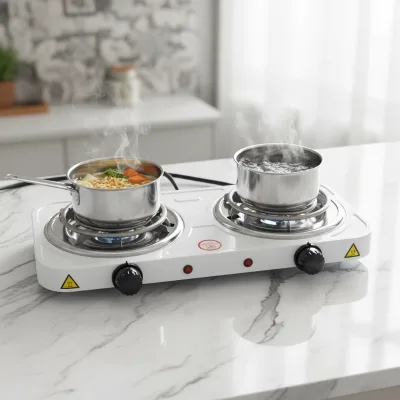
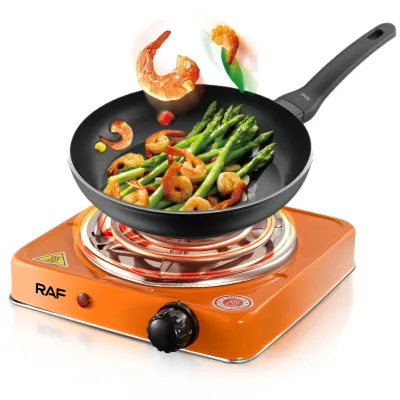
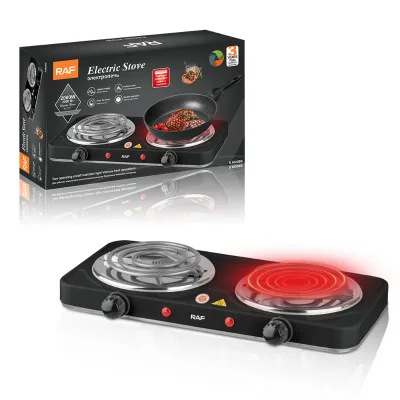
The most common risk in this category is assuming all "electric stove" listings are the same product. Results in this dataset span coil hotplates at 1000W, infrared ceramic cookers at 1200W plus 800W, a 2000W outdoor single-burner and a 1500W temperature-controlled solid hotplate intended for coffee and tea brewing. A supplier strong in camping stoves may not be your best source for a temperature-controlled coffee stove, and vice versa. Pin down the exact model number, wattage, heating type and controls in writing before sampling, because catalog photos alone will not distinguish a coil plate from an infrared ceramic plate.
Other recurring risks: certification claims that do not match your destination market's requirements — a GS or CE mark does not substitute for the approval regime your country enforces, so confirm which listed approvals apply to you and verify certificate numbers. Voltage and plug mismatch is a silent failure mode; the observed listings show both 220–240V and 120V variants, so specify the correct one and confirm plug type per market. Low stated MOQs can hide higher effective minimums once customization, packaging or mixed models are requested. Finally, avoid paying full balances before pre-shipment inspection; for a heated appliance, inspect thermostatic behavior, element seating and cord strain relief on production samples, not just golden samples, since the gap between sample and mass production is where most quality failures emerge.
Portable Electric Coffee Stove Regional Sourcing and Logistics
The high-confidence regional facts in this dataset are China, Zhejiang and China, Guangdong. Zhejiang's listed supplier covers a wide small-appliance portfolio and explicitly offers OEM and ODM, which suits buyers needing custom branding or modified voltage and wattage configurations. Guangdong's listed supplier focuses on induction and infrared cookers with ceramic-glass surfaces and third-party verification. When your search results show no region, identify clusters independently by asking for factory city and province, checking whether that province has a stated heating-appliance or small-kitchen-appliance industry base, and confirming the address in an audit — a trading company may quote a province different from the actual production site.
Logistics planning should follow from the packing data suppliers disclose. Observed listings show, for example, five pieces per carton with net and gross weights of 12.6 and 13.6 kilograms, and 20FT/40FT/40HQ loading of 1850/3750/4390 pieces on one model, versus ten pieces per carton and 6000/12400/14500 pieces on a smaller hotplate. Use these figures to compute freight cost per unit across sea, rail and air options; container-loading efficiency often decides whether a low unit price survives shipping. Ask each supplier which port they ship from, what the stated lead time includes (production only, or production plus booking), and whether they can consolidate multiple models into one container if your initial volumes do not fill one.
Portable Electric Coffee Stove Commercial Terms and Order Planning
Plan commercial terms around the attributes suppliers actually publish. Observed price ranges in this dataset span roughly USD 3.55–3.95 for a basic 1000W coil hotplate, 4.00–4.20 for a temperature-controlled 1500W hotplate, 5.85–6.25 for a 2000W outdoor burner and 16.50–18.00 for ceramic-glass stoves — but treat these as indicative listing prices, not quotes for your specification. Request formal quotations that state unit price by quantity tier, packaging, print and certification costs, Incoterms and validity period. Where MOQs are shown at 500–1,000 versus 2,000 pieces, negotiate trial orders at the stated MOQ and negotiate lower minimums only against confirmed reorder intent or higher unit prices.
Payment and risk controls should scale with order size. For a first order, prefer a modest deposit with balance after pre-shipment inspection, or escrow/protected payment if the platform displays that option for the supplier — verify per supplier rather than assuming. Align payment milestones with the stated lead time (30 days in one observed profile) and confirm whether that clock starts at deposit or at artwork approval. For repeat orders, lock a price-validity window, agree on spare-parts support — one observed listing states free spare parts as a service term — and document warranty handling for heating elements and glass panels. Finally, sequence orders so samples, then a pilot lot, then volume run through the same production line, and re-inspect at each step.
FAQs
What does a Portable Electric Coffee Stove typically cost from Chinese suppliers?
Listing prices on this page range from about $3.55 to $18 per unit, depending on the model, wattage, burner type and certifications. Compact single-coil hotplates sit at the lower end, while ceramic infrared cookers command higher prices. Final quotes vary with order quantity, customization and shipping terms, so request itemized quotations before comparing suppliers.
What is the usual minimum order quantity for these portable stoves?
Published MOQs on this page range from 500 to 2,000 units per model. Smaller coil hotplates list a 500-unit minimum, ceramic infrared cookers list 1,000 units, and glass-top ceramic stoves list 2,000 units. Confirm the exact MOQ for your chosen model, since some suppliers may negotiate trial orders at a higher unit price.
How long does production take after an order is confirmed?
One listed manufacturer states a 30-day lead time, which is a reasonable planning baseline for this product category. Actual timelines depend on order volume, customization requirements and factory capacity at booking time. Ask each supplier to confirm the lead time in writing for your specific quantity and include it in the purchase contract.
Which certifications should a Portable Electric Coffee Stove have for export?
Listed products on this page show approvals including ETL, GS, CB, CE, EMC, LVD, LFGB, RoHS and Emf, covering major export markets. One manufacturer also holds ISO9001:2015 and ISO14001:2015 system certificates. Verify that certificate numbers are current and issued by recognized bodies for the specific destination market before placing an order.
Can these stoves be customized with my own branding and specifications?
Yes, the listed products state that customization is available, and one combined manufacturer offers both OEM and ODM services. Customization can cover appearance, packaging, voltage and wattage configurations, such as 220-240V or 120V versions. Confirm minimum quantities for customized orders, sample approval steps and any tooling fees before committing to production.
Where are these suppliers located and how quickly do they respond?
The suppliers on this page are located in Zhejiang and Guangdong, China, both established small-appliance manufacturing regions. Recorded average response times range from roughly 4 to 6 hours. Response speed can vary with time zones and workload, so message several suppliers at once and note which ones reply with detailed, model-specific answers.