Recyclable Stand Up Drinking Bag Suppliers and Manufacturers
Source Recyclable Stand Up Drinking Bag options from 22 verified suppliers in China. Compare grounded dimensions including ISO9001:2015 certification, MOQs starting at 30,000 units, and lead times of 23-30 days. Request samples to verify moisture-proof features and customization capabilities.
Suppliers List

Guangdong Danqing Printing Co., Ltd.
- Verified by BV
- Combined
- China Guangdong
- Lead time23 days
- Avg. response≤ 10h
Main productsFood Packaging, Plastic Bag, Zipper Pouch, Spout Pouch, Plastic Film, Quad-Seal Flat Bottom Pouch, Shrink Sleeves, Stand up Zipper Pouch, Roll Film, Food Pouch
Main marketsSouth America,Africa,Southeast Asia/ Mideast,Europe,Australia,North America


Customized Special Shape Stand up Spout Pouch 750ml Drinking Water Packaging Bag
$0.02 - $0.06
Moq: 50000


Eco-Friendly Recyclable Stand-up Spout Pouch Plastic Packaging Bag for Liquid Beverage
$0.01 - $0.04
Moq: 50000

xinpaike(shandong)packaging Co., Ltd.
- Verified by SGS
- Trading Company
- China Shandong
- Lead time30 days
- Avg. response≤ 3h
Main productsFood Package Bag, Pet Food Bag, Smell Proof Bag, Freezer Bag, Specimen Bag, Garbage/Trash Bag, Mylar Bag, Biodegradable Packaging Bag, Sandwich Bag, Flat Bag
Main marketsDomestic,North America
Seabang (Xiamen) Outdoor Products Co., Ltd.
- Verified by SGS
- Trading Company
- China Fujian
- Lead time15 days
- Avg. response≤ 2h
Main productsCooler Box, Plastic Drinking Water Bottle, Insulated Bag, Headlamp, Waterproof Phone Pouch, Sport Water Bottle, Cooler Bag, Outdoor Waterproof Bag, Waterproof Storage Bag, Folding Bucket
Main marketsDomestic,Europe,North America

Dongguan Hua Di Packaging Product Co., Ltd.
- Manufacturer
- Guangdong, China
- Lead time20 days
- Avg. response≤ 4h
Main productsbeverage bag,spout pouch,breast milk bag,bag in box,zipper pouch
Main marketsNorth America(40.0%), Southern Europe(20.0%), Southeast Asia(10.0%), Eastern Asia(5.0%), South America(5.0%), Mid East(3.0%)

JIANGMEN MST PACKAGING GROUP LIMITED
- Verified by TUVRHEINLAND
- Trading Company
- China Guangdong
- Lead time30 days
- Avg. response≤ 1h
Main productsPackaging Bag, Box Pouch, Kraft Paper Bag, Paper Bag, Coffee Bag, Plastic Bag, Compostable Bags, Recyclable Bags, Biodegradable Bags, Spout Pouch
Main marketsSouth America,Southeast Asia/ Mideast,Europe,Australia,North America

MOLIA PACKAGING (QINGDAO) CO., LTD.
- Verified by BV
- Combined
- China Shandong
- Lead time23 days
- Avg. response≤ 6h
Main productsFood Packaging
Main marketsAfrica,Southeast Asia/ Mideast,Europe,Australia,North America
Beijing Honghai Packaging Co., Ltd.
- Verified by TUVRHEINLAND
- Trading Company
- China Beijing
- Lead time15 days
- Avg. response≤ 3h
Main productsCoffee Bag, Mylar Bag, Food Bag, Pet Food Bag
Main marketsEurope,Australia,North America
Chaozhou Jiayin Packaging Co., Ltd.
- Verified by BV
- Combined
- China Guangdong
- Lead time23 days
- Avg. response≤ 2h
Main productsStand up Pouch, Coffee Bag, Zipper Bag, Spout Pouch, Ziplock Bag, Drinking Bag, Printed Roll Film
Main marketsDomestic


Gift Bag Packaging Bag Coffee Packing Bag Stand up Pouch Resealable Zipper Bag
$0.10 - $0.50
Moq: 10000
Jiangmen Feima Plastics Industry Co., Ltd.
- Verified by TüVRheinland
- Manufacturer, Trading Company
- Lead time30 days
- Avg. response≤ 2h
Main productsFood Packaging Bag, Shopping Bag, Garbage Bag, Degradable Bag, Composite Plastic Bag
Main marketsSouth America(22%), North America(19%), Central America(18%)

- Verified by SGS
- Trading Company
- China Hebei
- Lead time15 days
- Avg. response≤ 1h
Main productsStand up Pouch, Mylar Bag, Food Packaging Bag, Coffee Packaging Bag, Pet Food Bags, Stand up Bag, Aluminium Foil Bag, Pet Food Packaging Bag, Square Bottom Bag, Side Gusset Bag
Main marketsEurope,North America

Qingdao Yurui Package Co., Ltd.
- Verified by SGS
- Manufacturer/Factory
- China Shandong
- Lead time23 days
- Avg. response≤ 4h
Main productsZip Lock Bag, Slider Zipper Bag, Food Storage Bag, Compsatable Ziplock Bag, Specimen Bag, Meidical Biohazard Bag, Paper Bag, Poly Bag, Lamination Bag, Glass Bottles
Main marketsSouth America,Eastern Europe,Mid East,North America,Southeast Asia,Eastern Asia,Oceania,Western Europe,Africa


Reclosable Hand Held Zipper Plastic Drinking Bags Clear Juice Drink Pouches with Straws
$40.00 - $100.00
Moq: 1

Yantai Bagmart Packaging Co., Ltd.
- Verified by SGS Group
- Manufacturer, Trading Company
- Lead time0 days
- Avg. response≤ 6h
Main productsPlastic Packaging Bag, Injection molded products
Main marketsNorth America(27%), Eastern Asia(15%), Western Europe(15%)
Tianjin Xiezuo Trading Co., Ltd.
- Verified by SGS
- Trading Company
- China Tianjin
- Lead time15 days
- Avg. response≤ 6h
Main productsPaper and Plastic Packaging
Main marketsNorth America
Dongguan Sealand Packaging Polybags Co., Ltd.
- Verified by Intertek
- Trading Company
- Lead time15 days
- Avg. response≤ 1h
Main productsCigar Bag, BIB Bag, Stand Up Pouch, Zipper Lock Bag, Spout Bag
Main marketsNorth America(45%), Western Europe(12%), Southeast Asia(8%)

Guangdong Min Sun Environmental Protection Packaging Technology Co., Ltd.
- Verified by SGS
- Manufacturer
- China Guangdong
- Lead time15 days
- Avg. response≤ 2h
Main productsPlastic Packaging Products, Printed Plastic Products, Film Rolls, Laminated Plastic Packaging Products, Food Packaging Bag, Industry Packaging Bag, Medicine Use Packaging Bag, Shrink Label, Gravure Printing Products, Custom Packaging Service
Main marketsEurope,North America

Shanghai David International Trade Co., Ltd.
- Verified by TUVRHEINLAND
- Combined
- China Shanghai
- Lead time15 days
- Avg. response≤ 6h
Main productsPromotional Gifts, Gift Sets, Tshirts, Hats, Hot Packs, Hot Cold Packs, Ice Packs, Bags, Umbrellas, Water Bottles
Main marketsSouth America,Africa,Southeast Asia/ Mideast,East Asia(Japan/ South Korea),Domestic,Europe,Australia,North America
Qingdao Haoyu Packaging Co., Ltd.
- Verified by TüVRheinland
- Manufacturer, Trading Company
- Lead time0 days
- Avg. response≤ 5h
Main productsSpout Pouch, Standup Ziplock Pouch, Straw Pouch, Palstic Film Roll Stock, Coffee Bag
Main marketsDomestic Market(60%), North America(15%), South America(5%)
Zhongshan Dongfeng Town Orient Printing Plastic Factory
- Verified by SGS
- Combined
- China Guangdong
- Lead time15 days
- Avg. response≤ 1h
Main productsBag, Roll Film, Packing, Gift Bag, Light Chemical Products, Gift Box, Doypack, Degradable Material, Composite Matrial
Main marketsDomestic
Shandong Lanxi Environmental Engineering Co., Ltd.
- Verified by CTI
- Combined
- China Shandong
- Lead time15 days
- Avg. response≤ 1h
Main productsWater Bladder, PVC Water Tank, Tarpaulin Fish Pond, Water Weight Bag, Fuel Bladder, Air Lifting Bag
Main marketsDomestic

QINGDAO SHINESTAR INDUSTRY AND TRADE CO.,LTD.
- Verified by SGS
- Trading Company
- China Shandong
- Lead time15 days
- Avg. response≤ 7h
Main productsPlastic Packaging Bag, Food Packaging Bag, Custom Packaging Bag, Paper Plastic Bag, Natural Health Product Bag, Irregular Shaped Bag, Plastic Film Rolls, Shrink Wrap, Pharmaceutical Packaging Bag, Cardboard Packaging Bag
Main marketsSouth America,Southeast Asia/ Mideast,Australia

Custom Printed Drinking Stand up Plastic Empty Juice Pouches Clear with Straws
$0.05 - $0.15
Moq: 5000


Guangdong A Little Better Technology Co., Ltd.
- Manufacturer, Trading Company, Distributor/Wholesaler
- Guangdong, China
- Lead time7 days
- Avg. response≤ 12h
Main productsbook printing,notebook,paper boxes,bags printing,label printing
Main marketsSouth America(30.0%), North America(30.0%), Southeast Asia(10.0%), Eastern Europe(10.0%), Mid East(5.0%), Africa(5.0%), Central America(2.0%), Western Europe(2.0%), Eastern Asia(2.0%), Oceania(2.0%), Southern Europe(1.0%), Northern Europe(1.0%)
Qingdao Fullsun Biotechnology Packaging Co., Ltd
- Verified by BV
- Combined
- China Shandong
- Lead time15 days
- Avg. response≤ 17h
Main productsBiodegradable Bag
Main marketsNorth America














Comprehensive Sourcing Guide
Recyclable Stand Up Drinking Bag Supplier Concentration and Factory Types
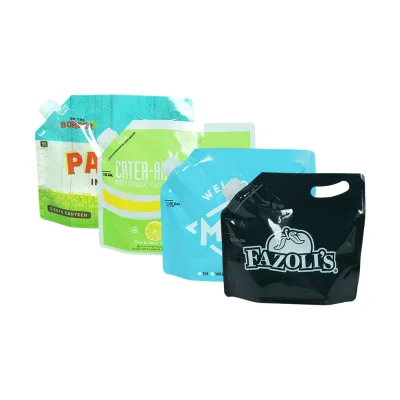
Current data indicates a concentration of manufacturing capabilities in China, specifically within the Guangdong province, where suppliers offer a wide range of plastic packaging solutions including stand-up pouches and spout bags. These facilities often operate as combined entities capable of handling both Original Design Manufacturing and Original Equipment Manufacturing, alongside their own brand production. The primary product lines observed in this region include food packaging, plastic bags, zipper pouches, and specialized spout pouches designed for liquid beverages. This clustering suggests a mature supply chain ecosystem where raw material sourcing and specialized machinery are readily available to support high-volume production runs.
In contrast, other regions such as Shandong province host trading companies that focus on diverse packaging needs like mylar bags and smell-proof containers. These trading entities typically verify their operations through third-party agencies like SGS and maintain a distinct operational profile compared to the direct factories found in Guangdong. While the Guangdong suppliers emphasize their own brand and ODM/OEM capacities, the trading companies in Shandong often aggregate products from various sources to meet specific client requirements for items like pet food bags and freezer bags. Buyers must distinguish between these factory types to ensure they are engaging with the appropriate entity for their specific volume and customization needs.
How to Verify Recyclable Stand Up Drinking Bag Suppliers
Verification of supplier credibility relies heavily on checking for recognized third-party audit results, such as BV or SGS certifications, which serve as objective evidence of operational compliance. Some suppliers in the current dataset display BV verification status, indicating a baseline level of due diligence has been completed regarding their business legitimacy and production capabilities. Additionally, system certifications like ISO9001:2015 are frequently cited, providing assurance that the supplier adheres to international quality management standards. Buyers should prioritize suppliers who explicitly list these verifications in their profile rather than relying on unverified claims, as these credentials are critical for maintaining product consistency and safety.
Beyond basic verification, buyers must examine the specific product attributes and certifications listed for individual items to ensure they meet regulatory requirements for food contact. Product evidence shows that some suppliers offer certifications including BRC, FDA, and SGS, which are essential for packaging intended for food and beverage applications. It is crucial to confirm that the specific bag model being sourced carries the necessary food-grade approvals, as general company certifications do not automatically extend to every product SKU. Buyers should request current test reports for the specific recyclable materials and inks used, ensuring that the "bio-degradable" or "recyclable" claims are backed by valid documentation rather than marketing terminology.
What to Compare Across Recyclable Stand Up Drinking Bag Suppliers
When evaluating potential partners, buyers should systematically compare lead times, which currently range from 23 days to 30 days depending on the supplier's location and capacity. A supplier in Guangdong may offer a 23-day lead time, while a trading company in Shandong might require 30 days, a difference that can significantly impact inventory planning and market responsiveness. Response times also vary, with some suppliers demonstrating a response time of under three days, while others may take nearly ten days to reply to inquiries. These metrics are vital for assessing the supplier's ability to handle urgent orders and maintain communication throughout the production cycle.
Minimum Order Quantities (MOQ) and pricing structures represent another critical comparison point, with observed MOQs ranging from 30,000 to 50,000 units and unit prices varying between $0.01 and $0.15. Buyers must analyze whether the lower price points align with the required material specifications, such as the use of PET/NY/Al/PE layers versus single-layer polyethylene. Additionally, the availability of customization services, including logo printing, color matching up to 13 colors, and specific thickness adjustments, should be weighed against the supplier's capacity to deliver these features without compromising the structural integrity of the bag. Comparing these commercial terms helps identify the most cost-effective partner for the specific order volume.
Common Recyclable Stand Up Drinking Bag Sourcing Risks
One significant risk involves the discrepancy between claimed material properties and actual product performance, particularly regarding the "bio-degradable" or "recyclable" nature of the packaging. While some product attributes list features like moisture proofing and shock resistance, the actual recyclability depends on the specific layer composition, such as the presence of aluminum foil or mixed polymers that may complicate recycling processes. Buyers must verify that the raw materials, whether high-pressure polyethylene or multi-layer structures, meet the specific recycling standards required by their target markets to avoid regulatory non-compliance or environmental claims that cannot be substantiated.
Another risk lies in the variability of sample availability and the consistency of mass production quality. Although some suppliers offer free samples, the transition from a prototype to a full production run can introduce defects if the manufacturing process is not tightly controlled. The "customized" nature of many orders, including specific sizes and spout diameters, increases the complexity of quality assurance. Buyers should be wary of suppliers who do not provide clear evidence of their filling capabilities or sealing integrity, as leaks or seal failures can lead to product spoilage and significant financial loss. Ensuring that the supplier has a robust quality control system for custom specifications is essential to mitigate these production risks.
Recyclable Stand Up Drinking Bag Regional Sourcing and Logistics
Sourcing from China, particularly the Guangdong region, offers access to a dense network of manufacturers specializing in plastic packaging and flexible films. The proximity of raw material suppliers and specialized machinery in this area often facilitates faster production cycles and more efficient logistics for export. However, buyers must account for the specific shipping requirements associated with heavy or bulky packaging rolls, which can impact freight costs and delivery timelines. The concentration of factories in Guangdong suggests that logistics infrastructure is well-developed to handle large volumes of plastic packaging goods destined for international markets.
In contrast, sourcing from other regions like Shandong may involve different logistical considerations, as these areas often host trading companies that aggregate products from multiple factories. This model can introduce additional handling steps and potential delays in the supply chain, although it may offer greater flexibility in sourcing diverse product types. Buyers should evaluate the total landed cost, including inland transportation and export documentation, when comparing suppliers from different provinces. Understanding the specific origin of the product, whether it is a direct factory output or a trading company's inventory, is crucial for accurately estimating delivery times and managing inventory levels effectively.
Recyclable Stand Up Drinking Bag Commercial Terms and Order Planning
Commercial terms regarding payment and order planning must be carefully aligned with the supplier's specific requirements, such as the observed MOQs of 30,000 to 50,000 units. Buyers should plan their orders to meet these thresholds to secure the most competitive pricing, which ranges from $0.01 to $0.15 per unit depending on the complexity and material composition. It is also important to clarify the payment terms and whether the supplier offers escrow services to protect the buyer's funds until the goods are verified. Understanding the financial structure of the deal is essential for maintaining cash flow and ensuring that the order is financially viable for both parties.
Order planning must also account for the customization lead times and the availability of samples, which some suppliers offer for free. Buyers should factor in the time required for design approval, sample testing, and final production when creating their procurement schedule. The ability to customize features like thickness, color, and spout diameter adds value but requires precise communication to avoid errors. Additionally, buyers should verify the packing specifications, such as carton or pallet arrangements, to ensure efficient storage and transportation. A well-structured order plan that anticipates these variables will help streamline the procurement process and reduce the risk of delays or misunderstandings.
FAQs
What is the price range for recyclable stand up drinking bags?
Prices typically range from $0.01 to $0.15 per unit depending on material complexity and customization. Basic plastic pouches start near $0.01, while specialized spout pouches with aluminum foil barriers cost up to $0.15. Buyers should request quotes for specific thickness and volume requirements to get accurate pricing.
What is the minimum order quantity for these packaging bags?
Minimum order quantities generally start at 30,000 units for standard spout pouches and 50,000 units for basic upright bags. These thresholds ensure efficient production runs for custom printing and sealing processes. Buyers with smaller volume needs should verify if suppliers offer higher per-unit costs for lower MOQs.
How long does production take for custom orders?
Standard lead times are approximately 23 to 30 days after order confirmation. This duration covers material sourcing, printing, and sealing processes for custom designs. Expedited options may be available for urgent projects, but buyers should confirm specific timelines with suppliers before finalizing purchase agreements for large batches.
Are free samples available for quality testing?
Many suppliers provide free samples to allow buyers to verify material quality and seal integrity before placing bulk orders. These samples help assess features like moisture proofing and leak resistance. Buyers should confirm sample availability and shipping costs directly with the supplier to ensure the product meets their specific application needs.
What certifications are required for food-grade packaging?
Common certifications include ISO9001:2015, BV, SGS, and FDA compliance for food contact safety. These documents verify that materials meet international standards for hygiene and durability. Buyers should request valid certificates to ensure the packaging is suitable for liquid beverages and complies with local regulatory requirements for food packaging applications.
Where are these suppliers located?
Manufacturers are primarily located in Guangdong and Shandong provinces in China. These regions are known for established plastic packaging industries with robust supply chains. Buyers can filter results by location to reduce shipping costs and lead times, ensuring closer proximity to major logistics hubs for efficient international delivery.