Sample Analysis Stone Grinder Suppliers and Manufacturers
Source 21 verified suppliers for Sample Analysis Stone Grinder equipment. Compare key dimensions including lead times, certifications, and response rates to identify suitable partners. Review product specifications and request quotes directly from the listed manufacturers; review the available evidence before requesting comparable quotations from suitable candidates.
Suppliers List

WUXI JIEBO INSTRUMENT TECHNOLOGY CO., LTD.
- Verified by TUVRHEINLAND
- Combined
- China Jiangsu
- Lead time15 days
- Avg. response≤ 1h
Main productsOptical Emission Spectrometer, Infrared Carbon Sulfur Analyzer, Hardness Tester, Micro-Coulometric Synthesize Analyzer, Wireless Smelting Thermometer, Ultrasonic Flaw Detector/Universal Test Machine, Microscope/Grinding/Polishing Machince, Ceramic Crucible/Tungsten/Iron Flux, Standard Sample
Main marketsSoutheast Asia/ Mideast,Domestic


China Sample Grinder for Oes Analysis
MOQ: 1 Sets
Qingdao Yosion Intelligent Technology Co., Ltd.
- Manufacturer/Factory
- China Shandong
- Lead time38 days
- Avg. response≤ 11h
Main productsPulveriser, Crucible, Container Laboratory, Bottle Roller, Crusher, Dust Collector, Rotary Sample Divier, Fusion Furnace, Drying Oven, Cupellation Furnace
Main marketsSouth America,Eastern Europe,Mid East,North America,Southeast Asia,Eastern Asia,Oceania,Western Europe,Africa


Laboratory Vibrating Pulverizer/Laboratory Sample Grinder/Lm2 Pulverizer Mill
$2380.00 - $10000.00
MOQ: 1 Pieces

Jiangxi Guangming Intelligent Technology Co., Ltd.
- Manufacturer, Trading Company
- Jiangxi, China
- Lead time15 days
- Avg. response≤ 3h
Main productslab jaw crusher,lab grinder,roll crusher,sample divider,lab pulverizer
Main marketsEastern Europe(15.00%), Mid East(15.00%), Western Europe(15.00%), Southern Europe(12.00%), Oceania(10.00%), Northern Europe(10.00%), Africa(9.00%), South America(5.00%), Southeast Asia(2.00%), Central America(2.00%), South Asia(2.00%), North America(2.00%), Eastern Asia(1.00%)
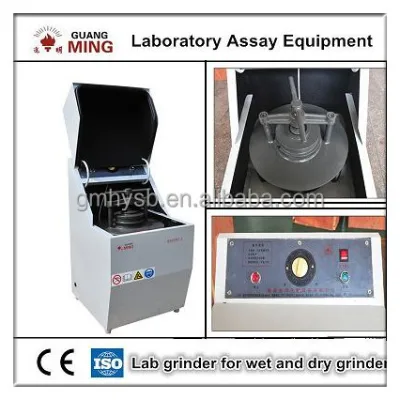
Efficient Lab Stone Grinder Machine for Sample Analysis, coke Coal Grinder Mill
$1.00 - $100.00
MOQ: 1 Minimum
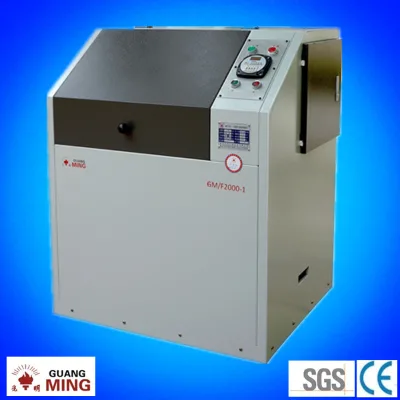
$1031.14 - $10310.36
MOQ: 1 Minimum
Ganzhou Gelin Mining Machinery Co., Ltd.
- Combined
- China Jiangxi
- Lead time15 days
- Avg. response≤ 12h
Main productsGold Mining Equipment, Zircon Ore Processing Machine, Gold Washing Trommel, Centrifugal Gold Concentrator, Shaking Table, Jigger Machine
Main marketsSouth America,Africa,Southeast Asia/ Mideast,East Asia(Japan/ South Korea),Domestic,Europe,Australia,North America
Shicheng Oasis Mineral Equipment Manufacturing Co., Ltd.
- Verified by SGS
- Combined
- China Jiangxi
- Lead time30 days
- Avg. response≤ 3h
Main productsShaking Table, Crushers, Ball Mill, Magnetic Separator, Vibrating Screen, Flotation Cell, Drum Washing Machine
Main marketsAfrica,Southeast Asia/ Mideast,Europe


High-Precision Sealed Sample Pulverizer Laboratory Mineral Sample Grinding Machine
$600.00 - $800.00
MOQ: 1 Pieces


Zhejiang Keyone Industry Co.,Ltd
- Verified by BV
- Trading Company,Manufacturer/Factory
- China Zhejiang
- Lead time38 days
- Avg. response≤ 12h
Main productsCutting Wheel, Cutting Disc, Grinding Wheel, Grinding Disc, Flap Wheel, Flap Disc, Abrasive Tool, Abrasive Wheel, Fiber Disc, Cut off Wheel
Main marketsSouth America,Eastern Europe,Mid East,North America,Southeast Asia,Eastern Asia,Oceania,Western Europe,Africa
Qingdao Tokays Machinery Co., Ltd.
- Trading Company,Manufacturer/Factory
- China Shandong
- Lead time30 days
- Avg. response≤ 4h
Main productsPillow Filling Machine, Fiber Opening Machine, Plush Toy Filling Machine, Build a Bear Machine, Ball Fiber Machine, Textile Fabric Waste Recycling Machine, Pillow Packing Machine, Down Filling Machine, Kapok Filling Machine, Polystyrene Beads Filling Machine
Main marketsSouth America,Eastern Europe,Mid East,North America,Southeast Asia,Eastern Asia,Oceania,Western Europe,Africa

Lab Mineral Laboratory Grinding Mill Machine Ore Powder Sample Milling Grinder Equipment
$1000.00 - $10000.00
MOQ: 1 Pieces

$1000.00 - $10000.00
MOQ: 1 Pieces

Mineral Laboratory Grinding Mill Machine for Ore Powder Sample Milling
$1000.00 - $10000.00
MOQ: 1 Pieces

Laboratory Mineral Ore Powder Grinding Pulverizing Machine Lab Stone Tungsten Carbide Pulverizer
$1000.00 - $10000.00
MOQ: 1 Pieces

XIAMEN MURAT NEW MATERIALS CO., LTD.
- Verified by TUVRHEINLAND
- Trading Company,Manufacturer/Factory
- China Fujian
- Lead time15 days
- Avg. response≤ 18h
Main productsDiamond Polishing Pads, Diamond Saw Blade, Concrete Polishing Tool, Grinding Cup Wheel, Diamond Segment, Floor Polishing Pads, Stone Tool, Abrasive Brush, Grinding Tool, Polishing Pad
Main marketsSouth America,Eastern Europe,Mid East,North America,Southeast Asia,Eastern Asia,Oceania,Western Europe,Africa

Trojan (Suzhou) Material Technology Co., Ltd.
- Combined
- China Jiangsu
- Lead time30 days
- Avg. response≤ 10h
Main productsBlade Wafer, Cut off Wheel, Metallographic Equipments, Metallographic Consumables, Cutting Machine, Mounting Press, Grinding & Polishing Machine, Hardener Test, Polish Cloth, Diamond Disc
Main marketsSoutheast Asia/ Mideast,Europe,Australia,North America

Laboratory Specimen Grinding Machine Usage Metallographic Sample Grinder and Polisher
$1.00 - $9999.00
MOQ: 1 Pieces

Dual-Disc Grinder and Polisher for Precision Metallographic Sample Preparation
$8999.00 - $12942.00
MOQ: 1 Pieces

Jiangxi Province County Mining Machinery Factory
- Verified by TUVRHEINLAND
- Combined
- China Jiangxi
- Lead time15 days
- Avg. response≤ 8h
Main productsMineral Processing Solution, Magnetic Separation Equipment, Mining Machine, Feeder equipment, Crusher Machine, Gold Processing Equipment, Gravity Sepation Equipment, Ore Washing Machine, Flotation Sepation Equipment, Grinding & Classification Equipment
Main marketsNorth America

Laboratory Sample Pulverizer Stone Grinding Pulverizing Hammer Mill Laboratory
$900.00 - $1300.00
MOQ: 1 Pieces


TAIZHOU EBPU PRECISION INSTRUMENTS CO., LTD.
- Trading Company,Manufacturer/Factory
- China Zhejiang
- Lead time15 days
- Avg. response≤ 12h
Main productsMetallographic Sample Preparation Machine, Ultrasonic Flaw Detector, Surface Roughness Tester, Thickness Meter, Metallurgical Microscope, Brinell Hardness Testing Machine, Vickers Hardness Testing Equipment, Shore Durometer, Portable Leeb Rebound Hardness Test Equipment, Rockwell Hardness Tester
Main marketsSouth America,Eastern Europe,Mid East,North America,Southeast Asia,Eastern Asia,Oceania,Western Europe,Africa


Metallographic Sample Preparation Grinder Polisher with Automatic Pneumatic Head
$3000.00 - $9000.00
MOQ: 1 set

Automatic Metallurgical Sample Grinder Polisher with Stepless Speed 100-1000r
$3000.00 - $9000.00
MOQ: 1 set

Xianxian Zhonglu Tongda Testing Instrument and Equipment Factory
- Verified by SGS
- Trading Company
- China Hebei
- Lead time45 days
- Avg. response≤ 2h
Main productsExperimental Instruments, Testing Instrument
Main marketsDomestic

Zhengzhou Timeway Machine Tool Co., Ltd.
- Verified by TUVRHEINLAND
- Trading Company
- China Henan
- Lead time60 days
- Avg. response≤ 10h
Main productsLathe, Milling Machine, Drilling Machine, Grinding Machine, CNC Machines, Shearing Machine, Press Brakes, Rolling Machine, Forklift Truck, Vehicle Machine
Main marketsSouth America,Africa,Southeast Asia/ Mideast,Europe,Australia,North America


MOQ: 1 Pieces

TRYTE TECHNOLOGY (H.K.) LIMITED
- Trading Company
- China Hunan
- Lead time0 days
- Avg. response≤ 16h
Main productsLab Equipment, Lab Instrument, Testing Machine, Analyzer Instrument, Coal Testing Instrument, Oil Testing Instrument, Petroleum Testing Instrument, Bomb Calorimeter, Medical Equipment, PCB Board Related Equipment

Grindability Testing Machine-Coal Sample Instrument-Laboratory Instrument
$1.00 - $25000.00
MOQ: 1 Pieces


Jiangxi Victor International Mining Equipment Co., Ltd.
- Combined
- China Jiangxi
- Lead time30 days
- Avg. response≤ 6h
Main productsShaking Table, Spiral Concentrator, Centrifugal Gold Concentrator, Mineral Jig Machine, Trommel Screen, Crushing Equipment, Magnetic Separator, Lab Crushing Equipment, Small Mineral Testing Equipment, Laboratory Grinding Mill Machine
Main marketsSouth America,Africa,Southeast Asia/ Mideast

Factory Direct Laboratory Mini Sample Pulverizer 10-50kg/H Small Ore Grinder with 200 Mesh
$900.00 - $960.00
MOQ: 1 Pieces

Fujian Joborn Machinery Co., Ltd.
- Verified by TUVRHEINLAND
- Combined
- China Fujian
- Lead time23 days
- Avg. response≤ 8h
Main productsStone Cutting Machine, Stone Polishing Machine, Stone Processing Machine
Main marketsAfrica,Domestic,Europe


$18000.00 - $22000.00
MOQ: 1 Sets

$18000.00 - $22000.00
MOQ: 1 Sets

Qingdao Shindah Machinery Co., Ltd.
- Verified by SGS
- Trading Company
- China Shandong
- Lead time23 days
- Avg. response≤ 25h
Main productsSMC Machine, Reactor, Sigma Kneader, SMC Sheet Cutting Solution, Bead Mill, Three Roller Mill, Ribbon Mixer, Dispersing Mixer, Paint Production Line, Adhesive Production Plant
Main marketsSouth America,Southeast Asia/ Mideast,Europe
Shenzhen Ponda Grinding Technology Co.,Ltd.
- Verified by CTI
- Combined
- China Guangdong
- Lead time15 days
- Avg. response≤ 8h
Main productsLapping Machine, Polishing Machine, Double-Disc Lapping Machine, Double-Disc Polishing Machine, Wafer Thinner, Substrate Thinner, Brush-Polishing Machine, Lathe Machine, Grinding Machine, Thinning Machine
Main marketsSoutheast Asia/ Mideast,East Asia(Japan/ South Korea),Domestic,Europe,Australia,North America


High Precision Flat Double-Sided Grinding Equipment for Sample Surface
$30000.00 - $50000.00
MOQ: 1 Pieces


High-Precision Grinding Equipment with Thickness Gauge Ensures Consistent
$20000.00 - $60000.00
MOQ: 1 Pieces

- Trading Company
- China Shandong
- Lead time0 days
- Avg. response≤ 13h
Main productsLathes, Milling Machines, Chucks and Jaws, Grinding Machines, Rotary Tables, Steady Rests, Boring Mill Jaws, T-Slotted Cast Iron Plaltes Angle Plates Cubes, Milling Heads
Main marketsSouth America,Eastern Europe,Mid East,North America,Southeast Asia,Eastern Asia,Oceania,Western Europe,Africa
Suzhou Longkai Electromechanical Technology Co., Ltd.
- Manufacturer/Factory
- China Jiangsu
- Lead time15 days
- Avg. response≤ 4h
Main productsWire Cut, EDM Drill Machine, Turret Milling Machine, Drilling and Milling Machine, Vmc, Machining Centre, CNC Engraving and Milling Machine
Main marketsEastern Europe,Mid East,North America,Eastern Asia
ZHENGZHOU KAWAY AUTOMATION TECHNOLOGY CO., LTD.
- Combined
- China Henan
- Lead time60 days
- Avg. response≤ 6h
Main productsAbrasives; Abrasives Machine, Automatic Flap Disc Making Machine, Automatic Cutting & Grinding Wheel Machine, Labelling Machine, Packaging Machine, Mop Flap Wheel Making Machine, Flap Wheel Cutting Machine, Abrasive Cloth Belt Slitting Machine, Oven, Abrasive Raw Material
Main marketsSouth America,Africa,Southeast Asia/ Mideast,East Asia(Japan/ South Korea),Domestic,Europe


Comprehensive Sourcing Guide
Sample Analysis Stone Grinder Supplier Concentration and Factory Types
Current data indicates a concentration of manufacturers and trading companies in specific Chinese provinces, including Jiangsu, Shandong, and Jiangxi. These regions host suppliers offering diverse product lines such as optical emission spectrometers, infrared carbon sulfur analyzers, and various grinding machines. Some entities operate as combined entities, while others are strictly manufacturers or factories. The presence of these facilities suggests established industrial clusters where supply chains for laboratory equipment are mature. Buyers should verify if a supplier's stated location matches their actual production base, as some trading companies may list a different origin than their manufacturing partners.
Factory types vary significantly among the available results, ranging from pure manufacturers to combined entities offering both production and trading services. Some suppliers list capabilities in ODM and own-brand development, indicating a capacity for customization beyond standard catalog items. Others focus on specific niches like sample preparation or mining machinery. When evaluating concentration, buyers must distinguish between a supplier's headquarters and their actual production facility. The data shows that main products often include crushers, pulverizers, and sample dividers alongside grinding machines, suggesting these suppliers may offer integrated solutions for sample analysis workflows.
How to Verify Sample Analysis Stone Grinder Suppliers
Verification of supplier credentials is critical when sourcing specialized equipment like sample analysis stone grinders. Several suppliers in the current results display third-party verification badges, such as those from TÜV Rheinland, which adds a layer of confidence regarding their business legitimacy. Additionally, system certifications like ISO 9001:2015 or ISO 9001 are frequently cited, indicating adherence to quality management standards. Buyers should request current copies of these certificates and cross-reference them with the issuing body to ensure they are valid and not expired. The presence of these certifications does not guarantee product performance but serves as a baseline for operational reliability.
Beyond certifications, buyers must assess the responsiveness and verification status of the supplier directly. Response times in the observed data vary, with some suppliers showing rapid engagement metrics while others take longer to reply. A fast response time often correlates with a dedicated sales team, but it does not replace the need for technical due diligence. Buyers should also check for specific product attributes listed in the supplier's catalog, such as motor types, bowl materials, and precision levels. Confirming that the supplier can provide detailed technical specifications and proof of origin, such as "Wuxi" or "Jiangxi," helps validate their claims about manufacturing capabilities and supply chain transparency.
What to Compare Across Sample Analysis Stone Grinder Suppliers
When comparing suppliers, lead time is a primary differentiator that impacts project scheduling and inventory planning. The observed data reveals a wide range of delivery windows, with some suppliers quoting lead times as short as 15 days while others indicate periods up to 38 days. This variance often depends on the complexity of the order, the availability of raw materials, and the specific customization requirements. Buyers should not assume a standard lead time applies to all orders; instead, they must request a confirmed delivery schedule based on their specific quantity and model requirements. Understanding these timelines is essential for aligning procurement with production schedules.
Another critical comparison point is the Minimum Order Quantity (MOQ) and pricing structure. Some suppliers offer an MOQ of just one unit, making them suitable for small laboratories or testing facilities, while others may have higher thresholds. Pricing data shows specific ranges, such as minimums around 1000 to 3000 units of currency, but these figures can fluctuate based on volume and customization. Buyers should also compare the scope of customization available, as some suppliers offer ODM services while others stick to standard models. Evaluating the main products offered alongside the grinder, such as crushers or pulverizers, can reveal if a supplier provides a comprehensive solution for the entire sample preparation process.
Common Sample Analysis Stone Grinder Sourcing Risks
One significant risk involves the discrepancy between advertised specifications and actual product performance. Product attributes listed in search results, such as "High Precision" or "Automatic Grade," may vary in implementation across different batches or models. For instance, some listings specify "Artificial" controlling modes while others claim "Automatic" grades, which could lead to confusion regarding the level of automation provided. Buyers must verify these attributes through direct communication and request detailed technical drawings or videos of the machine in operation. Relying solely on keyword descriptions without physical verification can result in receiving equipment that does not meet the specific analytical needs of the laboratory.
Another risk pertains to the reliability of the supply chain and after-sales support. While some suppliers list warranty periods, such as 12 months, the actual enforcement of these warranties depends on the supplier's longevity and financial stability. The data shows varying response times, which can indicate the availability of technical support teams. If a supplier has a slow response time, resolving issues related to machine breakdowns or calibration errors could cause significant downtime. Buyers should also be cautious of suppliers who do not clearly state their production capacity or supply ability, as this may lead to delays in fulfilling large orders or replacing defective units.
Sample Analysis Stone Grinder Regional Sourcing and Logistics
Sourcing from regions like Jiangsu, Shandong, and Jiangxi offers access to established manufacturing hubs, but logistics planning must account for regional variations. The origin of products, such as "Wuxi" or "China (Mainland)," influences shipping routes and customs procedures. Buyers should verify the specific port of dispatch, as some suppliers offer flexible options while others are restricted to specific locations. Understanding the logistics network of the supplier's region helps in estimating transit times and potential bottlenecks. For instance, suppliers in Jiangxi may have different shipping advantages compared to those in Shandong, depending on the destination country and available freight routes.
Packaging and handling standards also vary by region and supplier, affecting the safety of the equipment during transit. Some suppliers specify "Wooden Case" or "Standard Plywood Case" for packing, while others offer customized options based on customer requests. The weight and dimensions of the machines, such as a 165 kg unit with specific dimensions, require careful planning for freight forwarding and inland transportation. Buyers should confirm that the packaging meets international shipping standards to prevent damage during transit. Additionally, verifying the supplier's ability to handle export documentation and compliance with destination country regulations is crucial for a smooth logistics process.
Sample Analysis Stone Grinder Commercial Terms and Order Planning
Commercial terms, including payment methods and delivery conditions, are vital for securing a successful transaction. The observed data indicates that suppliers accept various payment terms, such as T/T and L/C, which offer different levels of security for both buyers and sellers. Buyers should negotiate terms that align with their financial policies and risk tolerance, ensuring that payment milestones are tied to clear deliverables. Understanding the specific payment structure helps in managing cash flow and mitigating the risk of non-delivery. It is also important to clarify who bears the cost of freight and insurance, as these terms can significantly impact the total landed cost of the equipment.
Order planning must account for the specific production capabilities and capacity of the supplier. Some suppliers list a supply ability of 50 sets per month, which sets a limit on how quickly large orders can be fulfilled. Buyers should plan their orders well in advance, considering the lead time and any potential delays in production. Customization requests, such as specific branding or modified specifications, may extend the lead time and require additional coordination. By aligning order quantities with the supplier's capacity and lead times, buyers can ensure a steady supply of equipment without disrupting their laboratory operations. Clear communication regarding these commercial and operational details is essential for a seamless procurement experience.
FAQs
What is the price range for sample analysis stone grinders?
Prices for sample analysis stone grinders typically range from $1,000 to $10,000 depending on the model and specifications. Basic units start around $1,000, while advanced laboratory pulverizers can cost up to $10,000. Buyers should verify specific pricing for their required capacity and features before placing orders.
What certifications do these grinding machines usually have?
Most sample analysis stone grinders carry ISO 9001, CE, and RoHS certifications to ensure quality and safety standards. Some models also meet GB standards for local compliance. Buyers should request valid certificates to confirm that the equipment meets international regulatory requirements for laboratory and industrial use.
How long does delivery usually take for these machines?
Delivery times for sample analysis stone grinders generally range from 7 to 38 days after payment confirmation. Specific lead times depend on the supplier's location and current production schedule. Buyers should confirm exact delivery windows with the supplier to ensure timely arrival for their laboratory setup.
What is the minimum order quantity for these grinders?
The minimum order quantity for sample analysis stone grinders is typically one unit, allowing buyers to purchase single machines for laboratory use. This low MOQ supports small-scale testing needs without requiring bulk purchases. Buyers should confirm if volume discounts apply for larger orders with the supplier.
Where are these grinding machines primarily manufactured?
Sample analysis stone grinders are primarily manufactured in China, with key production hubs in Jiangsu, Shandong, and Jiangxi provinces. These regions specialize in laboratory equipment and industrial machinery. Buyers can verify specific origins to assess logistics costs and supplier reliability based on regional manufacturing strengths.
What power options are available for these grinders?
Sample analysis stone grinders are available with AC motors, DC motors, and specific power ratings like 1.5kw. The choice depends on the required grinding speed and material hardness. Buyers should select the appropriate motor type to match their laboratory's power supply and operational efficiency needs.