Shopping Eco-friendly Bag Suppliers and Manufacturers
Compare 17 verified suppliers of Shopping Eco-friendly Bag based on location, lead time, certifications, and response time. Review product specs like customization and MOQ to select the right partner for your needs; review the available evidence before requesting comparable quotations from suitable candidates.
Suppliers List

Wenzhou Guanmin Import and Export Co., Ltd.
- Verified by BV
- Trading Company,Manufacturer/Factory
- China Zhejiang
- Lead time120 days
- Avg. response≤ 6h
Main productsShopping Bag, Cooler Bag, Notebook, Pen, Color Pencil, Lanyard, Beach Ball, Umbrella, Sunshade, Air Freshener
Main marketsSouth America,Eastern Europe,Mid East,North America,Southeast Asia,Eastern Asia,Western Europe

XIAMEN J-MAX INDUSTRY AND TRADE CO., LTD.
- Trading Company,Manufacturer/Factory
- China Fujian
- Lead time45 days
- Avg. response≤ 7h
Main productsSustainable Bags, Foldable Bags, Shopping Bags, Cooler Bags, Travel Bags, Backpack, ...etc
Main marketsSouth America,Eastern Europe,Mid East,North America,Southeast Asia,Eastern Asia,Oceania,Western Europe
Hangzhou Langjie Technology Co., Ltd.
- Verified by TUVRHEINLAND
- Trading Company
- China Zhejiang
- Lead time15 days
- Avg. response≤ 4h
Main productsNon-Woven Bag, Paper Box, Laminated Bag, Thermal Insulation Bag, Paper Bag, Canvas Bag, Notebook, Clothing Dust-Proof Bag, Sticker, Cosmetics Bag
Main marketsDomestic,North America

Fujian Angel Nonwoven Fabric Tech Co., Ltd.
- Verified by SGS
- Manufacturer
- China Fujian
- Lead time15 days
- Avg. response≤ 9h
Main productsNonwoven Fabric, Disposable Bed Sheet, Meltblown, Nonwoven Bag, Mattress Cover, Earloop/Nose Wire for Mask, PLA/Pet Nonwoven Fabric, Landscape Cover, Weed Control, TNT Table Cloth
Main marketsSoutheast Asia/ Mideast,Europe


Tote Shopping PP Non Woven Fabric Handle Eco Friendly Bag for Shopping
$0.05 - $0.09
MOQ: 10000 Pieces

Biodegradable Shopping Bag: Environmentally Conscious Tote for Sustainable Shopping
$0.07 - $0.15
MOQ: 1000 Pieces


Dongguan Xinyali Hardware Products Co., Ltd.
- Verified by BV
- Combined
- China Guangdong
- Lead time23 days
- Avg. response≤ 1h
Main productsStainless Steel Components, CNC Prototype Customisation, Hardware Precision Parts Milling, CNC Prototype Customised Parts, Hardware Precision Parts Lathe Machining, Aluminium Alloy Parts, Medical Device Parts, Aluminium Alloy Shaped Parts, Special Parts, Stainlesssteel
Main marketsDomestic
Tianjin Xiezuo Trading Co., Ltd.
- Verified by SGS
- Trading Company
- China Tianjin
- Lead time15 days
- Avg. response≤ 7h
Main productsPaper and Plastic Packaging
Main marketsNorth America

Shanghai Touch Industrial Development Co., Ltd.
- Verified by TUVRHEINLAND
- Combined
- China Shanghai
- Lead time15 days
- Avg. response≤ 6h
Main productsInstant Hot Pack, Hot Cold Pack, Gel Eye Mask, Gel Ice Pack, Gel Bottle Cooler, Instant Ice Pack, Hand Warmer, Heat Pack, Cooling Scarf, Gel Beads
Main marketsSouth America,Others(foreignTradeCapacity.exportBusinessCapacityMarketOther),Southeast Asia/ Mideast,East Asia(Japan/ South Korea),Domestic,Europe,Australia,North America

Lianyungang Yuede Packaging New Materials Co., Ltd.
- Verified by TUVRHEINLAND
- Combined
- China Jiangsu
- Lead time30 days
- Avg. response≤ 2h
Main productsPackaging Materials
Main marketsNorth America


Compostable Bag for Eco-Friendly Grocery Shopping and Customization Options
$1.57 - $1.72
MOQ: 3000 kg

Qingdao Yide Shine Industry Co., Ltd.
- Verified by SGS
- Manufacturer/Factory
- China Shandong
- Lead time15 days
- Avg. response≤ 4h
Main productsPaper Bag, Kraft Paper Bag, Non Woven Bag, Craft Paper Bag, Value Bag, Shopping Bag, PE Bag, Paper Napkin, Take Away Food Bag, Hanburger Box
Main marketsSouth America,Eastern Europe,Mid East,North America,Southeast Asia,Eastern Asia,Oceania,Western Europe,Africa

Eco Friendly Die Cut Shopping Non-Woven Bags D Cut Non Woven Bag Non Woven Shopping Bag
$0.03 - $0.26
MOQ: 5000 Pieces


Longgang Green Harmony Bags & Trading Co., Ltd.
- Verified by SGS
- Trading Company
- China Zhejiang
- Lead time15 days
- Avg. response≤ 1h
Main productsNon Woven Bags, Canvas Bags, Non Woven Laminated Bags, Tyvek Bags, Jute Bags, Non Woven Suit Cover, Cotton Bags, Non Woven Ultrasonic Bags, PP Woven Bags, Polyester Drawstring Bags
Main marketsSouth America,North America

- Manufacturer, Trading Company
- Fujian, China
- Lead time20 days
- Avg. response≤ 7h
Main productsCar cover fabrics,3 layers non-woven,4 layers non-woven,PE film Laminate nonwoven,SMPE SMSPE
Main marketsWestern Europe(25.00%), Southern Europe(10.00%), Northern Europe(10.00%), Domestic Market(10.00%), North America(10.00%), Southeast Asia(10.00%), Eastern Europe(10.00%), South America(10.00%), Central America(5.00%)
Hangzhou Initi Imp&Exp Co., Ltd.
- Verified by SGS
- Combined
- China Zhejiang
- Lead time30 days
- Avg. response≤ 7h
Main productsTote Bag, Cotton Bag, Canvas Bag, Drawstring Bag, Garment Bag, Cooler Bag, Cosmetic Bag, Shaker Bottle, Felt Bag, Corduroy Bag
Main marketsSoutheast Asia/ Mideast,East Asia(Japan/ South Korea),Europe,Australia,North America

Shanghai David International Trade Co., Ltd.
- Verified by TUVRHEINLAND
- Combined
- China Shanghai
- Lead time15 days
- Avg. response≤ 9h
Main productsPromotional Gifts, Gift Sets, Tshirts, Hats, Hot Packs, Hot Cold Packs, Ice Packs, Bags, Umbrellas, Water Bottles
Main marketsSouth America,Africa,Southeast Asia/ Mideast,East Asia(Japan/ South Korea),Domestic,Europe,Australia,North America

Guangzhou Blf Packing Co., Ltd.
- Verified by TUVRHEINLAND
- Combined
- China Guangdong
- Lead time15 days
- Avg. response≤ 15h
Main productsPaper Bag, Paper Box, Gift Box, Non Woven Bag, Book, Tag, Sticker, Air Freshener, Cards, Jewelry Box
Main marketsOthers(foreignTradeCapacity.exportBusinessCapacityMarketOther),Europe,North America

Xiamen Yahongda Trading Co., Ltd.
- Verified by BV
- Trading Company
- China Fujian
- Lead time30 days
- Avg. response≤ 7h
Main productsNon Woven Bag, Cotton Bag, Folding Bag, PP Woven Bag, RPET Bag, Makeup Bag, Mesh Bag, Jute Bag, Drawstring Bag, Garment Bag
Main marketsSoutheast Asia/ Mideast,East Asia(Japan/ South Korea),Europe,Australia,North America
Sichuan Fennidi Trading Co., Ltd
- Verified by BV
- Trading Company
- China Sichuan
- Lead time30 days
- Avg. response≤ 2h
Main productsCanvas Bag, Tote Bag, Shopping Bag, Customized Bag, Sports Bag, Non Woven Bag, Cosmetic Bag, Womens Shoes, Fashion Shoes
Main marketsSouth America,Africa,Others(foreignTradeCapacity.exportBusinessCapacityMarketOther),Southeast Asia/ Mideast,East Asia(Japan/ South Korea),Europe,North America

Customizable Reusable Non-Woven Tote Bag Eco-Friendly Shopping Bag Promotional Bag
$0.54 - $0.97
MOQ: 1000 pieces


Jinjiang Jiaxing Supply Management Co., Ltd.
- Verified by TUVRHEINLAND
- Trading Company
- China Fujian
- Lead time30 days
- Avg. response≤ 1h
Main productsEVA Clogs, Flip Flop, Shoe Charms, Shopping Bags, Wristbands, Gifts, Promotional Gifts, Slipper, Sport Cap, Ball
Main marketsNorth America


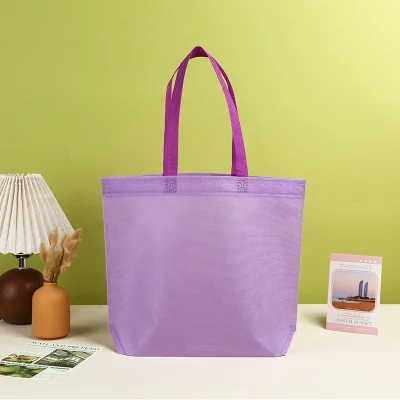
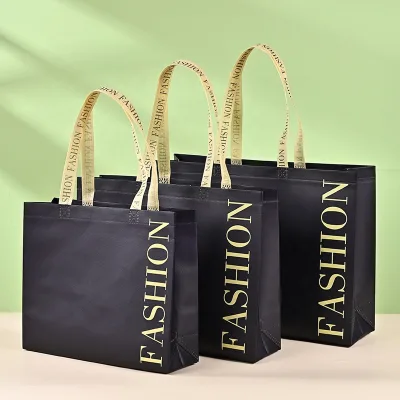


Comprehensive Sourcing Guide
Shopping Eco-friendly Bag Supplier Concentration and Factory Types
Current data indicates a concentration of suppliers in China, specifically within the Zhejiang and Fujian provinces. These regions host a mix of trading companies and manufacturers capable of producing shopping eco friendly bags. The Zhejiang cluster includes entities offering diverse product lines such as nonwoven shopping bags, cooler bags, and notebooks, while Fujian-based suppliers focus on sustainable and foldable bag solutions. This geographic clustering suggests established supply chains for raw materials like polyester and non-woven fabrics, which are essential for the production of these specific items. Buyers should verify if a supplier's stated location matches their actual factory operations, as trading companies may list a different address than their manufacturing partners.
The supplier landscape includes both pure trading companies and manufacturers with in-house production capabilities. Some entities hold dual roles, functioning as both a trading company and a manufacturer, which can streamline communication but requires careful verification of their actual production capacity. The presence of OEM and ODM capabilities is noted across several suppliers, indicating flexibility in customizing designs and materials. However, not all suppliers possess the same level of manufacturing depth; some may rely entirely on third-party factories. Buyers must distinguish between a supplier that designs and sources versus one that physically manufactures the goods to ensure quality control aligns with their specific requirements for eco-friendly materials.
How to Verify Shopping Eco-friendly Bag Suppliers
Verification of supplier credentials is critical when sourcing shopping eco friendly bags, as the market contains a mix of verified and unverified entities. Several suppliers in the current results display BV verification status, while others hold TUVRHEINLAND verification. These third-party audits provide a baseline of trust regarding the company's existence and operational legitimacy. Buyers should prioritize suppliers with these specific verification badges, as they indicate that an independent agency has reviewed the business. It is important to note that verification status can vary, and some suppliers may not display any external verification, requiring buyers to request additional documentation before proceeding with any transaction.
Beyond basic verification, system certifications offer deeper insight into a supplier's quality management and ethical standards. The available data shows certifications such as BSCI, ISO 9000, ISO 9001, SEDEX, and TS 16949 among various suppliers. Specific audits like BSCI, Sedex, BRC, Tesco, M&S, Kaufland, and Morrison are also listed for certain factories, indicating compliance with major retailer standards. Buyers should cross-reference these certifications with their own compliance requirements, particularly if they plan to sell in markets with strict labor or environmental regulations. The absence of certifications like BSCI or ISO 9001 in some supplier profiles does not necessarily disqualify them, but it necessitates a more rigorous due diligence process to confirm their adherence to quality and safety standards.
What to Compare Across Shopping Eco-friendly Bag Suppliers
When evaluating suppliers, response time and lead time are primary metrics for assessing operational efficiency. The data reveals response times ranging from approximately 3.68 to 6.27 hours, with lead times varying significantly from 15 days to 120 days. A supplier with a 15-day lead time may be suitable for urgent orders, whereas a 120-day lead time suggests a longer production cycle, possibly due to complex customization or high volume requirements. Buyers should compare these timelines against their own inventory needs and market launch schedules. It is essential to understand that lead times can fluctuate based on order volume and material availability, so confirming the specific timeline for a custom order is necessary before finalizing agreements.
Minimum Order Quantity (MOQ) and pricing structures also vary widely across the supplier base. Current listings show MOQs as low as 500 units for some custom polyester bags, while others require 1000 units for nonwoven options. Price points range from $0.50 to $1.78 per unit, depending on the material, customization level, and order size. Buyers must calculate the total landed cost, including shipping and duties, rather than focusing solely on the unit price. Additionally, the availability of customization features, such as logo printing or specific material choices, should be compared. Some suppliers offer full customization with sublimation printing, while others may have limited options, directly impacting the final product's marketability and brand alignment.
Common Shopping Eco-friendly Bag Sourcing Risks
One significant risk involves the discrepancy between claimed certifications and actual factory practices. While some suppliers list extensive audit results including BSCI, Sedex, and BRC, others may have no system certifications listed. Relying solely on a supplier's self-reported status without independent verification can lead to compliance failures in the destination market. Buyers should request recent audit reports directly from the supplier and verify their authenticity with the issuing body. The presence of a certification badge on a profile does not guarantee current compliance, as standards can change or audits may expire. Therefore, continuous monitoring and periodic re-verification are essential to maintain supply chain integrity.
Material quality and product consistency present another critical risk, particularly for eco-friendly claims. Products are described with attributes like "Recyclable," "RPET," and "Non-Woven," but the actual composition and durability can vary. For instance, some bags are rated as "Medium Soft" or "Soft," while others are "Partial Hard," affecting their load-bearing capacity and user experience. Buyers must request physical samples to test features such as waterproofing, color fastness, and weight limits before placing large orders. The absence of specific quality standards like Reach or En71 in some product profiles indicates a potential gap in safety compliance for certain markets. Without rigorous sample testing, there is a risk of receiving goods that do not meet the advertised eco-friendly or durability specifications.
Shopping Eco-friendly Bag Regional Sourcing and Logistics
Sourcing from China, specifically Zhejiang and Fujian, offers access to a mature manufacturing ecosystem for shopping eco friendly bags. These regions benefit from established logistics networks and proximity to major ports, which can facilitate efficient export processes. However, buyers must account for the specific shipping requirements associated with different bag types. For example, some products are packed in cartons with specific dimensions like 44x25x30cm, while others use OPP bags, affecting container loading efficiency and freight costs. Understanding the packaging details provided in the product attributes is crucial for accurate freight calculation and space optimization during shipping.
Logistics planning must also consider the variability in lead times and production capacity. Suppliers with shorter lead times, such as 15 days, may offer more flexibility for just-in-time inventory strategies, whereas those with 120-day lead times require advanced planning. Buyers should coordinate closely with suppliers to align production schedules with shipping windows, especially during peak seasons when port congestion can delay deliveries. Additionally, the origin of the goods, whether from Fujian or Zhejiang, may influence customs documentation and tariff classifications. Ensuring that the supplier provides accurate country of origin information is vital for compliance with import regulations in the buyer's target market.
Shopping Eco-friendly Bag Commercial Terms and Order Planning
Commercial terms regarding payment and order planning are pivotal for managing cash flow and risk. While specific payment terms are not explicitly detailed in the current data, the presence of escrow services and verified supplier statuses suggests that secure payment mechanisms are available. Buyers should negotiate clear terms that protect their interests, such as milestone payments or letters of credit, especially for large orders with extended lead times. The variation in MOQs, ranging from 500 to 1000 units, allows for flexible order planning, but buyers must ensure that their initial order volume meets the supplier's minimum requirements to avoid additional fees or production delays.
Order planning should also account for the customization process and its impact on the timeline. Suppliers offering OEM and ODM services can accommodate specific design requests, but this often extends the lead time beyond standard production cycles. Buyers need to factor in the time required for design approval, sample production, and final mass production. The availability of features like logo printing and custom sizing should be confirmed early in the process to prevent bottlenecks. Furthermore, understanding the supplier's capacity for handling large volumes is essential; some suppliers may have limits on their production output, which could affect the ability to scale orders quickly. Clear communication and detailed planning are necessary to ensure timely delivery of shopping eco friendly bags.
FAQs
What is the price range for eco-friendly shopping bags?
Prices for these bags typically range from $0.50 to $1.78 per unit. The lowest cost options are non-woven materials with a minimum order of 1000 pieces. Higher-priced polyester options start around $0.84 and go up to $1.62, often featuring sublimation printing and stricter quality standards for export markets.
What certifications are available for these suppliers?
Suppliers offer various system certifications including BSCI, ISO 9000, SEDEX, and ISO 13485. Some factories also hold BRC, QSR, and TS 16949 credentials. Product quality standards may include Reach, En71, Cpsia, Prop65, and ASTM-F96308. Verification services like BV and TÜV Rheinland are also available for trusted sourcing.
What are the typical lead times for production?
Production lead times vary significantly by supplier location and capacity. Some manufacturers in Zhejiang require up to 120 days for completion. Others in Fujian offer faster turnaround times of 40 to 45 days. Certain trading companies can deliver within 15 days, making them suitable for urgent promotional orders or small batch purchases.
What is the minimum order quantity for these bags?
Minimum order quantities depend on the specific product type and customization level. Non-woven bags generally require a minimum of 1000 pieces. Polyester and foldable eco-friendly bags often have lower thresholds, starting at 500 pieces. Buyers should verify specific MOQs with suppliers, as custom designs or special packaging may increase these baseline requirements.
Where are these suppliers located?
Manufacturers and trading companies are primarily located in China, specifically in the Zhejiang and Fujian provinces. These regions are known for producing a wide variety of shopping bags, including non-woven, polyester, and foldable options. Buyers can source from verified factories or trading companies based in these key manufacturing hubs for efficient logistics.
Can I customize the logo and design?
Customization is widely available for most eco-friendly shopping bags. Suppliers offer options for customized logos, colors, and sizes. Printing methods include sublimation and standard logo printing. Many products allow for OEM and ODM services, enabling buyers to create unique designs. Some items also support custom packaging, such as OPP bags or cartons, for branding purposes.