Tractor Lower Link Tie Rod Suppliers and Manufacturers
Explore 11 verified options for Tractor Lower Link Tie Rod from China Hebei and Guangdong. Compare response times, lead times, certifications, and prices to find the right fit. Contact suppliers directly to request samples or custom specifications; review the available evidence before requesting comparable quotations from suitable candidates.
Suppliers List

Baoding So Luen Import&Export Co., Ltd.
- Verified by BV
- Trading Company
- China Hebei
- Lead time60 days
- Avg. response≤ 4h
Main productsHydraulic Fittings and Agricultural Machinery, Boom Sprayer, Grass Mower, Hydraulic Cyliner and Link, Multi-Way Control Valve, Soil Grader and Leveller, Air Blast Sprayer, Grass Tedder, Hay Rake, Fertilizer Spreader
Main marketsDomestic


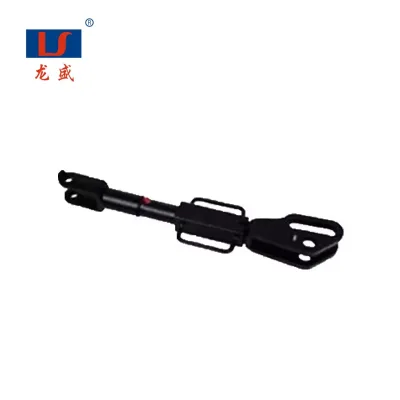
High Strength Steel Tractor Tie Rod Designed for Heavy Load and Long Service Life in Farm Equipment
$35.00 - $60.00
MOQ: 1 Pieces


Guangzhou Shengbao Agricultural Machinery Co., Ltd.
- Verified by SGS Group
- Manufacturer, Trading Company
- Lead time30 days
- Avg. response≤ 2h
Main productsDifferential Gear, Wheel Hub, Drive Axle, Carrier, Drive Shaft
Main marketsNorth America(50%), South America(20%), Southeast Asia(15%)
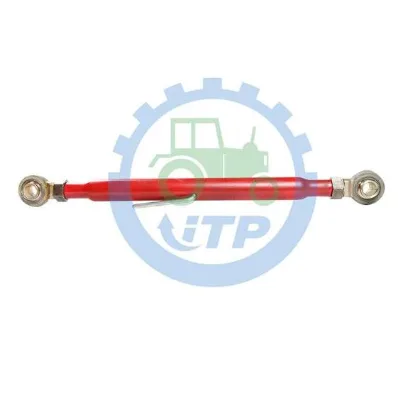
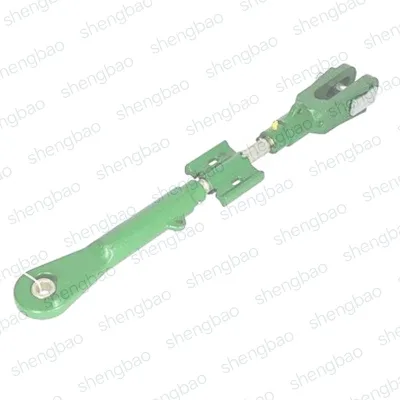
Oem Cheap Tractor Spare Parts Top Link Suitable for Massey Fergusom Tractor Tie Rod
$45.00 - $60.00
MOQ: 100

Langfang Gejing International Trade Co., Ltd
- Verified by TUVRHEINLAND
- Trading Company
- China Hebei
- Lead time30 days
- Avg. response≤ 4h
Main productsPto Shalft, Tractor Parts, Transmission Shaft, Plough Parts, Rotavator Blade, Spring, Harrow Parts, Pto Yoke, Coupling, Gearbox
Main marketsEurope

Components Tractor Top Link Rear Suspension Point Linkage Tractor Linkage
$5.00 - $30.00
MOQ: 300 Pieces


Ningbo Joy International Trade Co., Ltd.
- Verified by BV
- Trading Company
- China Zhejiang
- Lead time30 days
- Avg. response≤ 6h
Main marketsEurope


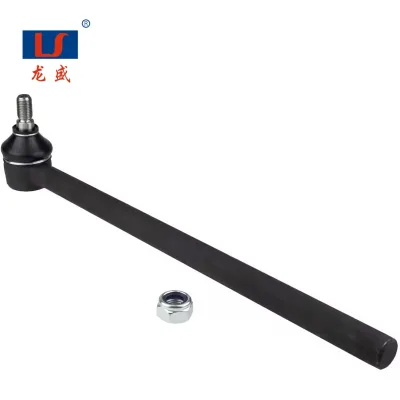
Factory Direct Sales Truck Suspension Parts Tie Rod End Tractor Ball Joint
$10.80 - $21.10
MOQ: 10 Pieces


Truck Suspension Parts Tie Rod Ends Drage Link Ball Joints Steering Tie Rod Ends
$3.00 - $5.00
MOQ: 100 Pieces


Hangzhou Kingdom Technology Co., Ltd.
- Verified by SGS
- Trading Company,Manufacturer/Factory
- China Zhejiang
- Lead time23 days
- Avg. response≤ 4h
Main productsHarvester Spare Parts, Tractor Spare Parts, Brand New Harvester, Brand New Tractor, Farm Machinery, Kubota Harvester Spare Parts, World Harvester Spare Parts, FM World Harvester Spare Parts, Lovol Harvester Spare Parts, Zoomlion Harvester Spare Parts
Main marketsSouth America,Mid East,Southeast Asia,Eastern Asia,Africa

Tc232-71100 Agricultural Spare Parts Top Link Tie Rod for Kubota L4508 Tractor
$9.50 - $10.00
MOQ: 10 Pieces


Anhui Heshun Automobile Parts Co., Ltd.
- Verified by SGS
- Combined
- China Anhui
- Lead time30 days
- Avg. response≤ 4h
Main productsBall Joint
Main marketsDomestic

LUOYANG RELIABLE MACHINERY PARTS CO., LTD
- Verified by BV
- Trading Company
- China Henan
- Lead time30 days
- Avg. response≤ 7h
Main productsVolvo Parts Jcb Parts Grader Parts, Engine Part Excavator Part, Construction Machinery Parts, Heavy Machinery Parts, Earthmoving Equipment Part, Pins Bushing, Wear Strip, Heavy Equipment Parts
Main marketsSouth America,Africa,Southeast Asia/ Mideast,East Asia(Japan/ South Korea),Europe,Australia,North America
Hebei Longsheng Screw Co., Ltd.
- Verified by TüVRheinland
- Manufacturer, Trading Company
- Lead time15 days
- Avg. response≤ 1h
Main productsPin, Bolt, Power Output Shaft, Agricultural Machinery Parts, Tractor Parts
Main marketsDomestic Market(80%), Northern Europe(10%), North America(2%)

Weifang Yinquan Machinery Co., Ltd.
- Verified by TUVRHEINLAND
- Combined
- China Shandong
- Lead time15 days
- Avg. response≤ 2h
Main productsTractor, Tractor Part, Agricultural Tractor, Agricultural Machinery, Wheel Tractor, Farm Machinery, Small Tractor, Compact Tractor, Mini Tractor, Farm Tractor
Main marketsSouth America,Europe

Yangzhou Tongte Technology Co., Ltd.
- Verified by TUVRHEINLAND
- Combined
- China Jiangsu
- Lead time30 days
- Avg. response≤ 3h
Main productsHydraulic Cylinder, Hydraulic Power Unit, Hydraulic Power Pack, Hydraulic Parts, Gate Valve
Main marketsSouth America,Southeast Asia/ Mideast,Europe,Australia,North America

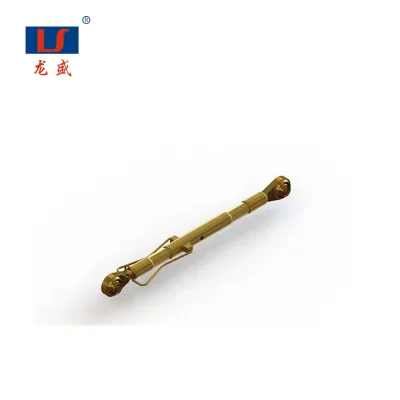
Agricultural Tractor Hydraulic Connect Compact Assembly Tractor Top Link for Tractor
$100.00 - $30000.00
MOQ: 1 Pieces


Henan Forging Emperor Industry Co.,Ltd.
- Verified by BV
- Manufacturer/Factory
- China Henan
- Lead time45 days
- Avg. response≤ 5h
Main productsForging, Casting, Machining, Machining Parts, CNC Machining Parts, Casting Part, CNC Parts, Hot Die Forging, Machinery Parts, Customized Part
Main marketsSouth America,Eastern Europe,Mid East,North America,Southeast Asia,Eastern Asia,Oceania,Western Europe,Africa

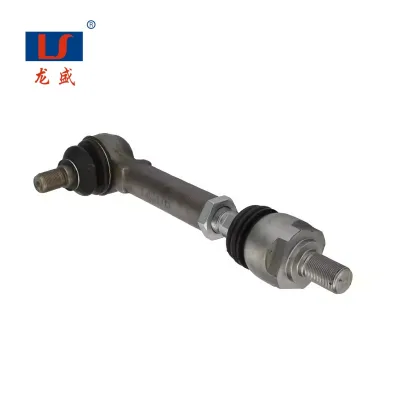
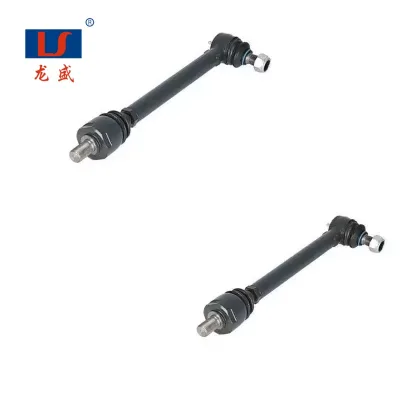
Customized Forgings Including Connector and Link Rod for Agricultural Machinery
$10.00 - $50.00
MOQ: 1000 Pieces




Comprehensive Sourcing Guide
Tractor Lower Link Tie Rod Supplier Concentration and Factory Types
Sourcing for the Tractor Lower Link Tie Rod category is dominated by suppliers based in China, with listings observed from Hebei and Guangdong. Hebei-based entries describe themselves primarily as trading companies with a broad agricultural machinery portfolio, including hydraulic fittings, boom sprayers, grass mowers, fertilizer spreaders, and multi-way control valves, alongside tractor linkage parts. Guangdong-origin listings tie the category to a wider parts ecosystem that also covers drive axles, wheel hubs, differential gears, and construction machinery components. This tells you that the product frequently appears inside mixed-catalog suppliers rather than dedicated linkage-only factories, so the buyer must look past the main-product line to judge genuine specialization.
Supplier types in this category split into manufacturers, trading companies, and hybrid manufacturer-traders. A hybrid profile can be useful when you need both standard catalogue items and customized hydraulic cylinder links, since some listings advertise sample processing, graphic processing, and customized-on-demand capability. Trading companies, by contrast, may aggregate parts across several factories, which can simplify one-stop ordering but adds a layer between you and the actual producer. When no cluster information is displayed for a candidate, identify concentration yourself by filtering search results for repeated provinces and cities, checking where product origins cluster, and asking each supplier directly which factory produces the tie rod and where it is located.
How to Verify Tractor Lower Link Tie Rod Suppliers
Verification should begin with the credentials displayed on the supplier profile and continue with document requests. In this category, third-party verification labels observed include BV for a Hebei trading company and SGS Group for a hybrid manufacturer-trader, so confirm which inspection body issued the badge and when the assessment occurred. Product listings themselves offer verification signals: some tie rod and top link listings state that a video outgoing inspection and a machinery test report are provided, and hydraulic cylinder links may carry ISOCE or GS certification markings. Ask for copies of any stated certificate, not just the label, because certificate scope must match the product you are actually buying.
Beyond credentials, verify that the supplier controls the product it lists. Request the production location, the relationship to any factory named in quotations, and evidence of past exports of tractor linkage parts. For items such as lift links sold under specific part numbers like AL200843, AL218629, AL205451, or AL200844, ask for dimensional drawings and confirm that the quoted part number matches your tractor model. Listings that state OEM availability and compatibility with many tractor and machinery brands should be tested with a technical question only a real producer or specialist could answer. Finally, verify packing and quality claims: tie rod listings commonly show carton packing, while heavier hydraulic top links list plywood cases and pallets, so confirm which applies to your order before contracting.
What to Compare Across Tractor Lower Link Tie Rod Suppliers
Build a comparison table using attributes that actually appear on supplier profiles, while remembering that not every supplier displays every attribute. Comparable dimensions in this category include lead time, MOQ, response speed, company type, third-party verification, location, and main products. Lead time claims vary widely: one hybrid manufacturer-trader lists around 30 days, while a Hebei trading company lists around 60 days, and an individual lift-link product page states 7 to 15 days delivery. Treat product-page delivery estimates and company-level lead times as separate claims and confirm which one governs your shipment.
MOQs in this category range dramatically, from single-piece minimums on high-strength tie rods and two-piece minimums on hydraulic top links, up to 50 pieces for standard tie rod ends and 100 pieces for OEM lower links, with a lift-link listing showing a 10-piece MOQ. A low MOQ can indicate stock items or a willingness to work with small buyers, but check the unit economics against price ranges such as roughly $3.50 to $6.00 for tie rod ends and $100 to $204 for top links and hydraulic cylinders. Response speed is another observable metric, with entries in this category reporting average response times of roughly two to three and a half hours. Also compare warranty terms, since hydraulic links commonly state one year while some lower-link listings state six months, and weigh whether the main-product breadth matches the linkage specialization you need.
Common Tractor Lower Link Tie Rod Sourcing Risks
The most common risk in this category is specification mismatch. Listings for tie rods frequently reference series models such as 30/50/80/90/1204 and state standards in diameter ranges like 19mm to 35mm, but your tractor's linkage geometry may not match any listed series. Part-number listings can look precise, yet a copied or mistyped part number leads to a link that fits the pin diameter but fails on length or thread orientation. Always cross-check the quoted part number, thread type, and center-to-center length against the worn part you remove, and request a dimensioned drawing before payment.
Second, beware of vague compatibility claims. Some lower-link listings advertise compatibility with a long list of global machinery brands, which may reflect a sales template rather than validated fitment. Third, mixed-catalog suppliers present a focus risk: when a company's main products center on sprayers, mowers, or axles, the tie rod may be a brokered item with little in-house quality control. Fourth, weight and packing discrepancies create cost surprises: listings for top links state unit standards of roughly 10 to 15 kilograms with plywood case and pallet packing, while tie rods ship in cartons, so freight quotations based on the wrong packing assumption will be wrong. Finally, certification markings such as ISOCE or GS on one listing do not extend to other items in a supplier's range; verify certificates per product, not per company.
Tractor Lower Link Tie Rod Regional Sourcing and Logistics
Regional selection in this category comes down to two Chinese provinces with distinct profiles. Hebei suppliers in the results are trading companies with deep agricultural-implement assortments, which suits buyers consolidating a mixed order of linkage parts and farm equipment attachments. Guangdong-origin listings are tied to heavier machinery parts, including backhoe and drive axle components, and one hybrid supplier there advertises research and development capacity for sample processing and customized parts. Match the province to your order profile: single-line tie rod replenishment, mixed agricultural consignments, or customized hydraulic links each point toward different supplier profiles.
Logistically, plan around the packing formats the listings actually state. Tie rods and lift rod ends pack in cartons, which suits sea LCL or even air shipment for urgent small quantities, whereas tractor top links and hydraulic cylinders pack in plywood cases on pallets at roughly 10 to 15 kilograms per unit, making them candidates for FCL consolidation or shared containers. Lead times matter most for service parts: where a supplier states 60 days and another states 30 days, the difference can determine whether you carry higher safety stock. Delivery windows as short as 7 to 15 days appear on individual lift-link listings, but confirm whether that applies to stock part numbers only. Ask each supplier for the port of loading, typical transit times to your port, and whether export documentation for agricultural machinery parts is handled in-house or by an agent.
Tractor Lower Link Tie Rod Commercial Terms and Order Planning
Structure your first order to test claims before scaling. Given MOQs in this category ranging from one piece to 100 pieces, a sensible pilot order sits near the lower bound of a supplier's stated minimum while still exercising their production or picking process. Confirm the payment term in writing; one lift-link listing states T/T payment, so agree on deposit percentage and balance timing explicitly, and check whether any transaction-protection or escrow mechanism applies on the platform listing, since not every supplier displays one. Record the warranty term per product line, because the six-month warranties seen on some lower links differ from the one-year warranties on hydraulic top links.
For order planning, lock down every variable that appeared in listings: unit price range, packing format, delivery time, machinery test report availability, video outgoing inspection, and OEM availability. Request quotations that separate product cost from packing and inland freight, since plywood cases and palletized top links carry different charges than cartoned tie rods. If you need customization, use the customized-on-demand capability some hybrid suppliers advertise and supply drawings early, as customized hydraulic cylinder links will follow the longer, company-level lead times rather than stock-item windows. Finally, schedule reorders against stated lead times with a buffer, keep the agreed part numbers and standards such as the 19mm to 35mm tie rod range in your purchase order, and retain inspection reports for warranty claims.
FAQs
Where are Tractor Lower Link Tie Rod suppliers located?
Suppliers for these parts are located in China Hebei and Guangdong. Buyers can find manufacturers and trading companies in these regions offering various agricultural machinery parts. Verify specific factory locations before placing orders to ensure logistics compatibility.
What is the minimum order quantity for tractor tie rods?
Minimum order quantities vary by product and supplier. Some items require 50 pieces, while others start at 2 or 100 pieces. Check specific product listings for exact MOQs to ensure your order meets the supplier requirements before proceeding with purchase.
How long does it take to receive tractor parts?
Lead times range from 30 to 60 days depending on the supplier and product type. Some sellers offer faster delivery windows of 7 to 15 days for specific items. Confirm the estimated delivery time with the supplier before finalizing your purchase agreement.
Are these tractor parts certified with ISO or GS standards?
Yes, certain hydraulic cylinder links carry ISOCE and GS certifications. These certifications indicate compliance with specific safety and quality standards. Always request the certification documents from the supplier to verify the product meets your regulatory requirements for agricultural machinery.
What materials are used for tractor tie rod ends?
Most tractor tie rod ends are manufactured using iron or steel materials. These materials provide the necessary strength for heavy load applications. Verify the specific material grade with the supplier to ensure durability matches your operational needs in farm equipment.
Do suppliers offer customization for tractor hydraulic links?
Customization is available for many tractor tie rod and hydraulic cylinder products. Buyers can request specific models or modifications to fit their machinery. Contact the supplier directly to discuss custom requirements and confirm if additional costs apply for tailored production.
What is the price range for tractor lower links?
Prices for these parts range from 3.50 to 204.00 depending on the specific model and specifications. Hydraulic cylinders generally cost more than simple tie rod ends. Compare multiple listings to find the best price that fits your budget and quality expectations.
How quickly do suppliers respond to inquiries?
Response times vary, with some suppliers replying within 2 hours and others taking up to 3.53 hours. Faster response times often indicate better customer service availability. Check the supplier profile for their average response time to gauge communication efficiency before contacting them.