Traditional Educational Slingshot Suppliers and Manufacturers
Source 11 verified suppliers for Traditional Educational Slingshot products. Compare key dimensions including certifications like EN 71 and ASTM F963, MOQs ranging from 100 to 500 pieces, and lead times. Review product specifications and request quotes to streamline your procurement process.
Suppliers List
- Verified by SGS Group
- Trading Company
- Lead time3 days
- Avg. response≤ 3h
Main productsEducational Toys; Montessori Teaching AIDS; Household Items; Kids Furniture; Stationery
Main marketsNorth America(25%), Western Europe(20%), Southeast Asia(10%)
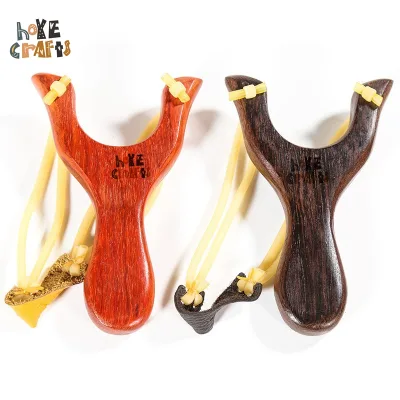
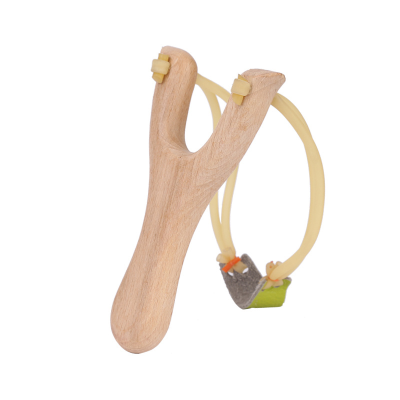
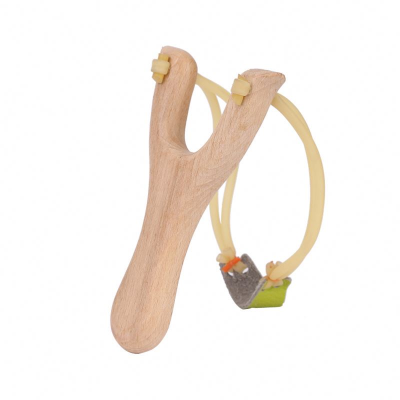
Educational Toy Classic Construction Hunting Accept Print Custom Logo Wenge Toy Wooden Slingshot
$0.71 - $0.86
MOQ: 200 pieces
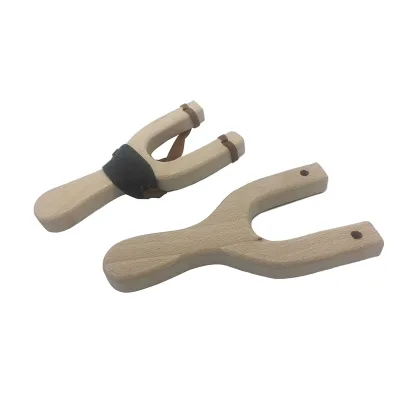
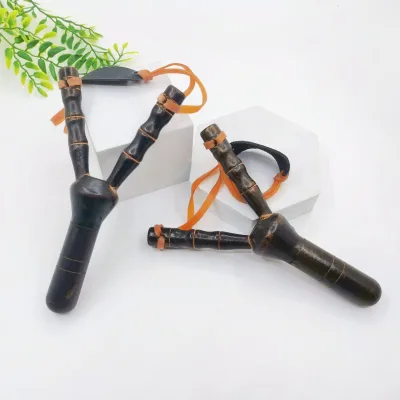
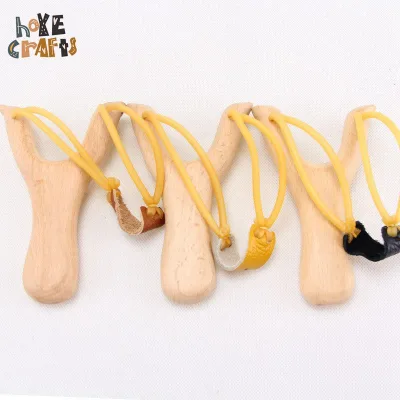
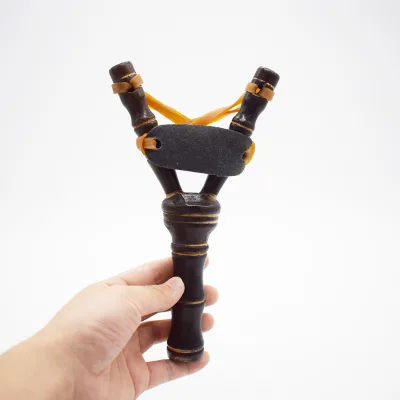
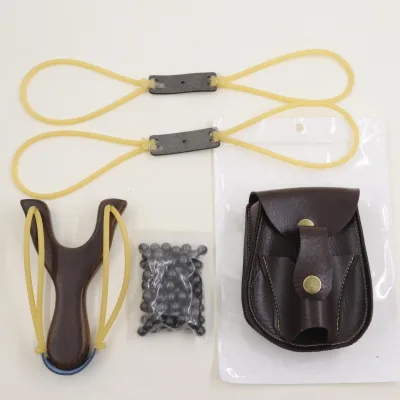
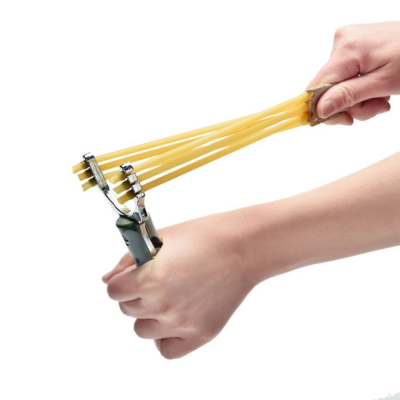
High Quality Outdoor Sports Rubber Band Shooting Hunting Slingshot Wooden Handle Slingshot
$2.12 - $2.41
MOQ: 40 sets
Yiwu Byloo Trade And Commerce Firm
- Trading Company
- Zhejiang, China
- Lead time30 days
- Avg. response≤ 4h
Main productsFishing rod,Fishing reel,fishing bait lure,fishing line,fishing bag
Main marketsWestern Europe(11.00%), North America(10.00%), Eastern Europe(10.00%), South America(10.00%), Mid East(9.00%), Northern Europe(9.00%), Central America(9.00%), Southeast Asia(8.00%), Southern Europe(8.00%), South Asia(5.00%), Eastern Asia(4.00%), Domestic Market(4.00%), Africa(2.00%), Oceania(1.00%)
Henan Hanke Shengshi Import And Export Trade Co., Ltd.
- Verified by Intertek
- Trading Company
- Lead time6 days
- Avg. response≤ 6h
Main productsCap, Clothing, Garden Hose, Kitchen Tools, Storage Box
Main marketsWestern Europe(35%), South America(30%), Eastern Europe(10%)
Henan Jielun Import And Export Co., Ltd.
- Trading Company
- Henan Province, China
- Lead time7 days
- Avg. response≤ 5h
Main productsWomen's clothing,Men's clothing,Sexy lingerie,women underwear/panty,Men's bag & Women's bag
Main marketsNorth America(23.00%), South America(21.00%), Eastern Europe(11.00%), Southeast Asia(10.00%), Africa(6.00%), Oceania(5.00%), Domestic Market(3.00%), South Asia(3.00%), Southern Europe(3.00%), Northern Europe(3.00%), Central America(3.00%), Western Europe(3.00%), Eastern Asia(3.00%), Mid East(3.00%)

WENZHOU TIMES ARTS&CRAFTS CO., LTD.
- Verified by SGS
- Manufacturer/Factory
- China Zhejiang
- Lead time23 days
- Avg. response≤ 4h
Main productsToys, Montessori Toys, Wooden Toy, Educational Toy, Role Play Toys, Children Furniture, Puzzle, Kid Bike, Musical Toy, Wooden Blocks
Main marketsSouth America,Eastern Europe,Mid East,North America,Southeast Asia,Eastern Asia,Oceania,Western Europe,Africa


Most Popular Educational Wooden Catapult Slingshot Toy for Kids W01A397
$1.00 - $3.00
MOQ: 1000 Pieces


Henan Zonelion Heavy Industry Co., Ltd.
- Verified by TüVRheinland
- Trading Company
- Lead time7 days
- Avg. response≤ 3h
Main productsCutting Machine, Polishing Machine, Grinding Wheel Manufacturing Machine, Pressure Machine, Fixed Machine
Main marketsNorth America(8%), South America(8%), Eastern Europe(8%)

Jinan Chuanghui International Trade Co., Ltd.
- Trading Company
- China Shandong
- Lead time0 days
- Avg. response≤ 3h
Main productsSteel Ball

Changzhou Feige Steel Ball Co., Ltd.
- Verified by BV
- Combined
- China Jiangsu
- Lead time15 days
- Avg. response≤ 2h
Main productsChrome Steel Ball, Stainless Steel Ball, Carbon Steel Ball, Steel Ball, Glass Ball
Main marketsSouth America,Africa,Southeast Asia/ Mideast,East Asia(Japan/ South Korea),Domestic,Europe,Australia,North America

Shuifu Huiyang Agricultural Technology Co., Ltd.
- Verified by SGS
- Trading Company
- China Yunnan
- Lead time23 days
- Avg. response≤ 3h
Main productsBamboo Products, Bamboo Crafts, Bamboo Chopsticks, Bamboo Skewers, Bamboo Weaving, Bamboo Tray, Bamboo Box, Bamboo Placemat, Bamboo Fruit Bowl, Lamp Shades
Main marketsDomestic
Ningbo General Union Co., Ltd.
- Trading Company
- Lead time旺季: "1 - 50":10,"51 - 1000":15,"> 1000":"To be negotiated", 淡季: "1 - 50":10,"51 - 1000":15,"> 1000":"To be negotiated"
- Avg. response≤ 9h
Main productsBoard Games, Indoor Toys, Drinking Games, Outdoor Toys, Novelty Toys
Huizhou Yooka Technology Co., Ltd.
- Manufacturer, Trading Company
- Guangdong, China
- Lead time12 days
- Avg. response≤ 8h
Main productsScuba diving equipment,Swimming Accessories,Outdoor Slingshot,Sport &Travel supplies,Camping Hunting
Main marketsWestern Europe(30.00%), North America(20.00%), Eastern Europe(15.00%), Southern Europe(15.00%), Mid East(10.00%), Central America(10.00%)


Comprehensive Sourcing Guide
Traditional Educational Slingshot Supplier Concentration and Factory Types
When sourcing a Traditional Educational Slingshot, the listings you review will often trace back to a small number of regional manufacturing clusters in China, and the product evidence on this page consistently points to Zhejiang province as the place of origin for these wooden slingshots. A cluster concentration like this matters to buyers because it usually means several workshops share material suppliers, tooling shops and hand-finishing labor, which shortens sample cycles but also means many suppliers may offer very similar designs. Rather than assuming all suppliers are manufacturers, check each profile to see whether the company describes itself as a factory or as a trading company.
The supplier represented in the current results is labeled a trading company, with main products spanning educational toys, Montessori teaching aids, household items, kids furniture and stationery. A trading company of this type can be useful when you want a curated range of wooden toys rather than a single-product factory, but it also means production may be subcontracted, so you should ask who physically carves, polishes and assembles the slingshots. Company type should shape your questions: with a trading company, request the underlying workshop's details, confirm who controls quality at each stage, and clarify whether customization requests such as laser logos or altered sizes go through the trading company or directly to the producing workshop. Establish this early so accountability is clear before samples and deposits.
How to Verify Traditional Educational Slingshot Suppliers
Verification for a Traditional Educational Slingshot supplier should start with third-party verification status. On this page, the supplier has been verified by SGS Group, which is a meaningful starting signal because an independent inspection body has confirmed basic company credentials. However, verification of a business license is not verification of product safety, so treat it as a filter rather than an approval. Next, examine the certification claims listed on the profile. This supplier lists EN 71, BS EN71, ASTM F963, EN 61000, CPC, CE and a Declaration of Conformity. These are exactly the toy-safety standards you would expect for a wooden slingshot aimed at children, but certificates can expire, apply to different product versions, or be copied from another company, so always request the actual certificate documents and match the applicant name, model numbers and dates.
Beyond documents, verify capability with the supplier's own evidence. The listed customization services include light customization, sample processing, graphic processing and customized on demand, which tells you what the supplier claims it can adapt; confirm this by commissioning a paid sample with your logo before committing. Product-level data also helps verification: listings state the place of origin as Zhejiang, China, list specific model numbers, and describe hand-carved or hand-polished wooden construction. Ask the supplier to produce the same model number in a sample and compare it against the listing photographs, weight and dimensions. Finally, check responsiveness yourself; the profile lists a three-hour response time, so a supplier that routinely takes days to answer basic questions is not behaving as advertised.
What to Compare Across Traditional Educational Slingshot Suppliers
Build a comparison table with dimensions drawn from supplier labels, but never assume every supplier displays every attribute. Useful columns include company type, location, verification status, certifications, response time, lead time, MOQ, main products and customization services. For the supplier documented here, the comparable values are: trading company; verified by SGS Group; toy-safety certifications including EN 71, ASTM F963, CPC and CE; a three-hour response time; a three-day lead time; and a main-product mix of educational toys, Montessori teaching aids, household items, kids furniture and stationery. If another supplier on your shortlist does not show a lead time or a verification badge, record it as missing and ask for it rather than guessing.
Product-level comparison is equally important because wooden slingshot listings vary widely. On this page, listed unit prices range from roughly $0.32 to $0.40 for a bamboo-design model at a 100-piece MOQ, $0.46 to $0.59 for an 18 cm beech-wood model at a 500-piece MOQ, $0.48 to $0.90 for a natural-color kids model, and about $0.71 to $0.86 for a wenge model at a 200-piece MOQ. Compare material (beech, bamboo, wenge or generic solid wood), size (roughly 15 cm to 20 cm across listings), applicable age ranges, logo method (laser, printed or free laser) and packing style. A lower headline price with a higher MOQ or inferior wood may cost more in total, so normalize every quote to landed cost per unit.
Common Traditional Educational Slingshot Sourcing Risks
The most serious risk in this category is safety compliance drift. A slingshot sold as an educational toy for children sits under strict toy regulations, and although the supplier here lists EN 71, BS EN71, ASTM F963, CPC and CE, the certificate that covers one model may not cover a redesigned or re-sized version. If you change the wood species, band type or size, confirm whether the certification still applies. A second risk is age-grading mismatch: several listings on this page state different applicable age groups, including 6-8 and 8-12 years on one model and ranges from 2 to 4 years upward on another, so a product marketed for young children needs correspondingly stricter testing and labeling scrutiny.
Operational risks are also specific here. Because the documented supplier is a trading company, you may face unclear accountability if the producing workshop misses a specification, so identify the actual maker early. Hand-carved and hand-polished production means unit-to-unit variation is normal; agree in writing on acceptable tolerances for weight (listings cite roughly 65 g to 150 g gross depending on model) and finish. Low MOQs of 100 to 500 pieces invite small trial orders, but bulk packing and small parcels can raise per-unit freight dramatically. Finally, beware price drift: listed prices from about $0.32 to $0.90 reflect material differences, so a quote that undercuts every listing deserves scrutiny of wood quality, band elasticity and whether the laser logo fee is truly free.
Traditional Educational Slingshot Regional Sourcing and Logistics
The clearest regional signal in the current evidence is that the slingshot listings consistently declare Zhejiang, China as the place of origin, with specific model numbers tied to that province. Zhejiang hosts dense wooden-toy and craft manufacturing, which supports the hand-carving, hand-painting and hand-polishing processes described in these listings. For buyers, this concentration suggests that sampling, re-orders and factory visits can be coordinated within one province, and that competing workshops for comparison are geographically close together. If you evaluate other suppliers without such a location label, identify clusters by asking where production actually occurs, checking place-of-origin fields on product listings, and requesting workshop addresses rather than only office addresses.
Logistically, these products are small and light, which shapes freight planning. Listed single gross weights range from about 0.1 kg to 0.15 kg per unit, with carton packing cited at 200 pieces per carton on one model, and package sizes around 15-21 cm. At a 100-piece MOQ, an air shipment is feasible for samples or launches, while volume re-orders usually justify sea freight consolidated with other wooden toys. Confirm whether packing is bulk, as one listing states, or in opp bags or color boxes as offered elsewhere, because retail packaging adds volume and weight. The listed three-day lead time appears to describe processing speed; treat it as production time only and add separate time for inland transport to port, booking and customs clearance.
Traditional Educational Slingshot Commercial Terms and Order Planning
Commercial terms for a Traditional Educational Slingshot should be anchored to the concrete figures in supplier listings rather than assumptions. Documented price bands run from about $0.32 to $0.40 (bamboo design, 100-piece MOQ), $0.46 to $0.59 (beech wood, 500-piece MOQ), $0.48 to $0.90 (natural-color kids model), and roughly $0.71 to $0.86 (wenge, 200-piece MOQ). Use these as reference points when negotiating, remembering that logo application, packaging upgrades to color boxes, and size changes are offered as customization options and may shift the price. Confirm in writing which MOQ applies to your chosen model, since the evidence shows 100, 200, 300 and 500 pieces across different designs, and ask whether mixed designs can be combined to reach a MOQ.
Payment and order protection deserve explicit attention. Use a payment method that offers escrow or platform-held funds so the supplier is paid only after you confirm receipt and quality; never wire full payment upfront to an unverified account. Given the three-hour response time and three-day lead time listed for this supplier, plan a schedule: paid sample with your laser logo, written approval of the sample, deposit, production, pre-shipment inspection against agreed tolerances, balance payment, then shipment. For re-orders, lock the model number, wood species and price in a simple contract. Finally, plan annual timing around toy-safety certificate renewals and pre-holiday production peaks, when wooden-toy capacity across the cluster tightens and quoted lead times can extend beyond the fast turnaround shown on profiles.
FAQs
What is the typical minimum order quantity for traditional educational slingshots?
Typical minimum order quantities for traditional educational slingshots range from 100 to 500 pieces per design. Entry-level natural wood models and animal-shaped bamboo designs are commonly listed at 100 pieces, while beech wood shooting toys often require 500 pieces, which usually equals one carton. Confirm the exact MOQ for your chosen model before requesting samples, because lower minimums sometimes apply only to in-stock designs.
How much do wholesale wooden educational slingshots cost per unit?
Wholesale unit prices generally fall between roughly 0.32 and 0.90 US dollars depending on model, material, and order volume. Simple bamboo or beech designs sit at the lower end, while hand-carved wenge slingshots with custom laser logos price higher. Final quotes depend on quantity, packaging, and customization, so request itemized pricing that separates product cost from printing and box charges.
Which safety certifications should educational slingshots meet for export?
For children's slingshots, ask suppliers for EN 71 and BS EN 71 for Europe, ASTM F963 for the United States, and CPC documentation where required. CE marking and a Declaration of Conformity support customs clearance in many markets. Verify that certificates apply specifically to the slingshot model you order, not only to a supplier's broader toy catalogue, and request recent third-party test reports.
What is the usual lead time for a custom wooden slingshot order?
Lead times of around three weeks are commonly offered for production after order confirmation, though this varies with order size and customization level. Laser logo printing and color changes typically add minimal time, while fully custom shapes or packaging may extend the schedule. Always confirm the production window in writing and factor in shipping time to your destination before planning retail launch dates.
Can suppliers add a custom logo or change packaging on slingshots?
Yes, most suppliers support light customization including laser logos, color changes, size adjustments, and custom packaging such as color boxes instead of bulk packing. Laser engraving is often offered free or at low cost on wooden models. Provide artwork files early and request a pre-production sample or photo approval, because logo placement and engraving depth affect both cost and the final appearance.
What materials and sizes are common for educational slingshots?
Common materials include solid wenge wood, beech wood, bamboo, and natural unfinished wood, with hand-carved or hand-polished finishes. Sizes typically range from about 15 to 20 centimeters, with weights between roughly 65 and 150 grams per unit including packaging. Rubber bands power the launching mechanism, and designs often target children aged six to thirteen, so check stated age recommendations against your market's safety rules.