Vintage Custom Printed Tea and Coffee Tin Box Suppliers and Manufacturers
Explore 12 verified suppliers offering Vintage Custom Printed Tea and Coffee Tin Box options with ISO and SGS certifications. Compare locations in Zhejiang and Guangdong, response times, lead times, and MOQs to find the right partner for your packaging needs today.
Suppliers List

Ningbo Pack Imp. & Exp. Co., Ltd.
- Verified by SGS
- Trading Company,Manufacturer/Factory
- China Zhejiang
- Lead time30 days
- Avg. response≤ 6h
Main productsAluminum Jar, Aluminum Bottle, Tin Box, Glass Dropper Bottle, Glass Tube, Paper Box, Paper Tube, Plastic Pop Top Tube, Plastic Bottle, Silicone Gummy Mold
Main marketsSouth America,Eastern Europe,Mid East,North America,Southeast Asia,Eastern Asia,Oceania,Western Europe,Africa

Shenzhen Bright Glassware Co., Ltd.
- Verified by SGS
- Trading Company
- China Guangdong
- Lead time30 days
- Avg. response≤ 7h
Main productsGlassware, Candle Jar, Glass Candle Holder, Reed Diffuser Bottle, Glass Perfume Bottle, Drinkware, Food Storage Jar, Candle Lid, Packaging Gift Box


Paper Tube Storage Box with Tinplate Bottom Packaging Box for Coffee and Tea
$0.30 - $1.00
MOQ: 5000 Pieces

Custom Round Tin Metal Box for Chocolate Cookie Tea Coffee Packaging Gift
$0.20 - $1.00
MOQ: 3000 Pieces

Rectangle Red Tea Canister Tin Metal Coffee Bean Storage Packaging Gift Boxes
$0.18 - $0.90
MOQ: 3000 Pieces

Dongguan City Weimei Can(Manufactory) Co., Ltd.
- Manufacturer
- China Guangdong
- Lead time30 days
- Avg. response≤ 22h
Main productsTin Container, Tin Box, Tin Bucket, Tin Coaster, Tin Badge, Tin Tray, Tin Sign, Tin Pencil Case, Tin Clock, Tin Photo Frame
Main marketsEast Asia(Japan/ South Korea),Europe,North America


Round Shape Coffee Tea Chocolate Printing Tin Box with Press Lid Packaging Tin Box
$0.31 - $0.36
MOQ: 5000 Pieces

Wholesale Custom Tea Packaging Tin Box Rectangle Tin Box for Tea Tin Container
$0.41 - $0.46
MOQ: 5000 Pieces


- Verified by CTI
- Trading Company,Manufacturer/Factory
- China Anhui
- Lead time23 days
- Avg. response≤ 13h
Main productsMetal Tin Box,Metal Box,Metal Can,Aluminum Tin,Candle Tin,Christmas Gift Tin,Candy Tin Box,Coffee Tin,Tea Box,Paper Tube
Main marketsEastern Europe,Mid East,North America,Eastern Asia,Western Europe

Custom Printed Square Metal Chocolate Coffee Tea Tin Box Tea Box Gift Metal Tin Box
$0.35 - $0.80
MOQ: 5000


SG Packaging (Dongguan) Co., Ltd.
- Verified by SGS
- Combined
- China Guangdong
- Lead time15 days
- Avg. response≤ 6h
Main productsPackaging Materials, Packaging Molds, Packaging Equipment, Gift Box, Carton Box, Paper Bag, Insert Card, Corrugated Box, Plastic Tape, Poly Bag
Main marketsAfrica,Southeast Asia/ Mideast,East Asia(Japan/ South Korea),Europe,Australia,North America

Hangzhou Anyou Manufacturing Cans Co., Ltd.
- Combined
- China Zhejiang
- Lead time23 days
- Avg. response≤ 10h
Main productsTin Cans, Tinplate Cans, Mental Jar, Pop Can, Custom Iron Can, Irregular Cartoon Tumbler Money Coin Box Metal, Tin Bucket, Push and Pull Tin Box
Main marketsSouth America,Africa,Southeast Asia/ Mideast,East Asia(Japan/ South Korea),Domestic,Europe,Australia,North America

- Combined
- China Guangdong
- Lead time30 days
- Avg. response≤ 6h
Main productsTin Can
Main marketsSouth America,Africa,Southeast Asia/ Mideast,East Asia(Japan/ South Korea),Domestic,Europe,Australia,North America


Custom Printing Tin Packaging Rectangle Metal Tea Box Sealed Coffee Tin Can
$1.50 - $1.80
MOQ: 1000 Pieces

Factory Custom Tinplate Packaging Square Shape Metal Container Can Tea Coffee Tin Box for Christmas
$0.48 - $0.68
MOQ: 3000 Pieces


- Verified by BV
- Manufacturer/Factory,Other
- China Guangdong
- Lead time15 days
- Avg. response≤ 1h
Main productsTin Box/Can, Tinplate Cookie Box, Matcha Tin Can/Box, Candy Biscuit Tins, Metal Tin Can, Coffee/Chocolate Tin Box/Can, Gift Box/Cosmetic Tin Box, Solid Perfume Case, Tea Packing Tin Box, Plastic Flower Pots
Main marketsSouth America,Eastern Europe,Mid East,North America,Southeast Asia,Eastern Asia,Oceania,Western Europe,Africa

Custom Vintage Luxury Mini Square Metal Tin Box for Cookie Candy Tea Coffee Bean
$0.25 - $0.49
MOQ: 3000 Pieces


Anhui Beauty Culture Development Co., Ltd.
- Verified by BV
- Combined
- China Anhui
- Lead time15 days
- Avg. response≤ 11h
Main productsGift Packing Box, Paper Bag, Stationery Printings, Packaging Box, Children Book, Board Games, Book Printing, Magazing Printing, Calendar Printing, Envelope Printing
Main marketsSoutheast Asia/ Mideast,Domestic,Europe,North America
Hangzhou Baodengda Tin Co., Ltd.
- Verified by TüVRheinland
- Manufacturer, Trading Company
- Zhejiang, China
- Lead time30 days
- Avg. response≤ 2h
Main productsTin Boxes, Metal Boxes, Tea Cans, Biscuit Cans, Candy Cans
Main marketsEastern Europe(20%), North America(17%), Southern Europe(15%)

Dongguan City Jinyuanbao Packing Industrial Co., Ltd.
- Verified by SGS
- Combined
- China Guangdong
- Lead time15 days
- Avg. response≤ 4h
Main productsCoffee Tea Tin Box/Tin Can, Candy Wax Tin Box/Tin Can, Christamas Gift Tin Box/Tin Can, Aluminum Tin Box/Tin Can, Cookie Biscuit Tin Box/Tin Can, Candy Sweet Tin Box/Tin Can, Lunch Tin Box/Tin Can, Tin Bucket/Tin Pail/Tin Tray
Main marketsEurope,North America

Wholesale Printed Food Grade Rectangular Vintage Tea Tins Box Packaging
$0.06 - $1.89
MOQ: 3000 pieces


Classic European Style Square Tin Package Boxes for Herbal/ Green, /Black Tea Collections
$0.56 - $0.88
MOQ: 3000 pieces

Dongguan DianYa Packaging MFG. Co., Ltd.
- Verified by TUVRHEINLAND
- Manufacturer/Factory
- China Guangdong
- Lead time30 days
- Avg. response≤ 1h
Main productsBox, Paper Box, Wooden Box, Leather Box, Plastic Box, Jewellery Box, Watch Box, Wine Box, Perfume Box, Cigar Box
Main marketsSouth America,Eastern Europe,Mid East,North America


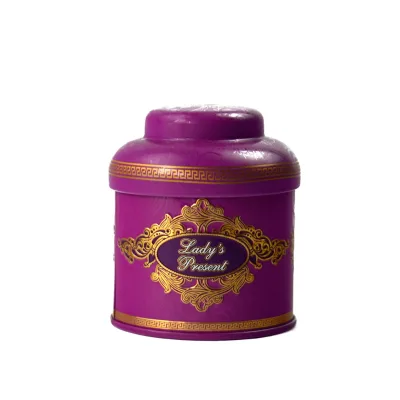
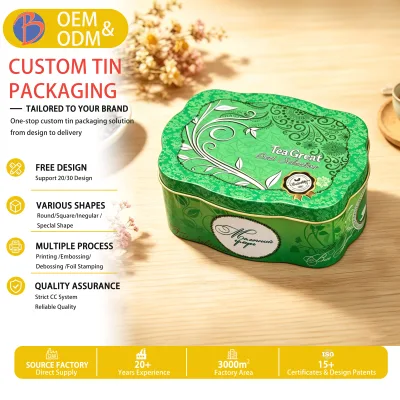
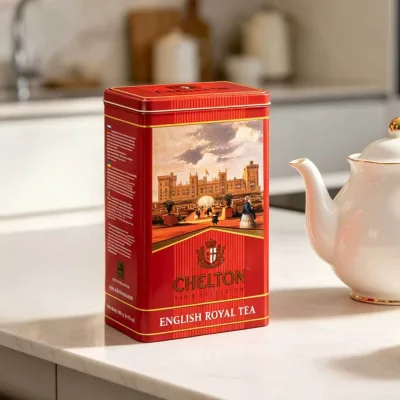


Comprehensive Sourcing Guide
Vintage Custom Printed Tea and Coffee Tin Box Supplier Concentration and Factory Types
The current supplier landscape for vintage custom printed tea and coffee tin boxes shows a distinct concentration in China, specifically within the Zhejiang and Guangdong provinces. These regions host a mix of trading companies and manufacturer factories that specialize in metal packaging solutions. The Zhejiang cluster often features suppliers offering a broad range of products including aluminum jars, glass dropper bottles, and various paper tubes alongside their primary tin box offerings. Meanwhile, the Guangdong suppliers frequently focus on glassware, candle jars, and specialized metal storage containers, indicating a regional specialization in diverse packaging materials.
When evaluating the factory types, buyers should note that many entities operate as both trading companies and manufacturers, which can streamline communication but requires verification of actual production capacity. The available data indicates that suppliers in these regions possess OEM and ODM capabilities, allowing for significant customization of the vintage aesthetic and functional requirements. However, the distinction between a pure trading entity and a direct factory is critical for understanding lead times and quality control depth. Buyers must confirm whether the supplier manages the entire production line or outsources specific steps, as this impacts the ability to deliver complex vintage designs with consistent quality.
How to Verify Vintage Custom Printed Tea and Coffee Tin Box Suppliers
Verification of suppliers for vintage custom printed tea and coffee tin boxes relies heavily on third-party audit reports and specific certification data rather than general claims. The current results show that some suppliers hold ISO 9001 system certifications and ANSI/ESD standards, which are relevant for quality management and electrostatic discharge control in manufacturing environments. Additionally, specific product evidence lists certifications such as ISO, CE, and CIQ, which are essential for food-grade applications like tea and coffee storage. Buyers should request current audit reports from agencies like SGS to confirm that the supplier's claims regarding these standards are active and valid for the specific production lines involved.
Beyond certifications, the verification process must include checking the supplier's response time and verification status to gauge reliability. Data indicates response times ranging from 6.00 to 6.73 hours, which serves as a baseline for communication efficiency during the sourcing process. A verified status, such as the SGS verification noted in the results, provides a layer of confidence regarding the company's existence and operational legitimacy. Buyers should also scrutinize the "10 Years Experiences" claim found in product attributes, as this suggests a level of historical stability, but it must be cross-referenced with the company's actual business registration and export history to ensure the experience is relevant to vintage tin box manufacturing.
What to Compare Across Vintage Custom Printed Tea and Coffee Tin Box Suppliers
Comparing suppliers requires a detailed analysis of key operational metrics such as minimum order quantities, lead times, and pricing structures. The current data reveals a wide variance in MOQs, with some suppliers requiring 1,000 pieces while others demand 3,000 or even 5,000 units. Lead times are also a critical differentiator, with observed times around 30 days for production, though this can fluctuate based on the complexity of the vintage printing and customization. Pricing ranges from $0.05 to $1.00 per unit depending on the specific product model, material thickness, and customization level, making it essential to compare unit costs against the specific volume requirements of the buyer's project.
In addition to cost and volume, buyers must compare the specific product attributes and material specifications to ensure they match the vintage aesthetic requirements. The available product evidence highlights materials such as tin and tinplate, with features like hot stamping, flexo printing, and slide lids. Some suppliers offer eco-friendly options and customized packaging, while others focus on standard brown carton packing. The response time of 6.00 to 6.73 hours also serves as a comparative metric for customer service efficiency. Buyers should create a matrix that weighs these factors, prioritizing suppliers who offer the specific vintage design capabilities and material standards required while maintaining competitive pricing and reasonable lead times.
Common Vintage Custom Printed Tea and Coffee Tin Box Sourcing Risks
One significant risk in sourcing vintage custom printed tea and coffee tin boxes is the potential mismatch between the claimed customization capabilities and the actual production output. While many suppliers list "Customization: Available" and offer OEM services, the complexity of achieving a specific vintage look through printing techniques like hot stamping or flexo printing can lead to quality inconsistencies. The product evidence shows various models with different surface handling options, but without a physical sample or a detailed pre-production proof, buyers risk receiving a product that does not match the intended aesthetic or functional specifications. This discrepancy is particularly risky when the vintage design involves intricate details that require precise alignment during the manufacturing process.
Another critical risk involves the variability in material quality and food safety compliance. Although some products are labeled as "Food Grade" and "Eco-Friendly," the specific certifications like ISO, CE, and CIQ must be verified for the exact batch of goods being ordered. The data indicates that some suppliers have SGS certificates, but this does not guarantee that every product variant meets the same rigorous standards. Furthermore, the lead time of 30 days may be extended if there are delays in sourcing specific vintage-style materials or if the supplier faces capacity constraints. Buyers must mitigate these risks by demanding detailed material safety data sheets and conducting rigorous quality inspections before shipment to ensure the final product meets all safety and design requirements.
Vintage Custom Printed Tea and Coffee Tin Box Regional Sourcing and Logistics
Sourcing vintage custom printed tea and coffee tin boxes from China involves navigating logistics from specific manufacturing hubs in Zhejiang and Guangdong. These regions are well-established for metal packaging and paper-based storage solutions, offering a robust infrastructure for shipping goods globally. The product evidence confirms that the origin of these items is China, and suppliers typically offer shipping methods including sea and air freight. Buyers should plan for the logistical complexities of importing metal containers, which can be heavy and require careful packing to prevent damage during transit. The availability of customized packaging options, such as standard carton boxes or gift boxes, also influences the final shipping volume and cost.
Logistics planning must also account for the specific shipping terms and the supplier's experience with international export. The data indicates that suppliers offer terms like EXW or FOB, which places different responsibilities on the buyer regarding freight forwarding and insurance. With response times averaging around 6 hours, communication regarding shipping schedules and customs documentation is generally efficient, but delays can occur if the supplier is not proactive in managing export procedures. Buyers should verify the supplier's export history, noting claims of "All Over World" reach, to ensure they have the necessary experience in handling international shipments. Proper logistics planning ensures that the vintage tin boxes arrive on time and in pristine condition, ready for retail or distribution.
Vintage Custom Printed Tea and Coffee Tin Box Commercial Terms and Order Planning
Commercial terms for vintage custom printed tea and coffee tin boxes vary significantly based on the supplier's location and the specific product configuration. The current data shows price ranges from $0.05 to $1.00 per unit, with MOQs ranging from 1,000 to 5,000 pieces. Buyers must carefully calculate the total landed cost, including the unit price, shipping fees, and any applicable tariffs, to determine the true cost of the vintage packaging. The availability of free samples is noted for some products, which can be a valuable tool for verifying quality before committing to a large order. However, the high MOQs for certain models may require buyers to plan their inventory carefully to avoid overstocking or understocking.
Order planning should also consider the lead time and the customization process, which can extend the timeline beyond the standard 30-day production window. Suppliers with established experience, such as those claiming 10 years in the industry, may offer more predictable schedules, but this must be confirmed through direct communication. The product attributes indicate that customization is available for logos, sizes, and shapes, which adds complexity to the order planning phase. Buyers should establish a clear timeline for design approval, sample production, and mass manufacturing to ensure the vintage tin boxes are ready for their intended market launch. Understanding these commercial terms and planning accordingly is essential for a successful sourcing strategy.
FAQs
What is the typical lead time for custom printed tea and coffee tin boxes?
The standard lead time for these custom metal packaging items is approximately 30 days. This duration covers the production process from order confirmation to final shipment. Buyers should account for this timeline when planning their inventory restocking schedules to ensure timely delivery.
What is the minimum order quantity for custom tin boxes?
Minimum order quantities vary by supplier, with common thresholds ranging from 1,000 to 5,000 units. Some specific product listings indicate a lower MOQ of 3,000 pieces. Buyers should confirm the exact MOQ with the supplier to ensure their order volume meets the production requirements.
What certifications are available for these metal packaging products?
Suppliers often hold ISO 9001 and ANSI/ESD system certifications. Individual products may also feature ISO, CE, and CIQ certifications. These credentials indicate adherence to quality management standards and safety regulations, which is crucial for buyers requiring compliant packaging for food and beverage products.
Can I request custom printing and design for the tin boxes?
Yes, customization is widely available for these metal containers. Suppliers support OEM and ODM services, allowing for custom printed designs, logos, and specific packaging configurations. Buyers can provide their own artwork or request design assistance to create unique branding for their tea and coffee products.
What materials are used for these vintage-style tin boxes?
The primary material for these containers is tin or tinplate. This metal choice offers durability and a classic aesthetic suitable for vintage-style packaging. The material is often eco-friendly and suitable for storing various items including tea, coffee, and other food products.
What is the average response time from suppliers?
Suppliers typically respond to inquiries within 6 to 7 hours. This quick turnaround time helps buyers receive quotes and technical details promptly. Maintaining a fast communication channel is essential for resolving design queries and finalizing order specifications efficiently.
Are samples available before placing a bulk order?
Many suppliers offer free samples to allow buyers to verify quality and design before committing to a large order. Requesting a sample is a standard practice in B2B sourcing. It ensures that the final product meets your specific requirements for material thickness, printing quality, and structural integrity.