Source Adjustable Lightweight Shower Bath Chair for home, hotel, and clinic use
Compare 30 verified listings for an Adjustable Lightweight Shower Bath Chair featuring aluminum and plastic options with varying heights and weight capacities. Buyers can review dimensions, certifications, and packing details to find the right fit for medical or residential needs.
Key considerations
Products List


White Bathroom Adjustable Shower Chair Bath Chair for Elderly and Disabled
$11.00 - $14.50
MOQ: 100 Pieces

Bathroom Shower Seat Height Adjustable Aluminium Bath Chair with Backrest for Seniors
$17.50 - $20.00
MOQ: 100 Pieces


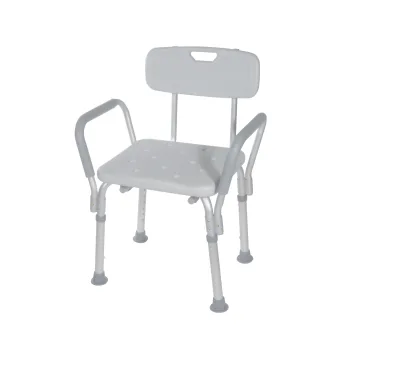


Bath Stool Shower Chair with Backrest Quick Detacbale Legs Adjustable Height
$13.50 - $14.50
MOQ: 100 Pieces

Non-Slipheight Adjustable Bath Chair with Armrests and Backrest for The Elderly
$17.50 - $18.50
MOQ: 100 Pieces


Comprehensive Sourcing Guide
Strategic Sourcing Guide for Adjustable Lightweight Shower Bath Chairs
Understanding the Core Product Category and Technical Variability
The search for an Adjustable Lightweight Shower Bath Chair requires a nuanced understanding of the diverse product landscape available in the global B2B market. Unlike standard furniture, these medical and accessibility aids must balance structural integrity with portability, often presenting conflicting engineering requirements. The observed market data reveals a significant variance in product specifications, indicating that "shower chair" is a broad category encompassing multiple distinct designs rather than a single uniform item. Buyers must recognize that dimensions, materials, and weight capacities vary drastically between models, even when they share the same core keyword.
Technical specifications are the primary differentiator in this sector. Analysis of current product listings shows that total length can range from 42 cm to 53 cm, while total width fluctuates between 43 cm and 51 cm. Height adjustments are equally critical for user comfort and safety, with observed ranges spanning from 38.5-51.5 cm for lower-profile units up to 76-84 cm for standard seated heights. These variations directly impact the chair's suitability for different bathroom layouts and user needs. For instance, a model with a total length of 50 cm and a width of 48 cm may be designed for a specific type of tub, whereas a unit measuring 42 cm in length might be intended for compact shower stalls.
Material composition is another pivotal technical factor. The market features chairs constructed from aluminium, which offers a high strength-to-weight ratio, as well as plastic variants. Some products specify a combination of materials, such as handrails made from Nylon and Stainless Steel, which suggests a focus on corrosion resistance and durability in wet environments. The surface finishing process also plays a role in longevity; listings indicate ABS surface finishing for certain plastic models, which provides a smooth, easy-to-clean surface resistant to moisture. Buyers must verify that the material choice aligns with the intended environment, as aluminium and plastic offer different maintenance profiles and load-bearing characteristics.
Compliance, Certification, and Safety Standards
In the medical and accessibility equipment sector, compliance is not merely a regulatory formality but a fundamental safety requirement. When sourcing adjustable lightweight shower bath chairs, buyers must rigorously verify certification status to ensure the product meets international safety benchmarks. The available data highlights several key certifications, including CE, ISO, RoHS, and specific standards like ISO 13485, which is often associated with medical device quality management systems.
The presence of CE marking indicates conformity with health, safety, and environmental protection standards for products sold within the European Economic Area. Similarly, ISO certification suggests adherence to international standards for quality management, which is crucial for consistent manufacturing processes. RoHS (Restriction of Hazardous Substances) certification is particularly relevant for products containing electronic components or specific plastics, ensuring that hazardous materials are minimized. However, buyers should note that not every listed product may possess every certification mentioned in the broader market; verification on a per-product basis is essential.
Safety standards also extend to load-bearing capabilities. Observed data indicates varying weight capacities, with some units rated for 137 kg (approximately 300 lbs) and others for 150 kg (300 lbs). These figures are critical for procurement decisions, as exceeding the loading capacity can lead to catastrophic failure. Buyers must cross-reference the stated weight capacity with the specific needs of their end-users. Furthermore, the standard dimensions provided, such as 681939 cm or 595638 cm, often relate to packaging or specific model standards rather than the operational footprint, requiring careful interpretation to ensure the chair fits the intended space.
Cost Drivers and Pricing Dynamics
The pricing structure for adjustable lightweight shower bath chairs is influenced by a complex interplay of material costs, manufacturing complexity, and certification requirements. The observed price range in the market spans from 7.8 USD to 97 USD, a significant variance that reflects differences in quality, features, and volume. Lower-priced items in this range typically correspond to basic plastic models with minimal adjustability or standard dimensions, while higher-priced units often feature advanced materials like aluminium, enhanced surface finishes, or specialized certifications.
Material costs are a primary driver of price variation. Aluminium chairs generally command a higher price point than plastic counterparts due to the raw material cost and the energy-intensive processing required. Additionally, the inclusion of stainless steel components in handrails or structural elements adds to the manufacturing expense. The surface finishing process, such as ABS application, also contributes to the final cost, as it requires additional steps to ensure a durable, non-slip, and easy-to-clean surface.
Minimum Order Quantity (MOQ) is another critical factor affecting the total cost of ownership. The market data shows an MOQ range from 1 to 300 units. For buyers with smaller procurement needs, the ability to order single units or small batches can reduce upfront capital expenditure, though the unit price may be higher. Conversely, larger orders often benefit from economies of scale, potentially lowering the per-unit cost. However, buyers must balance the savings from bulk purchasing against the storage and inventory costs associated with holding larger stock. The packaging configuration, such as "2 PC in One Carton Box" or "1 PC in One Carton Box," also impacts shipping costs and handling efficiency, which are indirect cost drivers in the procurement process.
Typical Applications and User Scenarios
The versatility of adjustable lightweight shower bath chairs makes them suitable for a wide range of applications, from residential bathrooms to commercial healthcare facilities. The primary application is in domestic settings, where individuals with limited mobility, elderly users, or those recovering from surgery require a safe and stable seating solution during bathing. The adjustability feature is particularly valuable here, allowing the chair to be customized to the user's height and the specific dimensions of their bathtub or shower stall.
In commercial and institutional settings, such as nursing homes, rehabilitation centers, and hospitals, these chairs serve a critical role in patient care. The robust weight capacities observed, ranging up to 150 kg, make them suitable for a diverse patient population. The lightweight nature of aluminium and plastic models facilitates easy movement by caregivers, reducing the physical strain associated with transferring patients. The specific dimensions, such as a seat depth of 30.5 cm or a seat size of 32.7*39.7 cm, are designed to accommodate various body types while ensuring stability.
Furthermore, the material properties of these chairs support specific use cases. For example, the use of Nylon and Stainless Steel in handrails is ideal for environments requiring high hygiene standards, as these materials resist corrosion and are easy to sanitize. The ABS surface finishing on plastic models provides a non-slip surface, which is essential for preventing falls in wet conditions. Buyers should consider the specific needs of their target demographic when selecting a model, ensuring that the chair's dimensions, weight capacity, and material properties align with the intended application.
Supplier Evaluation and Origin Verification
When evaluating potential suppliers for adjustable lightweight shower bath chairs, buyers must prioritize transparency regarding product origin and manufacturing capabilities. The available data indicates that products originate from China, with specific mentions of Guangzhou as a production hub. This regional concentration suggests a mature supply chain with established logistics networks, but it also necessitates careful due diligence to ensure quality consistency.
Supplier evaluation should focus on the ability to provide detailed product specifications and certification documentation. Buyers must verify that the supplier can consistently meet the required standards, such as CE, ISO, and RoHS, for each batch of products. The presence of specific product models, such as TCM8991U-A, TBB7960L, and MU176, indicates a diverse product portfolio, but buyers should confirm that the specific model they are sourcing matches their technical requirements.
The packaging and shipping logistics are also critical components of supplier evaluation. Listings show variations in packaging, from "Carton" to specific configurations like "1PC/Carton" or "2 PC in One Carton Box." These details impact shipping costs and the efficiency of inventory management. Buyers should assess the supplier's ability to provide secure packaging that protects the product during transit, especially given the delicate nature of adjustable mechanisms and the potential for damage to lightweight materials. Additionally, the supplier's lead time and responsiveness to quality inquiries should be considered to ensure a smooth procurement process.
Quality Control and Long-Term Procurement Considerations
Implementing a robust quality control (QC) strategy is essential for mitigating risks associated with sourcing adjustable lightweight shower bath chairs. Given the safety-critical nature of these products, buyers should establish clear acceptance criteria based on the observed specifications. This includes verifying dimensions, such as total length, width, and height, to ensure they match the product description. For example, a model with a total height of 72-80 cm must consistently fall within this range to guarantee user safety and comfort.
Long-term procurement considerations extend beyond the initial purchase to include the durability and maintenance of the products. The material choice, whether aluminium, plastic, or a combination with stainless steel, directly influences the product's lifespan. Buyers should request samples to test the resistance of the materials to corrosion, wear, and tear in wet environments. The surface finishing, such as ABS, should be evaluated for its ability to maintain its non-slip properties over time.
Furthermore, buyers should consider the availability of spare parts and the supplier's support for repairs. Adjustable mechanisms, such as height-adjustable legs, are prone to wear and may require replacement or maintenance. A supplier that offers a warranty or a clear policy for handling defective units adds significant value to the procurement relationship. Finally, buyers should monitor market trends and technological advancements to ensure that their procurement strategy remains aligned with evolving safety standards and user expectations. By maintaining a proactive approach to quality control and supplier management, buyers can secure a reliable supply of high-quality adjustable lightweight shower bath chairs for their specific needs.
FAQs
What certifications do these shower chairs have?
Most models carry CE, ISO, and RoHS certifications. Specific units may vary, so verify the exact certification list for each product model before purchase to ensure compliance with your regional safety standards.
How much weight can these chairs support?
Observed weight capacities range from 137 kg to 150 kg. Buyers must select a model with a capacity exceeding the user's weight to ensure safety and prevent structural failure during use.
Which materials are used for these chairs?
Chairs are constructed from aluminium, plastic, or a combination of nylon and stainless steel. The material choice affects durability and corrosion resistance, so match the material to your specific bathroom environment.
Can I get custom sizes for these chairs?
Customization is available for these shower bath chairs. Buyers should confirm specific dimension requirements with the supplier, as standard models have fixed lengths, widths, and height ranges.
What is the typical price range for these chairs?
Prices observed in the market range from 7.8 to 97 USD. The final cost depends on material quality, certification status, and order volume, with lower prices often corresponding to basic plastic models.
How are these chairs packaged for shipping?
Packaging varies by model, with options like one piece per carton or two pieces per carton. This affects shipping efficiency and costs, so verify the packing configuration before placing a bulk order.
Where are these chairs manufactured?
Products originate from China, with specific production hubs noted in Guangzhou. Buyers should verify the exact origin and logistics capabilities of the supplier to ensure reliable delivery timelines.