Source Aluminum Label for Transportation, Doors, and Heat Sinks
Find 30 verified options for Aluminum Label products suitable for transportation tools, door and window applications, and heat sinks. Buyers can compare specifications, surface treatments, and customization options from multiple suppliers in China.
Key considerations
Products List






Comprehensive Sourcing Guide
Strategic Sourcing Guide for Aluminum Labels
Understanding Technical Specifications and Material Variability
When sourcing aluminum labels, buyers must first navigate the complex landscape of material grades and processing techniques, as the term "Aluminum Label" often encompasses a broad spectrum of product types ranging from industrial heat sinks to decorative nameplates. The core material specification for aluminum-based labels typically falls under the 1000 Series, which offers high purity and excellent corrosion resistance, making it suitable for environments where chemical stability is paramount. The temper of the aluminum is a critical variable, with a standard range observed from O (annealed) to H112 (strain-hardened and partially annealed). This range dictates the mechanical properties of the final product; softer tempers allow for deep drawing and complex forming, while harder tempers provide structural rigidity for applications requiring load-bearing capacity.
The manufacturing process significantly influences the final surface quality and dimensional accuracy. Buyers should expect to encounter both cold rolling and hot rolling techniques in the supply chain. Cold rolling generally produces a smoother surface finish and tighter tolerances, which is essential for high-precision labeling applications, whereas hot rolling is often utilized for bulk material preparation. The surface treatment is another pivotal specification; while a mill finish is a common baseline offering a raw, unpolished metallic appearance, many applications require additional treatments to enhance durability or aesthetic appeal. It is crucial to verify if the supplier offers specific surface finishing options such as varnishing or etching, as these processes can alter the adhesion properties of the label and its resistance to environmental factors.
Furthermore, the distinction between pure aluminum labels and those made from other materials like PVC, PET, or PP must be clearly understood. While the core keyword focuses on aluminum, the market often presents composite solutions where aluminum is used for the substrate or the decorative layer, while the adhesive or backing is plastic-based. For instance, some products listed under similar search terms utilize PVC or PET materials with printed patterns, which serve different functional roles compared to pure metal labels. Buyers must scrutinize the "Material" attribute to ensure the core component is indeed aluminum, especially when the product description includes terms like "Metal Label" alongside plastic types. The shape of the label, whether round, custom, or standard rectangular, and the printing type, such as offset printing or digital printing, also play a significant role in the final utility of the product.
Compliance Framework and Certification Verification
In the B2B procurement of aluminum labels, compliance with international standards is not merely a formality but a prerequisite for market access and product reliability. The supply chain for aluminum products is heavily regulated, and buyers should verify that suppliers possess recognized quality management certifications. High-confidence data indicates that suppliers in this sector often hold ISO9001 certification, which validates their quality management systems. Additionally, specific material standards such as ASTM, JIS, GB, EN, and ASTMB are frequently cited. These standards govern the chemical composition, mechanical properties, and testing methods for aluminum alloys. For example, ASTM standards are critical for ensuring the material meets specific tensile strength and elongation requirements, while JIS and GB standards are relevant for buyers targeting the Japanese and Chinese markets, respectively.
It is essential to approach certification claims with a verification mindset. While some sources may list certifications like ISO 14001 or CE, these should be treated as background information rather than guaranteed attributes for every listed product. Buyers must request valid, current certificates from the specific supplier they intend to engage, rather than relying on general market assertions. The "Standard" attribute for aluminum labels is often listed as "As your request" or "Customized," indicating that the product can be tailored to meet specific regulatory requirements of the buyer's industry. This flexibility is a significant advantage but requires clear communication of the exact standard to be met, whether it is for automotive safety, aerospace durability, or general consumer goods.
For applications involving transportation tools or glass walls, the compliance requirements may extend beyond material certification to include fire resistance and structural integrity standards. The "Application" field often lists "Transportation Tools," "Door & Window," and "Glass Wall," which implies that the labels or components must withstand specific environmental stresses. Buyers should verify if the aluminum alloy grade and temper are sufficient to meet the load-bearing and safety standards of the intended application. In the context of brand protection and anti-counterfeiting, the certification of the printing and labeling process is equally important. Features such as holographic effects, laser engraving, and specific printing techniques like cold stamping or embossing must be validated to ensure they meet the anti-counterfeiting standards required by the brand owner.
Cost Drivers and Pricing Structure Analysis
The pricing of aluminum labels is influenced by a complex interplay of material costs, processing complexity, and order volume. The observed price range in the market spans from $0.01 to $9.50 USD, a wide disparity that reflects the diversity of product types, from simple adhesive stickers to complex, multi-layered metal labels with advanced finishing. The primary cost driver is the raw material price of aluminum, which fluctuates based on global market conditions. However, the processing costs often outweigh the material cost for high-value labels. Techniques such as cold rolling, hot rolling, and various surface treatments like varnishing, etching, and laser engraving add significant value but also increase the unit price.
Order volume is another critical factor in determining the final cost. The Minimum Order Quantity (MOQ) observed in the market ranges from 1 to 10,000 units, with a specific high-confidence observation noting an MOQ of 10,000 pieces for certain custom label types. This suggests that while small-batch sampling is possible, the most cost-effective pricing is realized at higher volumes. Buyers should be aware that the "Standard Marine Shipping" packing method, while protecting the product during transit, adds to the overall logistics cost, especially for heavy metal items. Conversely, simpler packing methods like "Carton" or "As You Like" may reduce costs but require careful evaluation of the risk of damage during shipping.
The complexity of the design and printing requirements also drives costs. Products featuring "Offset Printing," "Digital Printing," or specialized techniques like "Gold Stamping" and "Laser Engraving" command higher prices due to the specialized equipment and labor involved. The "Feature" of being "Waterproof" or "Anti-Counterfeit" often necessitates additional layers or chemical treatments, further impacting the price. Buyers must balance the need for premium features against the budget constraints, understanding that a label with a "Mixed Color" or "Custom Shape" will generally be more expensive than a standard silver, round label. It is advisable to request detailed cost breakdowns that separate material, processing, and logistics costs to negotiate effectively.
Typical Applications and Functional Requirements
Aluminum labels serve a multitude of functions across various industries, driven by their durability, aesthetic appeal, and resistance to environmental degradation. The "Application" field in the supply data highlights several key sectors, including "Transportation Tools," "Door & Window," "Glass Wall," and "Heat Sink." In the transportation industry, aluminum labels are used for vehicle identification, safety warnings, and component tracking, where resistance to vibration, temperature extremes, and moisture is essential. For architectural applications like doors, windows, and glass walls, these labels often serve a decorative purpose while providing information about the product or manufacturer, requiring a high-quality mill finish or polished surface to match the aesthetic of the building materials.
The "Heat Sink" application is particularly relevant for electronic and automotive industries, where aluminum labels may be integrated into thermal management systems. In this context, the thermal conductivity of the 1000 Series aluminum is a critical performance metric. Additionally, the "Decorations" category points to the use of aluminum labels in consumer goods, where the "Metal Label" serves as a premium branding element. The "Usage" attribute mentions "Custom Sticker" and "Bottled Beverage," indicating that aluminum labels are also used for product identification on packaging, where the "Waterproof" feature is vital to withstand condensation and handling.
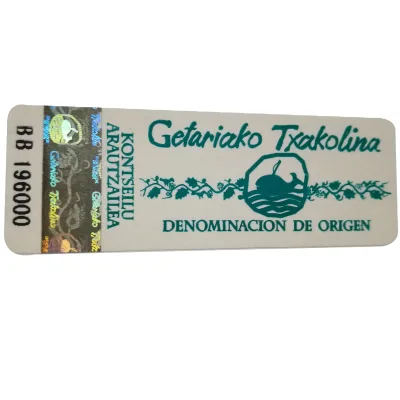
For brand protection, the application of aluminum labels extends to anti-counterfeiting measures. Products described as "Various adhesive laser hologram label" with "Anti-Counterfeit" features are designed to secure high-value goods. The "Printing Handling" capabilities, including "Die Cutting Printing," "Debossing," and "Etching," allow for the creation of unique, tamper-evident labels that are difficult to replicate. The "Key Words" such as "Custom Label Logo" and "Brand Protection" underscore the role of these labels in maintaining brand integrity. Buyers should align the specific application requirements with the technical capabilities of the supplier, ensuring that the chosen label can withstand the specific environmental and functional demands of its intended use.
Supplier Evaluation and Operational Capabilities
Evaluating a supplier for aluminum labels requires a comprehensive assessment of their technical capabilities, production capacity, and logistical reliability. The "Place of Origin" is a significant indicator, with major manufacturing hubs identified as "China," "Ningbo," and "Guangdong." These regions have established supply chains for aluminum processing and printing services, offering a wide range of options for buyers. However, buyers should verify the specific location of the factory to ensure it aligns with their logistics strategy and to assess the potential for local support or inspection.
The "Customization" attribute is a key differentiator among suppliers. The ability to offer "Customized" standards, "Customised" sizes, and "Custom Order" acceptance indicates a flexible manufacturing process. Buyers should look for suppliers who can accommodate specific requests for "Model Number" variations, such as "YS20260130JC00050," and who can produce labels in "Round" or "Custom" shapes. The "Sample" availability, often listed as "Free," is a valuable tool for evaluating the quality of the product before committing to a large order. However, buyers should be cautious about relying solely on samples, as mass production quality can vary.
Logistical capabilities are equally important. The "Product Packing" options, ranging from "Standard Marine Shipping" to "Carton" or "As You Like," reflect the supplier's ability to handle different shipping requirements. Buyers should assess the "Single Package Size" and "Single Gross Weight" to estimate shipping costs and storage requirements. The "Lead Time" and "MOQ" are critical operational parameters; while the observed MOQ can be as low as 1, some suppliers may require 10,000 pieces for custom runs. Buyers must ensure that the supplier can meet their volume requirements within their desired timeframe.
Quality Control and Long-Term Procurement Strategy
Maintaining high quality in Aluminum Label procurement requires a robust quality control (QC) strategy that spans the entire supply chain. Buyers should implement a multi-stage QC process, starting with the verification of raw materials. The "Grade" of the aluminum, specifically the 1000 Series, must be confirmed through mill test certificates. The "Temper" and "Surface Treatment" should be inspected for consistency, ensuring that the "Mill Finish" or other finishes meet the specified visual and tactile standards. For printed labels, the "Printing Type" and "Printing Handling" must be checked for color accuracy, registration, and durability.
Long-term procurement considerations involve building a sustainable relationship with suppliers who can adapt to changing market demands. The "Standard" being "As your request" suggests that suppliers are willing to engage in continuous improvement and customization. Buyers should establish clear communication channels to discuss potential changes in design, material, or volume. The "Feature" of being "Waterproof" and "Anti-Counterfeit" should be tested periodically to ensure ongoing compliance. Additionally, buyers should monitor the "Certification" status of the supplier, ensuring that ISO9001 and other relevant standards remain valid.
To mitigate risks, buyers should diversify their supplier base and avoid over-reliance on a single source. The "Location" of the supplier, whether in Ningbo, Guangdong, or elsewhere, can impact lead times and shipping costs. By maintaining a network of qualified suppliers, buyers can ensure continuity of supply and negotiate better terms. Finally, buyers should document all quality checks and supplier performance metrics to create a knowledge base that informs future procurement decisions. This data-driven approach will help in selecting the most reliable and cost-effective partners for Aluminum Label sourcing.
FAQs
What materials are used for aluminum labels?
The core material is typically 1000 Series aluminum, though some variants use PVC, PET, or PP. Buyers must verify the specific material attribute to distinguish pure metal labels from composite plastic stickers.
Which certifications do Aluminum Label suppliers hold?
High-confidence data indicates suppliers often hold ISO9001, ASTM, JIS, GB, EN, and ASTMB certifications. Buyers should request valid certificates to ensure the product meets specific industry standards for quality and safety.
Can I get custom sizes and shapes for these labels?
Yes, customization is available for sizes, shapes, and standards upon request. Suppliers accept custom orders for various applications including transportation tools, doors, windows, and decorative heat sinks with specific finishing needs.
What is the typical minimum order quantity for aluminum labels?
The observed MOQ ranges from 1 to 10,000 units depending on the specific product type. Some custom adhesive sticker types require a minimum of 10,000 pieces, while sampling may be possible at lower volumes.
How are aluminum labels packed for shipping?
Packing methods vary from standard marine shipping to cartons or custom arrangements as requested. The choice of packaging depends on the product weight and the need to protect the labels during transit from the origin.
What printing techniques are available for metal labels?
Available techniques include offset printing, digital printing, laser engraving, and cold stamping. These methods support features like waterproofing, anti-counterfeiting, and complex designs such as holograms or embossed logos.