Source Anti Blue Light Photochromic Lenses for Myopia, Astigmatism, and Presbyopia
Compare 26 Anti Blue Light Photochromic Lenses from Danyang suppliers. Options include 1.56 and 1.61 resin materials with HMC coatings, offering UV420 protection and customizable power ranges for various vision needs; compare the available evidence and request quotations based on your requirements.
Key considerations
Products List





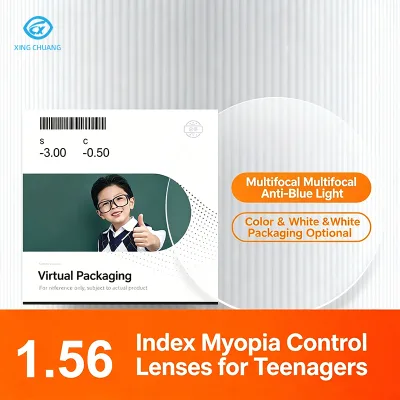
Blue Light-Blocking/Sunglass/Photochromic /Red-Coated Lenses with Smart Glasses
$39.00 - $41.00
MOQ: 500 Pieces



Comprehensive Sourcing Guide
Anti Blue Light Photochromic Lenses Sourcing Guide
Buyers evaluating anti-blue light photochromic lenses must first distinguish between single-vision and progressive designs, as the supplied data indicates distinct power ranges for each category. Single-vision options typically cover myopia and astigmatism with spherical ranges extending up to -8.00 diopters, while progressive models address presbyopia with specific add powers between +1.00 and +3.00. Understanding this functional split is critical before requesting samples, as the optical design requirements for distance and near vision correction differ significantly in manufacturing complexity.
The observed product listings reveal a strong emphasis on UV420 protection and blue light filtering, often paired with photochromic transitions that darken in sunlight. These lenses are frequently described with specific keywords like "Blue Cut" and "Photochromic," suggesting a dual-functionality that protects against digital strain and environmental glare. Procurement teams should verify that the specific lens model selected matches the intended user demographic, as some listings specify unisex usage while others target specific refractive errors like myopia or presbyopia.
Product Scope and Observed Listing Signals
The market data indicates a diverse range of lens materials, primarily resin-based, with refractive indices ranging from 1.56 to 1.61. Buyers should note that higher index materials like 1.61 often feature lower specific gravity, potentially reducing lens weight, while the 1.56 variants offer a different balance of optical clarity and cost. The diameter specifications vary between 65mm and 75mm, requiring precise frame compatibility checks to ensure the blank size accommodates the chosen frame shape without excessive edge thickness.
Coating technologies are a primary differentiator in the observed listings, with options including HC, HMC, and specialized choices like UC or Shmc. These coatings directly influence the lens durability and light transmission, which is reported to exceed 97% in several high-confidence entries. Sourcing teams must confirm that the selected coating matches the environmental demands of the end-user, as photochromic performance can be sensitive to the specific chemical composition of the anti-reflective layers applied during manufacturing.
Technical Specifications to Verify
Abbe values are a critical optical parameter that buyers must verify, as the data shows variations between 40 and 42 depending on the specific lens model and index. A higher Abbe value generally correlates with better color fidelity and reduced chromatic aberration, which is essential for users sensitive to visual distortions. Procurement specifications should explicitly state the required Abbe value to ensure the optical quality meets the expectations for high-definition vision correction, particularly for users with high prescriptions.
Power ranges and add powers must be cross-referenced against the specific lens model to avoid ordering incompatible blanks. The data highlights spherical ranges from -20.00 to +11.00 for some models, while progressive lenses have more restricted ranges with specific add powers. Buyers should validate that the supplier can produce the exact cylinder and spherical combinations required for their customer base, as the manufacturing tolerances for high-power lenses differ significantly from standard low-power options.
Compliance and Safety Documentation
UV protection is a non-negotiable safety feature, with observed listings consistently specifying UV420 or UV420 Protection standards. Buyers must request test reports confirming that the lenses block harmful ultraviolet radiation up to the stated wavelength limit, as this is a primary health benefit of the product. Documentation should explicitly verify the UV cutoff point to ensure compliance with international safety standards for optical devices, protecting end-users from long-term ocular damage.
Packaging and labeling standards are also part of the compliance picture, with standard export paper envelope packing noted in the data. While this indicates a baseline for shipping protection, buyers should verify if additional certifications are required for their target markets, such as CE or FDA markings for medical devices. Ensuring that the product origin, listed as Danyang, China, is clearly documented on all packaging helps maintain traceability and meets import regulations in various regions.
Cost Drivers and Commercial Terms
The observed price range of 0.1 to 48 USD suggests significant variation based on material index, coating complexity, and customization levels. Buyers should anticipate that higher refractive indices like 1.61 and specialized coatings such as HMC or Shmc will command premium pricing compared to standard 1.56 resin lenses with basic HC coatings. Understanding these cost drivers allows for more accurate budgeting and helps in negotiating volume discounts that reflect the true manufacturing complexity of the selected lens type.
Minimum Order Quantities (MOQ) vary widely from 1 to 500 units, offering flexibility for both trial orders and large-scale procurement. Suppliers offering customization services may have different MOQ thresholds compared to those selling standard stock items. Procurement teams should clarify the MOQ requirements for custom orders, such as specific lens colors or unique power combinations, to avoid unexpected costs or delays in the supply chain.
Supplier Qualification and Quality Control
The origin of the products is consistently listed as Danyang, a known hub for optical manufacturing, which implies a mature supply chain ecosystem. However, buyers should verify the specific factory capabilities rather than relying solely on the city of origin, as quality control processes can vary between different manufacturers within the same region. Requesting a facility audit or detailed quality assurance protocols is essential to ensure consistent production standards across all batches.
Guarantee periods of 3 to 5 years are observed in the listings, indicating a confidence in product durability and coating adhesion. Buyers should scrutinize the terms of this guarantee, including what constitutes a defect and the process for claims, to ensure it provides meaningful protection. Establishing clear quality control checkpoints during production, such as verifying the Abbe value and transmission rates, helps mitigate the risk of receiving substandard goods that might void the warranty.
Long-Term Procurement Checks
Sustainability and supply chain resilience are becoming critical factors for long-term partnerships, especially given the reliance on resin materials and chemical coatings. Buyers should inquire about the supplier's ability to maintain consistent raw material quality over time, as fluctuations in resin or coating chemistry can affect the photochromic transition speed and clarity. Building a relationship with a supplier who demonstrates stability in their production processes ensures a reliable supply of lenses for future orders.
Performance consistency over the product lifecycle is another key area for monitoring, particularly regarding the longevity of the photochromic transition and anti-reflective coating. Buyers should establish a protocol for periodic quality checks on received stock to verify that the lenses still meet the specified transmission and UV protection standards. Regular feedback loops with the supplier regarding field performance can help identify any emerging issues before they impact the end-user experience or brand reputation.
FAQs
What power ranges are available for these lenses?
Power ranges vary by lens type. Single vision options cover Sph: 0.00 to -8.00 with Cyl: 0.00 to -6.00. High-power single vision extends to Sph: -20.00 to +11.00. Progressive lenses typically offer Sph: 0.00 to +3.00 with Add: +1.00 to +3.00. These ranges accommodate myopia, astigmatism, and presbyopia needs effectively.
Can these lenses be customized for specific orders?
Yes, customization is available for these optical lenses. Buyers can select from various coating choices including UC, HC, HMC, SHMC, Green, and Blue. The lenses are produced in Danyang, China, and come in standard export paper envelope packing. This flexibility allows for tailored solutions to meet diverse customer requirements and specifications.
What is the UV protection level of these lenses?
These lenses provide UV420 protection, blocking harmful ultraviolet rays effectively. The specific gravity is approximately 1.16 to 1.30 depending on the index. With a transmission rate greater than 97%, they ensure clear vision while safeguarding eyes. The Abbe value ranges from 40 to 42, maintaining optical quality.
Which lens diameters are offered for these products?
Diameter options include 65mm, 70mm, and 75mm. Some progressive models also feature 12mm and 14mm segments. These sizes accommodate various frame styles and prescription needs. The standard export packaging ensures safe handling. Buyers can choose the appropriate diameter based on their specific frame requirements and optical center distances.
What coatings are available for anti-blue light lenses?
Available coatings include HC, HMC, UC, SHMC, Green, and Blue. These coatings enhance durability and visual clarity. The HMC coating is commonly paired with blue cut photochromic features. Buyers can select coatings based on their preference for scratch resistance and anti-reflective properties. Customization options allow for specific coating combinations to meet market demands.
How long is the guarantee period for these lenses?
The guarantee period is typically 3 to 5 years. This warranty covers manufacturing defects and material integrity. It provides assurance for buyers and end-users. The lenses are made from resin material with specific gravity around 1.16 to 1.30. This guarantee reflects the manufacturer's confidence in the product's durability and performance standards.