Source ATX Industrial Motherboard for Automation, Retail, and Control
Compare 30 ATX Industrial Motherboard options featuring Intel chipsets, DDR memory support, and various form factors like E-ATX and Mini-ITX. Buyers can review specifications including SATA interfaces, cooling systems, and certifications such as FCC, CE, and RoHS for diverse deployment needs.
Key considerations
Products List

Motherboard with Processor Intel COM LAN Mini Itx Industrial Motherboard
$100.00 - $199.00
MOQ: 1 Pieces


Intel 10th Gen ATX X86 Industrial Server Mini Itx Motherboard From Factory
$112.90 - $145.90
MOQ: 2 Pieces

Mini Itx I3 Motherboard for Industrial Computer with Processor 12th Generation
$131.90 - $149.90
MOQ: 10 Pieces

Factory OEM Mini Itx Motherboard for Industrial Mainboard with Lvds/Edp
$88.90 - $115.90
MOQ: 2 Pieces


OEM Industrial 6 COM Ports Mini Itx Motherboard for Factory Automation Control
$130.00 - $135.00
MOQ: 1 Pieces


Low Cost Compact Industrial Motherboard with 13th Gen Intel Core & Dual 4K Display
$223.00 - $228.00
MOQ: 1 Pieces


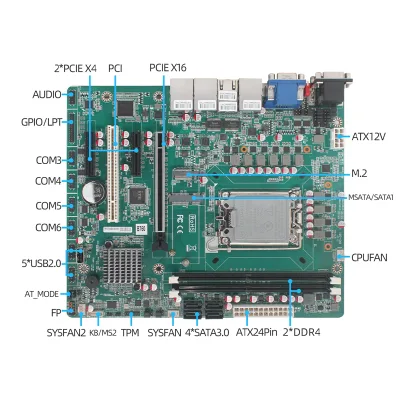


OEM/ODM Core B75 Embedded Industrial ATX Motherboard with 5*SATA+1*Msata 11*USB
$113.00 - $126.00
MOQ: 1 pieces

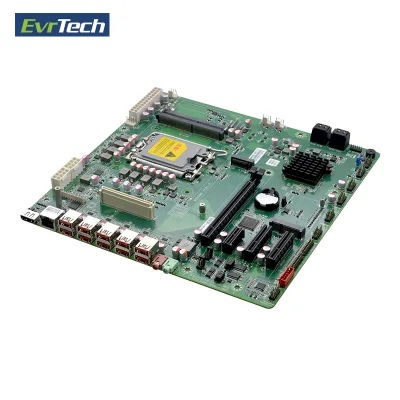


Comprehensive Sourcing Guide
Strategic Sourcing Guide for ATX Industrial Motherboards
The industrial sector relies heavily on robust computing infrastructure that can withstand harsh environments while maintaining high reliability. When sourcing an ATX Industrial Motherboard, buyers must navigate a complex landscape of technical specifications, compliance requirements, and supply chain logistics. Unlike consumer-grade components, industrial motherboards are engineered for continuous operation, extended temperature ranges, and specific form factors that accommodate diverse hardware configurations. This guide provides a structured approach to evaluating potential suppliers and selecting the right hardware, grounded in observable market data and verified product attributes.
Technical Architecture and Form Factor Verification
The foundation of any successful procurement begins with a precise understanding of the motherboard's architecture. The ATX form factor remains a dominant standard in industrial computing due to its balance of expandability and physical dimensions. However, buyers must distinguish between standard ATX and its variants, such as E-ATX, which offers expanded slot availability for specialized applications. Market observations indicate that industrial motherboards often support specific chipset families, with Intel being a prevalent choice for main chipset integration in high-performance units.
A critical technical differentiator is the memory architecture. While some industrial units are designed with integrated graphics for basic display output, others are explicitly configured without integrated graphics to accommodate dedicated high-performance GPUs. The maximum memory capacity varies significantly across models, ranging from 8GB to 64GB depending on the specific chipset and board design. Buyers should verify the supported memory interface, as some units utilize DDR interfaces while others may support SATA-based storage controllers. The physical dimensions of the board are equally vital; standard specifications often cite dimensions around 482mm in width for rack-mountable units, while others may adhere to standard ATX measurements.
Furthermore, the expansion capabilities define the board's utility in industrial settings. A high-density configuration might feature up to seven expansion slots, allowing for the integration of multiple communication cards, I/O controllers, or specialized processing units. The power supply interface is another key attribute, with ATX power supply types being the standard for compatibility with industrial power distribution units. When evaluating a product, procurement teams must cross-reference the model number against these physical and electrical constraints to ensure the board fits the intended chassis and meets the system's power requirements.
Compliance Standards and Certification Requirements
In the industrial sector, regulatory compliance is not merely a formality but a prerequisite for market access and operational safety. Buyers must rigorously verify that the motherboard and its components meet international safety and environmental standards. Common certifications observed in the industrial market include FCC, CE, RoHS, and ISO 9001. These certifications indicate that the product adheres to electromagnetic compatibility standards, restricts hazardous substances, and is manufactured under a quality management system.
Specific material certifications are also essential for safety in demanding environments. For instance, the base material of the printed circuit board (PCB) often requires a UL94V-0 rating, which denotes a high level of flame retardancy. Additionally, compliance with Reach regulations ensures that the product does not contain substances of very high concern. When sourcing, buyers should request current certification documents rather than relying on generic claims, as these standards are subject to renewal and regulatory updates.
The manufacturing origin also plays a role in compliance verification. Many industrial motherboards are produced in regions known for electronics manufacturing, such as Guangdong or Shenzhen in China. While the origin itself does not dictate quality, it helps in understanding the supply chain dynamics and the specific regulatory frameworks the manufacturer operates under. Buyers should ensure that the supplier can provide traceability for all certified components, particularly for the PCB layers, which are often specified as six-layer structures to ensure signal integrity and thermal management.
Cost Drivers and Pricing Dynamics
Understanding the cost structure of industrial motherboards is essential for budgeting and total cost of ownership analysis. The price range for these components can be substantial, varying from approximately $0.25 to $400 depending on the complexity, specifications, and order volume. Several factors drive these costs, including the main chipset generation, the amount of supported memory, and the level of customization required.
Customization is a significant cost driver. While standard specifications are available, many industrial applications require tailored solutions, such as specific I/O port configurations or unique mounting holes. The ability to customize the product often comes with a higher price point but ensures that the hardware fits the exact application needs. Additionally, the production type, which may include SMT (Surface Mount Technology), DIP (Dual In-line Package), and assembly testing, influences the final cost. High-volume orders typically benefit from economies of scale, with Minimum Order Quantities (MOQ) ranging from 1 to 100 units.
Buyers should also consider the packaging and logistics costs. Industrial motherboards often require specialized packaging, such as export carton boxes, case protection, PE bags, and pearl cotton, to prevent damage during transit. These packaging requirements add to the overall cost but are necessary to maintain product integrity. When evaluating quotes, procurement teams should look beyond the unit price and consider the total landed cost, including shipping, insurance, and any potential duties associated with the import location.
Typical Industrial Applications and Use Cases
The versatility of ATX industrial motherboards makes them suitable for a wide range of applications across various sectors. One primary use case is in industrial automation, where these boards serve as the central processing unit for PLCs (Programmable Logic Controllers) and HMI (Human-Machine Interface) systems. The robust design and high memory capacity allow these systems to handle complex control algorithms and real-time data processing.
Another significant application is in the medical device industry, where reliability and compliance are paramount. Industrial motherboards with integrated graphics and specific certification standards are often used in diagnostic imaging equipment and patient monitoring systems. The ability to operate in a wide temperature range and the availability of multiple expansion slots for medical communication cards make these boards ideal for such critical applications.
In the transportation sector, ATX industrial motherboards are utilized in onboard computing systems for trains, buses, and commercial vehicles. The ruggedized design ensures that the hardware can withstand vibrations and temperature fluctuations inherent in transportation environments. Additionally, these motherboards are common in digital signage and public information displays, where the need for continuous operation and high-resolution graphics output is critical. The specific model numbers, such as those indicating 6th or 8th generation Intel processors, often correlate with specific application requirements, allowing buyers to select the right balance of performance and power consumption.
Supplier Evaluation and Manufacturing Capabilities
Selecting the right supplier is as important as selecting the right product. Buyers should evaluate potential suppliers based on their manufacturing capabilities, experience, and quality control processes. A reputable supplier often highlights their experience in the industry, such as being a motherboard manufacturer since 2005, which indicates a deep understanding of the market and technical challenges.
The production process is another critical factor. Suppliers that offer a comprehensive range of services, including SMT, BGA, and DIP assembly, as well as final testing, are better equipped to handle complex orders. The inspection process should be rigorous, encompassing 100% IQC (Incoming Quality Control), IPQC (In-Process Quality Control), FQC (Final Quality Control), QA (Quality Assurance), and ICT (In-Circuit Testing). These steps ensure that every unit meets the specified standards before leaving the factory.
Buyers should also assess the supplier's ability to provide OEM and ODM services. The flexibility to customize products according to specific client requirements is a valuable asset for industrial applications. Additionally, the supplier's location and logistics capabilities should be considered, as proximity to the buyer can reduce lead times and shipping costs. A supplier with a strong track record in the industry and a commitment to quality is more likely to deliver reliable products that meet the demanding requirements of industrial environments.
Quality Control and Long-Term Procurement Strategy
Ensuring the long-term reliability of industrial motherboards requires a proactive approach to quality control and supply chain management. Buyers should implement a rigorous quality assurance plan that includes regular audits of the supplier's manufacturing processes and product testing. The inspection data, such as 100% IQC and ICT results, should be reviewed to identify any recurring issues or trends that could impact product quality.
Long-term procurement strategies should focus on building strong relationships with suppliers who demonstrate a commitment to continuous improvement and innovation. This includes staying updated on the latest technological advancements and ensuring that the supplier can adapt to changing market demands. Buyers should also consider the availability of spare parts and technical support, as these factors are crucial for maintaining operational continuity in industrial settings.
Furthermore, the cooling system and physical design of the motherboard should be evaluated for long-term performance. Air cooling is a common method, but buyers should verify that the design allows for adequate airflow in the intended chassis. The material quality, such as the use of steel for chassis components, also contributes to the overall durability and longevity of the system. By prioritizing quality control and fostering strong supplier relationships, buyers can ensure a steady supply of high-quality industrial motherboards that meet their operational needs.
Conclusion
Sourcing ATX industrial motherboards requires a meticulous approach that balances technical specifications, compliance requirements, and cost considerations. By understanding the nuances of form factors, memory architectures, and certification standards, buyers can make informed decisions that align with their specific application needs. The importance of supplier evaluation and quality control cannot be overstated, as these factors directly impact the reliability and longevity of the deployed systems. With a strategic approach to procurement, organizations can secure the high-performance computing solutions necessary to drive their industrial operations forward.
FAQs
What certifications do these industrial motherboards hold?
These units typically hold FCC, CE, RoHS, and ISO 9001 certifications. Some specific models also include UL94V-0 for base material flame retardancy and Reach compliance to ensure safety in demanding environments.
Which memory capacities are supported by these boards?
Supported memory capacity ranges from 8GB to 64GB depending on the specific model and chipset. Some units support up to 16GB while others are designed to handle up to 64GB for high-performance industrial applications.
Can these motherboards be customized for specific needs?
Yes, customization is available for specifications and packaging requirements. Buyers can request tailored solutions including specific I/O configurations or unique mounting holes to fit exact application needs.
Where are these industrial motherboards manufactured?
These products originate from manufacturing hubs in Guangdong and Shenzhen, China. The supply chain is established in these regions known for electronics manufacturing and component assembly.
What is the minimum order quantity for these boards?
The minimum order quantity ranges from 1 to 100 units depending on the supplier and product configuration. This flexibility allows buyers to order small batches for testing or larger volumes for production.
Which form factors are available for these motherboards?
Available form factors include ATX, E-ATX, and Mini-ITX structures. The physical dimensions vary, with some rack-mountable units measuring 482mm in width and others adhering to standard ATX measurements.
How are these motherboards packaged for shipping?
Packaging typically includes export carton boxes, case protection, PE bags, and pearl cotton. This multi-layer approach ensures the boards remain undamaged during transit and storage.