Source Baby Laundry Liquid Detergent for Cloth Washing, Apparel Care, and Fabric Tending
Find 30 options for Baby Laundry Liquid Detergent designed for cloth washing, apparel care, and fabric tending. Buyers can compare specifications including scent, pH levels, and packaging sizes from suppliers in China.
Key considerations
Products List


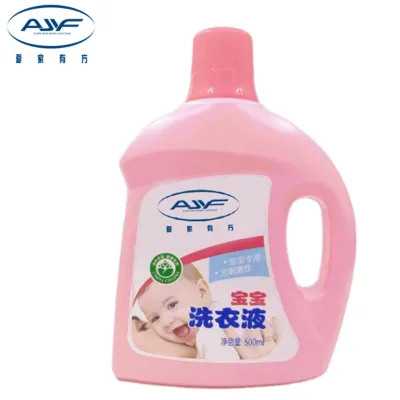

Family Detergent Laundry Liquid, Baby Care Clothes Liquid Laundry Detergent
$0.60 - $0.75
MOQ: 18936 Pieces


Wholesale Baby Laundry Liquid Detergent Deep Cleansing No Fragrance Laundry Detergent
$0.37 - $10.80
MOQ: 5000 Pieces

Factory Direct Sales Baby Laundry Detergent Liquid Customized Fragrance Liquid Detergent
$0.68 - $2.99
MOQ: 3000 Pieces


Comprehensive Sourcing Guide
Strategic Sourcing Guide for Baby Laundry Liquid Detergent
Procuring Baby Laundry Liquid Detergent requires a distinct approach compared to standard household cleaning products. The primary differentiator lies in the safety profile, formulation gentleness, and the rigorous verification of ingredients suitable for infant skin. For B2B buyers, the sourcing process involves navigating a complex landscape of variable specifications, from active matter concentrations to packaging materials. This guide outlines the critical factors for evaluating suppliers and products, grounded in observed market data and industry standards.
Technical Specifications and Formulation Variability
The technical landscape of Baby Laundry Liquid Detergent is characterized by significant variability in formulation and physical properties. Unlike standard detergents, baby-specific products often prioritize mildness over aggressive stain removal, though high-performance options exist. A critical observation in the current market is the diversity in active matter content. Suppliers may offer formulations ranging from 8% to 70% active matters, a wide spectrum that directly impacts cleaning efficacy and cost. Buyers must verify the specific concentration required for their target market, as a lower concentration may be preferred for sensitive skin, while a higher concentration might be necessary for heavy soiling.
Formulation attributes also extend to scent and pH balance. The market data indicates a prevalence of floral scents, natural fragrances, and specific fruit scents such as lemon or jasmine. For baby products, "Natural Fragrance" and hypoallergenic profiles are often preferred to minimize the risk of dermatological reactions. The pH level is another crucial technical parameter. Many suppliers indicate a neutral or slightly alkaline pH, which is generally safe for fabrics and skin, but buyers should request specific pH test reports to ensure compliance with safety standards for infant care.
Foam generation is another variable specification. Some manufacturers offer high-foam formulations, which are often associated with a perception of cleaning power, while others provide low-foam options suitable for high-efficiency washing machines. The color of the liquid is also customizable, allowing brands to differentiate their products visually. Understanding these technical nuances is essential before engaging with a supplier, as the "one-size-fits-all" approach rarely applies to this category.
Compliance Standards and Certification Verification
Compliance is the cornerstone of sourcing baby laundry products. While specific certification statuses cannot be universally guaranteed for every listed product, the industry relies on established international standards. Buyers should prioritize suppliers who demonstrate adherence to ISO standards, specifically ISO 22716:2007, which governs Good Manufacturing Practices (GMP) for cosmetics and personal care products. This standard is often cited alongside SGS and GMPC certifications, indicating a commitment to quality control and safety.
When evaluating a supplier, it is vital to verify their production standards against the specific requirements of the target market. For instance, some suppliers list standards related to packaging weights (e.g., 100g to 200kg) or specific model numbers like LD-08 or LW-005, which may correspond to internal quality benchmarks. However, the presence of a standard code does not automatically imply full compliance with local regulations in the buyer's country. Buyers must independently verify if the supplier's products meet local chemical restrictions, such as REACH regulations in Europe or similar standards in other regions.
The absence of phosphorus is a common and desirable attribute in modern baby detergents, often listed explicitly as "Without Phosphorus." This formulation choice aligns with environmental regulations and health concerns regarding water pollution and skin irritation. Buyers should explicitly confirm the phosphorus-free status through laboratory test reports rather than relying solely on marketing claims. Additionally, while some background information mentions REACH, this should be treated as a general industry trend rather than a confirmed attribute of every product unless explicitly verified by the supplier for the specific batch.
Cost Drivers and Pricing Dynamics
The pricing structure for Baby Laundry Liquid Detergent is influenced by several interconnected factors, including volume, formulation complexity, and packaging requirements. The observed market price range is extensive, spanning from $0.37 to $980 per unit, which reflects the diversity of product sizes and service levels. This wide range indicates that a single unit price cannot be used as a benchmark; instead, buyers must analyze the cost per liter or per kilogram.
Volume is a primary cost driver. Suppliers often have Minimum Order Quantities (MOQs) that vary significantly, ranging from as low as 1 unit for sampling to 40,000 units for bulk industrial orders. Some suppliers specify an MOQ of 10 tons, which suggests a focus on large-scale industrial distribution. The relationship between volume and price is typically inverse; larger orders usually result in a lower unit cost. However, the complexity of customization plays a significant role. Products with custom scents, specific active matter percentages, or unique packaging designs often command a premium.
Packaging materials also impact the final cost. The market utilizes a variety of materials, including PP/PE, Pet/PE, PA/PE, and paperboard. The choice between a simple plastic bag, a bottle, or a bucket affects both the material cost and the logistics expense. Furthermore, the origin of the product influences pricing. Suppliers based in Hangzhou, Zhejiang, or Shandong Province, China, offer competitive pricing due to established supply chains, but buyers must factor in shipping costs and import duties.
Typical Applications and Usage Scenarios
The application of Baby Laundry Liquid Detergent extends beyond simple fabric cleaning. The primary usage is for cloth washing and tending, specifically designed for apparel that comes into direct contact with an infant's skin. This includes clothing, bedding, towels, and diapers. The formulation is engineered to handle common baby stains such as milk, food, and bodily fluids while remaining gentle enough not to irritate sensitive skin.
The versatility of the product is evident in the various usage contexts. Some formulations are designed for deep cleaning, targeting stubborn stains, while others focus on maintenance and freshness. The "Apparel" usage category suggests that these detergents are suitable for a wide range of fabrics, from cotton to synthetic blends commonly used in baby clothing. The ability to customize the scent and color allows brands to tailor the product for specific marketing angles, such as "natural fresh" for eco-conscious parents or "lavender" for a calming effect.
It is important to note that the application may vary based on the specific model and formulation. For example, a product with a high active matter percentage might be intended for heavy-duty cleaning in a commercial laundry setting, whereas a lower concentration product might be optimized for home use. Buyers should ensure that the product's intended usage aligns with their distribution channel and customer expectations.
Supplier Evaluation and Service Capabilities
Evaluating a supplier requires a deep dive into their service capabilities and production flexibility. The market shows a strong trend toward OEM (Original Equipment Manufacturer) and ODM (Original Design Manufacturer) services, allowing buyers to create private label products. This flexibility is crucial for brands looking to differentiate themselves in a crowded market. Suppliers often offer customization for packaging, scent, and even the physical appearance of the liquid, such as color.
The location of the supplier is a key factor in the evaluation process. Most observed suppliers are located in China, specifically in provinces like Zhejiang and Shandong. These regions have well-developed chemical manufacturing infrastructures. However, buyers should verify the specific factory location, as some may be in Hangzhou while others are in Shangdong Province. The proximity to raw material sources and logistics hubs can influence lead times and reliability.
Service capabilities also include the ability to handle various packaging formats. Suppliers may offer options ranging from small bottles (500ml, 750ml, 1L) to large industrial containers (20kg, 1000kg). The packaging specifications, such as "6PCS/CTN" or "Laundry Detergent in Carton," indicate the supplier's readiness for different distribution channels. Buyers should assess the supplier's capacity to meet specific demand requirements, including the ability to produce according to customer specifications for model numbers like LD-01 or CWD02.
Quality Control and Long-Term Procurement Considerations
Quality control is paramount when sourcing baby products. Buyers must implement a robust QC strategy that includes pre-production sampling, in-process monitoring, and final inspection. The variability in active matter content and pH levels necessitates regular testing to ensure consistency. Suppliers should provide certificates of analysis (CoA) for each batch, detailing the chemical composition, pH, and active matter percentage.
Long-term procurement considerations involve building a sustainable relationship with the supplier. This includes establishing clear communication channels for order updates, quality feedback, and supply chain disruptions. The ability of the supplier to scale production is critical; while some suppliers have an MOQ of 10 tons, others may be more flexible for smaller orders. Buyers should also consider the environmental impact of the product, looking for phosphorus-free formulations and eco-friendly packaging materials.
Finally, buyers must remain vigilant about regulatory changes. As standards evolve, particularly regarding chemical safety and environmental impact, suppliers must be able to adapt their formulations and processes. A reliable supplier will proactively communicate changes and offer support in navigating new compliance requirements. By focusing on these long-term factors, buyers can ensure a stable supply of high-quality baby laundry detergent that meets the evolving needs of their customers.
Comparative Analysis of Product Attributes
To facilitate decision-making, the following table summarizes the key attributes observed in the market for Baby Laundry Liquid Detergent. This comparison highlights the diversity in specifications and helps buyers identify the most suitable options for their specific needs.
| Attribute | Observed Range/Options | Relevance for Buyers |
|---|---|---|
| Active Matters | 8% - 70% | Determines cleaning power and cost; verify specific % for target use. |
| pH Level | Neutral or a Little Alkaline | Critical for skin safety; request specific test reports. |
| Scent | Floral, Natural, Fruit, Lemon, Jasmine, Lavender | Affects consumer appeal; ensure "Natural" claims are verified. |
| Packaging | PP/PE, Pet/PE, Paperboard, Bottle, Bucket, Bag | Impacts logistics and shelf life; check compatibility with distribution. |
| MOQ | 1 - 40,000 units (or 10 tons) | Determines entry barrier; negotiate based on volume needs. |
| Certifications | ISO 22716:2007, SGS, GMPC | Indicates quality management; verify current status for specific batches. |
| Origin | Hangzhou, Zhejiang, Shandong, China | Influences lead time and shipping costs; verify factory location. |
| Customization | Available (OEM/ODM) | Allows brand differentiation; confirm lead time for custom runs. |
This table serves as a reference point for buyers to compare potential suppliers. It is important to note that not every product will possess all these attributes simultaneously. Buyers must carefully match the specific product specifications to their business requirements, ensuring that the chosen supplier can deliver the exact formulation, packaging, and volume needed. By adhering to these guidelines and maintaining a rigorous evaluation process, buyers can successfully source high-quality Baby Laundry Liquid Detergent that meets the highest standards of safety and performance.
FAQs
What active matter concentrations are available for baby laundry detergent?
Active matter concentrations range from 8% to 70% depending on the specific formulation. Buyers must verify the exact percentage required for their target market as lower concentrations are often preferred for sensitive infant skin while higher concentrations suit heavy soiling.
Which certifications do suppliers typically follow for manufacturing standards?
Suppliers often adhere to ISO 22716:2007, SGS, and GMPC standards for good manufacturing practices. Buyers should request specific test reports to confirm compliance with local regulations rather than relying solely on general standard codes listed in product descriptions.
Can I customize the scent and color of the liquid detergent?
Customization is available for scents like floral, natural, or fruit fragrances and for liquid colors. Buyers can specify preferences such as lavender or lemon, but they must confirm the final formulation meets safety standards for baby apparel before placing bulk orders.
What packaging materials and sizes are commonly offered by manufacturers?
Packaging options include PP/PE, Pet/PE, PA/PE, and paperboard in sizes ranging from 500ml to 20kg. Suppliers may also offer bulk formats like buckets or plastic bags, with carton configurations varying based on customer demand and product specifications.
How does the minimum order quantity vary across different suppliers?
Minimum order quantities range from 1 unit for sampling up to 40,000 units or 10 tons for bulk industrial orders. Buyers should evaluate their volume needs carefully as larger orders typically result in lower unit costs but require higher initial investment.
Where are the primary manufacturing locations for these detergents?
Most suppliers are located in China, specifically in Hangzhou, Zhejiang, and Shandong Province. These regions offer established chemical manufacturing infrastructures, but buyers must verify specific factory locations to assess logistics costs and lead times accurately.
What is the typical pH level of Baby Laundry Liquid Detergent?
The pH level is generally neutral or slightly alkaline to ensure safety for fabrics and skin. Buyers should request specific pH test reports to verify that the product meets the gentle requirements necessary for infant care and sensitive skin protection.