Source Biotin Collagen Keratin Beauty Capsules for Hair, Skin, Nails
Compare 30 Biotin Collagen Keratin Beauty Capsules from verified Chinese manufacturers. Buyers can review specifications like 60 capsules per bottle, 24-month shelf life, and OEM customization options for adult daily supplements.
Key considerations
Products List


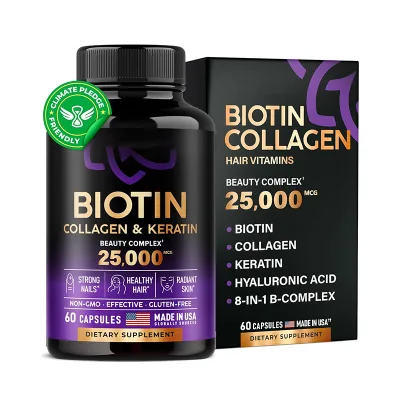


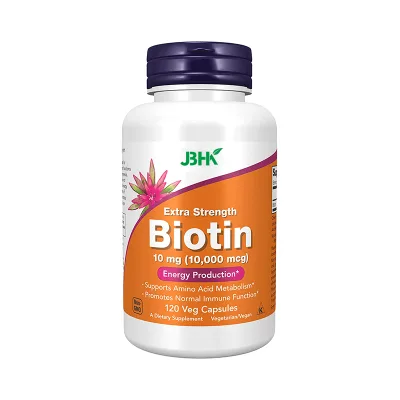
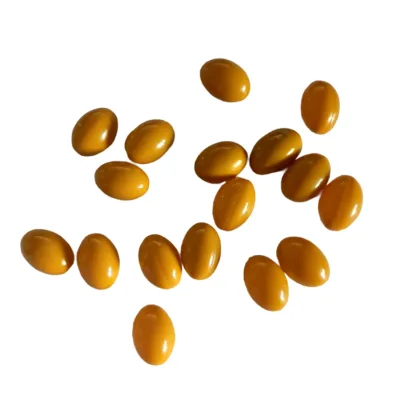
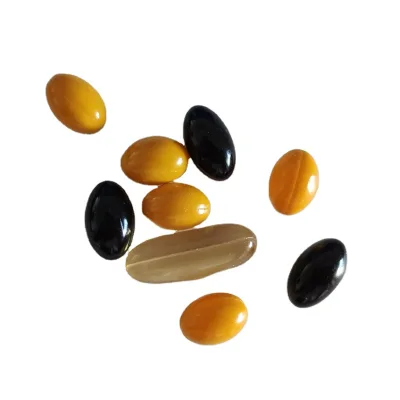
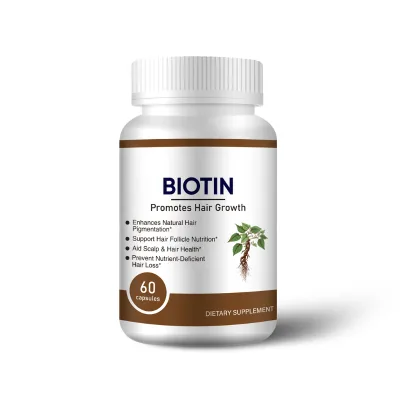
Private Label Biotin Vitamins Capsule Vitamin Hair Biotin Hair Growth Capsule
$3.60 - $5.00
MOQ: 100 Pieces




Comprehensive Sourcing Guide
Strategic Sourcing Guide for Biotin Collagen Keratin Beauty Capsules
Understanding Product Specifications and Formulation Variations
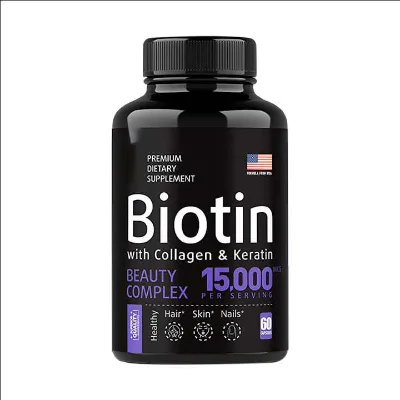
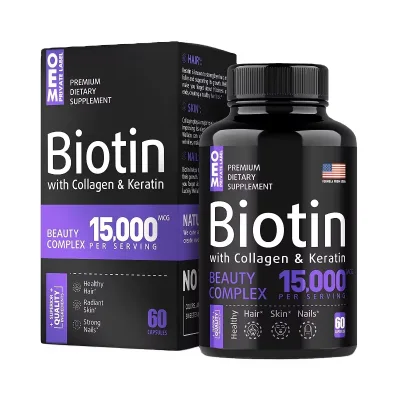
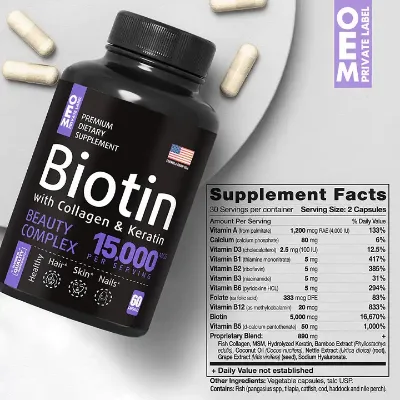
When sourcing Biotin Collagen Keratin Beauty Capsules, buyers must first establish a clear understanding of the technical specifications that define the product's physical and chemical identity. The core product category typically manifests as oral dietary supplements designed for adult consumers, specifically targeting hair, skin, and nail health. Based on observed market data, the primary dosage form is consistently the capsule, often packaged in bottles containing 60 units per container. The active ingredient profile is critical; high-confidence observations indicate the presence of Biotin (Vitamin B7) as a central component, frequently combined with Keratin, Collagen, Zinc, and Turmeric to create a synergistic effect.
The formulation often includes claims of being organic, sugar-free, and decaffeinated, which appeals to health-conscious demographics. However, buyers must treat these attributes as observations of specific listings rather than universal guarantees for every SKU. The physical specifications vary, with some listings noting a single package size of 10x10x15 cm and a gross weight of 0.250 kg. The packaging structure usually involves a bottle contained within a paper carton, adhering to a "moisture-proof" requirement to maintain product integrity during transit. Dosage instructions observed in the market suggest a daily intake of 2 capsules, equating to a total daily consumption of 3-5 grams, though this must be verified against the specific manufacturer's label for the selected batch.
| Specification Category | Observed Attribute | Verification Requirement |
|---|---|---|
| Dosage Form | Capsules | Confirm capsule shell material (gelatin vs. vegetarian). |
| Active Ingredients | Biotin, Keratin, Collagen, Zinc, Turmeric | Request Certificate of Analysis (CoA) for exact mg/g per capsule. |
| Packaging Unit | 60 Capsules per Bottle | Verify if "60 capsules" refers to the bottle count or total carton count. |
| Shelf Life | 24 Months (2 Years) | Confirm start date of shelf life from production or packaging date. |
| Storage Conditions | Moisture Proof, Away from Direct Sunlight | Validate packaging seal integrity and humidity resistance. |
| Target Demographic | Adults (Men, Women) | Ensure clear labeling excludes pregnant women, newborns, and children. |
Compliance, Certification, and Regulatory Standards
Navigating the regulatory landscape is paramount when importing beauty supplements. The supply chain data indicates that compliant products often carry certifications such as HACCP, GMP (Good Manufacturing Practice), and ISO. These certifications are not merely marketing terms but represent adherence to specific quality management systems. HACCP focuses on hazard analysis and critical control points, ensuring food safety throughout the production process. GMP certification confirms that the facility meets strict standards for manufacturing, testing, and packaging, which is essential for dietary supplements. ISO standards provide a framework for quality assurance and operational efficiency.
Buyers must verify the validity of these certifications directly with the issuing bodies, as the presence of a logo on a product page does not guarantee current compliance. The product standard is often listed as "Regular," which is a generic descriptor. In a procurement context, this requires the buyer to define what "Regular" means for their specific market, whether it aligns with local FDA regulations, EU food supplement directives, or other regional standards. The product origin is frequently identified as China, with specific manufacturing hubs in Henan. This geographic information is crucial for assessing supply chain risks and understanding the regulatory environment of the exporting country.
Furthermore, the product is classified as a "Food" item rather than a pharmaceutical, which dictates the regulatory pathway. The "Not Applicable" section for pregnant women, newborns, and children is a critical safety flag. Procurement teams must ensure that all labeling and marketing materials explicitly state these exclusions to avoid liability. The "Effectiveness" is described as "Beauty Products" or "Promotion Development," which are functional descriptions rather than medical claims. Buyers must be vigilant to ensure that supplier marketing does not cross into unapproved medical claims, which could lead to regulatory penalties in the destination market.
Cost Drivers and Pricing Dynamics
The pricing structure for biotin collagen keratin capsules is influenced by several variables, including raw material costs, certification levels, and order volume. The observed price range in the market spans from 0 to 5.3 USD, a wide variance that suggests significant differences in product quality, branding, and packaging complexity. This range likely includes both bulk commodity pricing and premium private-label costs. The low end of the spectrum may represent generic, unbranded products with minimal packaging, while the higher end could reflect organic certification, custom labeling, or higher concentrations of active ingredients.
The Minimum Order Quantity (MOQ) is a significant cost driver, with observed ranges extending from 1 unit to 20,000 units. For small businesses or startups, an MOQ of 1 allows for sample testing and low-risk market entry. However, larger enterprises may negotiate MOQs closer to the 20,000-unit range to secure better per-unit pricing. The "Selling Units" are typically listed as single items, but bulk transactions usually involve cases or pallets. The "Single gross weight" of 0.250 kg per package is a key factor in calculating freight costs, which can significantly impact the landed cost, especially for air freight.
Customization services, such as OEM (Original Equipment Manufacturer) and ODM (Original Design Manufacturer) with private labeling, add to the cost structure. The availability of "Logo Printing" and "Customized Label" services means that buyers can tailor the product to their brand, but this incurs additional setup fees and potentially higher MOQs. The "Service" category explicitly mentions OEM/ODM acceptance, indicating that the supply chain is flexible enough to accommodate brand-specific requirements. Buyers should request detailed cost breakdowns that separate the base product cost from customization fees, tooling costs, and packaging expenses to understand the true cost drivers.
Typical Applications and Market Positioning
The primary application of Biotin Collagen Keratin Beauty Capsules is in the personal care and wellness sector, specifically targeting hair, skin, and nail health. The "Effect" is described as a "Daily Supplement," positioning the product as a maintenance item rather than a cure for specific medical conditions. The "Effectiveness" is categorized under "Beauty Products" and "Promotion Development," suggesting that these supplements are often marketed as part of a broader beauty regimen. The inclusion of ingredients like Turmeric and Zinc suggests a focus on anti-inflammatory properties and overall skin health, appealing to a demographic interested in holistic wellness.
The target audience is clearly defined as adults, including both men and women, while explicitly excluding pregnant women and children. This segmentation allows for targeted marketing strategies that focus on adult beauty concerns, such as hair thinning, skin elasticity, and nail brittleness. The "Flavor" is noted as "unflavored," which is a common preference for supplements to ensure the capsule is easy to swallow and does not interfere with the taste of other foods. The "Side Effects" are listed as "No," a claim that must be substantiated by clinical data or a history of safe use, as no supplement is entirely free of potential adverse reactions for all individuals.
In the B2B context, these products are often sourced for private label brands, health food stores, and online beauty retailers. The "Customization" feature allows suppliers to create unique product lines for different market segments. For instance, a brand focusing on organic products might prioritize the "Organic" attribute, while a brand targeting cost-conscious consumers might focus on the "Sugar-Free" aspect. The "Product Name" variations, such as "Biotin Keratin Collagen Pills" or "Hair Capsules," indicate that the same formulation can be marketed under different names to suit different brand identities.
Supplier Evaluation and Verification Protocols
Evaluating suppliers for biotin collagen keratin capsules requires a rigorous due diligence process that goes beyond the information provided on product pages. The "Service" attribute highlights the availability of OEM/ODM and private label services, which is a positive indicator of a supplier's flexibility. However, buyers must verify the supplier's capacity to deliver on these promises. This includes assessing their production facilities, quality control systems, and ability to handle custom orders. The "Sample" availability is a critical step in the evaluation process; buyers should always request samples to verify the physical quality, taste, and packaging integrity before committing to a large order.
The "Certification" attributes (HACCP, GMP, ISO) should be verified through direct communication with the supplier and by requesting copies of valid certificates. Buyers should check the expiration dates of these certifications and ensure they cover the specific manufacturing site. The "Location" data, specifically "Henan, China," provides a starting point for background checks, but buyers should also investigate the specific factory's reputation and history. The "Standard" attribute, listed as "Regular," is vague and requires clarification. Buyers should ask for the specific national or international standards the product complies with, such as GB standards in China or FDA registration in the US.
Supplier reliability is also measured by their response to "Not Applicable" warnings. A reputable supplier will clearly communicate the contraindications for pregnant women and children, ensuring that their labeling and marketing materials are compliant. The "Customization" and "Logo Printing" capabilities should be tested with a small trial order to ensure the quality of the printing and the accuracy of the label information. The "Shelf Life" of 24 months is a key metric; buyers should verify the production date on the sample to ensure the product has sufficient remaining shelf life upon arrival.
Quality Control and Long-Term Procurement Strategy
Implementing a robust quality control (QC) strategy is essential for maintaining product integrity and brand reputation. The "Storage Note" of "Moisture Proof" and "Away From Direct Sunlight" must be strictly enforced during both manufacturing and logistics. Buyers should specify packaging requirements that meet these storage conditions, such as the use of desiccants and UV-resistant materials. The "Shelf Life" of 24 months (or 2 years) must be clearly defined in the contract, including the method of calculation (e.g., from production date to expiration date).
Long-term procurement considerations involve building a sustainable supply chain that can adapt to market changes. The "Customization" feature allows for product evolution, enabling buyers to introduce new formulations or packaging designs as consumer preferences shift. The "Service" of OEM/ODM provides the flexibility to scale production up or down based on demand. Buyers should establish clear communication channels with suppliers to monitor inventory levels and production schedules, ensuring timely delivery and minimizing stockouts.
Quality control should also extend to the testing of raw materials. The "Main Ingredient" list includes Biotin, Keratin, Collagen, Zinc, and Turmeric. Buyers should require third-party testing reports to verify the purity and potency of these ingredients. The "Active Ingredient" concentration must match the label claims, and any potential contaminants must be below acceptable limits. The "Side Effects" claim of "No" should be backed by safety data sheets and historical usage records.
Finally, buyers should consider the environmental impact of their procurement decisions. The "Packaging" using paper cartons and bottles can be optimized for sustainability. The "Single gross weight" and "Single package size" data can be used to calculate the carbon footprint of shipping and to optimize logistics. By focusing on these long-term factors, buyers can build a resilient and responsible supply chain that delivers high-quality Biotin Collagen Keratin Beauty Capsules to their customers consistently.
FAQs
What certifications do the Biotin Collagen Keratin Beauty Capsules have?
The products typically hold HACCP, GMP, and ISO certifications to ensure quality and safety. These standards verify adherence to strict manufacturing and food safety protocols, though buyers should request valid certificates directly from the supplier for confirmation.
Can I get custom labels and private labeling services for these capsules?
Yes, OEM and ODM private label services are available with logo printing options. Suppliers accept customized labels, allowing brands to tailor packaging and branding, though this may involve specific setup fees or minimum order quantities depending on the volume.
What is the shelf life and storage requirement for these beauty capsules?
The shelf life is 24 months or 2 years when stored correctly. Products must be kept in a dry, cool place away from direct sunlight and moisture to maintain integrity, as specified in the product storage notes and packaging requirements.
Who is the target audience for these Biotin Collagen Keratin Beauty Capsules?
These capsules are designed for adult men and women as a daily supplement. They are explicitly not applicable for pregnant women, newborns, or children, ensuring safety for the intended demographic while excluding vulnerable groups from consumption.
What are the main active ingredients in these beauty supplement capsules?
The primary active ingredient is Biotin (Vitamin B7), often combined with Keratin, Collagen, Zinc, and Turmeric. Some formulations may also include organic components, sugar-free options, and decaffeinated ingredients to support hair, skin, and nail health.
What is the typical dosage and packaging format for these supplements?
The standard dosage is 2 capsules per day, with a daily intake range of 3 to 5 grams. Products are commonly packaged as 60 capsules per bottle, contained within a paper carton, and often feature a single gross weight of 0.250 kg.