Source Car Anti-Theft Pedal Lock for Steering, Brake, and Parking
Compare 30 verified listings for the car anti-theft pedal lock designed to secure steering wheels, brake pedals, and parking mechanisms. Buyers can review specifications, pricing, and supplier details for these universal steel security devices.
Key considerations
Products List
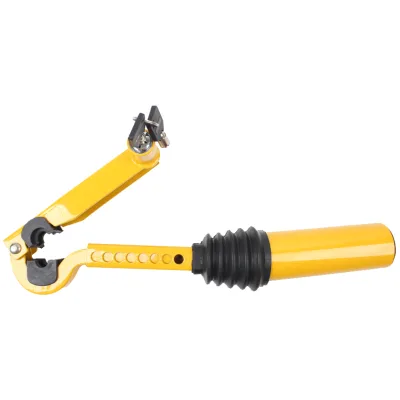


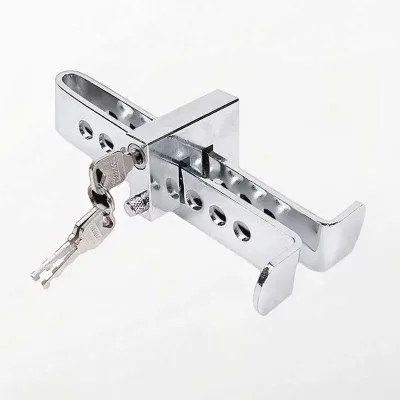


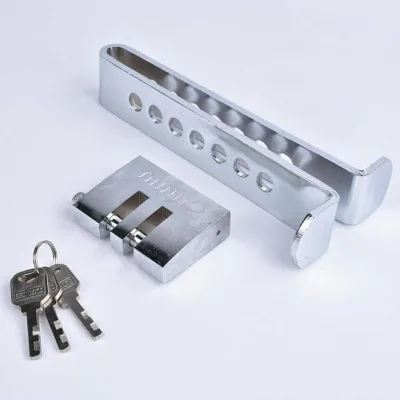


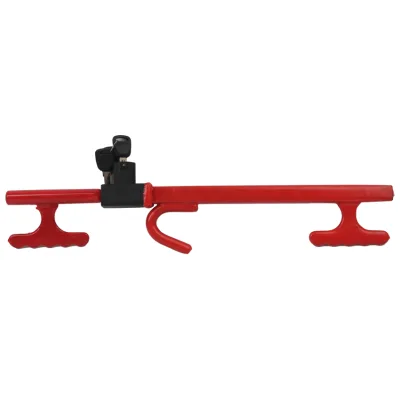

Comprehensive Sourcing Guide
Strategic Sourcing Guide for Car Anti-Theft Pedal Locks
Understanding Product Specifications and Variability
When initiating a procurement strategy for a car anti-theft pedal lock, the primary challenge lies in navigating the significant variance in product specifications observed across the market. Unlike standardized components, these security devices often exhibit inconsistent data points regarding dimensions, weight, and key configurations. A thorough analysis of available listings reveals a wide spectrum of physical attributes. For instance, observed single package sizes range drastically from compact dimensions of 10x10x3 cm to larger configurations measuring 60x10x10 cm or 56x42x28 cm. Similarly, the gross weight of individual units fluctuates between 0.75 kg and 2.000 kg, with some listings citing a single gross weight of 27.500 kg, which likely represents a bulk carton weight rather than a single unit.
Buyers must exercise extreme caution when interpreting these figures. The "Universal" fitment claim is frequently cited, yet the physical dimensions required to secure different vehicle pedal assemblies vary. Some products are described as having a single package size of 60x20x5 cm, while others are listed as 56x42x27.5 cm. This inconsistency suggests that "Universal" is a marketing classification rather than a guarantee of compatibility with every vehicle model without verification. Furthermore, the material composition is a critical differentiator. While steel is a standard material for high-security locks to ensure resistance against cutting tools, the specific grade and thickness are rarely detailed in general listings. The presence of a "Car Gear Lock" or "Steering Wheel Lock" in product titles alongside pedal locks indicates that suppliers often bundle or confuse product categories, necessitating a rigorous review of the specific item description to ensure the correct mechanism is being sourced.
Key Configuration and Operational Mechanics
The operational security of a pedal lock is heavily dependent on its key system. Data indicates a notable divergence in the number of keys provided with each unit. Some product entries specify "2 Keys," while others list "3 Keys." This variance has direct implications for inventory management and replacement logistics. A procurement strategy that relies on a single supplier without verifying the key count risks a mismatch between the number of keys delivered and the operational needs of the fleet or retail distribution. Additionally, the key type is another critical specification. The observed "Round Key" configuration suggests a specific mechanical interface that may differ from standard flat-blade keys used in other automotive security devices.
The functional application of these devices is consistently described as "Anti-Theft" or "Car Security Anti-Thief." However, the specific mechanism of action—whether it is a simple pedal clamp or a more complex interlocking system—must be verified. The "Car Fitment" is often labeled as "Universal," but the physical constraints of the pedal box in various vehicle makes and models can render a "universal" lock ineffective if the locking bar cannot span the required distance or if the clamping force is insufficient. Buyers should prioritize suppliers who provide detailed diagrams or fitment charts rather than relying solely on the "Universal" label. The availability of samples is a crucial factor in validating these mechanical claims before committing to a bulk order, as the sample time is typically short, ranging from 1 to 2 days, allowing for rapid physical testing.
Cost Drivers and Pricing Structures
The pricing landscape for car anti-theft pedal locks is characterized by a broad range, with observed listed prices spanning from $2.48 to $98.00 USD. This massive disparity is not merely a reflection of brand premium but is driven by several tangible factors. The primary cost driver is the material quality and manufacturing complexity. A unit weighing 0.75 kg constructed from high-grade steel will inherently cost more than a lighter, potentially hollow or lower-grade alloy alternative. The packaging also influences the final price; units sold in "Color Box" packaging often carry a higher retail price point compared to those in simple cartons, as the former implies a finished consumer-ready product, while the latter is often intended for wholesale or B2B distribution.
The Minimum Order Quantity (MOQ) is another significant variable affecting the unit cost. The observed MOQ range is extensive, from 1 unit to 1000 units. Suppliers with a high MOQ often offer lower per-unit pricing due to economies of scale, whereas those allowing an MOQ of 1 are likely targeting small retailers or drop-shippers, resulting in a higher base price. The "Selling Units" are typically listed as "Single item," but the "Packing" section reveals that bulk cartons often contain 24 pieces per carton. This discrepancy between the selling unit and the shipping unit requires careful calculation of the total landed cost. Buyers must also consider the "OEM" and "ODM" availability. Suppliers accepting "OEM" or offering "Customized Logo" services will likely charge a setup fee or a higher unit price, which must be factored into the total cost of ownership if branding is a strategic requirement.
Compliance, Certification, and Supplier Verification
In the realm of automotive security, compliance and certification are paramount, yet the provided data highlights a significant gap in explicit certification claims. While ISO 27001:2022 is mentioned in the background context, it is a standard for information security management systems, not for physical product safety or anti-theft efficacy. Therefore, buyers should not assume that a supplier's mention of this standard implies their physical products have been tested for resistance against theft or impact. The absence of specific product certifications in the observed data necessitates a proactive verification process.
Buyers must request third-party test reports from potential suppliers to validate the durability and security claims of the pedal locks. These reports should cover tensile strength, resistance to bolt cutters, and the integrity of the locking mechanism under stress. The "Brand Name" field often lists "ANMA," but relying on a single brand without independent verification is risky. Instead, the focus should be on the supplier's ability to provide evidence of quality control. The "Delivery" lead time, observed at 20-25 days after deposit or 25-30 days, indicates a manufacturing process that requires careful scheduling. Suppliers who cannot meet these timelines or who offer inconsistent lead times may have unreliable production capacities. Furthermore, the "Sample" availability is a low-risk method to assess the supplier's responsiveness and the quality of their initial output before scaling the order.
Supplier Evaluation and Quality Control Protocols
Evaluating a supplier for car anti-theft pedal locks requires a multi-faceted approach that goes beyond price and lead time. The "Place of Origin" is consistently listed as "Zhejiang, China," a region known for a high concentration of automotive accessory manufacturers. While this indicates a mature supply chain, it also means that competition is fierce, and quality can vary widely between different factories within the same region. Buyers should prioritize suppliers who demonstrate transparency in their manufacturing process. The "OEM/ODM" availability suggests that many suppliers are capable of customization, but this capability must be balanced against their ability to maintain consistent quality standards.
Quality control protocols should be established before the first order is placed. Given the variance in "Single Gross Weight" and "Single Package Size" observed in the data, a strict inspection protocol is essential. This should include random sampling of units from the production batch to verify weight, dimensions, and key functionality. The "Color" of the product, observed as "Silver," "Red," or "Silver and Red," must also be verified against the agreed-upon specifications, as color consistency can affect the perceived quality of the product. The "Packing" method, whether "Carton, 24PCS/CTN" or "Color Box," must be robust enough to prevent damage during transit, especially given the heavy nature of steel components. A supplier who fails to pack their products correctly risks damaging the goods, leading to returns and reputational damage.
Long-Term Procurement and Strategic Considerations
Sourcing car anti-theft pedal locks is not merely a transactional activity but a strategic decision that impacts long-term business stability. The "Delivery Time" of 20-30 days requires careful inventory planning to avoid stockouts. Buyers should consider the "Sample time" of 1-2 days as an opportunity to refine their product specifications and negotiate better terms before committing to large volumes. The "No. of Keys" and "Key Type" are critical for customer satisfaction; a mismatch here can lead to high return rates and customer complaints. Therefore, maintaining a consistent relationship with a supplier who can guarantee these specifications is vital.
The "Application" of the product as a "Car Anti-Theft Device" implies a responsibility for the safety of the end-user. Buyers must ensure that the products they source do not pose a risk of injury or damage to the vehicle's pedal assembly. The "Features" listed as "Anti-Theft" are a baseline requirement, but the actual performance must be validated through real-world testing. Long-term procurement considerations also include the scalability of the supply chain. As demand grows, the supplier must be able to increase production without compromising quality or extending lead times. The "Gross Weight" of 27.5 kg per carton is a significant factor in logistics planning, affecting shipping costs and storage requirements. Buyers should negotiate freight terms that account for these heavy shipments to optimize their overall cost structure.
Conclusion
In conclusion, sourcing car anti-theft pedal locks requires a disciplined approach that prioritizes verification of specifications, rigorous quality control, and strategic supplier evaluation. The observed data reveals a market with significant variability in dimensions, weight, key configurations, and pricing. Buyers must navigate these inconsistencies by demanding detailed product information, requesting third-party test reports, and conducting thorough sample inspections. The absence of explicit product certifications in the available data underscores the need for proactive compliance checks. By focusing on material quality, operational mechanics, and logistical feasibility, buyers can build a resilient supply chain that delivers high-quality security products to the market. The strategic selection of a supplier who can consistently meet the "Universal" fitment claims and provide reliable lead times is essential for long-term success in this competitive sector.
FAQs
What is the typical delivery time for car anti-theft pedal lock orders?
Delivery typically takes 20 to 25 days after deposit or 25 to 30 days depending on the supplier. This timeline accounts for manufacturing and logistics from the Zhejiang, China origin before the goods reach the buyer.
How many keys are usually included with a car anti-theft pedal lock unit?
Units generally come with either two or three keys depending on the specific model configuration. Buyers should verify the exact key count in the product specifications before ordering to ensure sufficient replacement keys are available.
Can I order samples of car anti-theft pedal locks before placing a bulk order?
Yes, samples are available for most listings with a short sample time of one to two days. This allows buyers to verify the steel material quality and anti-theft functionality before committing to larger purchase quantities.
What is the minimum order quantity for sourcing car anti-theft pedal locks?
The minimum order quantity varies from one unit up to one thousand units based on the supplier. A common standard MOQ is 100 pieces, though some vendors may accept smaller orders for single item sales.
Which materials are used to construct car anti-theft pedal locks for durability?
These devices are primarily constructed from steel to ensure resistance against cutting tools and physical impact. The material choice is critical for maintaining the anti-theft function and securing the vehicle pedal assembly effectively.
How does the packaging size affect shipping costs for car anti-theft pedal locks?
Packaging sizes vary significantly from 10x10x3 cm to 60x10x10 cm, impacting bulk weight and volume. Single cartons often weigh up to 27.5 kg and contain 24 pieces, requiring careful logistics planning for efficient transport.