Source Car Steering Wheel Cover for AITO, Fiat, and Allg Baumasch
Source 30 Car Steering Wheel Cover options from Chinese manufacturers with PVC, PU, and leather materials. Buyers can compare customization, MOQs, and packaging for AITO, Fiat, and Allg Baumasch applications.
Key considerations
Products List






Comprehensive Sourcing Guide
Strategic Sourcing Guide for Automotive Steering Wheel Covers
Understanding Product Specifications and Material Variations
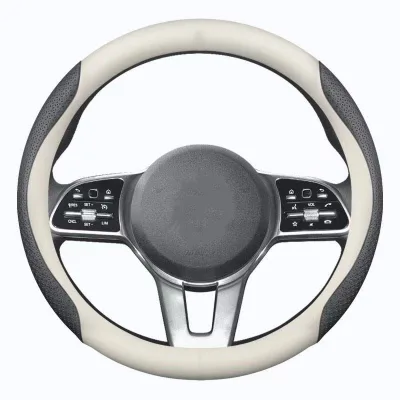
When sourcing car steering wheel covers, buyers must first navigate a complex landscape of material compositions and design specifications. The market offers a diverse array of options, ranging from synthetic polymers to natural and artificial leathers. Based on observed product data, the primary material categories include PVC, PU, and various blends of leather and artificial leather. Some listings explicitly cite "PVC and PU" as the major material, while others distinguish between "Artificial leather" and specific finishes like "Sheepskin [Sheared and Embossed]" or "Leather with fur trim."
The physical dimensions and fitment are critical parameters that cannot be overlooked. A standard steering wheel cover must match the diameter of the steering wheel to ensure proper installation and safety. Observed specifications indicate a common match diameter of 38cm, which serves as a baseline for many universal fit products. However, buyers should verify that the "Single package size" and the internal dimensions of the cover align with their specific vehicle models. The product data also highlights specific model numbers such as 105088FG, 105139VB, and 01234, which often correspond to unique design iterations or fitment profiles.
Design attributes further differentiate these products. The "number of spokes" is a specific technical detail, with some covers designed for 3-spoke steering wheels, which is a common configuration in modern vehicles. The "Installation type" varies, with "Sew-free" options gaining popularity for their ease of use, while others may require traditional sewing or specific attachment methods. The "Style" is another differentiator, with "Simplicity" being a noted aesthetic, alongside more elaborate designs featuring fur trims or embossed patterns. Buyers should note that while some products are marketed as "All-match" or suitable for "All four seasons," others are specifically tailored for "Spring & Autumn," indicating that material breathability and thermal properties vary significantly between SKUs.
Compliance, Certification, and Safety Standards
In the automotive aftermarket, compliance and safety standards are paramount, yet the data presents a nuanced picture regarding certifications. A critical observation from the product listings is the attribute "Is there a patent supply source: No." This suggests that many available steering wheel covers are generic designs without proprietary patent protection, which can simplify the sourcing process but may also indicate a crowded market with lower barriers to entry.
Regarding safety and quality standards, the term "Unverisal" appears in the product specifications, likely referring to a universal fit standard, though it is not a recognized international certification body. More reliable indicators include the "Export Standard" mentioned in several listings, which implies adherence to general international shipping and packaging requirements, though it does not guarantee specific automotive safety testing. Buyers must verify if the materials used, particularly PVC and PU, meet regional regulations regarding volatile organic compounds (VOCs) and flammability.
The "prod_standard" field often lists "Unverisal" or "Export Standard," but these are internal or descriptive terms rather than formal certifications like ISO or DOT. Consequently, buyers should not assume that a product labeled with these terms has undergone rigorous third-party safety testing. It is essential to request specific test reports from suppliers regarding the fire resistance of the surface material and the durability of the stitching or bonding agents. For vehicles in regions with strict automotive safety regulations, verifying that the cover does not interfere with airbag deployment is a non-negotiable requirement. Since the data does not provide explicit test results or certification numbers, the procurement strategy must include a mandatory request for material safety data sheets (MSDS) and specific airbag compatibility declarations from the supplier.
Cost Drivers and Pricing Dynamics
The pricing structure for car steering wheel covers is influenced by a combination of material costs, customization levels, and order volume. The observed listed price range in the market spans from $0.04 to $4.93 USD. This wide disparity indicates that the lowest price points likely correspond to basic, non-customized PVC or PU covers with minimal packaging, while the higher end of the spectrum reflects premium materials like sheepskin, fur trims, or complex embossing processes.
The "MOQ" (Minimum Order Quantity) is a significant cost driver. The observed MOQ range extends from 1 to 10,000 units. Products with an MOQ of 1000PC or 200PC are typical for standard inventory items, whereas suppliers accepting "Small Orders" or an MOQ of 1 may cater to sample buyers or very small retailers. However, accepting small orders often comes with a higher unit cost due to the lack of economies of scale. The "Supply Type" is listed as "Make-to-Order" for many items, which can impact pricing flexibility. Customization, such as OEM logos or specific color options like "Sheepskin Embossed Coffee," adds value but also increases the production complexity and cost.
Packaging also plays a role in the final landed cost. While some products come in simple "OPP Pack" bags, others utilize "Cartons" for bulk protection. The "Single gross weight" of 0.900 kg for a single item suggests that shipping costs can be substantial for heavy, fur-trimmed covers compared to lightweight synthetic options. Buyers should calculate the total cost of ownership, including freight, by considering the "Single package size" of 38X38X6 cm, which affects container loading efficiency. The "prod_packing" attribute of "40days" likely refers to a lead time or production cycle, which can indirectly influence pricing if rush fees are applied for expedited manufacturing.
Typical Applications and Fitment Considerations
Car steering wheel covers are designed for a variety of applications, ranging from daily commuting to specialized vehicle use. The "Applicable season" attribute reveals that some covers are intended for "All four seasons," suggesting materials that offer both warmth and breathability, while others are restricted to "Spring & Autumn," indicating lighter materials that may be too cold or too hot for extreme weather conditions. The "Applicable Gender" is listed as "Male" in some contexts, though this is likely a classification artifact rather than a functional limitation, as most covers are unisex.
Fitment is a critical application factor. The data specifies "Car Fitment" for brands such as AITO, AIFO (FIAT), ABG (Allg Baumasch Gesellsch), and Advance Mixer. This indicates that while many covers are universal, some are engineered for specific vehicle makes or even commercial machinery. The "Match the diameter of the steering wheel: 38cm" specification is a key metric for buyers to verify against their fleet or target vehicle models. A mismatch in diameter can lead to a loose fit, which is a safety hazard, or a tight fit that damages the steering wheel or the cover itself.
The "Installation type" of "General" or "Sew-free" suggests ease of application for end-users, which is a selling point for retail products. However, for fleet procurement, the durability of the installation method is crucial. Covers that rely on simple slip-on mechanisms may degrade faster than those with secure stitching or adhesive backing. The "Style" of "Simplicity" aligns with a broad market appeal, but buyers should ensure the design does not obscure critical steering wheel controls or indicators. The "Type: All-match" designation implies versatility, but buyers should still validate the aesthetic compatibility with the vehicle's interior design.
Supplier Evaluation and Operational Capabilities
Evaluating suppliers requires a focus on their operational flexibility and transparency. The "Origin" of the products is consistently listed as "China," with specific provinces like "Zhejiang" and "Guangdong" mentioned. These regions are known for their manufacturing clusters in the automotive accessories sector. The "Brand Name" varies, with "ANMA" and "YT" appearing in the data, indicating that many suppliers operate under their own private labels or as white-label manufacturers.
A key capability to assess is "Customization." The attribute "Customization: Available" and "Processing and customization: Yes" confirms that suppliers are willing to tailor products. This includes OEM logo acceptance, as noted by "OEM Logo: Accept," and color customization, where "Color: Optional" is listed. Buyers should verify the supplier's capacity to handle these customizations without compromising lead times. The "prod_packing" of "40days" suggests a standard production cycle, but this should be confirmed as a lead time rather than a packing duration.
The "Supply Type: Make-to-Order" indicates that the supplier operates on a pull-based system, which can reduce inventory risk for the buyer but requires precise forecasting. The acceptance of "Small Orders" is a positive indicator of supplier flexibility, allowing buyers to test the market with low-risk orders before committing to larger volumes. However, buyers should be cautious of suppliers who claim high customization capabilities but lack the infrastructure to maintain consistent quality across different batches. The "Is there a patent supply source: No" attribute suggests that suppliers are not relying on proprietary technology, which is common in this sector, but it also means that buyers should focus on the supplier's quality control processes rather than unique product features.
Quality Control and Long-Term Procurement Strategy
Maintaining quality in the steering wheel cover market requires a robust quality control (QC) strategy. Given the variation in materials from basic PVC to premium sheepskin, the QC process must be tailored to the specific material being sourced. For synthetic materials like PVC and PU, buyers should verify the tensile strength and resistance to abrasion. For leather and fur-trimmed options, the focus should be on the consistency of the embossing, the durability of the stitching, and the quality of the fur attachment.
The "prod_standard" of "Unverisal" and "Export Standard" should be treated as baseline expectations rather than guarantees of quality. Buyers must implement their own inspection protocols, including pre-shipment inspections to check for defects in color, texture, and fitment. The "Single gross weight" of 0.900 kg provides a benchmark for weight consistency, which can be used to detect under-filling or material shortages.
For long-term procurement, building a relationship with suppliers who offer "Make-to-Order" capabilities is advantageous. This allows for continuous improvement and adaptation to market trends. The "MOQ" flexibility, ranging from 1 to 10,000 units, enables buyers to scale their orders based on demand without being locked into excessive inventory. However, buyers should negotiate clear terms regarding lead times, as the "40days" production cycle could impact supply chain responsiveness.
To mitigate risks, buyers should diversify their supplier base across different regions within China, such as Zhejiang and Guangdong, to reduce the impact of regional disruptions. Regular audits of the supplier's production facilities and quality management systems are essential to ensure that the "OEM Logo" and customization requests are executed correctly. Finally, buyers should establish a feedback loop with end-users to monitor the performance of the covers in real-world conditions, ensuring that the "Applicable season" and "Installation type" claims hold true over time.
Comparative Analysis of Product Attributes
To facilitate decision-making, the following table summarizes key product attributes observed in the market, highlighting the variations buyers should consider during sourcing.
| Attribute Category | Observed Variations | Sourcing Implication |
|---|---|---|
| Material | PVC, PU, Leather, Artificial Leather, Sheepskin | Higher cost for natural/embossed materials; verify durability for synthetic options. |
| Fitment | Universal (38cm), Specific Car Fitment (AITO, FIAT) | Verify steering wheel diameter; check for specific vehicle compatibility. |
| Customization | OEM Logo, Color Options, Fur Trim | Confirm lead times for custom orders; check MOQ for custom SKUs. |
| Installation | Sew-free, General, Standard | Evaluate ease of use for end customers; check retention strength. |
| Seasonality | All Seasons, Spring & Autumn | Match material breathability to target climate; avoid mismatched seasonality. |
| Packaging | OPP Pack, Cartons | Assess protection level; calculate shipping volume based on package size. |
| MOQ | 1 to 10,000 Units | Balance inventory risk with unit cost; negotiate lower MOQ for samples. |
| Origin | China (Zhejiang, Guangdong) | Leverage regional manufacturing clusters; verify export compliance. |
This comparative analysis underscores the need for a nuanced approach to sourcing. By carefully evaluating these attributes against specific business requirements, buyers can select steering wheel covers that offer the optimal balance of cost, quality, and functionality. The absence of universal certifications necessitates a proactive approach to quality assurance, ensuring that every batch meets the expected standards for safety and durability.
FAQs
What materials are used for car steering wheel covers?
Car steering wheel covers are primarily made from PVC, PU, and artificial leather. Some premium options feature sheepskin with embossed patterns or fur trims. Buyers should verify the specific material composition to ensure durability and comfort for their intended use.
Which steering wheel diameter fits these covers?
Most observed products are designed to match a steering wheel diameter of 38cm. This specification ensures a proper fit for universal applications. Buyers must confirm the diameter matches their vehicle to prevent safety hazards or loose installation.
Can I customize the logo and color of the cover?
Yes, customization is available for logos and colors. Suppliers accept OEM logo requests and offer optional color selections like sheepskin embossed coffee. This allows buyers to tailor the product to their brand identity or specific aesthetic preferences.
How do I install a sew-free Car Steering Wheel Cover?
Sew-free installation methods allow for easy application without traditional stitching. These covers typically use a slip-on design for general installation types. Buyers should ensure the cover matches the steering wheel size to maintain a secure fit during driving.
What is the minimum order quantity for these covers?
The minimum order quantity ranges from 1 to 10,000 units depending on the supplier. Some vendors accept small orders starting at 1 unit, while standard inventory items often require 200 or 1000 pieces. This flexibility supports both sample testing and bulk procurement.
Are these covers suitable for all four seasons?
Some products are suitable for all four seasons, while others are designed specifically for spring and autumn. Seasonal suitability depends on the material breathability and thermal properties. Buyers should select covers based on their local climate and usage requirements.