Source Cooling System Hose Clamp Plier for Auto Repair, HVAC, and Plumbing
Find and compare 30 Cooling System Hose Clamp Plier options from verified Chinese manufacturers. Buyers can evaluate specifications like jaw length, material grade, and MOQ to select the right tool for automotive repair, HVAC maintenance, or industrial plumbing applications.
Key considerations
Products List
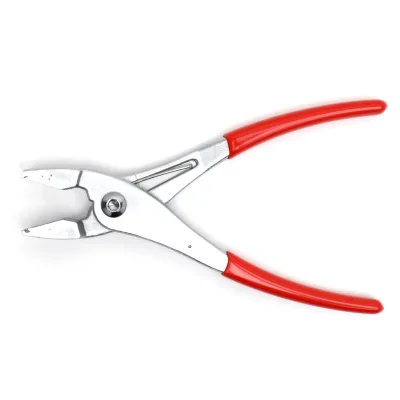
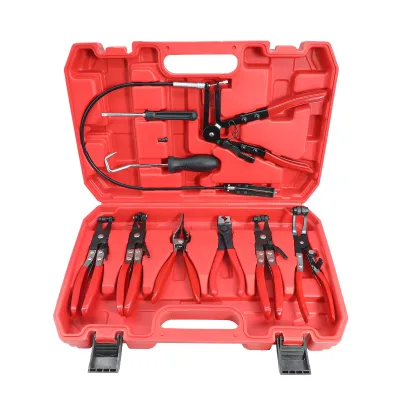
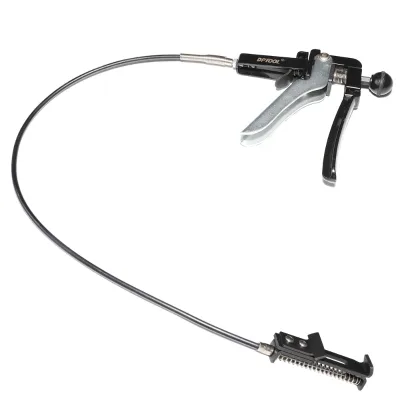


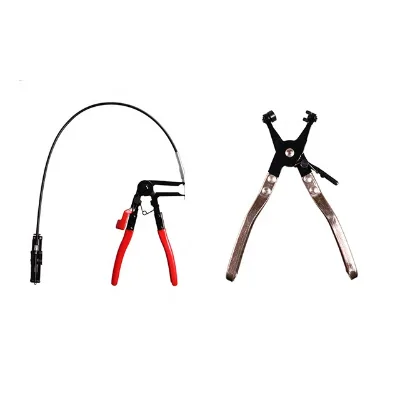



Comprehensive Sourcing Guide
Strategic Sourcing Guide for Cooling System Hose Clamp Pliers
Understanding Product Specifications and Technical Variability
When sourcing cooling system hose clamp pliers, buyers must first navigate the significant variance in technical specifications found across different product listings. The core function of these tools is to compress and expand hose clamps, yet the physical attributes required to perform this task vary based on the intended application and the specific clamp sizes being serviced. In the current market, specifications often reference specific model numbers such as FJ05-061 or A12309, which serve as identifiers for distinct tool configurations rather than universal standards.
A critical observation in the supply chain is the diversity in jaw dimensions and opening capacities. Some listings specify a jaw length of "standard size" or "STADARD SIZE," while others provide precise measurements like 670mm for the overall length of the tool. This discrepancy highlights the need for buyers to verify the maximum opening capacity against the specific hose clamp diameters they intend to service. The market data indicates a range of model numbers corresponding to different clamp sizes, specifically 1/4", 3/8", and 1/2", suggesting that a single tool may not be sufficient for all cooling system maintenance tasks.
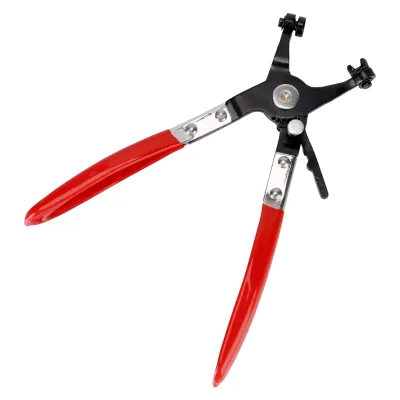
Material composition is another pivotal specification that dictates the tool's durability and suitability for industrial versus DIY applications. Suppliers frequently cite materials such as 50# Carbon Steel or a combination of carbon steel and PVC. The handle material often features a red PVC coating, which is designed to provide grip and insulation, though the specific grade of the steel (e.g., 50#steel) varies. Surface finishes also differ, with some units described as having a pearl nickel plated finish, while others may have a smooth jaw texture or a jaw surface that is not rated. These material and finish choices directly influence the tool's resistance to corrosion and its ability to withstand the high torque required for tight hose clamps.
Buyers should also pay close attention to the measurement system compatibility. Tools in the market are often designed to support both Metric and Imperial (Inch) systems, which is essential for automotive repair tools used in international markets. The physical dimensions of the single package, ranging from 39X32X11 cm to 60X29.5X23 cm, further indicate that packaging and logistics costs will vary significantly depending on the specific model selected. Understanding these technical nuances is the first step in ensuring that the procured tools match the operational requirements of the end-user.
Compliance, Certification, and Quality Verification Protocols
In the realm of industrial tool procurement, verifying compliance and quality standards is paramount, yet the supply data presents a mixed landscape regarding certifications. While background knowledge suggests that ISO 9001 is a common standard for manufacturing facilities, specific product listings do not explicitly confirm this certification status for every item. Therefore, buyers must treat any mention of certifications as a variable to be verified rather than a guaranteed attribute of the product.
The quality of the tool is often inferred through specific attributes listed in the product description. For instance, the "Surface Finish" is noted as "Pearl Nickel Plated" on some units, which implies a specific level of corrosion resistance and aesthetic finish. However, other listings describe the "Jaw Surface" as "Not Rated," which presents a potential risk for buyers requiring high-performance tools for heavy-duty industrial applications. The absence of a rating or a specific finish description necessitates a rigorous request for product testing data or third-party inspection reports before finalizing an order.
Warranty periods serve as another proxy for quality confidence. The observed market data shows a range of warranty offerings, with some suppliers providing a 9-month warranty and others offering a 1-year warranty. This variance suggests that manufacturers have different confidence levels in their product durability. A longer warranty period, such as the 1-year option, may indicate a more robust manufacturing process, but it should not be the sole determinant of quality. Buyers should cross-reference warranty terms with the material grade, such as the use of 50# Carbon Steel, to assess the overall value proposition.
Furthermore, the "Jaw Texture" and "Jaw Bend" specifications provide insight into the tool's mechanical integrity. Listings mentioning a "Smooth" jaw texture and "stadard" (standard) jaw bend suggest a focus on ease of use and standard operational mechanics. However, without standardized testing data, buyers cannot assume that all tools with these descriptions will perform identically under stress. It is advisable to request sample units for physical testing to verify that the jaw opening mechanism functions smoothly and that the material does not deform under the torque required for cooling system maintenance.
Cost Drivers and Pricing Structure Analysis
The pricing structure for cooling system hose clamp pliers is influenced by a complex interplay of material costs, manufacturing complexity, and order volume. The observed price range in the market spans from $0.34 to $999, a disparity that reflects the difference between basic hand tools and potentially specialized or bulk-packaged industrial sets. This wide range indicates that price alone is not a reliable indicator of quality without context regarding the specific model, material grade, and included accessories.
Material costs are a primary driver of pricing. Tools constructed from 50# Carbon Steel with PVC-coated handles generally command a higher price point than those with basic carbon steel and minimal coating. The inclusion of additional features, such as laser-coated logos or customizable card inserts, also adds to the unit cost. Buyers must evaluate whether these value-added features are necessary for their specific market or if a more basic configuration would suffice.
Order volume plays a critical role in determining the final unit price. The Minimum Order Quantity (MOQ) varies significantly, with observed ranges from 1 piece to 5000 pieces. Some suppliers set an MOQ of 1500 pieces, while others require 500 sets. This variation suggests that smaller buyers may face higher per-unit costs or may need to negotiate directly with suppliers who offer lower MOQs. The "Selling Units" attribute, often listed as "Single item," implies that some suppliers are willing to sell individual units, which can be beneficial for sampling but may result in higher logistics costs per unit.
Packaging and logistics also contribute to the overall cost. The single package size varies from 383110cm to 60X29.5X23 cm, and the gross weight can range from approximately 297.6g to 17.000 kg. These dimensions and weights directly impact shipping costs, which can be a significant portion of the total landed cost for international buyers. Buyers should calculate the total cost of ownership, including shipping and duties, rather than focusing solely on the listed unit price.
Typical Applications and Market Segmentation
Cooling system hose clamp pliers are versatile tools designed for a broad spectrum of applications, primarily centered around automotive repair and industrial maintenance. The "Car Fitment" is universally listed as "Universal," indicating that these tools are intended to work across a wide variety of vehicle makes and models. This universality makes them a staple in automotive repair shops, where mechanics need to service diverse cooling systems ranging from small passenger cars to larger commercial trucks.
The "Application" attribute is frequently described as "Multi-Functional" or "Automotive Repair Tools," highlighting their primary use case. However, the "Grade" attribute, which includes "DIY" and "Industrial," suggests that these tools are also marketed to do-it-yourself enthusiasts and heavy-duty industrial users. The distinction between these segments is crucial for buyers, as the durability requirements for industrial use are significantly higher than those for occasional DIY tasks. Tools designed for industrial use often feature higher-grade steel and more robust construction to withstand frequent, high-torque applications.
In addition to automotive repair, these pliers are essential for general plumbing and HVAC maintenance, where hose clamps are commonly used to secure flexible tubing. The "Function" is explicitly listed as "hose clamp pliers set," implying that some products are sold as part of a set, which may include multiple sizes or complementary tools. This bundling can be advantageous for buyers looking to equip a workshop with a comprehensive toolkit.
The "Type" of the tool is consistently identified as "Automotive tool" or "hose clamp pliers," reinforcing their specialized nature. Despite this specialization, the "Model Number" variations, such as FJ05-061 and A12309, suggest that manufacturers offer different configurations to meet specific market demands. Buyers should align their procurement strategy with the specific applications they serve, ensuring that the tools selected are capable of handling the required clamp sizes and torque levels.
Supplier Evaluation and Customization Capabilities
Evaluating suppliers for cooling system hose clamp pliers requires a careful assessment of their customization capabilities, production capacity, and logistical reliability. The market data indicates that many suppliers offer "OEM, ODM, OBM" support, allowing buyers to customize the product with their own branding, logos, and packaging. The "Logo" attribute confirms that printing is possible, with some suppliers offering laser-coated logos for enhanced durability and aesthetics. This level of customization is particularly valuable for buyers looking to establish a private label or brand identity in the market.
The "Place of Origin" is a key factor in supplier evaluation, with listings showing products originating from Zhejiang, China, and Anhui, China. These regions are known for their manufacturing hubs, but buyers should verify the specific factory capabilities and quality control measures of each supplier. The "Brand Name" varies, with some listings showing "Fengjie" and others "FITOP," indicating that many suppliers operate as private label manufacturers rather than established global brands. This suggests that buyers have the opportunity to work directly with manufacturers to create a unique product offering.
Sample availability is another critical aspect of supplier evaluation. The "Sample" attribute is listed as "Available" for many suppliers, allowing buyers to test the product quality before committing to a large order. This is particularly important given the variance in specifications and material grades observed in the market. Buyers should utilize the sample phase to verify the tool's performance, durability, and compliance with their specific requirements.
Logistical considerations, such as the "Packing" method, also play a role in supplier selection. Options range from "Slide card" to "Customizable card insert," which can impact the product's presentation and protection during transit. Buyers should ensure that the packaging is robust enough to prevent damage during shipping, especially for tools with delicate components like nickel-plated jaws. Additionally, the "Warranty" terms, ranging from 9 months to 1 year, should be clearly understood and incorporated into the procurement agreement to mitigate potential risks.
Long-Term Procurement Considerations and Quality Assurance
Establishing a long-term procurement strategy for cooling system hose clamp pliers requires a focus on consistency, quality assurance, and supply chain resilience. The observed variance in specifications, such as jaw length, material grade, and surface finish, underscores the importance of maintaining strict quality control protocols. Buyers should develop detailed technical specifications that define the minimum acceptable standards for material, dimensions, and performance to ensure that all supplied units meet their operational requirements.
Quality assurance should extend beyond the initial sample phase. Buyers should implement a system of regular inspections, potentially utilizing third-party inspection services to verify that production batches adhere to the agreed-upon specifications. This is particularly important given the "Not Rated" status of some jaw surfaces and the variability in material grades. Regular audits of the supplier's manufacturing process can help identify potential issues before they result in defective products reaching the market.
Supply chain resilience is another critical consideration. The "MOQ" ranges from 1 to 5000 pieces, and the "Lead Time" is not explicitly defined in the provided data. Buyers should negotiate clear lead time commitments and contingency plans to mitigate the risk of supply disruptions. Diversifying the supplier base can also help reduce dependency on a single source, ensuring a steady supply of tools even if one supplier faces production challenges.
Finally, buyers should consider the long-term relationship with their suppliers. Suppliers offering "OEM, ODM, OBM" support are often more flexible and willing to collaborate on product improvements. By fostering a collaborative relationship, buyers can work with suppliers to refine product designs, improve material quality, and optimize packaging, ultimately enhancing the value proposition of their product offerings. This strategic approach ensures that the procurement of cooling system hose clamp pliers remains a competitive advantage in the long run.
Comparative Analysis of Key Product Attributes
To facilitate informed decision-making, the following table summarizes the key attributes observed in the market for cooling system hose clamp pliers. This comparison highlights the variability in specifications and helps buyers identify the most suitable options for their needs.
| Attribute | Observed Variations | Implications for Buyers |
|---|---|---|
| Model Number | FJ05-061, A12309 | Indicates distinct configurations; verify against specific clamp sizes. |
| Material | 50# Carbon Steel, Carbon Steel + PVC | Higher grade steel (50#) suggests better durability for industrial use. |
| Jaw Length | 670mm, Standard Size | Must match the maximum opening capacity required for the application. |
| Surface Finish | Pearl Nickel Plated, Smooth, Not Rated | Nickel plating offers better corrosion resistance; "Not Rated" requires verification. |
| Warranty | 9 Months, 1 Year | Longer warranty may indicate higher manufacturer confidence in product quality. |
| MOQ | 1, 500 Sets, 1500 Pieces, 5000 | Lower MOQs suitable for sampling; higher MOQs required for bulk pricing. |
| Packaging | Slide card, Customizable card insert | Custom packaging adds value for branding; ensure robustness for shipping. |
| Origin | Zhejiang, China; Anhui, China | Regional manufacturing hubs; verify factory capabilities and quality controls. |
| Customization | Logo printing, OEM/ODM/OBM | Enables private labeling; confirm technical feasibility of custom requirements. |
This comparative analysis serves as a foundational reference for buyers navigating the complex landscape of Cooling System Hose Clamp Plier procurement. By carefully evaluating these attributes, buyers can make data-driven decisions that align with their specific operational needs and quality standards.
FAQs
What materials are used for cooling system hose clamp pliers?
These tools are typically constructed from 50# Carbon Steel or a combination of carbon steel and PVC. The handles often feature a red PVC coating for improved grip, while the jaw surface may have a pearl nickel plated finish for corrosion resistance.
Which model numbers are available for these hose clamp pliers?
Common model identifiers include FJ05-061 and A12309, which correspond to specific tool configurations. Some listings also reference clamp sizes such as 1/4, 3/8, and 1/2 inches to indicate the maximum opening capacity for different hose applications.
Can buyers request custom logos on the cooling system hose clamp pliers?
Yes, suppliers offer customization support including OEM, ODM, and OBM services with logo printing. Options range from standard printed logos to laser-coated finishes, allowing buyers to brand the tools according to their specific market requirements.
How does the MOQ vary for Cooling System Hose Clamp Plier orders?
Minimum Order Quantities vary significantly, with observed ranges from 1 piece up to 5000 pieces. Specific listings show MOQs of 1500 pieces or 500 sets, so buyers must verify the exact requirement with the manufacturer before placing an order.
What warranty periods are offered for these automotive repair tools?
Warranty coverage typically ranges from 9 months to 1 year depending on the manufacturer. This variance reflects different confidence levels in product durability, so buyers should review specific warranty terms alongside material grades like 50# steel.
Where are Cooling System Hose Clamp Plier factories located?
Manufacturing facilities are primarily located in Zhejiang and Anhui, China. These regions serve as key production hubs, but buyers should verify specific factory details and quality control measures for each supplier to ensure product reliability.