Source eco-friendly uncoated cast iron wok for stir-fry, searing, and braising
Compare 30 listings for eco-friendly uncoated cast iron wok options from Zhejiang suppliers. Buyers can review specifications like size, material, and stove compatibility to find suitable cookware for home or commercial kitchens.
Key considerations
Products List
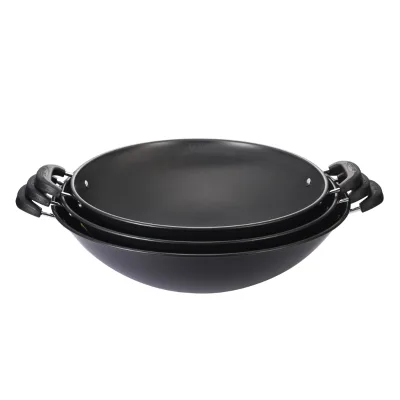
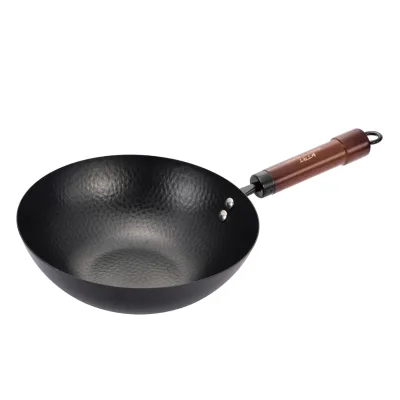
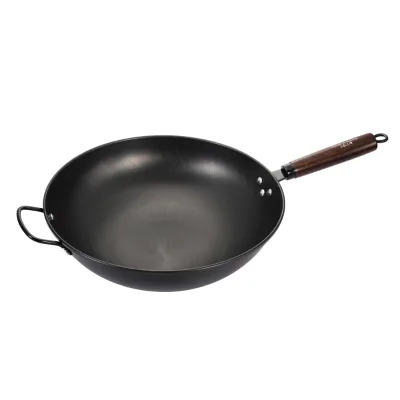


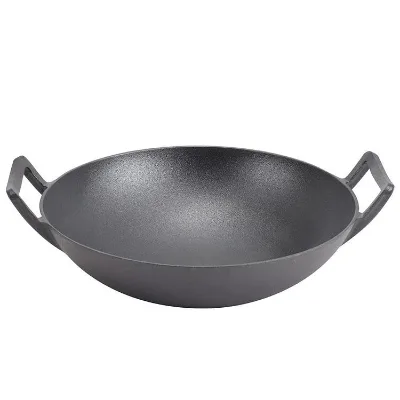
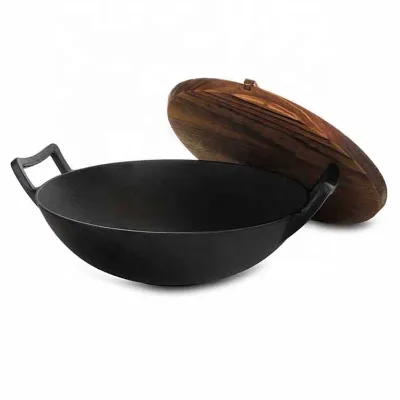
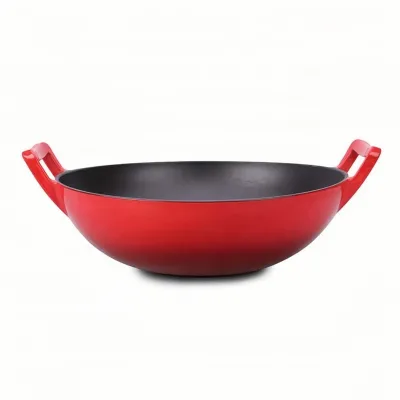


High Quality Preseasoned Cast Iron Wok/Preseasoned Cast Iron Wok/Cast Iron Wok
$20.00 - $21.00
MOQ: 100 Sets


Traditional Chinese Cast Iron Wok Cookware Pot with Vegetable Oil Cast Iron Wok
$20.00 - $21.00
MOQ: 100 Sets


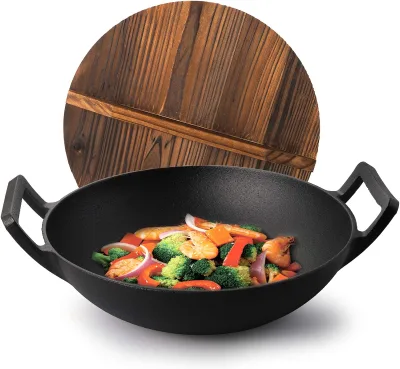
Comprehensive Sourcing Guide
Strategic Sourcing Guide for Eco-Friendly Uncoated Cast Iron Woks
The global B2B market for cookware has seen a distinct shift toward sustainable, chemical-free cooking solutions. Buyers seeking an eco-friendly uncoated cast iron wok are navigating a segment where material integrity, thermal performance, and environmental compliance intersect. This guide provides a disciplined framework for sourcing these specific products, grounded in observed market data and technical realities. The focus remains on uncoated cast iron variants, distinguishing them from non-stick or aluminum alloy alternatives that often appear in broader wok categories.
Technical Specifications and Material Integrity
When evaluating an uncoated cast iron wok, the primary technical differentiator is the material composition and the absence of synthetic coatings. The market data indicates a clear distinction between products labeled as "Non-Stick" with aluminum alloy bases and those specified as "Cast Iron" with no interior coating. For the specific keyword of an uncoated cast iron wok, buyers must prioritize items where the prod_prop.interior coating is explicitly listed as "No Coating" or "None."
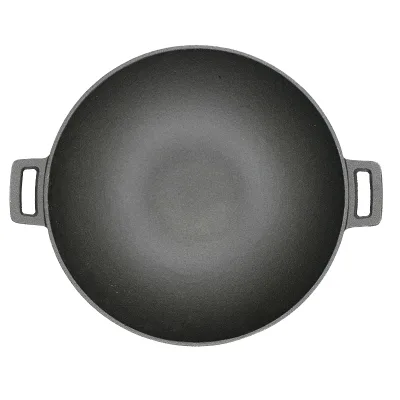
The material specification is critical. While some listings describe the material simply as "Iron," high-quality uncoated variants are often identified as "Cast Iron" or "Refined iron." The presence of a "Single bottom" construction is common in traditional cast iron woks, though some modern iterations may vary. The physical dimensions are equally important for operational fit. Observed product sizes in the market range significantly, with specific models noted at 26cm, 31.5cm, 32cm, 34cm, and 41cm. A 34cm or 32cm diameter is typical for commercial kitchen applications, while 26cm units may serve smaller, specialized, or individual serving contexts.
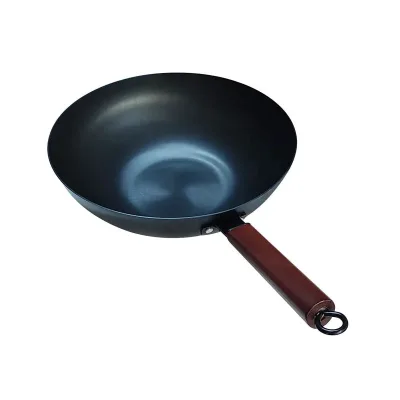
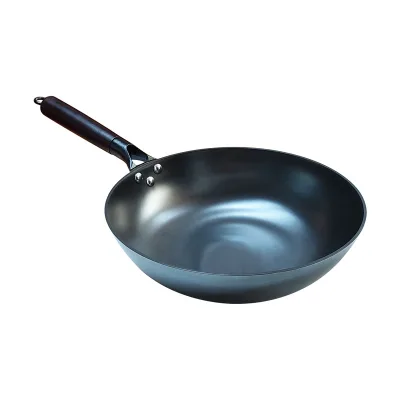
The handle material is another technical specification that impacts usability and safety. In the observed data, wood is a frequently cited material for the hand grip, providing thermal insulation that is essential for cast iron cookware, which retains heat intensely. Conversely, some listings may lack specific handle details or indicate a metal construction, which requires careful verification regarding heat resistance. The shape is consistently "Round," adhering to the traditional wok geometry that facilitates the tossing and stir-frying techniques essential to Asian cuisine.
Compliance and Certification Verification
For B2B procurement, particularly in Western markets, compliance with food safety standards is non-negotiable. The supply chain for cast iron cookware must demonstrate adherence to rigorous safety protocols. The available data highlights specific certifications such as FDA, LFGB, and CE/EU. These are not merely marketing terms but critical verification points for buyers importing into the United States, Europe, and other regulated regions.
- FDA (Food and Drug Administration): Essential for products entering the US market, ensuring the materials do not leach harmful substances into food.
- LFGB (German Food and Feed Code): A stringent standard often required for the European market, covering migration limits and testing of food contact materials.
- CE/EU: Indicates conformity with health, safety, and environmental protection standards for the European Economic Area.
Buyers must verify that the "Cast Iron" is explicitly labeled as "Food Grade." The absence of an interior coating means the raw iron surface is in direct contact with food; therefore, the purity of the iron and the manufacturing process must be free from heavy metals and toxic residues. While the data confirms the availability of these certifications for certain models, buyers should not assume all cast iron woks in a catalog possess them. Verification requires requesting current, valid certificates from the supplier for the specific model number, such as those associated with the 32cm or 34cm variants.
Cost Drivers and Pricing Dynamics
Understanding the cost structure of uncoated cast iron woks requires analyzing the interplay between material weight, manufacturing complexity, and packaging. The observed price range in the market spans from $3.42 to $21.00 USD. This wide variance is driven by several factors. The primary driver is the net weight and the density of the cast iron. A 34cm cast iron wok with a net weight of approximately 1.02kg to 3.000kg (depending on the specific model and packaging inclusion) will inherently cost more than a lighter, thinner alternative.
The "Single gross weight" of 3.000 kg for a 41cm model suggests significant material usage, which directly correlates to higher unit costs. Conversely, smaller models or those with lighter gauges will fall toward the lower end of the price spectrum. Another cost driver is the "Boxing" configuration. Products are often packed in cartons containing 12 or 15 pieces. Bulk purchasing power is influenced by the "MOQ" (Minimum Order Quantity), which ranges from 1 to 1200 units. Buyers can often negotiate better unit prices by ordering closer to the upper end of the MOQ range, though the initial capital outlay will be higher.
The "Customization" availability is also a cost factor. Options for OEM logos or specific packaging modifications can add to the base unit cost. Additionally, the "Place of origin" being Zhejiang, China, a major manufacturing hub, generally offers competitive labor and material costs, but logistics and shipping fees for heavy cast iron items can significantly impact the landed cost.
Typical Applications and Market Segmentation
The application of an eco-friendly uncoated cast iron wok extends beyond simple cooking; it serves specific culinary and operational needs. The "Applicable stove" data indicates compatibility with "Gas Cooker" and "All Purpose" stoves. This versatility makes these woks suitable for a wide range of commercial kitchens, from high-volume stir-fry stations to home-use retail. The "Round" shape and "Single bottom" design are optimized for high-heat searing and even heat distribution, which are critical for the Maillard reaction in stir-frying.
The "Without Pot Cover" attribute is notable. Many traditional cast iron woks are sold without lids, relying on the wok's shape and the cooking technique to manage steam and heat. However, buyers should confirm if the specific model requires a separate lid for certain applications. The "Capacity" of 6 suggests these units are designed for serving multiple portions, making them ideal for family-style dining or restaurant service.
The "Eco-Friendly" attribute is a key selling point for modern consumers. Unlike non-stick pans that rely on synthetic polymers (PTFE/PFOA) which degrade over time and require replacement, uncoated cast iron is durable, recyclable, and free from chemical leaching. This longevity appeals to environmentally conscious B2B buyers and end-users alike. The "No Coating" feature also means the product does not require the energy-intensive manufacturing processes associated with applying and curing non-stick layers.
Supplier Evaluation and Operational Metrics
Selecting a reliable supplier for cast iron woks requires a rigorous evaluation of their operational capabilities. The data provides several metrics that serve as proxies for supplier maturity. The "Model number" consistency, such as HCCG-ZZYK-32P or HCCG-GMSH-34Y, indicates a structured product line. Buyers should look for suppliers who can consistently reproduce these model numbers with stable quality.
The "Packing size" and "Single package size" are critical for logistics planning. For instance, a packing size of 58.836.036.0 cm for a 34cm wok versus 43.043.032.0 cm for a 41cm model highlights the variance in volumetric weight. Buyers must calculate shipping costs based on these dimensions, as cast iron is heavy and bulky. The "Boxing" density (12 or 15 pieces per box) affects palletization efficiency. A supplier that optimizes box dimensions to minimize void space will offer better freight rates.
The "Lead time" and "MOQ" are operational constraints. While the observed MOQ range is broad (1-1200), a supplier offering an MOQ of 1200 may have longer lead times due to production scheduling, whereas a supplier with a lower MOQ might offer faster turnaround for smaller orders. Buyers should verify the "Customization" lead time if OEM branding is required, as this often extends the production cycle.
Quality Control and Long-Term Procurement
Quality control for uncoated cast iron focuses on surface finish, structural integrity, and safety. Since there is no coating to hide imperfections, the surface must be smooth and free of cracks, slag inclusions, or porosity. Buyers should implement a quality assurance protocol that includes visual inspection for surface defects and weight verification to ensure the product matches the specified net weight (e.g., 1.02kg).
The "Handle" attachment is a common failure point. For wood-handled woks, the connection between the wood and the iron must be secure and resistant to loosening under thermal expansion. The "Wood" material must be treated to resist moisture and heat damage. For long-term procurement, buyers should consider the "After-sales" support regarding handle replacement or repair, although cast iron is generally a "buy once, use forever" item if maintained correctly.
Sustainability is a long-term consideration. The "Eco-Friendly" nature of cast iron means the product has a long lifecycle, reducing waste. However, buyers must ensure the supplier adheres to sustainable manufacturing practices. The presence of "FDA, LFGB, CE/EU" certifications provides a baseline for safety, but ongoing compliance monitoring is necessary. Buyers should request periodic re-certification or audit reports to ensure the supplier maintains these standards over time.
Comparative Analysis of Product Attributes
To assist in decision-making, the following table summarizes key observed attributes for different cast iron wok configurations found in the market data. This comparison highlights the variance in size, weight, and packaging that buyers must account for.
| Attribute | Model A (26cm) | Model B (32cm) | Model C (34cm) | Model D (41cm) |
|---|---|---|---|---|
| Material | Refined Iron | Cast Iron | Cast Iron | Iron |
| Coating | No Coating | No Coating | No Coating | Non-Stick |
| Net Weight | N/A | N/A | 1.02 kg | 3.000 kg (Gross) |
| Packing Size | 47.039.531.0 cm | 58.836.036.0 cm | 43.043.032.0 cm | 50X50X30 cm |
| Boxing | N/A | 15 pcs/box | 12 pcs/box | N/A |
| Certification | N/A | FDA, LFGB, CE/EU | N/A | N/A |
| Handle | N/A | Wood | N/A | N/A |
| Cover | Without Cover | Without Cover | Without Cover | Without Pot Cover |
Note: Data reflects specific observations from the provided product list. Not all models possess all listed attributes. Buyers must verify specific model details before ordering.
Conclusion
Sourcing an eco-friendly uncoated cast iron wok requires a balance of technical verification, compliance checking, and logistical planning. The market offers a diverse range of sizes and configurations, from 26cm to 41cm, with varying material grades and packaging standards. By focusing on the "No Coating" specification, verifying "Food Grade" status, and ensuring valid certifications like FDA and LFGB, buyers can secure high-quality products that meet both safety and sustainability goals. The wide price range and MOQ flexibility allow for strategic procurement, but success depends on rigorous supplier evaluation and clear communication of technical requirements. Ultimately, the durability and environmental benefits of uncoated cast iron make it a robust choice for B2B buyers committed to long-term value and responsible sourcing.
FAQs
What certifications are available for uncoated cast iron woks?
Some models carry FDA, LFGB, and CE/EU certifications for food safety compliance. Buyers must verify these certificates for specific model numbers like HCCG-ZZYK-32P before importing to regulated regions.
Which sizes are available for eco-friendly uncoated cast iron woks?
Observed product sizes range from 26cm to 41cm in diameter. Specific models include 26cm, 32cm, 34cm, and 41cm variants suitable for different kitchen capacities and cooking styles.
Can I customize the logo on these cast iron woks?
Yes, customization is available for OEM logo printing on the product. This service may affect the unit price and lead time depending on the specific order volume and design complexity.
What is the typical MOQ for ordering these woks?
The minimum order quantity ranges from 1 to 1200 units depending on the supplier. Lower MOQs allow for smaller trial orders while higher volumes often secure better pricing tiers.
How much does a 34cm cast iron wok weigh?
A 34cm model has a net weight of approximately 1.02kg. The gross weight including packaging varies, with some larger 41cm models reaching a single gross weight of 3.000kg.
What is the price range for these uncoated woks?
The observed price range spans from 3.42 to 21 USD per unit. Costs vary based on material density, size, packaging configuration, and whether the item includes specific certifications.
Where are these cast iron woks manufactured?
The products originate from Zhejiang, China, a major manufacturing hub for cookware. This location typically offers competitive labor costs but requires careful calculation of shipping fees for heavy items.