Source Embedded Type Water Filled Barrier for road, tunnel, and parking
Compare 30 Embedded Type Water Filled Barrier options from Chinese manufacturers. Buyers can evaluate specifications like dimensions, materials, and functions for road construction, tunnel safety, and parking separation needs.
Key considerations
Products List


Flexible Water Filled Barricade Anti-Impact Water Filled Plastic Traffic Barriers
$48.00 - $70.00
MOQ: 144 Pieces

Stable and Portable 2m Water Filled Barricade Water Filled Plastic Traffic Barriers
$56.00 - $65.00
MOQ: 140 Pieces


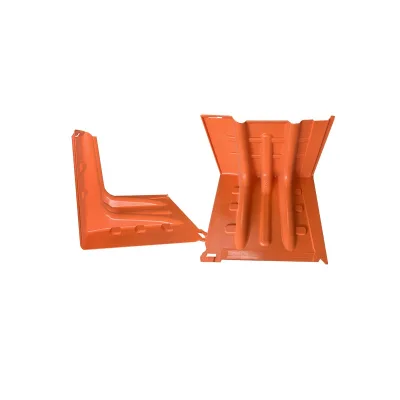


Water Activated Flood Barrier Inflatable Flood Barrier for Door Flood Barriers
$0.80 - $1.00
MOQ: 100 Pieces
Comprehensive Sourcing Guide
Strategic Sourcing Guide for Embedded Type Water Filled Barriers
Understanding Product Categories and Functional Definitions
When sourcing embedded type water-filled barriers, buyers must first distinguish between static separation units and dynamic obstruction systems. The available market data indicates a diverse range of products categorized by their primary function, which includes separation, obstruction, and warning. These barriers are engineered for specific environments such as car parks, road construction sites, railways, tunnels, and general roadways. The core distinction lies in the installation method; "embedded" implies a base designed to be secured into the ground or a permanent surface, often utilizing a polymer base for fixation rather than relying solely on the weight of water for stability.
The material composition is a critical initial filter. Observed listings reveal a mix of Polyurethane (PU) and Polypropylene (PP) plastics, with rotational molding being a prevalent manufacturing craft. This method ensures a seamless, watertight structure capable of withstanding the internal pressure of filled water. While some units are described simply as "plastic," the specific application dictates the grade. For instance, barriers intended for high-impact zones or long-term outdoor exposure often feature enhanced UV resistance and flexibility, described in some contexts as a "flexible barrier" to absorb impact without shattering. The functional scope extends beyond simple traffic control; some units are marketed with aesthetic qualities ("Beautiful") alongside their safety functions, suggesting a dual role in urban planning and traffic management.
Technical Specifications and Dimensional Variability
Technical due diligence requires a granular analysis of dimensions, as the "embedded" designation does not guarantee a single standard size. The observed product specifications display significant variance in length, width, and height, which directly impacts the volume of water required for activation and the resulting stability. For example, one observed model features a length of 1500mm with a base width of 600mm and a top width of 400mm, weighing approximately 18kg. In contrast, other configurations list a length of 2000mm with a top width of 145mm and a bottom width of 400mm, with a height of 800mm and a net weight ranging between 17kg and 19kg.
Buyers must verify the exact dimensional requirements for their specific site constraints. The base width is particularly critical for embedded types, as it determines the footprint required for the installation trench or anchor point. Some specifications list dimensions in centimeters (e.g., H52.8W70.5D68cm), while others use millimeters (e.g., Lenght: 1450mmBottom width: 380mmHeight: 780mm). This inconsistency in data presentation necessitates a direct request for a technical datasheet that clearly defines the internal volume and the external envelope. The weight of the empty unit is a separate metric from the total weight when filled; the 17-19kg range observed likely refers to the dry weight of the plastic shell. The total stability is achieved only after filling, which adds significant mass. Therefore, procurement specifications must account for the total loaded weight to ensure the foundation can support the barrier without shifting.
Compliance, Certification, and Standard Verification
Certification status is a primary indicator of quality and regulatory compliance, though the data presents a mix of specific standards and generic descriptors. The CE mark is explicitly listed as a standard for certain models, indicating conformity with health, safety, and environmental protection standards for products sold within the European Economic Area. However, other entries list dimensions or packing sizes under the "standard" field (e.g., "1457838" or "H52.8W70.5D68cm"), which suggests a potential data entry error or a non-standardized listing format. Buyers should not assume that a product listing a dimension as its standard possesses formal certification.
The EN1317 standard, referenced in background knowledge regarding road restraint systems, is a critical benchmark for crashworthiness. While the provided text does not explicitly confirm EN1317 compliance for every listed item, it is a standard that buyers should actively verify. Water-filled barriers are often used as temporary traffic control devices, and their ability to absorb impact energy is vital. If a supplier claims compliance with EN1317, they must provide third-party test reports. In the absence of such documentation, buyers should treat the product as a passive warning and separation tool rather than a high-speed crash barrier. The "Degree of Distortion" being listed as "Flexible Barrier" is a positive attribute, suggesting the material can deform under load, but this must be quantified through testing data to ensure it meets the safety requirements of the specific road or construction zone.
Cost Drivers and Pricing Structure Analysis
The pricing landscape for these barriers is highly variable, with observed ranges spanning from $0.80 to $5,500 USD. This wide disparity is not indicative of a single product line but rather reflects differences in size, material quality, customization, and order volume. The lower end of the spectrum likely corresponds to smaller, single-unit barriers or those with minimal customization, while the upper end may represent large-scale systems, custom-molded units, or bulk container loads.
The Minimum Order Quantity (MOQ) is another significant cost driver, with observed ranges from 1 to 1,150 units. A buyer seeking a single unit for a small project may face a higher per-unit cost compared to a large infrastructure contractor placing an order for 1,000 units. The "Customization" attribute is available across the market, which implies that bespoke dimensions, colors (Red/Yellow are common), or branding can be requested. However, customization typically incurs additional tooling costs and longer lead times. Buyers must clarify whether the quoted price includes the cost of the water filling mechanism, the base anchors, or the specific packaging required for transport. The packing specifications vary from individual cartons to bagged units and container loads, each affecting the final landed cost.
Supplier Evaluation and Origin Verification
Geographic origin plays a pivotal role in the supply chain dynamics for these products. The data indicates a concentration of suppliers in China, with specific mentions of Zhejiang, Sanmen, Beijing, and Suzhou. Zhejiang and Sanmen are known industrial hubs for plastic molding and traffic safety equipment. When evaluating suppliers, buyers should verify the specific factory location to assess logistics capabilities and potential tariffs. A supplier listing "China" as the origin without a specific province may be a trading company, whereas a specific city listing often points to a manufacturer.
The "Product Name" and "Function" fields provide insight into the supplier's specialization. Suppliers offering "Traffic Water Barriers" with functions like "Separation, Obstruction, Warning" are likely generalists, while those focusing on "Flood Barriers" or "Access Control Systems" may have niche expertise. It is crucial to distinguish between suppliers who manufacture the plastic shell and those who merely assemble or rebrand. The presence of advanced features like "TCP/IP" communication interfaces or "Electric" sensing methods in some listings suggests a convergence of physical barriers with smart infrastructure, which requires a supplier with technical engineering capabilities beyond simple plastic molding. Buyers should request proof of the manufacturing facility's capacity and ask for references from similar projects in their region.
Quality Control and Long-Term Procurement Considerations
Quality assurance for water-filled barriers extends beyond the initial purchase to the product's lifecycle. The observed "Life Span" of 3 years for certain models provides a baseline expectation, but this is heavily dependent on environmental conditions such as UV exposure, temperature fluctuations, and physical abrasion. The "Rotational Molding" craft is generally robust, but buyers must verify the wall thickness and the quality of the resin used to ensure the barrier does not become brittle over time. The "Post Fixation" method using a "Polymer Base" is a key quality indicator; a secure fixation system prevents the barrier from being displaced by high winds or vehicle impact, which is a common failure point in lower-quality units.
Packaging is another critical aspect of quality control. The data lists various packing methods, including "Carton," "Bag," and "Container." For long-distance shipping, the integrity of the packaging is essential to prevent damage to the barrier's surface or structural integrity. A "Container" shipment implies a high-volume order where palletization and securing are vital. Buyers should also consider the "Communication Interface" and "Sensing Method" if the barrier is part of an automated system. A "Semi-Automatic" control mode or "Single Movement" capability requires reliable electrical components that can withstand outdoor conditions. Long-term procurement strategies should include a review of the supplier's warranty terms, the availability of spare parts, and the ease of maintenance. The ability to customize the color and the specific dimensions allows for better integration into existing site layouts, reducing the need for retrofitting and ensuring a more durable installation.
Comparative Analysis of Product Attributes
To facilitate decision-making, the following table summarizes the key attributes observed in the market, highlighting the variability that buyers must navigate.
| Attribute | Observed Variability | Procurement Implication |
|---|---|---|
| Material | PU/PP, Plastic | Verify specific polymer grade for UV/impact resistance. |
| Dimensions | Length: 1500mm to 2000mm; Height: 800mm to 110cm | Must match site trench/anchor requirements precisely. |
| Weight | 17kg to 19kg (Empty) | Calculate total weight when filled for foundation design. |
| Standard | CE, or listed as dimensions | Verify actual certification documents; do not assume compliance. |
| Origin | China (Zhejiang, Sanmen, Beijing, Suzhou) | Assess logistics costs and supplier manufacturing capacity. |
| Function | Separation, Obstruction, Warning, Flood Control | Select based on specific site risk profile (traffic vs. water). |
| Fixation | Polymer Base, Embedded | Ensure base design matches the ground surface type. |
| Customization | Available | Confirm lead time and tooling costs for bespoke orders. |
This comparative view underscores the necessity of a detailed Request for Quotation (RFQ) that specifies exact requirements. Relying on general market observations can lead to mismatches in performance or safety. Buyers must treat the observed data as a reference for the range of possibilities rather than a guarantee of specific product attributes for any single supplier. By rigorously applying these verification steps, procurement teams can secure embedded type water-filled barriers that meet both safety standards and operational needs.
FAQs
What materials are used for embedded type water filled barriers?
These barriers are constructed from PU, PP, or general plastic materials. Rotational molding is the common craft used to ensure a seamless, watertight structure capable of withstanding internal water pressure and impact.
Can I customize the dimensions of the water filled barrier?
Customization is available for specific project needs. Buyers can request bespoke dimensions, colors like red or yellow, and branding, though this may incur additional tooling costs and affect lead times.
Which certification standards apply to these traffic barriers?
Some models carry the CE standard for European compliance. Other listings may display dimensions under standard fields, so buyers must verify actual certification documents rather than assuming compliance based on listing text.
How are these barriers fixed to the ground?
Many units utilize a polymer base for post fixation to secure them into the ground. This embedded design prevents displacement by wind or impact, offering stability beyond the weight of the water alone.
What is the typical weight of an empty barrier unit?
Empty units typically weigh between 17kg and 19kg depending on the model. This dry weight is separate from the total mass achieved after filling, which is critical for foundation design and stability.
Where are these barriers manufactured?
Manufacturing is concentrated in China, specifically in regions like Zhejiang, Sanmen, Beijing, and Suzhou. Specific city listings often indicate the factory location, which helps assess logistics capabilities and potential tariffs.
What functions do these barriers serve in traffic control?
They provide separation, obstruction, and warning functions for roads, railways, and tunnels. Some models also offer flood control capabilities or aesthetic qualities suitable for urban planning alongside safety requirements.