Source Explosion-Proof Wire Pulley for Mining, Lifting, and Construction
Explore 30 verified listings for the explosion-proof wire pulley designed for demanding environments. Buyers can compare specifications like material, bearing type, and surface treatment across manufacturers from China to find the right component for lifting or industrial machinery applications.
Key considerations
Products List




Comprehensive Sourcing Guide
Strategic Sourcing Guide for Explosion-Proof Wire Pulley Systems
Understanding Technical Specifications and Material Composition
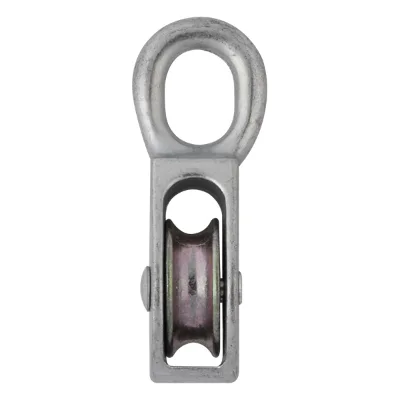
When sourcing explosion-proof wire pulleys, the primary objective is to identify components that can operate safely in hazardous environments where flammable gases, dusts, or fibers may be present. The technical foundation of these systems relies heavily on material selection and mechanical design. Based on available market data, the core construction materials for such pulleys often include cast iron and carbon steel, which provide the necessary structural integrity for heavy-duty lifting and tensioning applications. The material choice is critical; while cast iron offers excellent damping properties, carbon steel is frequently utilized for its high tensile strength and resistance to deformation under load.
The physical specifications of the pulley must align with the specific operational requirements of the facility. The product model numbers observed in the market range significantly, from generic identifiers like "pulley-#9990" to specific series such as "KZ006" or "LCT." Buyers must verify that the chosen model corresponds to the required load capacity and diameter. The standard sizes available often follow a progression, such as the B400/600/800/1000/1200/1400/1600/1800/2000 series, indicating a wide range of diameters to accommodate different wire rope thicknesses. Furthermore, the bearing system is a vital component; double-sealed bearings are commonly specified to prevent the ingress of dust and moisture, which is essential for maintaining performance in harsh industrial settings. The surface treatment, often involving baking paint or powder metallurgy processes, serves as the first line of defense against corrosion, ensuring the pulley retains its mechanical properties over time.
Compliance, Certification, and Safety Standards
In the realm of explosion-proof equipment, compliance is not merely a recommendation but a legal and safety imperative. Buyers must rigorously verify that any supplier can provide documentation confirming adherence to recognized international standards. The market data indicates that certifications such as ISO 9001 are frequently cited, serving as a baseline for quality management systems. Additionally, specific regional standards like CE are often mentioned, suggesting compliance with European safety directives. However, for explosion-proof applications, the absence of explicit UL or ATEX certification data in the general product listings requires immediate verification by the buyer.
The standards applicable to these components can vary widely depending on the geographic origin and the target market. The observed product specifications reference a broad spectrum of standards including BS, ANSI, JIS, GB, GOST, ASTM, and DIN. This diversity highlights the need for buyers to explicitly request the specific standard under which the explosion-proof rating was granted. For instance, while a pulley might meet the mechanical requirements of a DIN standard, it may not inherently possess the explosion-proof certification required for Zone 1 or Zone 2 environments without specific testing. The "UL 60079-11" and "UL 913" standards, though noted in background contexts, represent specific explosion-proof and intrinsically safe criteria that must be confirmed on a per-product basis. Buyers should never assume that a standard mechanical pulley meets explosion-proof requirements simply because it is made of steel; the housing design, thermal limits, and spark resistance must be independently validated.
Cost Drivers and Pricing Variables
The pricing structure for explosion-proof wire pulleys is influenced by a complex array of factors, ranging from raw material costs to the intricacies of the certification process. The observed price range in the market spans from $0.01 to $50,000, a variance that reflects the difference between simple, non-certified components and fully engineered, certified systems. The lower end of this spectrum typically represents standard industrial pulleys or small accessories, while the upper end likely encompasses large-scale, custom-engineered lifting systems with full explosion-proof certifications.
Several specific cost drivers must be considered during the procurement process. First, the material grade significantly impacts the base cost; high-grade carbon steel or specialized cast iron alloys command higher prices than standard materials. Second, the surface treatment process, such as baking paint or powder metallurgy, adds to the manufacturing cost but is essential for durability and safety. Third, the level of customization required plays a major role. Products with "Customized" attributes, such as specific model numbers or non-standard sizes, often incur higher unit costs and potentially higher Minimum Order Quantities (MOQ). The observed MOQ range of 1 to 1000 units suggests that while some suppliers accept small trial orders, larger production runs may be necessary to achieve cost efficiency. Additionally, the complexity of the bearing system and the inclusion of features like rust anti-corrosion treatments will further influence the final price. Buyers should be prepared for a significant price premium for products that include verified explosion-proof testing and certification, as these processes involve rigorous third-party validation.
Typical Applications and Operational Environments
Explosion-proof wire pulleys are designed for environments where the risk of ignition is a critical concern. The primary application identified in the market data is "Lifting," which encompasses a wide range of industrial activities including crane operations, hoisting systems, and material handling in hazardous zones. These pulleys are classified as "simple machines" but are integral to complex lifting systems used in chemical processing, oil and gas extraction, mining, and grain handling facilities. In these environments, the presence of flammable gases, vapors, or combustible dusts necessitates equipment that cannot generate sparks or excessive heat during operation.
The classification of these products as "Other" in terms of applicable industries suggests their versatility across various sectors, but their core function remains consistent: safe mechanical advantage in dangerous conditions. The "Magnetic Separator" and "Powder Metallurgy Parts" attributes found in the data point to specialized applications where metal separation or high-precision component manufacturing is required within explosive atmospheres. The "ROUND BELT" product type indicates compatibility with specific drive systems, further expanding their utility in conveyor and transmission applications. Buyers must ensure that the selected pulley is not only mechanically suitable for the load but also rated for the specific atmospheric conditions of their facility. The "Turning" installation method suggests that these components are designed for rotational movement, requiring precise alignment to prevent friction-induced heating.
Supplier Evaluation and Geographic Considerations
Evaluating suppliers for explosion-proof components requires a deep dive into their manufacturing capabilities and geographic origins. The market data indicates that suppliers are located in various regions, including China (specifically Hunan, Jiangsu, and Taiwan), which are known hubs for industrial manufacturing. The "Small Orders: Accepted" attribute suggests that many suppliers are flexible regarding order size, which can be beneficial for initial procurement or testing phases. However, the "Customization: Available" and "Packing: Can Be Customized" attributes indicate that many suppliers operate on a made-to-order basis, which requires careful coordination of timelines and specifications.
When selecting a supplier, buyers should prioritize those who demonstrate transparency regarding their origin and production processes. The "Place of Origin" being listed as "Taiwan, China" or "Jiangsu" provides a starting point for due diligence, but the specific factory's capability to produce explosion-proof rated goods must be verified. Suppliers offering "Free" samples can be valuable for initial quality assessment, allowing buyers to inspect the surface treatment, bearing quality, and overall build before committing to a larger order. The "Warranty: 1 Year" attribute is a standard indicator of supplier confidence, but for explosion-proof equipment, the warranty terms should explicitly cover the integrity of the safety features, not just the mechanical function. Buyers should also verify the "Payment Term" options, such as T/T, L/C, Paypal, and West Union, to ensure they align with their company's financial policies and risk management strategies.
Quality Control and Long-Term Procurement Considerations
Maintaining the safety and reliability of explosion-proof wire pulleys over the long term requires a robust quality control (QC) framework. The observed "QC: All Inspection" and "Testing: Salt Spray Test" attributes highlight the importance of rigorous testing protocols. Salt spray testing is particularly relevant for verifying the effectiveness of the "Rust Anti" features and the durability of the "Baking Paint" or "Powder Metallurgy" surface treatments. These tests ensure that the protective coatings can withstand corrosive environments, which is crucial for maintaining the explosion-proof integrity of the housing.
For long-term procurement, buyers must consider the availability of spare parts and the consistency of the manufacturing process. The "Delivery Time" of 3-15 days suggests a relatively quick turnaround for standard items, but customized orders may require longer lead times. The "Delivery: Can Be Customized" attribute implies that lead times are flexible but dependent on the specific order requirements. Buyers should establish a clear protocol for ongoing quality assurance, including regular inspections of incoming stock and periodic re-testing of critical safety features. The "Condition: New" status is a baseline requirement, but for critical safety components, buyers should also verify the traceability of materials and the certification history of each batch. Ultimately, the goal is to build a supply chain that ensures continuous compliance with safety standards, minimizing the risk of equipment failure in hazardous environments.
Comparative Analysis of Product Attributes
To facilitate a clearer understanding of the available options, the following table summarizes key attributes observed in the market for wire pulley systems. This comparison aids in distinguishing between standard industrial components and those potentially suitable for specialized applications.
| Attribute Category | Observed Values | Relevance to Explosion-Proof Sourcing |
|---|---|---|
| Material | Cast Iron, Carbon Steel, Steel | Critical for structural integrity and spark resistance. |
| Surface Treatment | Baking Paint, Powder Metallurgy | Essential for corrosion protection and preventing ignition sources. |
| Bearings | Double Sealed Bearing | Prevents dust ingress, maintaining safety in hazardous zones. |
| Certifications | ISO 9001, CE, ISO 9001:Condition:New | Baseline quality; specific explosion-proof certs must be verified. |
| Standards | BS, ANSI, JIS, GB, GOST, ASTM, DIN | Must match local regulatory requirements for hazardous areas. |
| Customization | Available, As Required | Allows tailoring to specific hazardous environment constraints. |
| Origin | China (Hunan, Jiangsu, Taiwan) | Indicates manufacturing hubs; requires specific factory audit. |
| Warranty | 1 Year | Standard coverage; verify scope includes safety features. |
| Testing | Salt Spray Test, All Inspection | Confirms durability and resistance to environmental factors. |
This structured approach ensures that buyers can systematically evaluate potential suppliers and products, focusing on the critical factors that define safety and reliability in explosion-proof applications. By adhering to these guidelines, procurement teams can mitigate risks and secure high-quality components that meet the stringent demands of hazardous industrial environments.
FAQs
Can I order small quantities of explosion-proof wire pulleys?
Yes, small orders are accepted for these pulleys. This allows buyers to test quality before committing to large production runs. Suppliers often accommodate trial orders with flexible minimums to support initial procurement needs.
What certifications are available for these pulley systems?
Available certifications include ISO 9001 and CE compliance. These standards indicate adherence to quality management and safety directives. Buyers should verify specific explosion-proof ratings separately as general certifications do not guarantee hazardous environment safety.
Which materials are used to construct these pulleys?
Pulleys are commonly constructed from cast iron or carbon steel. These materials provide the necessary structural integrity for heavy-duty lifting. Surface treatments like baking paint or powder metallurgy are applied to prevent rust and corrosion.
How long is the delivery time for custom pulleys?
Standard delivery times range from 3 to 15 days. Customized orders may require adjusted lead times depending on specific requirements. Buyers should confirm exact timelines with the supplier before placing an order for non-standard specifications.
What payment terms do suppliers typically accept?
Suppliers accept various payment methods including T/T, L/C, Paypal, and West Union. These options provide flexibility for international transactions. Buyers should select the term that best aligns with their company's financial policies and risk management strategies.
Can the pulley size be customized for specific needs?
Yes, the size can be customized to meet specific operational requirements. Models range from standard series to unique identifiers like KZ006. Customization allows for precise fitment with different wire rope thicknesses and load capacities.
What testing procedures are performed on these products?
Products undergo salt spray testing and all-inspection quality control. These tests verify the effectiveness of rust anti-corrosion features and overall build quality. Buyers can request sample units to inspect the surface treatment and bearing integrity.