Source Explosive Area Ionizing Air Bar for SMT and Chemical Plants
Find and compare 30 models of Explosive Area Ionizing Air Bar solutions designed for hazardous environments. Evaluate specifications such as 7.0kV and 5.6kV operating voltages, decay times, and customization options to ensure safe static control in combustible zones.
Key considerations
Products List


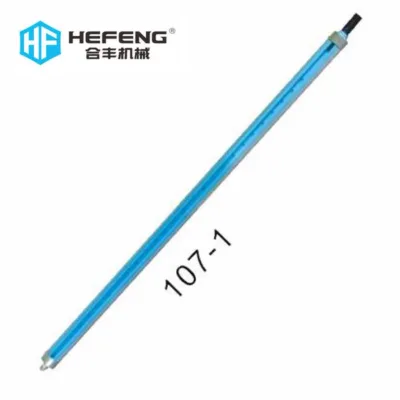
Antistatic Ionizing Air Bar for Static Elimination Electrostatic Ionizing air bar
$202.73 - $506.82
MOQ: 1 Minimum
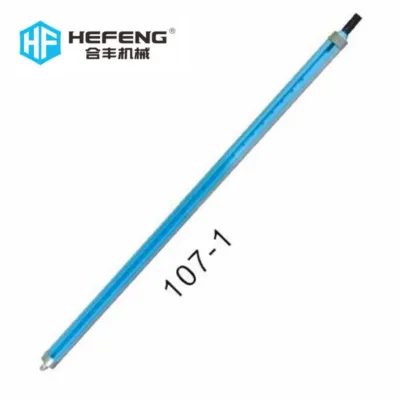
SRB/Static Free Room Ionizer/Antistatic Space Ionizing Bar/Non-air Electrostatic
$203.84 - $509.60
MOQ: 1 Minimum

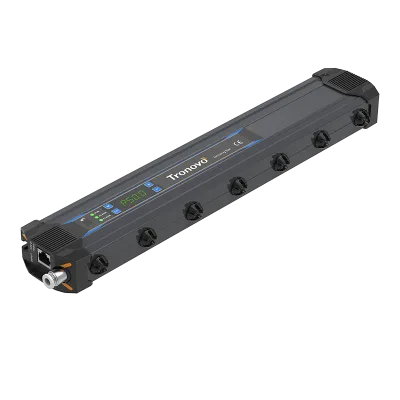


Ap-Ab1216-1 Electrostatic Deionizing Ion Antistatic Static Charging Bar
$200.00 - $298.00
MOQ: 1 Pieces


Industrial Applications Air Compressor 300 Bar for Industrial Applications
$1650.00 - $1800.00
MOQ: 1 Pieces


Heavy Duty 600L 1000L Buffer Air Tank 8bar 10bar for Compressor Storage
$360.00 - $580.00
MOQ: 1 Pieces

1000L Air Tank, 8 Bar, 10 Bar, Suitable for Storing Air From a Compressor.
$230.00 - $950.00
MOQ: 1 Pieces

Comprehensive Sourcing Guide
Explosive Area Ionizing Air Bar Sourcing Guide
Static electricity control is a critical operational requirement in environments where flammable gases, vapors, mists, or combustible dusts are present. In these hazardous zones, even a small electrostatic discharge can ignite an atmosphere, leading to catastrophic safety incidents. An ionizing air bar serves as the primary engineering control to neutralize static charges on non-conductive materials as they move through production lines. By emitting balanced positive and negative ions, the device eliminates static buildup without physical contact, ensuring that the process remains safe and efficient. Procuring the correct equipment requires a rigorous understanding of both the technical performance of the ionization system and the specific safety certifications mandated for explosive atmospheres.
The market for these devices is diverse, with manufacturers offering solutions tailored to various industrial scales and environmental conditions. Buyers must distinguish between general-purpose ionizers used in cleanrooms or electronic assembly and those specifically engineered for hazardous locations. The latter category demands robust construction, intrinsic safety features, and compliance with international standards for explosive environments. This guide provides a structured approach to sourcing explosive area ionizing air bars, focusing on technical verification, compliance documentation, and commercial due diligence. By adhering to these procurement principles, buyers can mitigate risk and ensure that their static control infrastructure meets the highest safety and performance benchmarks.
Product Scope and Observed Listing Signals
The product landscape for ionizing air bars includes a variety of form factors, from compact bars to large-scale air knives, each serving different airflow and coverage needs. Observed listings indicate a wide range of models, such as the SL-042, SL-006, and KE-84X, suggesting that suppliers offer customizable solutions to fit specific machine geometries. These devices are often constructed from metal materials to ensure durability and effective grounding, which is essential for maintaining ion balance in harsh industrial environments. The presence of customization options allows buyers to specify dimensions, mounting configurations, and airflow patterns to match their existing production line infrastructure precisely.
Listing signals also reveal variations in operating parameters, with observed input voltages including DC24V and AC220V, as well as output voltages reaching up to 7.0kV. These electrical specifications are critical for integration with existing plant power systems and must be verified against the specific requirements of the installation site. Additionally, some listings highlight features such as corona discharge generation methods and decay times of less than two seconds at specific distances, which are key performance indicators for static neutralization speed. Buyers should carefully review these technical signals to ensure that the selected ionizer can achieve the necessary ion balance and response time for their particular application, whether it involves high-speed web processing or delicate component handling.
Technical Specifications to Verify
When evaluating ionizing air bars for explosive areas, the primary technical focus must be on the balance of positive and negative ions and the speed at which static charges are neutralized. The offset voltage, observed in some listings as plus or minus 50V, is a critical metric that indicates the balance of the ion field; a lower offset voltage generally signifies better balance and more effective static removal. Buyers should verify the decay time, which measures how long it takes for a static charge to dissipate, ensuring it meets the operational speed of the production line. Additionally, the effective distance of ionization, noted in some contexts as 10-80mm, determines the optimal placement of the bar relative to the material being treated, influencing both efficiency and safety.
Electrical safety and power consumption are equally important technical considerations for hazardous environments. The input voltage and frequency, such as 50/60Hz or DC24V, must be compatible with the facility’s power supply, and the power rating, observed in the range of 25-100W, impacts energy costs and heat generation. In explosive areas, the design must prevent any internal arcing or overheating that could serve as an ignition source. Buyers should request detailed electrical schematics and thermal management data to ensure that the device operates within safe temperature limits under continuous use. Furthermore, the mechanical dimensions and weight, such as the 20kg weight observed in some heavy-duty units, affect mounting requirements and structural support needs on the production line.
Compliance and Safety Documentation
Compliance with international standards for explosive atmospheres is non-negotiable when sourcing ionizing air bars for hazardous locations. Buyers must verify that the equipment carries appropriate certifications, such as the MTI110106001CE observed in some listings, which indicates conformity with specific safety directives. In many regions, this involves adherence to ATEX or IECEx standards, which classify equipment based on the type of explosive atmosphere it is designed to withstand. The certification should explicitly state the equipment category and gas group, ensuring that the ionizer is suitable for the specific hazardous zone classification of the installation site. Without proper certification, the use of the equipment in an explosive area may violate local safety regulations and void insurance coverage.
In addition to product certification, buyers should request comprehensive safety documentation, including machinery test reports and detailed installation manuals. These documents provide evidence that the device has undergone rigorous testing for intrinsic safety, flameproof integrity, and electrical insulation. The presence of a machinery test report, as noted in some listings, offers assurance that the manufacturer has validated the performance and safety of the unit. Buyers should also verify that the documentation includes clear instructions for grounding, maintenance, and troubleshooting, which are essential for maintaining the safety integrity of the system over time. Ensuring that all safety documentation is complete and up-to-date is a critical step in the procurement process to avoid regulatory penalties and operational hazards.
Cost Drivers and Commercial Terms
The cost of an ionizing air bar is influenced by several factors, including the complexity of the design, the materials used, and the level of customization required. Metal construction and specialized coatings for corrosion resistance can increase the base price, while custom dimensions or integrated sensors may add to the manufacturing cost. Observed price ranges in the market vary significantly, from low-cost standard units to high-end specialized systems, reflecting the diversity in quality and feature sets. Buyers should consider the total cost of ownership, which includes installation, maintenance, and energy consumption, rather than focusing solely on the initial purchase price. Investing in a higher-quality unit with better ion balance and durability can reduce long-term operational costs and downtime.
Commercial terms such as minimum order quantity (MOQ), packaging details, and warranty coverage also play a significant role in the procurement decision. MOQs can range from single units to larger batches, depending on the supplier’s production model and the level of customization. Packaging, such as wooden cases or standard cartons, affects shipping costs and protection during transit, which is particularly important for delicate electronic components. Warranty periods, observed to be one or two years, provide a safety net against manufacturing defects and indicate the manufacturer’s confidence in their product. Buyers should negotiate clear terms for after-sales service, including the availability of engineers for overseas support, to ensure that any technical issues can be resolved promptly without disrupting production.
Supplier Qualification and Quality Control
Selecting a qualified supplier is essential for ensuring the reliability and safety of explosive area ionizing air bars. Buyers should prioritize manufacturers with a proven track record in producing static control equipment for hazardous environments, as evidenced by their certifications and past projects. The place of origin, such as Jiangsu or Guangdong in China, may indicate specific industrial clusters with expertise in electronic and mechanical manufacturing, but buyers should verify the supplier’s quality management systems and production capabilities. Requesting references from similar industries, such as chemical processing or pharmaceutical manufacturing, can provide insight into the supplier’s ability to meet stringent safety and performance requirements.
Quality control processes should be transparent and rigorous, with suppliers providing detailed information about their testing procedures and component sourcing. The use of core components like PLCs, as noted in some listings, suggests a level of automation and precision in manufacturing, but buyers should verify the quality and origin of these components. Suppliers should offer machinery test reports and other validation data to demonstrate that each unit meets the specified performance criteria. Additionally, buyers should inquire about the supplier’s supply ability, such as 1000 sets per month, to ensure that they can meet delivery schedules without compromising quality. Establishing a strong relationship with a qualified supplier can facilitate ongoing support, technical updates, and potential future collaborations.
Long-Term Procurement Checks
Long-term procurement success depends on establishing a framework for continuous monitoring and evaluation of the ionizing air bars in service. Buyers should implement regular maintenance schedules to clean the ion emission points and check the electrical connections, ensuring that the device continues to perform optimally. Over time, dust and debris can accumulate on the bars, reducing ionization efficiency and potentially creating safety hazards. Suppliers should provide clear maintenance guidelines and offer spare parts, such as nozzles or power supplies, to facilitate easy repairs and minimize downtime. Regular performance audits, including measurements of ion balance and decay time, can help identify degradation early and prevent unexpected failures.
Furthermore, buyers should stay informed about updates to safety standards and technological advancements in static control. As regulations evolve, existing equipment may need to be upgraded or replaced to remain compliant. Maintaining open communication with the supplier can provide early warnings about regulatory changes or new product offerings that may improve safety and efficiency. Additionally, tracking the performance data of the installed units can help in making informed decisions about future procurement, such as scaling up operations or upgrading to more advanced models. By adopting a proactive approach to long-term management, buyers can ensure that their explosive area ionizing air bars continue to provide reliable and safe static control throughout their operational lifespan.
FAQs
Can this ionizer be used in combustible and explosive areas?
Yes, the product is explicitly designed for use in combustible and explosive areas. It features a corona discharge method to neutralize static electricity safely in hazardous environments like SMT production lines and printing workshops.
What is the operating voltage for the ionizing air blower?
The device operates at high voltages such as 7.0kv or 5.6kv depending on the specific model. Some variants also support an input voltage of DC24V plus or minus 5% for control circuits.
Which certifications does the Explosive Area Ionizing Air Bar hold?
The product holds the MTI110106001CE certification, ensuring compliance with safety standards for hazardous locations. This certification validates its suitability for use in areas with explosive atmospheres.
How long is the warranty period for this equipment?
The warranty period is typically one year or two years depending on the specific model purchased. Buyers should verify the exact term with the supplier before finalizing the order.
What is the effective distance for static elimination?
The effective distance for static elimination ranges from 10 to 80mm. The decay time is less than 2 seconds at a distance of 150mm, ensuring rapid neutralization of static charges.
Can the product be customized for specific production lines?
Yes, customization is available to meet specific production line requirements. Buyers can request tailored solutions for SMT lines, computer rooms, or electronic component maintenance rooms.
What is the packaging detail for the ionizing air bar?
The product is packed as one set per carton or one piece per carton depending on the model. Larger units may be shipped in a wooden case to ensure safe transport.