Find Gooseneck Flexible Wall Mount Lamp for Buildings, Shops, and Schools
Explore 30 listings of Gooseneck Flexible Wall Mount Lamp options featuring customizable shapes, aluminum bodies, and LED COB chips. Buyers can compare specifications like working temperature, input voltage, and housing colors across modern designs suitable for indoor decoration and advertising.
Key considerations
Products List


LED Picture Lamp, Wall Lamp, Flexible Gooseneck Desk Lamp for Home Office
$26.00 - $33.00
MOQ: 1 Pieces


LED Picture Lamp, Wall Lamp, Flexible Gooseneck Desk Lamp for Office Use
$26.00 - $33.00
MOQ: 1 Pieces


Interior Goose Neck Wall Lamp LED Bedside Light Mounted Adjustable Wall Light
$8.50 - $10.00
MOQ: 100 Pieces


T013A Gooseneck Adjustable Dimmable LED Desk Nightstand Lamp for Office
$8.00 - $12.00
MOQ: 100 Pieces


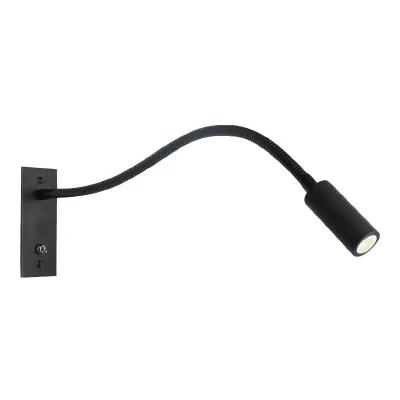


Comprehensive Sourcing Guide
Strategic Sourcing Guide for Gooseneck Flexible Wall Mount Lamps
The global demand for adaptable lighting solutions has elevated the Gooseneck Flexible Wall Mount Lamp from a niche architectural element to a staple in commercial and residential procurement. For B2B buyers, sourcing these fixtures requires a nuanced understanding of the intersection between mechanical flexibility, electrical safety, and aesthetic customization. The following guide synthesizes available product data and industry standards to provide a disciplined framework for evaluating suppliers and specifications. This analysis focuses on the technical realities of the supply chain, ensuring that procurement decisions are grounded in verified attributes rather than marketing speculation.
Technical Specifications and Mechanical Design
The defining characteristic of a gooseneck lamp is its articulated arm, which allows for precise directional control of light. In the current market, the structural integrity of this flexibility is paramount. Based on observed product attributes, the lamp body material is frequently specified as Aluminum, often combined with Iron in specific models to ensure durability. This material selection is critical for maintaining the tension of the gooseneck mechanism over thousands of adjustments without sagging or loosening.
Electrical specifications vary significantly across different product lines, requiring careful verification against the intended application. Input voltage is a primary differentiator; some units are designed for low-voltage DC operation with an Input Voltage of 12V/24V, typically requiring an external adaptor. Conversely, other models operate directly on mains voltage with an Operating Voltage of 220-240V. Buyers must align these electrical requirements with the local grid infrastructure of the installation site. Furthermore, the working temperature range is a crucial safety parameter, with observed data indicating a functional range of -20 ℃ to 45 ℃. This specification suggests suitability for standard indoor environments but may require additional thermal management for extreme outdoor or industrial applications.
The physical dimensions and shape are equally variable. While some models feature a customized shape to fit specific architectural constraints, others adhere to standard geometries such as Round or specific cylindrical dimensions like D100H480mm or φ100mmH540mm. The lamp luminous efficiency is observed at 100lm, a metric that helps in calculating the total light output required for a given space. The light source itself is predominantly LED COB (Chip on Board), which offers high brightness and a compact form factor. Color temperature options, such as Warm White, and Color Rendering Index (CRI) values of Ra>=80 are standard considerations for ensuring visual comfort and accurate color perception in the target environment.
Compliance and Certification Protocols
In the B2B sector, compliance is not merely a formality but a prerequisite for market entry and liability protection. The supplied product data highlights specific certifications that serve as indicators of regulatory adherence. The most frequently observed certifications include CE and RoHS. The CE mark indicates conformity with health, safety, and environmental protection standards for products sold within the European Economic Area, while RoHS (Restriction of Hazardous Substances) ensures that the lamp does not contain specific hazardous materials like lead or mercury.
However, buyers must exercise caution when interpreting these labels. The presence of a certification in a product listing does not automatically guarantee that every unit in a bulk order meets the same standard. It is essential to verify that the supplier can provide valid, up-to-date test reports from accredited laboratories. The H.S Code 9184110000 is listed for certain models, which aids in customs classification and duty calculation, though buyers should cross-reference this with their local customs authority to ensure accurate tariff application.
Regarding product standards, the data indicates a mix of "custom" standards and specific dimensional standards (e.g., L445W35H30mm). This duality suggests that while the electrical and safety aspects may follow international norms, the physical dimensions are often tailored to the buyer's specific design requirements. When evaluating compliance, procurement teams should request a Declaration of Conformity (DoC) that explicitly lists the standards met, rather than relying solely on the presence of a logo on the product packaging.
Cost Drivers and Pricing Dynamics
The pricing structure for gooseneck wall mount lamps is influenced by a complex interplay of material costs, customization levels, and order volume. The observed listed price range in the market spans from 1.5 to 68 USD, a wide disparity that reflects differences in build quality, brand positioning, and feature sets. Several key factors drive these costs. First, the material composition plays a significant role; lamps constructed with high-grade Aluminum and Iron command a higher price point than those using lower-cost alloys or plastic components.
Second, the level of customization is a major cost variable. The product attributes confirm that customization is available, with options for customized shapes, housing colors (White, Black, Grey, Gold, Sandy White, etc.), and switch types (Rotary/Button or Touch Switch). Each layer of customization adds to the manufacturing complexity and tooling costs, which are passed on to the buyer. Third, the power supply configuration impacts pricing. Units requiring a specific adaptor or those with integrated drivers for 12V/24V operation may differ in cost from simple 220-240V direct-wire models.
Minimum Order Quantity (MOQ) is another critical cost driver. The observed MOQ range is 1 to 1000 units, with a specific data point noting an MOQ of 300 for certain models. High-volume orders typically unlock lower per-unit pricing, but they also require significant upfront capital. Buyers must balance the economies of scale against their inventory carrying costs and cash flow constraints. Additionally, packaging standards, such as "Carton" or "Standard Export Package," influence logistics costs, particularly for international shipments where dimensional weight and packaging durability are factored into freight charges.
Typical Applications and Usage Scenarios
The versatility of gooseneck flexible wall mount lamps makes them suitable for a diverse array of application places. The observed data lists Buildings, Shops, Wedding venues, Schools, Bars, and Bus Stations as primary use cases. This breadth of application underscores the lamp's ability to adapt to different lighting needs, from the focused task lighting required in schools and offices to the ambient and accent lighting desired in bars and wedding venues.
In commercial settings like shops and buildings, the adjustable nature of the gooseneck allows for dynamic lighting layouts that can be reconfigured as display needs change. In educational environments, the durability of the Aluminum body and the long working lifetime of 50000 hours are particularly valuable, reducing maintenance frequency and total cost of ownership. The usage category is explicitly listed as "Advertising," suggesting these fixtures are often employed in retail displays to highlight products or signage.
Residential applications are also evident, with specifications mentioning Living Rooms, Indoor Decoration, and Bedrooms. In these contexts, the modern style and color options (White, Black, Gold, Chrome) allow the lamps to serve as both functional lighting and decorative elements. The switch type, whether Rotary/Button or Touch Switch, further tailors the user experience to the specific room's aesthetic and functional requirements. Buyers should consider the specific lighting intensity and directionality needed for each application to ensure the selected model meets the functional demands of the space.
Supplier Evaluation and Origin Verification
When evaluating potential suppliers, the origin of the product is a significant factor. The supplied data indicates that the product origin is Guangzhou, China, a major manufacturing hub known for its electronics and lighting industry clusters. Guangzhou-based suppliers often have established supply chains for components like LED chips and aluminum extrusions, which can streamline production. However, buyers must verify the specific factory capabilities rather than relying solely on the city of origin.
Supplier evaluation should focus on their ability to meet the "custom" standard requirements. Since the product standard is listed as "custom" for many models, the supplier must demonstrate flexibility in design and production. This includes the ability to modify dimensions, such as the L445W35H30mm or φ100*H540mm specifications, to fit unique project needs. The availability of customization in shape, color, and switch type is a strong indicator of a supplier's adaptability.
Furthermore, the warranty period is a critical metric for supplier confidence. A 2-Year warranty is observed in the product data, which serves as a baseline expectation for quality assurance. Buyers should scrutinize the terms of this warranty, including what constitutes a defect and the process for replacement or repair. A supplier that stands behind their product with a clear warranty policy is more likely to maintain consistent quality control. Additionally, the packing method, whether standard carton or export-grade packaging, should be evaluated to ensure the products arrive in pristine condition, minimizing the risk of damage during transit.
Quality Control and Long-Term Procurement Considerations
Ensuring long-term reliability requires a robust quality control (QC) strategy. The working lifetime of 50000 hours is a significant selling point, but it must be validated through testing. Buyers should request evidence of burn-in tests and lumen maintenance data to confirm that the LED performance remains stable over time. The CRI of Ra>=80 is a standard benchmark for good color rendering, but for high-end applications, higher CRI values may be necessary.
Long-term procurement considerations also involve the supply chain's resilience. With an MOQ of 300 for some models and a range up to 1000, buyers need to assess the supplier's capacity to handle fluctuating demand. Lead times, while not explicitly detailed in the provided data, are a critical factor in project planning. Buyers should establish clear communication channels regarding production schedules and potential delays.
Finally, the maintenance of the product's aesthetic and functional integrity is essential. The color of the housing, available in options like Sandy White, Sandy Black, Satin, and Chrome, should be selected for its resistance to fading and wear. The switch type, whether touch or rotary, should be tested for durability under frequent use. By focusing on these long-term factors, buyers can ensure that their investment in gooseneck flexible wall mount lamps delivers value over the product's entire lifecycle, minimizing downtime and replacement costs.
Comparative Analysis of Product Attributes
To facilitate informed decision-making, the following table summarizes the key attributes observed in the product data, highlighting the variability that buyers must navigate.
| Attribute Category | Observed Variations | Procurement Implication |
|---|---|---|
| Input Voltage | 12V/24V (with Adaptor) vs. 220-240V | Must match local electrical infrastructure; affects adaptor requirements. |
| Material | Aluminum vs. Aluminum+Iron | Impacts durability, weight, and cost; Iron adds structural strength. |
| Dimensions | D100H480mm, φ100H540mm, L445W35H30mm | Critical for fitting specific architectural spaces and mounting constraints. |
| Color Options | White, Black, Grey, Gold, Sandy White, Satin, Chrome | Must align with interior design schemes and branding requirements. |
| Switch Type | Rotary/Button vs. Touch Switch | Affects user interface and aesthetic integration; touch may be preferred for modern settings. |
| Certification | CE, RoHS | Essential for regulatory compliance in target markets; verify validity of documents. |
| Warranty | 2 Years | Baseline for quality assurance; terms should be clearly defined in contracts. |
| MOQ | 1 to 1000 (specific 300 noted) | Influences unit cost and inventory strategy; higher volumes reduce per-unit price. |
This comparative view underscores the necessity of a tailored approach to sourcing. There is no single "best" gooseneck lamp; rather, the optimal choice depends on the specific alignment of technical specifications, compliance requirements, and budgetary constraints. By rigorously evaluating these factors, B2B buyers can secure a supply chain that delivers reliable, high-quality lighting solutions for their diverse projects.
FAQs
What certifications do gooseneck flexible wall mount lamps have?
These lamps typically hold CE and RoHS certifications to ensure safety and environmental compliance. Buyers should verify that test reports are valid for the specific batch, as certifications indicate conformity with European standards but require supplier validation for bulk orders.
Can I customize the shape and color of the lamp housing?
Yes, customization is available for both shape and housing color options like white, black, or gold. The product standard is listed as custom, allowing buyers to specify dimensions and finishes, though this may affect the minimum order quantity and unit pricing.
What is the minimum order quantity for these wall mount lamps?
The minimum order quantity varies between 1 and 1000 units depending on the specific model and customization level. Some standard models require a minimum of 300 units, while others may accept smaller trial orders, so buyers must check the specific product listing.
How long is the working lifetime of the LED lamps?
The working lifetime is specified as 50,000 hours for these LED COB units. This long lifespan reduces maintenance needs in commercial settings like schools or shops, provided the operating temperature remains within the -20 to 45 Celsius range.
Which input voltage options are available for these fixtures?
Input voltage options include 12V or 24V DC requiring an adaptor, or 220-240V AC for direct mains connection. Buyers must match the electrical specification to their local grid infrastructure to ensure safe and proper operation of the fixture.
Where are these gooseneck lamps manufactured and shipped from?
The products originate from Guangzhou, China, a major hub for lighting manufacturing. This location supports established supply chains for aluminum and LED components, ensuring efficient production and export packaging suitable for international shipping requirements.