Source Hand Made Angel Resin Ornament for Home, Gifts, and Art
Compare 30 Hand Made Angel Resin Ornament listings from verified Chinese suppliers. Buyers can review specifications, customization options, and pricing for home decoration, holiday gifts, and art collection purposes.
Key considerations
Products List
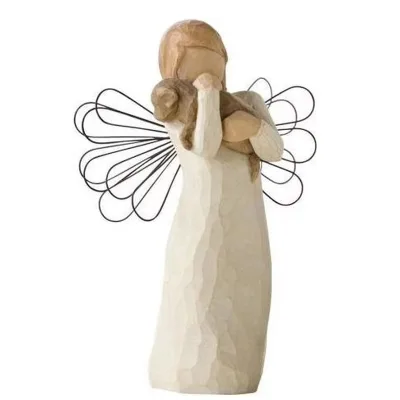


Creative Handmade Crafts Resin Angel Plays with Angel Figurine Home Decoration
$0.10 - $5.00
MOQ: 500 Pieces


Custom Resin Angel Statue Holding Heart-Shaped Hand-Painted Home Decoration
$1.25 - $3.58
MOQ: 500 Pieces










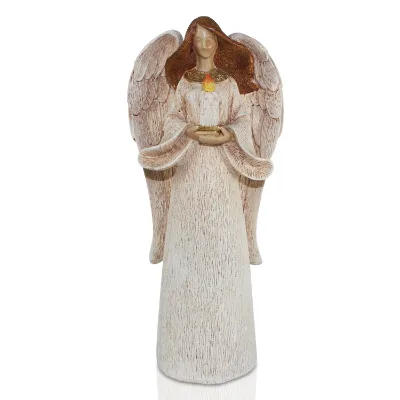
Comprehensive Sourcing Guide
Strategic Sourcing Guide for Hand-Made Angel Resin Ornaments
The global market for decorative resin sculptures has seen a sustained increase in demand, particularly for items that blend traditional craftsmanship with modern aesthetic trends. For procurement professionals seeking "hand-made angel resin ornaments," the sourcing landscape requires a nuanced understanding of material properties, manufacturing processes, and supply chain logistics. These items are not merely mass-produced novelties but often represent a specific intersection of artistic expression and functional home or business decoration. This guide provides a comprehensive framework for evaluating potential suppliers and products based on verified industry attributes and observed market data, ensuring that procurement decisions are grounded in factual evidence rather than marketing speculation.
Technical Specifications and Material Composition
The foundational element of any resin ornament is the material itself. In the context of hand-made angel figures, the primary material observed in the current market is polyresin or resin. This material choice is critical because it offers a balance between durability and the ability to capture fine artistic details. Unlike ceramic, which can be brittle, or metal, which can be heavy, polyresin allows for intricate carving and painting processes while remaining relatively lightweight for shipping and display. The specific product data indicates that these items often undergo a "carving" process followed by "hand-painted" surface treatments. This combination suggests that the final product is not a simple mold cast but involves significant manual intervention to achieve the desired "antique" or "natural" style.
Dimensions are a key technical specification that varies significantly across different models. Observed data points to a wide range of sizes, from compact figures standing approximately 10 cm in height to larger sculptures measuring up to 18 cm in width and 26 cm in depth. For example, specific model numbers such as LK-MEI-1009 and TR250411 correspond to distinct dimensional profiles. Buyers must verify the exact dimensions required for their intended display space, as the "shape" is consistently described as a "figure" or "angel," but the scale can vary from tabletop decor to larger floor-standing pieces. The material composition, specifically the use of polyresin, also influences the weight and structural integrity, which must be considered when calculating shipping costs and storage requirements.
Manufacturing Processes and Customization Capabilities
The "hand-made" designation in the product title is a critical differentiator in this category. The supply chain data reveals that the processing techniques include "carving" and "hand-made" assembly, distinct from fully automated injection molding. This manual aspect is often what justifies a higher price point and allows for the "fashion" and "antique" styles observed in the market. The surface treatment is consistently noted as "painted," which implies a multi-step process involving priming, base coating, and detailed hand-painting to achieve the final color palette. The color options are generally flexible, with suppliers often offering "as picture" standard colors alongside "customization" capabilities.
Customization is a significant driver for B2B buyers in this sector. The available data confirms that customization is available for both the product design and the packaging. Suppliers may offer OEM (Original Equipment Manufacturer) services, allowing buyers to apply their own branding or specific design modifications. The model number "oem" appearing in the data suggests that many manufacturers are structured to handle bespoke orders. However, buyers should note that customization often impacts the production timeline. While standard items might have a production time of 30 to 35 days, custom orders could require additional lead time for design approval and prototype creation. The sample time is typically noted as ranging from 7 to 15 days, which is a crucial metric for planning product launches or seasonal inventory replenishment.
Compliance, Safety, and Certification Verification
When sourcing decorative items, particularly those intended for home environments or as gifts, compliance with safety standards is paramount. The product attributes indicate that safety certifications such as SGS, CE, and Sct are available for these resin ornaments. These certifications are not merely marketing claims but essential verification that the materials used are non-toxic and safe for handling. The "Eco-Friendly" attribute mentioned in the data further suggests that some manufacturers adhere to environmental standards regarding the resins and paints used.
However, buyers must exercise due diligence. While the data lists these certifications as available, it does not guarantee that every listed product or supplier automatically possesses them. The presence of "SGS" and "CE" in the attribute list indicates that these are common standards in the region, but verification is required on a per-supplier basis. For international trade, compliance with destination-specific regulations is mandatory. For instance, products entering the European Union must strictly adhere to REACH regulations regarding chemical safety, while those entering the United States may need to comply with CPSIA standards if they are intended for children, though these are primarily home decoration items. Buyers should explicitly request current test reports and certificates of conformity before finalizing any order, ensuring that the "Safety: Eco-Friendly" claim is backed by valid documentation.
Cost Drivers and Pricing Dynamics
The pricing for hand-made angel resin ornaments is influenced by several factors, including the complexity of the design, the level of hand-painting required, and the order volume. The observed price range in the market spans from $0.10 to $7.65 USD. This wide variance is not indicative of quality differences alone but reflects the spectrum from small, simple figures to large, intricately detailed sculptures. The lower end of the price range likely corresponds to smaller units or those with less complex painting, while the higher end reflects the labor-intensive nature of the "hand-painted" and "carving" processes.
Minimum Order Quantity (MOQ) is another significant cost driver. The data shows an MOQ range from 1 to 1200 units, with a specific observation of 500 pieces for certain custom or standard runs. For small businesses or those testing a new product line, suppliers with lower MOQs are essential. However, larger orders often benefit from economies of scale, reducing the unit cost. Buyers must balance the desire for a lower unit price against the capital tied up in inventory. Additionally, the "production time" of 30 to 35 days for standard orders and the potential for longer lead times for custom work must be factored into the total cost of ownership, including warehousing and potential stock-out risks.
Supplier Evaluation and Operational Logistics
Selecting the right supplier involves more than just comparing unit prices; it requires a holistic evaluation of their operational capabilities. The geographic origin of these products is predominantly China, with specific mentions of Guangdong and Fujian provinces. These regions are known for their established manufacturing ecosystems for resin crafts. When evaluating suppliers, buyers should verify the "Place of Origin" to ensure it aligns with their supply chain strategy. For example, a supplier in Guangdong might offer different logistics advantages compared to one in Fujian, depending on the proximity to major shipping ports.
Packaging is a critical component of supplier evaluation, as resin ornaments are fragile. The data indicates various packaging standards, ranging from simple "Poly Bag" to more robust "PP Bag + Polyfoam + Inner Box + Export Carton" configurations. The choice of packaging directly impacts the risk of damage during transit. A supplier that uses "Poly Foam" and "Inner Boxes" demonstrates a higher commitment to product protection, which can reduce loss rates and associated costs. Buyers should request photos of the actual packaging process to ensure that the "1 PCS" standard or bulk carton standards are strictly followed. Furthermore, the "Customization" of packaging, such as adding a buyer's logo to the box, is a value-added service that should be confirmed during the negotiation phase.
Quality Control and Long-Term Procurement Strategy
Maintaining consistent quality in hand-made products requires a robust quality control (QC) strategy. Since the "hand-painted" and "carving" processes involve human labor, there is an inherent risk of variation between batches. To mitigate this, buyers should establish clear acceptance criteria for color consistency, surface finish, and structural integrity. The "Antique" and "Natural" styles mentioned in the data suggest that a certain degree of artistic variation might be acceptable, but major defects like chipping or misalignment must be rejected. Implementing a pre-shipment inspection protocol is highly recommended, especially for large orders where the cost of a defect is magnified.
For long-term procurement, building a relationship with a supplier who offers "OEM" services and has a proven track record of meeting "Production Time" commitments is essential. The ability to scale production up or down based on market demand is a key consideration. Buyers should also consider the "Sample Time" of 7 to 15 days as a benchmark for the supplier's responsiveness. A supplier that can deliver high-quality samples quickly is often better equipped to handle urgent orders or design iterations. Finally, buyers should monitor the "MOQ" flexibility of their suppliers. A partner willing to negotiate MOQs for new product introductions can be a strategic asset in a volatile market, allowing for agile inventory management without the risk of overstocking.
Comparative Analysis of Product Attributes
To assist in the decision-making process, the following table summarizes key attributes observed in the market for hand-made angel resin ornaments. This comparison highlights the variability in specifications that buyers must navigate.
| Attribute Category | Observed Range / Options | Key Considerations for Buyers |
|---|---|---|
| Material | Resin, Polyresin | Verify density and weight; ensure non-toxic certification. |
| Technique | Hand-painted, Carving, Hand-Made | Assess labor intensity; higher labor often means higher cost and uniqueness. |
| Size | 10 cm H to 18x7.5x26 cm | Match dimensions to display space; check shipping volume. |
| Style | Antique, Natural, Fashion | Define target aesthetic; ensure supplier can replicate specific styles. |
| MOQ | 1 to 1200 units (e.g., 500 pcs common) | Negotiate based on order volume; consider sample orders first. |
| Lead Time | 30-35 days (Production), 7-15 days (Sample) | Plan inventory cycles around these timelines; factor in customs. |
| Packaging | Poly Bag, PP Bag + Foam + Box | Request packaging samples; ensure export-grade protection. |
| Certification | SGS, CE, Sct (Available) | Demand valid test reports; verify scope covers destination markets. |
In conclusion, sourcing hand-made angel resin ornaments requires a balanced approach that values the artistic integrity of the product while rigorously managing the logistical and compliance aspects of international trade. By focusing on the verified attributes of material, process, and supplier capability, buyers can secure a supply chain that delivers high-quality, decorative pieces that meet both aesthetic and functional requirements. The flexibility in customization and the availability of various certifications provide a robust foundation for building a successful product line in the home decoration and gift sectors.
FAQs
What materials are used for hand made angel resin ornaments?
These ornaments are primarily made from resin or polyresin materials. This choice allows for intricate carving and hand-painted details while remaining lightweight for shipping and display in home or business settings.
Can I customize the size and color of these ornaments?
Yes, customization is available for both size and color options. Buyers can request specific dimensions like 18x7.5x26cm or accept standard sizes, with colors matching pictures or custom requests upon agreement.
What is the typical production time for these resin sculptures?
The standard production time ranges from 30 to 35 days for bulk orders. Custom orders may require additional lead time for design approval, while sample creation typically takes 7 to 15 days.
Which certifications are available for these home decoration items?
Available certifications include SGS, CE, and Sct to verify safety and eco-friendly standards. Buyers should request current test reports to ensure compliance with destination-specific regulations before finalizing any purchase.
How does the minimum order quantity affect the unit price?
The minimum order quantity ranges from 1 to 1200 units, with 500 pieces being a common threshold. Larger orders often benefit from economies of scale, reducing the unit cost compared to smaller sample runs.
Where are these hand made angel ornaments manufactured?
These products originate from China, specifically from provinces like Guangdong and Fujian. These regions are known for established manufacturing ecosystems that support the carving and painting processes required for these items.