Source Heated Reflective Motorcycle Jacket for Traffic, Security, and Racing
Compare 30 verified listings for the Heated Reflective Motorcycle Jacket designed for traffic wardens, security staff, and motorcycle racing applications. Review specifications including waterproofing, breathability, and customization options from manufacturers in China.
Key considerations
Products List






Comprehensive Sourcing Guide
Strategic Sourcing Guide for Heated Reflective Motorcycle Jackets
Understanding the Product Category and Core Specifications
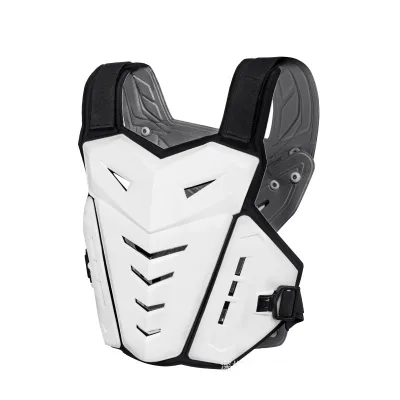
When sourcing a Heated Reflective Motorcycle Jacket, buyers must first distinguish between general protective gear and specialized thermal integration. The supplied product data indicates a diverse range of protective apparel, including "Armor Vest Motorcycle Racing Body Protection Jacket" and "Reflective Coat" variants. While the specific keyword includes "heated," the provided facts highlight materials such as 100% Polyester, 100% Nylon, and composite structures using PP and Foam. These materials form the foundational layer for any heated system, as the heating element requires a durable, weather-resistant substrate.
The technical specifications observed in the market for this category include "Free Size" or "One Size Fits" options, which suggests a design philosophy focused on layering over other gear. For a heated jacket, the fit must accommodate the thermal wiring and battery pack without restricting movement. The closure types noted are primarily "Zipper," which is critical for sealing the jacket against wind and water while allowing access to internal heating components. The feature set consistently lists "Windproof," "Waterproof," and "Breathable" attributes. In the context of motorcycle racing or traffic administration, these three features are non-negotiable. A jacket that is waterproof but not breathable will trap sweat, leading to rapid heat loss when the rider stops, negating the benefit of the heating element.
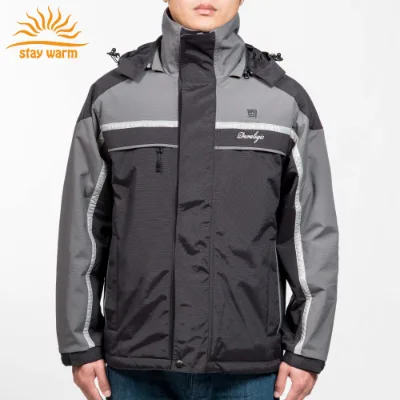
The application scope extends beyond recreational riding to professional use cases such as "Traffic Warden," "Security Staff," and "Sanitation Workers." This implies that the sourcing strategy must account for high-visibility requirements, often achieved through reflective materials integrated into the fabric or as separate panels. The "Reflective Coat" designation in the data confirms that visibility is a primary function. Buyers should verify that the reflective material meets specific luminance standards, as standard fabric reflection is insufficient for high-speed environments. The material composition varies, with some products listed as "100% Nylon/Polyester" blends, offering a balance between abrasion resistance and flexibility.
Compliance, Certification, and Safety Standards
Safety compliance is the most critical differentiator in the motorcycle apparel sector. The provided context references "EN 17092" as a low-confidence background standard. While this standard is relevant for motorcycle protective clothing, buyers must not assume any listed product automatically satisfies it without explicit documentation. EN 17092 specifically governs the performance requirements for motorcycle protective clothing, including abrasion resistance, tear strength, and impact protection. For a heated jacket, the electrical components must also comply with relevant safety standards regarding voltage, current, and insulation to prevent short circuits or burns.
The data mentions "CE" as a potential certification. In the European market, CE marking is mandatory for Personal Protective Equipment (PPE). However, the presence of a CE mark on a product page does not guarantee the specific category of protection (e.g., Category II or III). Buyers must request the specific test reports that demonstrate the jacket meets the required impact protection levels for the intended use, such as "Motorcycle Racing" or "Road Administration." The "Armor Vest" classification in the data suggests that some products include integrated armor, likely at the shoulders, elbows, and back. The sourcing guide must emphasize verifying the armor material, which is listed as "PP, Foam" in some instances. Polypropylene (PP) and foam are common, but the density and certification of the impact-absorbing material must be confirmed.
Furthermore, the electrical heating system introduces unique compliance challenges. The heating element must be isolated from the rider's skin and protected against moisture ingress. Buyers should verify that the heating system has been tested for water resistance, aligning with the "Waterproof" feature claims. If the jacket is intended for use in "Winter" conditions, as noted in the product attributes, the electrical components must operate reliably in low temperatures. The sourcing process should include a request for the manufacturer's declaration of conformity, specifically addressing the electrical safety of the heating module. Without this, the risk of liability in the event of an electrical failure is significant.
Cost Drivers and Pricing Structure Analysis
The pricing landscape for heated reflective motorcycle jackets is influenced by several distinct factors. The observed price range in the market spans from $3.99 to $125 USD. This wide disparity indicates a market with significant variation in quality, feature sets, and brand positioning. The lower end of the spectrum likely represents basic reflective vests or simple jackets without integrated heating or advanced armor. The higher end of the range suggests products with comprehensive protection, including certified armor, advanced waterproofing, and integrated heating systems.
Material composition is a primary cost driver. Products listed as "100% Nylon" or "100% Polyester" with specialized coatings for wind and water resistance will cost more than basic fabric constructions. The inclusion of "PP, Foam" armor adds material and manufacturing costs. Additionally, the complexity of the heating system, including the wiring, control units, and battery compatibility, significantly impacts the final price. Buyers should be wary of prices that seem too low to cover the cost of certified electrical components and impact protection.
Minimum Order Quantity (MOQ) is another critical cost factor. The observed MOQ range is 1 to 1000 units. For buyers testing the market or requiring small batches, an MOQ of 1 allows for sample evaluation, but the unit cost will be higher. As the order volume increases, the unit cost typically decreases due to economies of scale in material purchasing and production line efficiency. The data shows specific MOQs, such as "20pcs" for certain reflective coats, which serves as a benchmark for small-to-medium enterprises. Buyers must calculate the total landed cost, including shipping and duties, as the "Delivery Time" for bulk orders can be "Normally 60-90 Days," affecting inventory carrying costs.
Typical Applications and Usage Scenarios
The versatility of these jackets is evident in the diverse applications listed. The "Reflective Coat" is explicitly designed for "Transportation, Road Administration, Traffic Warden, Security Staff, and Sanitation Workers." In these roles, the jacket serves a dual purpose: personal protection and high visibility. For traffic wardens and sanitation workers, the "Winter" season attribute is crucial, as these roles often involve long hours outdoors in cold, wet conditions. The "Heated" functionality becomes a vital tool for maintaining body temperature and preventing hypothermia, directly impacting worker productivity and safety.
For the "Motorcycle Racing" application, the requirements shift towards high-speed protection and aerodynamics. The "Armor Vest Motorcycle Racing Body Protection Jacket" indicates a focus on impact absorption. In this context, the heating system must be low-profile to avoid interfering with the rider's posture or the fit of the racing suit. The "Breathable" feature is equally important here to manage sweat during high-intensity riding. The "Single package size" of 47x46x10 cm suggests a compact design, which is beneficial for storage and transport in racing environments.
The "Outdoor Worker" classification bridges the gap between industrial safety and recreational riding. These users require a jacket that can withstand harsh weather while providing visibility in low-light conditions. The "Windbreak" and "Waterproof" features are essential for protecting against the elements, while the "Reflective" elements ensure visibility to other road users. Buyers should consider the specific environmental conditions of their target market when selecting the appropriate jacket. For example, a jacket for a traffic warden in a rainy climate may require a higher waterproof rating than one for a rider in a dry, cold region.
Supplier Evaluation and Business Model Assessment
Evaluating suppliers for heated reflective motorcycle jackets requires a deep dive into their business model and capabilities. The data identifies suppliers as "Manufacturer & Exporter" with "OEM ODM" services available. This indicates that the supply chain is capable of customizing products, including logo placement and potentially modifying the heating system or armor configuration. The "Customized Logo" attribute is standard for corporate procurement, allowing companies to brand the jackets for their employees or security teams.
The "Sample Time" is a key metric for supplier reliability. The observed ranges are "15-21 Days" for some products and "7-10 Days" for others, with a specific mention of "2-7 days" for sample delivery in certain contexts. These variations suggest differences in production readiness and inventory management. Buyers should use the sample phase to verify the quality of the heating system, the fit of the armor, and the durability of the reflective material. The "Sample Time" of 15-21 days may indicate a more complex customization process, while the shorter 7-10 day window suggests a more streamlined operation.
Geographic origin is another factor in supplier evaluation. The data lists origins in "Jiangsu, China," "Taian Shandong," and "Hebei, China." These regions are known for their textile and manufacturing industries. However, buyers should not assume uniform quality across all locations. It is advisable to audit the specific factory to ensure they have the necessary equipment for producing heated garments and testing electrical safety. The "Business Type: Manufacturer & Exporter" status implies that the supplier controls the production process, which can lead to better quality control and cost efficiency compared to trading companies.
Quality Control and Long-Term Procurement Considerations
Quality control (QC) for heated reflective jackets must extend beyond visual inspection to include functional testing. The "Delivery Time for sample" of 2-7 days allows for rapid iteration, but the bulk "Delivery Time" of 60-90 days requires robust planning. Buyers should implement a rigorous QC protocol that includes checking the integrity of the heating elements, the waterproofing of seams, and the durability of the reflective tape. The "Packing" methods, such as "1PC/Polybag" or "8 PCS/CTN," must be verified to ensure that the products arrive in good condition without damage to the electrical components.
Long-term procurement considerations involve the sustainability of the supply chain and the availability of spare parts. The "Heated" feature implies a reliance on batteries and electrical components that may degrade over time. Buyers should inquire about the availability of replacement batteries, heating pads, or control units. The "Customization" availability suggests that suppliers can adapt to changing requirements, but the lead time for such changes must be factored into the procurement plan. The "MOQ" of 1 to 1000 units offers flexibility, but buyers should negotiate volume discounts for repeat orders to optimize costs.
Finally, the "Standard" of "100% Polyester" or "100% Nylon" should be verified against the specific performance needs. While these materials are common, the quality of the weave and the treatment applied (e.g., DWR coating for water resistance) can vary significantly. Buyers should request detailed material specifications and test reports to ensure that the jacket meets the required durability and safety standards. By focusing on these technical and operational details, buyers can secure a reliable supply of heated reflective motorcycle jackets that meet the rigorous demands of both professional and recreational users.
FAQs
Can I customize the logo on heated reflective motorcycle jackets?
Yes, customized logos are available for these jackets. Suppliers offer OEM and ODM services, allowing you to place your specific branding on the garment for corporate or team use.
What materials are used for heated reflective motorcycle jackets?
Common materials include 100% polyester, 100% nylon, and blends of both. Some protective variants also incorporate PP and foam for added impact resistance and durability in racing or industrial settings.
Which certifications do heated reflective motorcycle jackets typically meet?
Products may carry CE certification and aim for EN 17092 compliance for motorcycle protective clothing. Buyers should request specific test reports to verify impact protection and electrical safety standards.
How long does it take to receive samples of heated reflective motorcycle jackets?
Sample delivery times vary between 2 to 21 days depending on the supplier and customization level. Some manufacturers provide samples within 7 to 10 days, while complex custom orders may take up to 21 days.
What is the minimum order quantity for heated reflective motorcycle jackets?
The minimum order quantity ranges from 1 to 1000 units based on the supplier. Specific items like reflective coats may have an MOQ of 20 pieces, while bulk orders benefit from lower per-unit costs.
Where are heated reflective motorcycle jackets manufactured?
These jackets are primarily manufactured in China, with origins in Jiangsu, Shandong, and Hebei provinces. Buyers can select suppliers from these regions to access established textile and protective gear manufacturing hubs.
Can heated reflective motorcycle jackets be used by outdoor workers?
Yes, they are designed for outdoor workers such as traffic wardens, security staff, and sanitation workers. The jackets feature windproof, waterproof, and breathable properties suitable for winter conditions and road administration duties.