Source Industrial Fanless Firewall for Automation, Networking, and Control
Find and compare 29 Industrial Fanless Firewall options for automation, networking, and control. These units feature Intel processors, 8GB RAM, and storage capacities up to 256GB SSD. They support Windows or Linux, operate in wide temperature ranges, and offer wall-mounted or desktop configurations for reliable industrial environments.
Key considerations
Products List


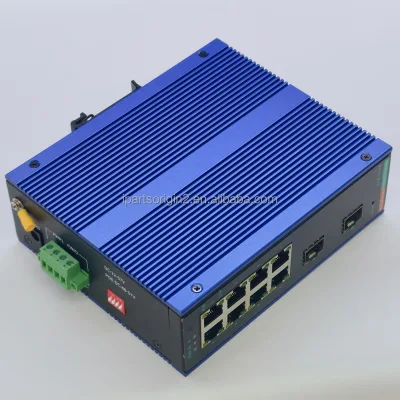
Industrial Ethernet Switch Unmanaged 5/8 Port 12~48VDC Fanless Low Power
$35.00 - $85.00
MOQ: 1 Pieces




Comprehensive Sourcing Guide
Industrial Fanless Firewall Sourcing Guide
Procurement teams must first distinguish between general industrial PCs and specialized firewall appliances, as the supplied data reveals a mix of models like the Anbox and GW100 series that serve diverse industrial needs. While some units feature high-performance storage and specific operating temperatures, buyers must verify if the listed hardware includes the necessary packet processing capabilities for a dedicated firewall role rather than general data collection or queue management.
The observed product range includes systems with Intel processors and varying storage capacities, yet the specific network throughput and forwarding rates required for a firewall application are not explicitly confirmed for every listed model. Buyers should scrutinize the "10/100M adaptive electrical port" and "1G / 1.6G" switching bandwidth specifications to ensure the selected unit can handle the intended network load without thermal throttling in a fanless design.
Product Scope and Observed Listing Signals
The current market listings indicate a broad scope of industrial computing hardware, including models with 8GB RAM and 256GB SSD storage, which may serve as the foundation for a firewall solution. However, the presence of accessories like industrial power supplies and cables suggests these are often sold as bare-bone systems requiring specific configuration for network security functions. Buyers must carefully map these general-purpose industrial PCs to their specific firewall requirements to avoid purchasing units lacking the necessary interface density.
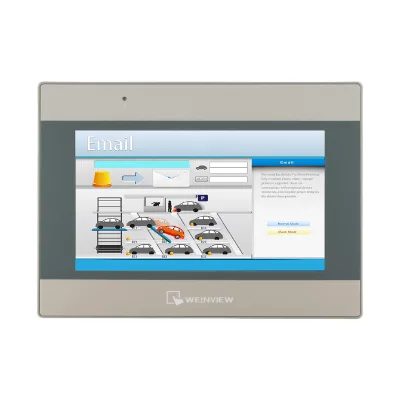
Listing signals such as "Touch Screen: Without Touch Screen" and "Mounting Options: Wall-Mounted/Desktop" highlight the physical deployment flexibility of these units in industrial environments. While some products mention "Queue System Display Function," this feature is distinct from the core packet filtering logic required for a firewall. Procurement teams should prioritize units that explicitly support the "Industrial PC" classification while verifying that the "Data Collector Signal Transmission" is wired and suitable for secure network integration.
Technical Specifications to Verify
When evaluating technical specifications, the operating temperature range of -20°C to 60°C is a critical parameter for ensuring reliability in harsh industrial settings without active cooling. Buyers must confirm that the specific model selected maintains stable performance within this thermal envelope, as fanless designs rely heavily on passive heat dissipation to prevent component failure during continuous network monitoring. The "Storage Temperature" range of -10°C to -60°C further defines the limits for safe storage and transport before deployment.
Network interface capabilities must be rigorously tested against the "100 Gigabit Forwarding Rate" and "store-and-forward" transmission method claims found in some listings. Although some models specify "5/8 port" configurations, the actual number of available Ethernet ports for ingress and egress traffic must be verified to ensure the device can manage the required network segments. Additionally, the "System Expansion Slot: M.2" should be checked to determine if additional network interface cards can be added to expand connectivity options.
Compliance and Safety Documentation
Safety and compliance documentation is essential for deploying industrial hardware in regulated environments, with certifications like CE, RoHS, and CCC appearing in the available product data. Buyers should request specific test reports confirming that the unit meets these standards, particularly for electrical safety and electromagnetic compatibility, which are vital for preventing interference with other sensitive industrial equipment. The presence of "ISO: CE" certification suggests a baseline level of quality management, but specific product-level validation is necessary.
Documentation regarding the "Industrial Power Supply" and input voltage ranges of 12-48VDC or 24VAC must be reviewed to ensure compatibility with existing facility power infrastructure. Procurement teams should verify that the power consumption figures, such as the noted "1.0W / 1.4W" wastage, align with the facility's energy efficiency goals and thermal management strategies. Without clear certification records for the specific firewall configuration, the risk of non-compliance in safety audits remains a significant concern for the buyer.
Cost Drivers and Commercial Terms
The cost of an Industrial Fanless Firewall is heavily influenced by the processor generation, such as the "10th Gen I3" or "10th I5" options, and the included storage capacity like 128GB or 256GB SSD. Buyers should expect price variations based on these internal components, as higher performance processors and larger storage drives directly impact the unit's ability to handle complex firewall rules and logging requirements. The "Customization: Available" attribute also suggests that tailored configurations may incur additional costs beyond the base unit price.
Commercial terms regarding the Minimum Order Quantity (MOQ) and lead times are critical for budgeting and project scheduling, with observed ranges spanning from 1 to 500 units. While some listings indicate a "Carton" packing standard, others specify a "Wooden Box" for heavier or more sensitive units, which can affect shipping costs and insurance requirements. Buyers must clarify whether the quoted price includes the necessary accessories like cables and power supplies or if these are sold as separate line items to avoid unexpected budget overruns.
Supplier Qualification and Quality Control
Supplier qualification requires verifying the origin of the products, as the data indicates origins in China and specific locations like Xishida, which may impact supply chain transparency and logistics. Buyers should assess the supplier's ability to provide consistent quality control for "New" condition units and ensure that the "Customized" options are manufactured to precise specifications without compromising the structural integrity of the fanless chassis. The "Hard Disk Rack Type" being either "Board Type" or "Partition" also requires verification to ensure it meets the durability standards of the intended industrial application.
Quality control processes must include checks for the "Condition" of the hardware and the reliability of the "Operating Temperature" performance under load. Suppliers should demonstrate a track record of delivering units that maintain the "Industrial PC" classification standards and provide clear documentation on the "System switching bandwidth" capabilities. It is advisable to request sample units for testing to confirm that the "Transmission method" and "Forwarding Rate" meet the specific security and performance needs of the network infrastructure.
Long-Term Procurement Checks
Long-term procurement strategies should focus on the availability of spare parts and the longevity of the "Industrial Power Supply" and other critical components. Buyers must ensure that the supplier can support the product lifecycle for the "Anbox" or "GW100" models, particularly regarding firmware updates and hardware replacements for the "M.2" expansion slots or storage drives. The "Quantity: High Quality" claim should be backed by a warranty policy that covers potential failures due to thermal stress or electrical issues over time.
Regular audits of the deployed units are necessary to verify that the "Queue System Type" and "Graphics" display functions remain operational and that the "Touch Inquiry" features, if applicable, continue to function correctly. Procurement teams should establish a maintenance schedule that accounts for the "Storage Environment" limits and ensures that the units are not exposed to conditions exceeding the specified temperature ranges. This proactive approach helps mitigate the risk of downtime and ensures the continued security of the industrial network infrastructure.
FAQs
How does a fanless industrial firewall handle heat without active cooling?
A fanless industrial firewall uses a passive heatsink chassis that dissipates processor heat through the enclosure surface, eliminating fans, dust buildup, and moving-part failures. Effective deployment depends on ambient conditions, so buyers should match the unit to the rated operating range and allow clearance around the casing. In enclosed cabinets, verifying airflow and temperature inside the cabinet is important.
What operating and storage temperatures should I expect from an Industrial Fanless Firewall?
Listed models in this category specify operating temperatures from -20°C to 60°C and storage environments ranging from -10°C to -60°C or -20°C to 70°C depending on configuration. These ranges suit unheated cabinets, outdoor enclosures, and factory floors. Always confirm the exact rating for your chosen configuration, since temperature performance can vary between processor and memory options.
Which display outputs are available on these Industrial Fanless Firewall units?
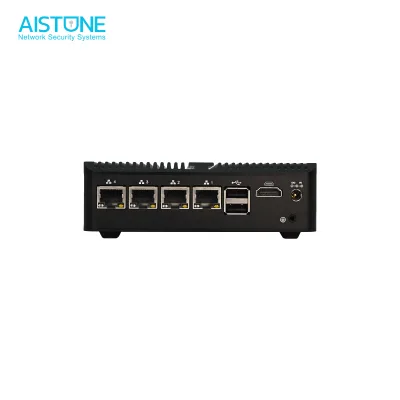
Configurations in this category offer HDMI, VGA, or a combination of HDMI and VGA outputs, with some units providing a single HDMI port. This covers connection to industrial monitors, touch panels, and legacy displays. Before ordering, verify which port set your chosen model includes, since display configuration differs between product variants in the same series.
Can Industrial Fanless Firewall products be customized for specific deployments?
Yes, customization is listed as available for these units. Typical options include storage capacity such as 128GB or 256GB SSD, memory, mounting style, and accessory sets like cables or industrial power supplies. Buyers should define required specifications, operating environment, and quantity before requesting a custom quotation, as customization usually affects pricing, lead time, and minimum order quantities.
What operating systems do Industrial Fanless Firewall units support?
These units support Windows and Linux, giving flexibility for firewall software stacks, network security platforms, and industrial control applications. Windows suits environments with Windows-based management tools, while Linux is common for open-source firewall distributions. Confirm driver availability for your chosen OS version and expansion hardware, since M.2 slot support can depend on the operating system image.
How are Industrial Fanless Firewall units packaged and shipped?
Packaging varies by model: carton packing is listed for some units, while others ship in wooden boxes suited to heavier or export shipments. Wooden-box packing protects against transit damage for industrial equipment. Buyers should confirm the packing type for their order, especially for mixed-model purchases, and consider whether export documentation or reinforced packing is needed for their destination.
Which certifications apply to these Industrial Fanless Firewall products?
Listed certifications for products in this category include CE, RoHS, CCC, and ISO. Certification coverage can differ between models and configurations, so buyers should request the specific certificates for the exact model and batch they intend to purchase. This matters for customs clearance, tender compliance, and installation in regulated industrial or public-sector network environments.
What memory and storage configurations are offered for Industrial Fanless Firewall models?
Observed configurations include 8GB RAM paired with either 128GB or 256GB SSD storage, and one Android-based model is listed as RK3588 8G+128G. Storage capacity affects logging retention, caching, and virtualization headroom for firewall services. Choose capacity based on log volume and uptime requirements, and confirm whether the hard disk rack type is board type or partition based.