Source IP67 OBD2 Extension Cable for Automotive, Industrial, and Equipment Use
Compare 30 listings for the IP67 OBD2 Extension Cable featuring copper conductors, PVC jackets, and IP67 waterproof ratings. Buyers can evaluate options for automotive, industrial, and electronic equipment applications with customizable lengths and connector types.
Key considerations
Products List


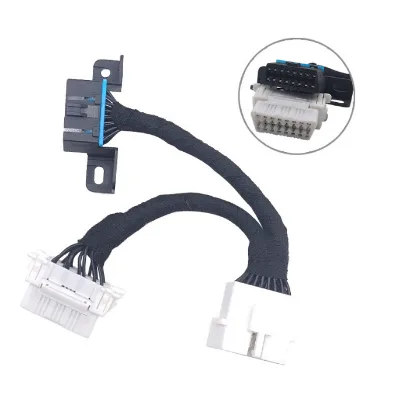


Premium Heavy Duty OBD-II Male to Female Extension Cable for Diagnostics
$8.88 - $10.00
MOQ: 10000 Pieces


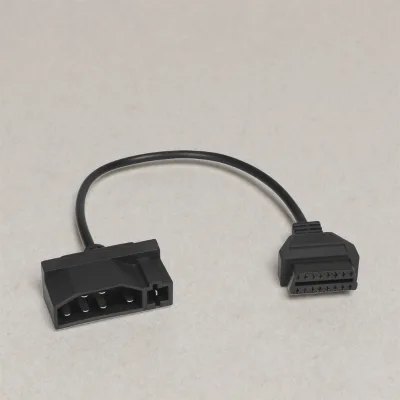


Comprehensive Sourcing Guide
Strategic Sourcing Guide for IP67 OBD2 Extension Cables
Understanding Technical Specifications and Core Attributes
When sourcing an IP67 OBD2 Extension Cable, buyers must first distinguish between the specific diagnostic interface requirements and the broader cable assembly capabilities observed in the market. The core keyword implies a need for a robust connection between a vehicle's On-Board Diagnostics (OBD) port and external testing equipment, specifically designed to withstand harsh environmental conditions. Based on available product data, the target configuration often involves a "Male to Female" gender arrangement, facilitating the extension of the signal path without altering the physical interface standard.
The physical construction of these cables is critical for durability. Observed specifications indicate that the conductor material is typically copper, often in a stranded configuration to provide flexibility and resistance to vibration, which is common in automotive environments. The insulation material is frequently identified as silicone rubber, offering superior heat resistance compared to standard plastics, while the outer sheath or jacket is commonly made of PVC. This combination ensures the cable can handle the electrical load while maintaining structural integrity.
A pivotal specification for the "IP67" designation is the ingress protection rating. In the context of these cables, this rating signifies that the connector assembly is dust-tight and can withstand immersion in water up to 1 meter for 30 minutes. This is essential for applications where the vehicle may be exposed to rain, car washes, or damp environments. The pin configuration varies, with common options including 2pin, 3pin, 4pin, and 6pin arrangements, though the standard OBD2 interface typically utilizes 16 pins. Buyers must verify if the extension cable is a direct pass-through for the full 16-pin standard or a specialized adapter for specific diagnostic modules. The voltage rating for similar cable assemblies in the observed data ranges from 30 to 300 V, which is generally sufficient for standard automotive signaling, but the specific current carrying capacity must be confirmed against the vehicle's electrical system requirements.
Compliance and Certification Verification
Navigating the regulatory landscape for automotive components requires rigorous verification of certifications. The supply chain for these cables often presents a mix of international standards. Observed product listings frequently cite a combination of certifications including CE, ISO, RoHS, CCC, UL, VDE, and GS. Each of these marks serves a distinct purpose in the procurement process.
The CE marking indicates conformity with health, safety, and environmental protection standards for products sold within the European Economic Area. For automotive applications, this is often a baseline requirement. The ISO certification, specifically referencing standards like ISO 9001 for quality management, suggests that the manufacturer has established processes to ensure consistent product quality. RoHS (Restriction of Hazardous Substances) compliance is non-negotiable for modern electronics, ensuring the cable does not contain lead, mercury, or other restricted materials that could harm the environment or human health.
In markets like China, the CCC (China Compulsory Certification) is a mandatory requirement for products sold domestically. If the cable is intended for export to North America, the UL (Underwriters Laboratories) or VDE (German Electrical Engineering Association) marks become critical indicators of safety and electrical performance. The presence of a GS mark (Geprüfte Sicherheit) further validates safety compliance in German-speaking regions. Buyers should not assume that a single listing satisfies all these standards simultaneously. It is essential to request specific test reports or certificates of conformity for each certification claimed, as the presence of one does not guarantee the validity of another. The observed data also mentions "Standard" and "Customize" as product standards, indicating that while some items may meet generic industry norms, others may require bespoke compliance testing for specific regional regulations.
Cost Drivers and Pricing Dynamics
The pricing structure for IP67 OBD2 extension cables is influenced by several variable factors, primarily material composition, customization levels, and order volume. The observed price range in the market spans from $0.10 to $20.00 USD, a wide disparity that reflects the difference between generic, mass-produced cables and specialized, high-performance units.
Material costs are a primary driver. Cables utilizing high-grade silicone rubber insulation and pure copper conductors will naturally command a higher price point than those using lower-grade PVC or copper-clad aluminum. The complexity of the connector molding also affects cost; an IP67-rated connector requires precise engineering to achieve the waterproof seal, often involving multi-part injection molding that increases unit cost compared to standard open connectors.
Customization is another significant cost variable. While many suppliers offer "Standard" models, the ability to customize cable length, pin configuration, and jacket color adds to the manufacturing overhead. The data indicates that "Small Quantity Can Be Accepted, Like 10PCS," suggesting that suppliers are flexible with Minimum Order Quantities (MOQ). However, the MOQ range observed is broad, extending up to 10,000 units. Buyers ordering small quantities, such as samples or prototype runs, may face a higher unit price due to the setup costs associated with custom tooling or short production runs. Conversely, bulk orders of 1,000 units or more typically benefit from economies of scale, bringing the unit cost closer to the lower end of the observed range.
Lead times also play a role in the total cost of ownership. Standard items with a delivery time of 7-30 days are generally more cost-effective than custom orders that may require extended production schedules. Additionally, packaging methods, such as PE bags or FedEx shipping for samples, can influence the final landed cost, particularly for international buyers.
Typical Applications and Use Cases
The versatility of IP67 OBD2 extension cables makes them suitable for a diverse range of applications beyond simple vehicle diagnostics. The observed data highlights usage in "Electronic, Equipment, Automotive, and Industry" sectors. In the automotive realm, these cables are indispensable for technicians who need to access the OBD port in tight engine bays or for vehicles where the port is recessed or obstructed. The IP67 rating ensures that diagnostic sessions can continue even in wet conditions, such as during outdoor testing or in vehicle wash facilities.
Beyond standard diagnostics, these cables are utilized in "Overhead, Heating, and Underground" applications, suggesting their deployment in industrial wiring harnesses and heavy machinery. The "Cold-Resistant" attribute noted in the specifications indicates suitability for operations in extreme temperatures, making them ideal for automotive testing in cold climates or for equipment used in outdoor industrial settings.
The "Product Name" field in the data references "Wire Harness and Cable Assembly Manufacture," implying that these extension cables are often part of larger, custom-engineered harness systems. In this context, the cable serves as a critical link in a chain of connectivity, ensuring signal integrity between the vehicle's ECU (Electronic Control Unit) and external monitoring devices. The availability of "Equivalent and Original Parts" for connectors suggests that these cables can be used to replace damaged OEM harnesses or to integrate third-party diagnostic tools into the vehicle's network without compromising system performance.
Supplier Evaluation and Selection Criteria
Selecting the right supplier for IP67 OBD2 extension cables requires a multi-faceted evaluation process. The observed data indicates that many suppliers are located in "China Shenzhen," a global hub for electronics manufacturing. While this location offers access to a robust supply chain, buyers must verify the specific capabilities of individual vendors.
Key evaluation criteria include the supplier's ability to provide samples for evaluating. The data confirms that "Sample Can Be Provided for Evaluating," which is a crucial step for verifying the physical quality, IP67 seal integrity, and electrical continuity before committing to a bulk order. Buyers should request samples to test the cable's flexibility, the durability of the strain relief, and the accuracy of the pin mapping.
Furthermore, the supplier's service model is a critical factor. The availability of "OEM, ODM Products" indicates that the supplier can accommodate private labeling and custom design requests. This is particularly important for buyers who need to integrate the cable into their own branded diagnostic tools or who require specific cable lengths and connector types not available off-the-shelf. The "Update Method: by Internet" attribute suggests that the supplier may offer digital tools or firmware updates for compatible devices, which adds value to the procurement relationship.
Buyers should also assess the supplier's commitment to quality through their certification portfolio. A supplier claiming CE, ISO, and RoHS compliance should be able to provide documentation to back these claims. The presence of multiple certifications in the product data suggests a mature manufacturing process, but verification is necessary to ensure the specific batch of cables ordered meets these standards.
Quality Control and Long-Term Procurement Considerations
Ensuring long-term reliability of IP67 OBD2 extension cables requires a proactive approach to quality control. The "Condition: New" status of the products indicates that buyers should expect fresh inventory, but the manufacturing process must be scrutinized to prevent defects. Key quality control checks include verifying the "Material Shape" (Round Wire vs. Flat Wire) to ensure it matches the application's mechanical stress requirements, and confirming the "Conductor Type" is stranded for flexibility.
The "Jacket" material, typically PVC, must be tested for resistance to abrasion, oil, and chemicals, as automotive environments can be harsh. The "IP67 Waterproof" rating must be validated through independent testing, as visual inspection alone cannot confirm the seal's integrity. Buyers should request test reports for water ingress and dust resistance to ensure the cable will perform as advertised over time.
For long-term procurement, buyers should consider the "Lead Time" of 7-30 days as a baseline for supply chain planning. However, for custom orders, lead times may extend, requiring earlier forecasting. The "Packaging" of 100PCS suggests standard bulk packaging, but buyers should confirm if individual protective packaging is available to prevent damage during transit.
Finally, the "Standard" and "Customize" attributes highlight the need for clear communication regarding specifications. Buyers should establish a detailed technical agreement that defines the exact pin configuration, voltage rating, and material composition. This ensures that future re-orders match the initial successful batch, maintaining consistency in the diagnostic equipment ecosystem. By focusing on these technical and operational details, buyers can secure a reliable supply of high-quality IP67 OBD2 extension cables that meet the rigorous demands of modern automotive and industrial applications.
FAQs
What certifications do IP67 OBD2 extension cables typically have?
These cables commonly carry CE, ISO, RoHS, CCC, UL, VDE, and GS certifications. Buyers should verify specific test reports for each mark as listings may vary in which standards are fully met for a given batch.
Can I order small quantities of IP67 OBD2 extension cables?
Yes, small quantities like 10 pieces are often accepted for evaluation. While the general MOQ range spans from 1 to 10,000 units, suppliers may charge higher unit prices for sample runs compared to bulk orders.
What materials are used for the conductors and insulation?
Conductors are typically stranded copper, and insulation often uses silicone rubber for heat resistance. The outer jacket is usually PVC, ensuring durability and flexibility suitable for automotive and industrial environments.
How long does delivery take for these cables?
Standard delivery times range from 7 to 30 days depending on order volume. Custom orders or those requiring specific certifications may require longer lead times compared to standard stock items.
Are custom lengths and pin configurations available?
Yes, customization is available for cable length, pin count, and connector types. Buyers can request specific configurations like 2pin, 3pin, 4pin, or 6pin arrangements to match their diagnostic equipment needs.
What is the voltage rating for these extension cables?
The voltage rating typically falls between 30 and 300 volts. This range is generally sufficient for standard automotive signaling but should be confirmed against specific vehicle electrical system requirements.