Source Low Rope Course for Kids in Indoor Play Areas
Source a Low Rope Course for Kids designed for physical development training in indoor environments. Compare 30 customizable options featuring wooden or steel frames, CE and EN1176 certifications, and various warranty terms from Chinese manufacturers.
Key considerations
Products List


Children Indoor High Adventure Play Equipment Rope Course for Shopping Mall
$35000.00 - $40000.00
MOQ: 1 Sets

New Style Indoor High Challenge Adventure Rope Courses for Children
$75.00 - $180.00
MOQ: 1 Square Meters
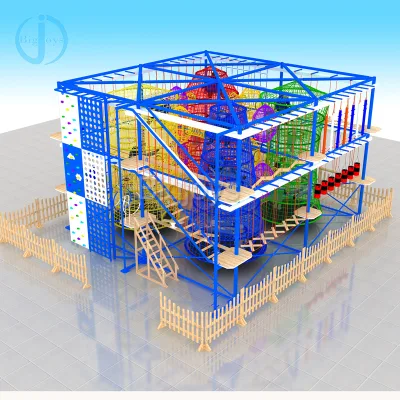
2024 Popular Kids Zone Games Rope Course Obstacle Course for Shopping Mall
$5099.51 - $20398.02
MOQ: 1 Minimum
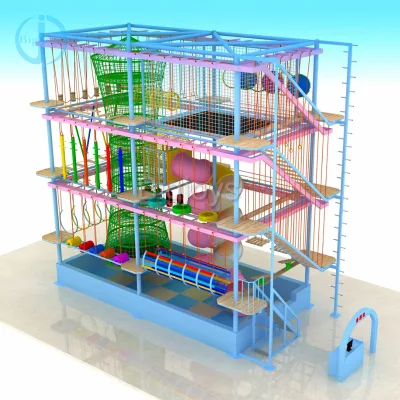
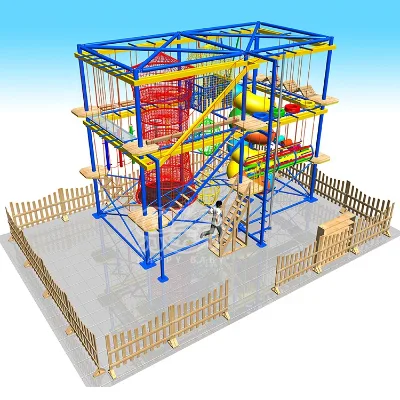
Rectangle Kid Indoor Adventure Park Rope Course for Adults and Children
$105.00 - $150.00
MOQ: 50 square
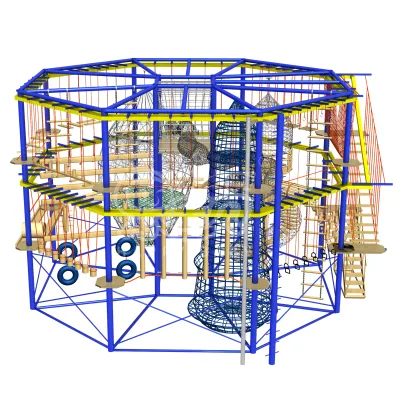


Certified China Factory: Durable Rope Course for Outdoor Amusement Park
$100.00 - $300.00
MOQ: 1 Square Meters

Kids Adult Indoor Outdoor Adventure High and Low Level Training Ropes Course
$120.00 - $180.00
MOQ: 1 Square Meters

Customized Small Spaces Adventure Climbing Rope Course for Kids Indoor Outdoor Fun
$120.00 - $180.00
MOQ: 1 Square Meters

Indoor Outdoor Playground Children Adventure Obstacle Park Kids Rope Course with Tent
$100.00 - $180.00
MOQ: 50 Square Meters

Customized Two Floors Kid Playground Park Children Rope Course Outdoor with Climbing Wall
$120.00 - $180.00
MOQ: 1 Square Meters

High Wooden Kids Rope Course at Children Indoor Outdoor Playground Trampoline Park
$120.00 - $180.00
MOQ: 1 Square Meters

Team Building Indoor High Level Climbing Adventure Challenging Obstacle Course
$100.00 - $150.00
MOQ: 50 Square Meters

Kids Indoor High Rope Adventure Course for Thrilling Playground
$90.00 - $350.00
MOQ: 10 Square Meters


"Indoor Brave Track Customized for Children’ S Challenging Fun Activities"
$80.00 - $150.00
MOQ: 10 Square Meters


Comprehensive Sourcing Guide
Low Rope Course for Kids Sourcing Guide
Procuring a low rope course for children requires a careful balance between developmental utility and rigorous safety engineering. These structures are designed as physical development training systems that challenge balance, coordination, and confidence without the high-risk factors associated with high-altitude adventure courses. Buyers must recognize that these installations are not merely play equipment but specialized educational tools often deployed in indoor facilities, supermarkets, or dedicated adventure parks. The sourcing process demands a focus on structural integrity, material durability, and strict adherence to international safety standards to ensure the well-being of young users.
The market for these systems is diverse, ranging from standardized modular units to fully customized obstacle courses tailored to specific venue dimensions. Suppliers often offer options for various age groups, including children aged 3-12 years and older demographics up to 12 years and above, which influences the complexity and height of the obstacles. Understanding the intended user profile is critical, as it dictates the necessary jump weight capacities, enclosure heights, and the overall footprint of the installation. Buyers should approach this procurement as a long-term infrastructure investment rather than a simple equipment purchase, considering factors like warranty coverage, maintenance requirements, and the potential for future expansion or customization.
Product Scope and Observed Listing Signals
The observed product landscape reveals a wide variance in specifications, with prices ranging from $50 to $40,000 USD and minimum order quantities (MOQ) typically starting at just one set. This broad range indicates that buyers can find both small, entry-level modules and large, comprehensive adventure parks. The presence of customized size options, such as dimensions exceeding 16 feet or specific models like VS6-008 and VS5-160702-33, suggests that many suppliers prioritize bespoke solutions over off-the-shelf inventory. Buyers should expect that the final configuration will likely require detailed input regarding the available space, whether it is an indoor setting or a specialized commercial venue like a supermarket.
Material composition and construction methods are key differentiators in this category. Listings frequently highlight the use of wooden frames, steel components, and rotational molding techniques for certain elements, ensuring robustness against heavy use. The maximum jumping weight capacity is often cited as being greater than or equal to 100kg, which is a crucial metric for accommodating older children and ensuring the structure can withstand dynamic loads. Additionally, packaging details such as cotton with PP film or bubble bags indicate a need for careful logistics planning to prevent damage during transit from origins like China, including specific regions like Wenzhou and Henan.
Technical Specifications to Verify
When evaluating technical proposals, buyers must verify the physical dimensions and structural height of the course. Specifications often mention enclosure heights greater than 2.5 meters and overall sizes that can be customized to fit specific venues. It is essential to confirm whether the proposed design includes a square or other specific shape configuration that aligns with the floor plan of the installation site. The model numbers provided by suppliers, such as BJ-IP80 or VS5-150721-32, should be cross-referenced with detailed engineering drawings to ensure that the footprint and vertical clearance meet the safety and spatial requirements of the facility.
The allowable passenger capacity and the specific entertainment projects included in the course are also critical technical parameters. Buyers should verify if the system is designed as a rope course adventure or a more general obstacle training system, as this affects the flow of users and the complexity of the activities. The maximum capacity, which may be listed as 100 persons for larger installations, must be validated against the intended throughput of the venue. Furthermore, the use of specific productive technologies like rotational molding for certain components should be confirmed to ensure durability and resistance to wear and tear from frequent use by children.
Compliance and Safety Documentation
Safety certification is non-negotiable for low rope courses intended for children. Buyers must insist on documentation that includes recognized international standards such as EN1176, which is a primary benchmark for playground equipment safety. Additional certifications like ISO9001 for quality management, ISO14001 for environmental management, and tests by SGS and TUV provide further assurance of manufacturing rigor. The presence of CE marking is a common requirement, but buyers should verify that the certification covers the specific components of the course, including the metal frames, springs, and mattress materials, to ensure comprehensive compliance.
Beyond static certifications, the warranty terms and guarantee periods offer insight into the supplier’s confidence in their product’s longevity. Typical warranties cited in the market include five years for the metal frame, three years for springs, and one year for mattresses, though some suppliers may offer extended five-year warranties on the entire structure. Buyers should carefully review these terms to understand what constitutes valid coverage and what maintenance actions might void the warranty. Ensuring that the supplier provides clear documentation of these guarantees is essential for protecting the investment and ensuring long-term operational safety.
Cost Drivers and Commercial Terms
The cost of a low rope course is influenced by several factors, including the level of customization, the materials used, and the complexity of the obstacle design. Prices can vary significantly based on whether the buyer opts for a standard model or a fully customized solution with specific dimensions and features. The MOQ of one set allows for flexibility in budgeting, but buyers should be aware that larger orders or more complex configurations may impact the unit price. Payment terms such as FOB, CIF, and CNF are common, and buyers should evaluate these based on their logistics capabilities and risk tolerance.
Lead times are another critical commercial consideration, with delivery periods typically ranging from 7 to 20 days after all information is confirmed. However, these timelines can extend depending on the level of customization and the current production schedule of the supplier. Buyers should factor in shipping and installation time when planning their launch dates. Additionally, the origin of the product, often from China, may involve import duties and logistics costs that should be included in the total cost of ownership. Clear communication regarding these timelines and terms is essential to avoid delays and ensure a smooth procurement process.
Supplier Qualification and Quality Control
Selecting a reliable supplier involves verifying their manufacturing capabilities and quality control processes. Buyers should look for suppliers who accept OEM orders and have a history of producing customized products, as this indicates flexibility and expertise in meeting specific client needs. The brand name, such as Bigjoys, may be associated with certain quality standards, but buyers should conduct their own due diligence to assess the supplier’s reputation and track record. Requesting references or case studies of previous installations can provide valuable insights into the supplier’s reliability and the performance of their products in real-world settings.
Quality control should be emphasized throughout the production process, from material sourcing to final assembly. Buyers should inquire about the specific standards followed during production, such as EN1176 and ISO9001, and request evidence of these practices. The use of high-quality materials, such as steel and wood, and advanced production techniques like rotational molding, should be verified through site visits or third-party inspections if possible. Ensuring that the supplier has a robust quality control system in place is crucial for minimizing the risk of defects and ensuring the long-term safety and durability of the low rope course.
Long-Term Procurement Checks
After the initial purchase, buyers must establish a routine for maintenance and inspection to ensure the continued safety and functionality of the low rope course. Regular checks of the metal frame, springs, and mattress materials are essential to identify any signs of wear or damage that could compromise safety. Buyers should work with the supplier to develop a maintenance schedule that aligns with the warranty terms and the expected usage intensity of the facility. Keeping detailed records of all inspections and repairs is also important for tracking the condition of the equipment over time.
Furthermore, buyers should maintain a relationship with the supplier for potential future upgrades or expansions. As the needs of the facility or the age group of the users change, the ability to customize or add new elements to the course can be a significant advantage. Buyers should stay informed about new models and technologies offered by the supplier, such as updated versions of the VS series or new designs that incorporate enhanced safety features. By planning for long-term engagement, buyers can ensure that their investment in a low rope course remains relevant, safe, and engaging for years to come.
FAQs
What certifications do low rope courses for kids have?
Products typically hold CE, ISO9001, and EN1176 certifications to ensure safety standards. Some listings also include SGS, TUV, and ISO14001 approvals. These documents verify that the equipment meets international safety requirements for children's play areas.
How long is the delivery time for these products?
Delivery usually takes about 10 to 20 days after order confirmation. Some suppliers offer faster turnaround times of 7 to 15 days once all information is confirmed. Exact timing depends on the specific manufacturer and customization requirements.
Can I customize the size and dimensions of the course?
Yes, the size can be customized to fit specific indoor or outdoor spaces. Standard dimensions vary, but many manufacturers offer tailored solutions to meet unique project needs. This flexibility allows for precise fitting in various environments.
What is the minimum order quantity for these courses?
The minimum order quantity can be as low as one set for some suppliers. Other vendors may require up to 100 units depending on the product type. Buyers should verify specific MOQs with individual manufacturers before placing an order.
Which materials are used to construct these rope courses?
Materials often include steel frames and wooden components for durability. Some units feature rotational molding technology for specific parts. The combination ensures structural integrity while maintaining safety for children using the equipment.
What warranty is provided for the metal frame and springs?
Warranties typically cover five years for the metal frame and three years for the springs. Mattresses usually have a one-year warranty period. These terms protect buyers against manufacturing defects and ensure long-term reliability.
Where are these products manufactured and shipped from?
Products are primarily manufactured in China, with origins in cities like Wenzhou and Henan. Shipping terms include FOB, CIF, and CNF options. Buyers can expect global distribution from these established manufacturing hubs.