Find lp style single-coil bass pickup for guitars, bands, and studios
Source 30 listings for the lp style single-coil bass pickup to compare specifications like material, finish, and application. Buyers can evaluate options from various Chinese manufacturers to find the right component for electric guitar or bass instruments.
Key considerations
Products List
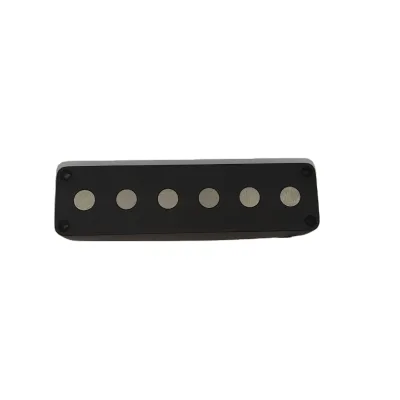
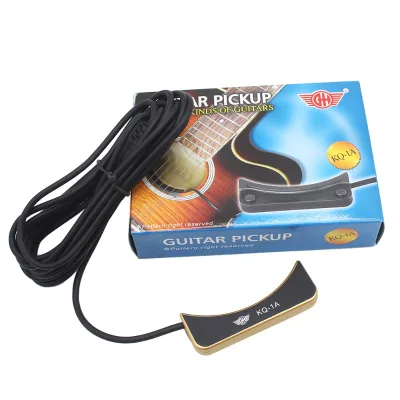
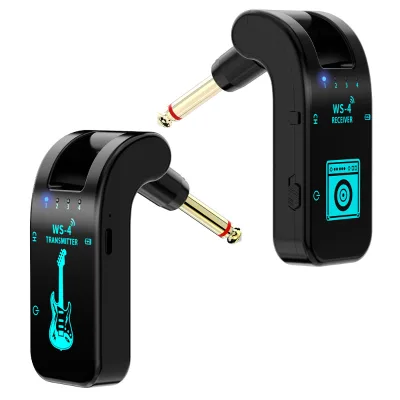
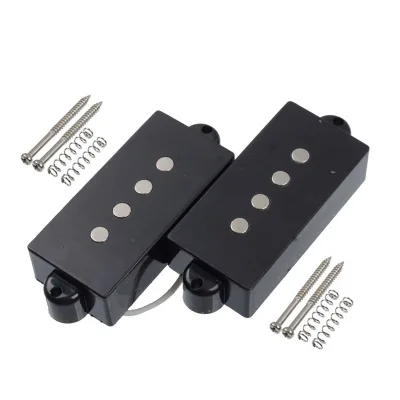
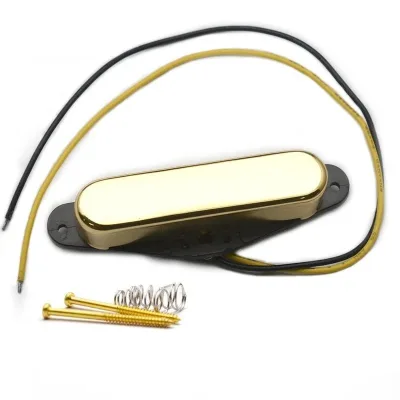
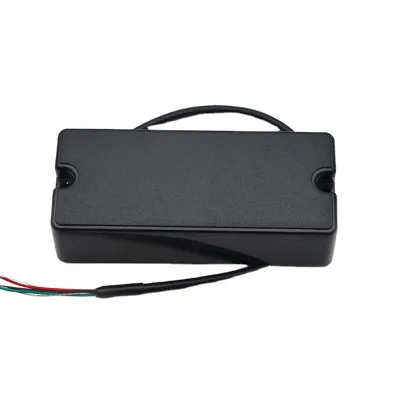
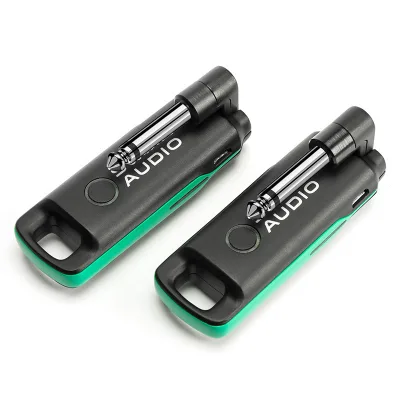
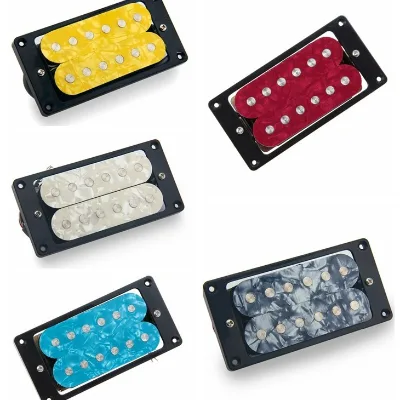
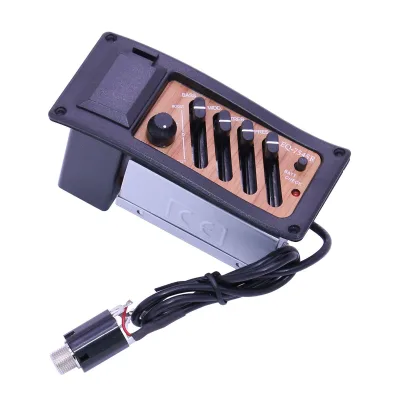


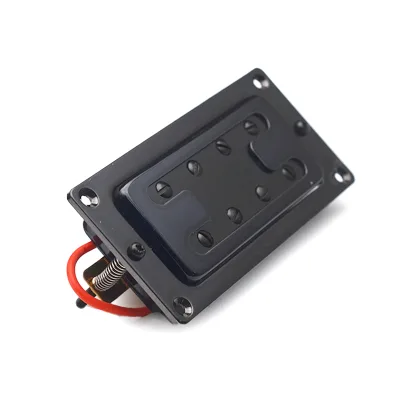
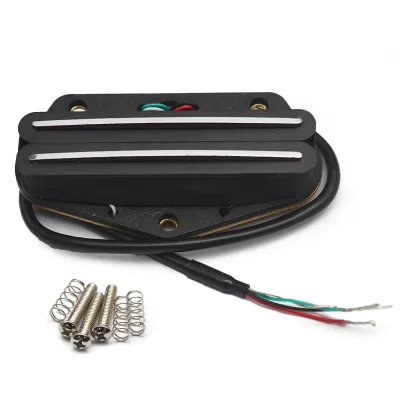
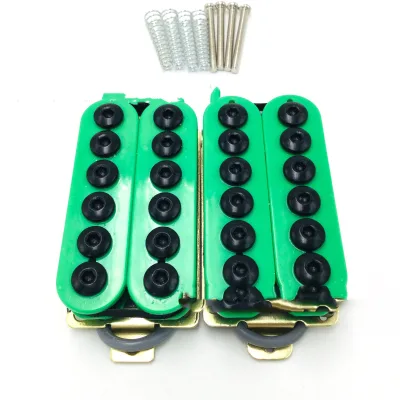
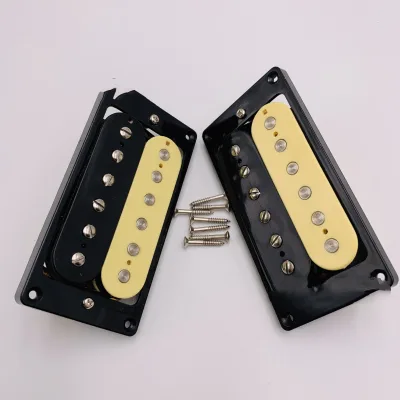
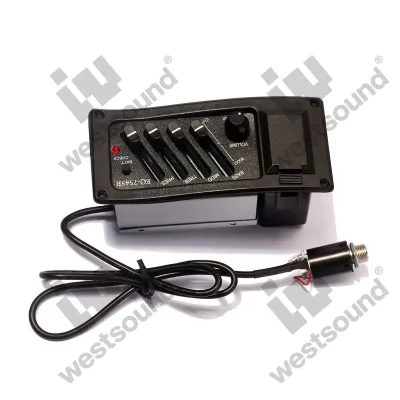
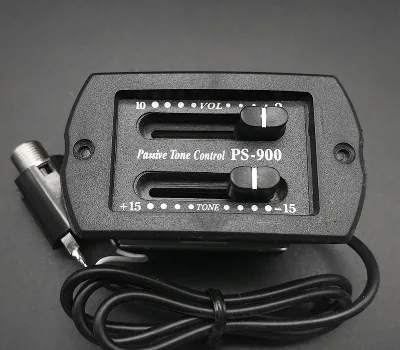
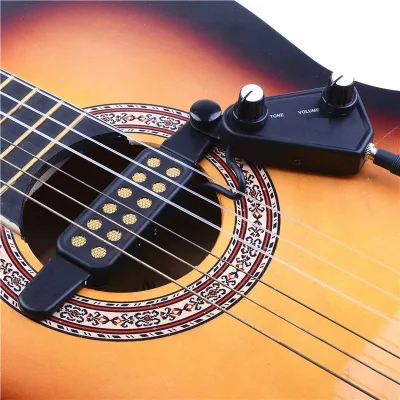
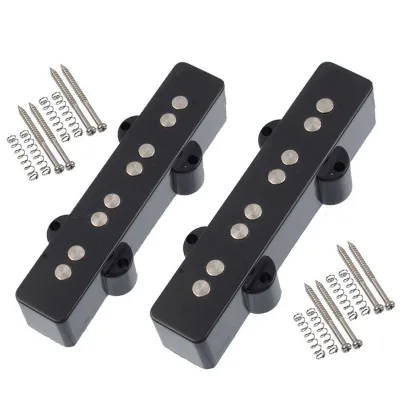


Hot Sale Made in China Custom Brand Design H-S-H Pickup Electric Guitar
$65.00 - $82.00
MOQ: 30 Pieces
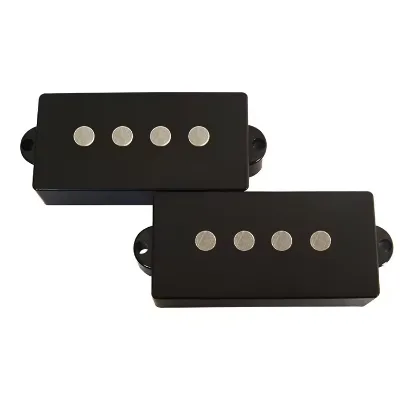
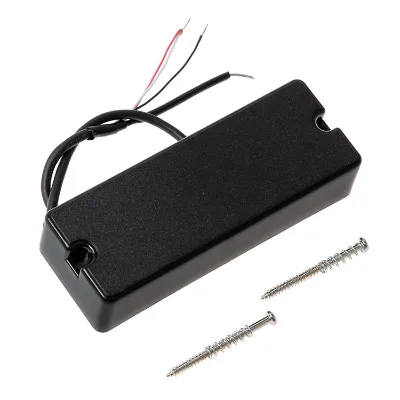
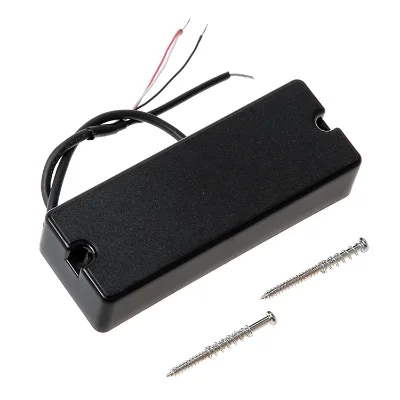
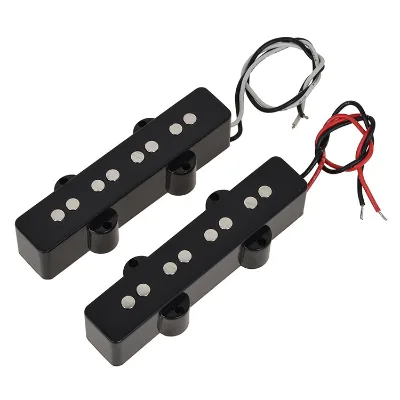
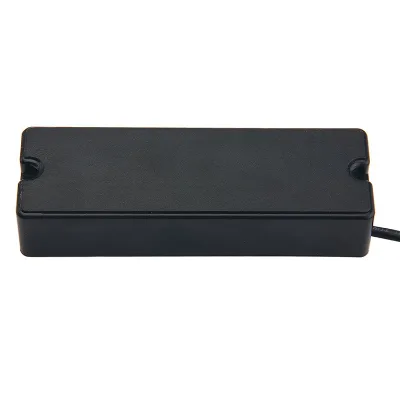
Noiseless Closed/Sealed J Bass 4 String Bass Guitar Pickup with High Quality
$4.58 - $4.99
MOQ: 10 pieces
Comprehensive Sourcing Guide
Strategic Sourcing Guide for LP Style Single-Coil Bass Pickups
Understanding the Product Category and Core Specifications
Sourcing an LP style single-coil bass pickup requires a precise understanding of the intersection between guitar aesthetics and bass-specific tonal requirements. The "LP style" designation typically refers to the physical form factor and mounting configuration associated with the Les Paul platform, which often dictates specific cavity dimensions and mounting hardware. However, when applied to bass instruments, the term frequently describes a single-coil design that fits into the body contours of bass guitars that mimic the silhouette of the classic electric guitar, or it refers to a specific pickup shape used in hybrid bass configurations.
Based on the observed product data, the market for these components is diverse, with suppliers offering variations in material, finish, and electrical characteristics. A critical observation from the current supply landscape is the prevalence of OEM and ODM branding, indicating that many manufacturers produce generic or white-label units that can be customized. The materials identified in the active listings include ABS plastic, metal, and coated finishes, suggesting a range from cost-effective, lightweight options to more durable, magnetically optimized metal housings.
The technical specifications for these pickups vary significantly across the supply base. Some units are explicitly designed for bass applications, while others are marketed for electric guitars but may be adaptable. For instance, one observed model is designated specifically for "BASS" application with a single gross weight of 0.300 kg, while another is listed for "Electric guitar/ bass" with a weight of 1.000 kg. This variance highlights the importance of verifying the specific application intent of the supplier's inventory. Buyers must distinguish between pickups designed for the higher string tension and lower frequency range of a bass guitar versus those intended for standard electric guitars, as the magnetic field strength and coil winding density differ to accommodate the fundamental frequencies of bass strings.
Technical Specifications and Design Attributes
When evaluating the technical attributes of LP style single-coil bass pickups, buyers must scrutinize the physical dimensions, material composition, and electrical output. The product data reveals a wide range of single package sizes, from 26x15x10 cm to 30x15x15 cm, which likely correlates to the packaging of the pickup and its associated mounting hardware rather than the pickup itself. However, the physical size of the pickup is a primary constraint; an LP style pickup must fit the specific routing of the instrument body.
Material selection is a primary driver of both cost and tonal character. The observed listings include products made from ABS plastic, which offers durability and cost efficiency, and metal components, which may provide better shielding or a different aesthetic finish. The finish types observed include "Matte" and "Coated" or "Uncoated" descriptions. A matte finish is often preferred for a vintage look, while coated finishes may offer resistance to corrosion and wear. The presence of "Coated" descriptions in some listings suggests a protective layer that might be essential for instruments exposed to varying environmental conditions.
Electrical specifications are equally critical. While specific frequency ranges for the bass pickups were not universally detailed in the provided data, one listing mentions a frequency range of 2.4GHz ISM, which is indicative of wireless transmission technology rather than the pickup's audio frequency response. This distinction is vital; a buyer must ensure they are sourcing a passive or active audio pickup and not a wireless transmitter module unless that is the specific requirement. The control types observed include "Touch" and "Button" controls, which implies that some units may be active pickups requiring a power source, while others are passive. However, a specific listing notes "Without Battery," confirming the existence of passive options in the market.
The following table summarizes the observed technical attributes to assist in specification verification:
| Attribute Category | Observed Variations | Sourcing Implication |
|---|---|---|
| Material | ABS, Metal, Plastic | Metal offers durability; ABS is lightweight and cost-effective. |
| Finish | Matte, Coated, Uncoated | Coated finishes may offer better corrosion resistance. |
| Application | Electric Guitar, Bass, Hybrid | Must verify "BASS" designation for proper tonal output. |
| Power Source | Without Battery, Touch Control | "Without Battery" indicates passive; "Touch" may imply active. |
| Weight | 0.300 kg to 1.000 kg (Gross) | Indicates packaging weight; actual pickup weight is lighter. |
| Brand Type | OEM, ODM, NAOMI, CIK | OEM/ODM allows for customization; branded units may have consistency. |
Compliance, Certification, and Regulatory Checks
In the B2B procurement of electronic musical components, compliance with international standards is a non-negotiable aspect of the sourcing process. While the provided product data does not explicitly list specific certification numbers (such as CE, FCC, or RoHS), buyers must treat the absence of visible certification data as a risk factor requiring immediate verification. The "Place of Origin" for the majority of the observed products is Guangdong, China, with some from Zhejiang and Shanghai. These regions are major manufacturing hubs, but the regulatory adherence can vary between factories.
Buyers should request proof of compliance with the Restriction of Hazardous Substances (RoHS) directive, which limits the use of specific hazardous materials in electrical and electronic equipment. This is particularly relevant given the metal and plastic components used in the pickups. Additionally, if the pickups are marketed as active or include wireless components (as hinted by the 2.4GHz ISM reference in one listing), they must comply with FCC regulations in the United States or the CE marking requirements in Europe regarding electromagnetic compatibility (EMC).
The "Brand Name" field in the data shows a mix of OEM/ODM and specific brand names like "NAOMI" and "CIK." When sourcing under an OEM arrangement, the buyer is responsible for ensuring that the final product meets the compliance standards of the destination market. The supplier must provide a Declaration of Conformity (DoC) or a test report from an accredited laboratory. Without these documents, the risk of customs delays or product recalls increases significantly. Buyers should also verify that the "Coating Description" and "Finish type" do not involve materials that violate environmental regulations in the target export market.
Cost Drivers and Pricing Dynamics
The pricing landscape for LP style single-coil bass pickups is influenced by several key factors, including material costs, manufacturing complexity, and order volume. The observed price range in the market spans from $1.41 to $150 USD, a disparity that reflects the vast difference between basic passive units and high-end active or custom-wound pickups. The lower end of the spectrum likely corresponds to mass-produced, ABS plastic or simple metal units with standard OEM branding. The higher end may include pickups with specialized metal alloys, advanced shielding, or active electronics requiring battery integration.
Minimum Order Quantity (MOQ) is another significant cost driver. The observed MOQ range is between 1 and 50 units. A low MOQ of 1 allows for sample testing and small-batch prototyping, which is essential for buyers validating product quality before committing to larger orders. However, the unit price for low-volume orders will naturally be higher. Conversely, an MOQ of 10 sets or higher, as seen in some listings, typically unlocks a lower per-unit cost. The "Selling Units" are listed as "Single item," suggesting that while the MOQ might be higher, the transaction can be structured around individual units if the total order meets the threshold.
Other cost factors include the "Single package size" and "Package weight." Larger packaging dimensions and heavier weights (e.g., 260g to 1.000 kg gross weight) increase shipping costs, particularly for air freight. Buyers should calculate the total landed cost, including freight, duties, and insurance, rather than focusing solely on the FOB price. The "Process" attributes, such as "Coated" or "Matte" finishes, may also add to the manufacturing cost due to additional labor or material steps.
Typical Applications and Market Fit
The primary application for LP style single-coil bass pickups is in the construction and modification of bass guitars. The data explicitly lists "Application: BASS" and "Application: Electric guitar/ bass," confirming their utility in both dedicated bass instruments and hybrid setups. The "Function" is described as "Music Effect," which is a broad term but generally implies the conversion of string vibration into an electrical signal for amplification.
These pickups are particularly suited for bassists seeking a specific tonal profile. Single-coil pickups are known for their clarity, punch, and articulate attack, which can be desirable in funk, slap bass, and rock genres. The "LP style" form factor suggests they are designed to fit into the body cavities of instruments that share the aesthetic or structural design of the Les Paul, or they may be used in basses that utilize a similar pickup mounting system.
The "Use" attribute is listed as "GUITAR" in some contexts and "BASS" in others, indicating that some models are versatile. However, for a dedicated bass application, the magnetic pole pieces and coil windings must be optimized for the thicker strings and lower frequencies of a bass. Buyers should verify that the "Model Number" corresponds to a bass-specific design, as using a guitar pickup on a bass may result in insufficient output or tonal imbalance. The "Control Type" being "Button" or "Touch" suggests that some units may be part of a more complex system involving onboard preamps or active circuits, which are common in modern bass setups.
Supplier Evaluation and Quality Control
Evaluating suppliers for LP style single-coil bass pickups requires a rigorous approach to quality assurance. The "Brand Name" field shows a prevalence of OEM/ODM, meaning the buyer may be dealing with the factory directly or through a trading company. In either case, the buyer must assess the factory's capability to maintain consistent quality across batches. The "Place of Origin" is consistently China (Guangdong, Zhejiang, Shanghai), regions known for high-volume electronics manufacturing, but quality control practices can vary.
Key quality control checks should include:
- Visual Inspection: Verify the "Finish type" (Matte, Coated) for consistency and absence of defects like scratches or uneven coating.
- Dimensional Accuracy: Ensure the "Single package size" and internal components match the specifications for the intended instrument body.
- Electrical Testing: Test the output impedance, frequency response, and signal-to-noise ratio. While specific test results are not provided in the data, buyers must request these metrics from the supplier.
- Material Verification: Confirm that the "Material" (ABS, Metal) matches the order specifications and that the metal components are free from corrosion or plating defects.
The "Feature" attribute lists "Durable" as a selling point. Buyers should validate this claim through independent testing or by reviewing third-party quality reports. The "Package" type, listed as "Carton" or "Opp Bag," also impacts the protection of the product during transit. A sturdy carton is generally preferred for bulk orders to prevent damage, while Opp bags may be sufficient for individual retail units.
Long-Term Procurement Considerations
Sourcing LP style single-coil bass pickups is not merely a transactional event but a strategic decision that impacts long-term product reliability and brand reputation. The "Model Number" variations (e.g., R-EPK1, KQ-1A, M-TP133, T-DXZP-39, EA-22, JHDBS-5) indicate a fragmented market with many different SKUs. Buyers should aim to standardize their supply chain by selecting a limited number of models that meet their specific tonal and physical requirements. This standardization simplifies inventory management and ensures consistency in the final product.
Lead times and supply chain resilience are critical considerations. While specific lead times are not provided in the data, buyers should establish clear communication channels with suppliers to understand production schedules and potential delays. The "MOQ" flexibility (1 to 50) allows for agile procurement strategies, enabling buyers to start with small orders and scale up as demand grows. However, reliance on a single supplier for a critical component like a pickup can pose a risk. Diversifying the supplier base or maintaining a safety stock of key models can mitigate supply chain disruptions.
Finally, the "Brand Name" strategy should be considered. If the buyer intends to sell under their own brand, the OEM/ODM capability of the supplier is essential. The supplier must be willing to customize the "Coating Description," "Finish type," and packaging to align with the buyer's brand identity. Long-term partnerships with suppliers who demonstrate flexibility and a commitment to quality will yield the best results in the competitive musical instrument market.
FAQs
What material options exist for lp style single-coil bass pickup?
Products are available in ABS plastic, metal, and standard plastic compositions. Buyers should verify the specific material listed for each model number to ensure durability and tonal characteristics match their instrument requirements.
Which model numbers are available for bass guitar applications?
Specific models like KQ-1A, M-TP133, T-DXZP-39, and EA-22 are listed for bass or hybrid use. Verify the application field to confirm the unit is designed for bass strings rather than standard electric guitars.
Can I find lp style single-coil bass pickup with low MOQ?
Yes, suppliers offer Minimum Order Quantities ranging from 1 to 50 sets. Some listings require 10 sets minimum, while others allow single item purchases for sampling purposes.
How does the finish type affect the pickup durability?
Available finishes include matte, coated, and uncoated options. Coated finishes may offer better resistance to corrosion and wear compared to uncoated or standard matte surfaces.
What is the typical price range for these pickups?
The observed market price ranges from 1.41 to 150 USD per unit. Pricing varies based on material, such as ABS versus metal, and whether the unit includes active electronics or battery requirements.
Which origin locations supply these guitar accessories?
Manufacturers are located in Guangdong, Zhejiang, and Shanghai, China. Buyers should confirm the specific place of origin for each supplier to assess logistics and shipping times.
What packaging details should I expect for bulk orders?
Packaging typically includes cartons or OPP bags with weights ranging from 260g to 1.000 kg gross. Single package sizes vary between 26x15x10 cm and 30x15x15 cm depending on the model.