Source Marine Dock Fuel Pump Hose for Dredging, Floating, and Petrol Suction
Compare 30 verified Marine Dock Fuel Pump Hose options designed for industrial dredging, floating applications, and aromatic fuel suction. These hoses feature natural rubber, nitrile rubber, and synthetic covers with working pressures ranging from 2.5 MPa to 90 Bar.
Key considerations
Products List


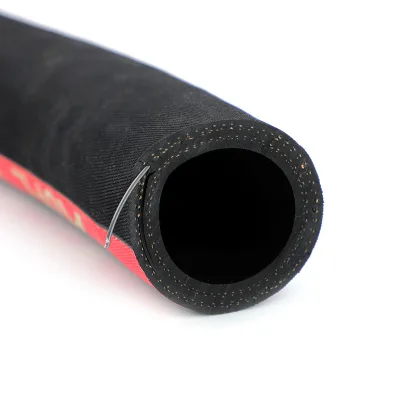
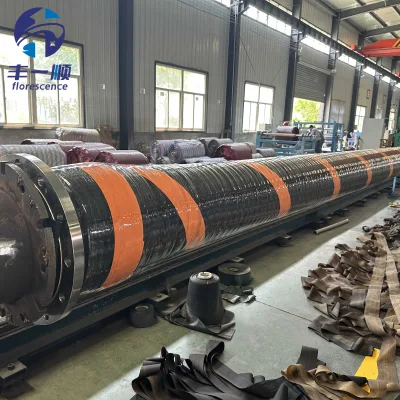
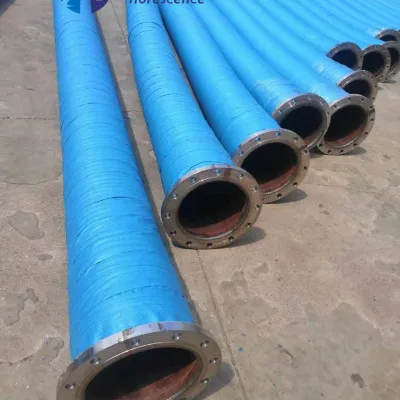
High Pressure Rubber Bulk Diesel 16mm 25mm Oil Suction Marine Fuel Hose Pipe
$1.69 - $47.60
MOQ: 1000 Meters




Comprehensive Sourcing Guide
Strategic Sourcing Guide for Marine Dock Fuel Pump Hoses
Selecting the appropriate hose for marine dock fuel pump applications requires a rigorous understanding of material compatibility, pressure ratings, and structural reinforcement. The core keyword "Marine Dock Fuel Pump Hose" points to a specialized category of industrial rubber tubing designed to handle the transfer of petroleum products, including those with significant aromatic content, under demanding environmental conditions. Buyers must navigate a complex landscape of specifications, ranging from nominal bore sizes to specific working and burst pressure limits. This guide provides a disciplined framework for evaluating potential suppliers and products based on verified technical attributes and industry standards, ensuring that procurement decisions are grounded in factual data rather than marketing assertions.
Technical Specifications and Material Composition
The foundation of a reliable marine fuel hose lies in its material composition and structural design. For applications involving fuel transfer, the tube material must offer exceptional resistance to hydrocarbons. Observed product data indicates that Nitrile Rubber (NBR) is a primary material choice for such hoses, specifically formulated to handle aromatic content up to 50%. The tube is typically described as black, smooth, and constructed from synthetic rubber to ensure chemical resistance. In contrast, other industrial variants may utilize Natural Rubber or a blend of NR/SBR Synthetic Rubber, though these are often better suited for general dredging or water transfer rather than high-aromatic fuel applications.
The reinforcement layer is equally critical for maintaining structural integrity under pressure. High-performance hoses for marine docks typically feature multi-ply high-strength synthetic fabric combined with helix steel wire. This combination allows the hose to withstand high internal pressures while maintaining flexibility. The cover material is generally a synthetic rubber, often CR (Chloroprene) or similar compounds, designed to protect the internal layers from abrasion, UV exposure, and weathering. The specific product model "CR2602" or "CR2606" may appear in supplier catalogs, indicating specific configurations for different pressure classes.
Pressure ratings vary significantly across product lines. For fuel-specific hoses, the minimum working pressure (W.P) can range from 10 Bar to 27.6 Bar, with burst pressures (B.P) reaching as high as 82.8 Bar. Other industrial dredging hoses may exhibit different ratings, such as a working pressure of 2.5MPa to 3MPa or a vacuum rating of 0.8 Bar. Buyers must verify that the selected hose meets the specific pressure requirements of their fuel pump system. Nominal bore sizes for these hoses can be substantial, ranging from 600mm up to 1100mm for large-scale dredging, while fuel transfer hoses may utilize smaller diameters, typically falling within the 12-inch to 52-inch range depending on the flow rate requirements.
Compliance, Certification, and Safety Standards
When sourcing hoses for fuel transfer, compliance with international standards and certifications is non-negotiable. The supply chain for marine equipment is heavily regulated to prevent environmental spills and ensure operator safety. A key certification to verify is ISO9001, which indicates that the manufacturer maintains a quality management system. While specific product standards like ISO 8469 may be referenced in the broader industry, buyers should treat such references as background knowledge and confirm the specific standard applicable to the hose model in question.
Safety is paramount when dealing with flammable liquids. The hose must be certified to handle the specific chemical properties of the fuel being transferred. For instance, hoses designed for aromatic content up to 50% require specific tube formulations to prevent degradation. Buyers should request documentation proving that the hose has been tested for compatibility with the exact fuel blend used at their facility. Additionally, the presence of a "Floating Dredging Hose" or "Suction/Discharge Dredging Hose" designation suggests a different application profile than a dedicated "Nitrile Petrol Suction Hose." It is crucial to distinguish between hoses designed for general water/dredging and those specifically engineered for fuel to avoid catastrophic failure.
Cost Drivers and Pricing Variables
The price of marine dock fuel pump hoses is influenced by several distinct factors, primarily material costs, manufacturing complexity, and order volume. The observed price range for industrial hoses can be extensive, spanning from $0.30 to $9,100 USD. This wide variance is not arbitrary but reflects differences in diameter, length, pressure rating, and material quality. A small-diameter, low-pressure hose will naturally cost significantly less than a large-diameter, high-pressure hose with steel wire reinforcement.
Minimum Order Quantity (MOQ) is another significant cost driver. The observed MOQ range spans from 1 to 1000 units. Suppliers offering lower MOQs may charge a premium per unit to cover setup costs, while bulk orders typically benefit from economies of scale. Buyers should also consider the "Customization" and "OEM" capabilities of the supplier. If a specific length, color, or fitting configuration is required, the supplier's ability to accommodate these requests without inflating the unit price is a key negotiation point. The product origin, often listed as Jiangsu, China, or generally China, can also influence logistics costs and lead times, which should be factored into the total cost of ownership.
Typical Applications and Operational Environments
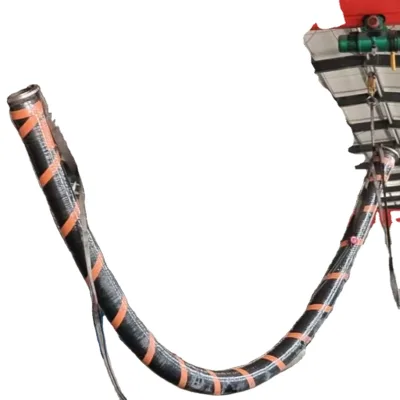
Marine dock fuel pump hoses are primarily utilized in the transfer of fuel between vessels and shore-based storage facilities. These hoses must operate in harsh environments characterized by saltwater exposure, UV radiation, and constant movement due to tides and vessel docking. The "Nitrile Petrol Suction Hose" is explicitly designed for this purpose, offering resistance to aromatic hydrocarbons. In contrast, "Floating Dredging Hoses" (FDH) or "Dredging Hoses" are designed for moving water, slurry, or non-flammable liquids, often featuring independent foam for buoyancy and a different reinforcement structure.
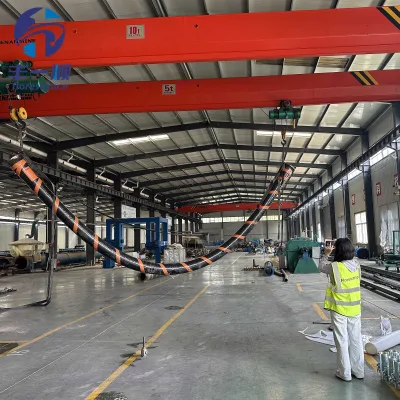
The operational environment dictates the need for specific features. For example, the hose must have a minimum bending radius, often specified as 8d, 12D, or 15D, to prevent kinking during vessel movement. The working pressure must be sufficient to handle the pump's output without bursting, while the vacuum rating ensures the hose does not collapse during suction. The length of the hose is also a critical variable, with standard lengths observed ranging from 11.8 meters to 61 meters, or even shorter segments of 1 to 3 meters for specific fittings. Buyers must match the hose length and flexibility to the specific geometry of their dock and vessel interface.
Supplier Evaluation and Verification
Evaluating a supplier for marine fuel hoses requires a focus on technical capability and transparency. Buyers should verify the supplier's ability to provide detailed product specifications, including the exact model number (e.g., SDH, DDH, FDH) and the corresponding pressure ratings. The "Working Pressure" and "Burst Pressure" must be clearly stated, with a safety margin appropriate for the application. For instance, a hose with a burst pressure of 9-30 Bar may be insufficient for high-pressure fuel transfer, whereas a hose with a burst pressure of 15-90 Bar offers a higher safety margin.
Suppliers should also demonstrate a clear understanding of the product's intended use. A supplier offering "Natural Rubber" hoses for fuel applications may not be the best choice compared to one specializing in "Nitrile Rubber" or "Synthetic Rubber" with proven resistance to aromatics. The presence of "OEM" and "Customization" options indicates a supplier's flexibility to meet specific client needs. Buyers should request samples or detailed test reports to verify the hose's physical properties, such as wear layer thickness (ranging from 10mm to 50mm) and cover thickness (5mm to 8mm). The origin of the product, whether Jiangsu or another region in China, should be transparently disclosed to facilitate logistics planning.
Quality Control and Long-Term Procurement
Ensuring long-term reliability requires a robust quality control (QC) process. Buyers should insist on a QC protocol that includes visual inspection of the hose for defects, pressure testing of finished products, and verification of material composition. The "Wear Layer Thickness" is a critical quality metric, with options ranging from 10-15mm up to 25-30mm for heavy-duty applications. A thicker wear layer generally indicates a longer service life in abrasive environments. Similarly, the "Cover Thickness" must be sufficient to protect the reinforcement from external damage.
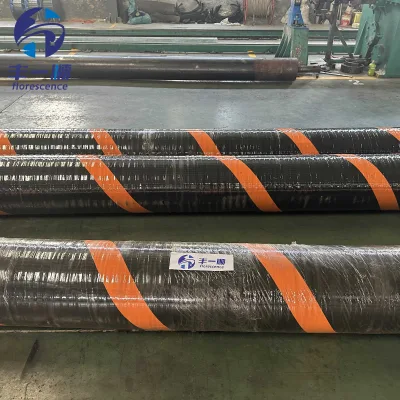
Long-term procurement considerations include the availability of spare parts, fittings, and replacement hoses. Suppliers that offer "Hoses Body to Be Wrapped with Plastic Membrane" for packaging demonstrate a commitment to protecting the product during transit and storage. Buyers should also consider the lead time and the supplier's capacity to handle large orders, given the observed MOQ range. Establishing a relationship with a supplier who can provide consistent quality and timely delivery is essential for maintaining operational continuity. Regular audits of the supplier's manufacturing process and quality certifications, such as ISO9001, will help mitigate the risk of supply chain disruptions.
Comparative Analysis of Hose Types
To assist in the decision-making process, the following table compares key attributes of the different hose types observed in the supply data. This comparison highlights the distinctions between fuel-specific hoses and general industrial hoses.
| Feature | Nitrile Petrol Suction Hose | Floating Dredging Hose (FDH) | Suction/Discharge Dredging Hose (SDH/DDH) |
|---|---|---|---|
| Primary Material | Nitrile Rubber (Tube) | NR/SBR Synthetic Rubber | Natural Rubber / Synthetic |
| Reinforcement | Multi-ply Fabric + Steel Wire | Fabrics + Helix Steel Wire + Foam | Fabrics + Steel Wire |
| Working Pressure | 10 Bar - 27.6 Bar | 3-10 Bar (SDH) / 5-30 Bar (DDH) | 2.5MPa - 3MPa |
| Burst Pressure | 30 Bar - 82.8 Bar | 9-30 Bar (SDH) / 15-90 Bar (DDH) | Not explicitly defined in range |
| Aromatic Resistance | Up to 50% | Not specified | Not specified |
| Typical Length | 11.8m / 30.5m / 61m | 11.8m | 5m ~ 11.8m |
| Nominal Bore | 12" - 52" | 6"-44" | 600mm - 1100mm |
| Key Application | Fuel Transfer | Floating/Dredging | Industrial Dredging |
This comparison underscores the importance of selecting the correct hose type for the specific application. Using a dredging hose for fuel transfer could lead to rapid degradation and safety hazards, while using a fuel hose for dredging might be unnecessarily expensive and less flexible. Buyers must align their technical requirements with the specific capabilities of the product model to ensure optimal performance and safety.
FAQs
What material is used for marine dock fuel pump hoses?
Nitrile rubber is the primary tube material used for these hoses to handle aromatic content up to 50 percent. The cover is typically synthetic rubber, and reinforcement includes multi-ply high-strength synthetic fabric with steel wire.
Can these hoses operate under high vacuum conditions?
Yes, specific models like SDH can operate with a vacuum rating of 0.8 Bar. Other variants may have different pressure limits, so verifying the specific working and burst pressure ratings is essential for safe operation.
Which certification should suppliers provide for fuel hoses?
Suppliers should provide ISO9001 certification to demonstrate a maintained quality management system. This ensures the manufacturing process meets international standards for safety and reliability when handling flammable liquids.
How does the minimum order quantity affect pricing?
The minimum order quantity ranges from 1 to 1000 units, directly influencing the unit price. Lower MOQs often carry a premium, while bulk orders benefit from economies of scale in manufacturing and logistics.
What is the typical working pressure range for these hoses?
Working pressure varies by model, with some rated between 10 Bar and 27.6 Bar for fuel applications. Other industrial variants may range from 2.5 MPa to 3 MPa, requiring careful selection based on pump output.
Are customization and OEM services available for these hoses?
Yes, customization and OEM services are available to meet specific client requirements. Buyers can request adjustments to length, color, or fitting configurations without necessarily inflating the unit price significantly.