Source Mattress Protector for Home Hotel and Hospital Use
Compare 30 verified Mattress Protector options featuring waterproof, anti-bacteria, and flame retardant properties. Buyers can evaluate customization, materials, and MOQs for home, hotel, and hospital applications.
Key considerations
Products List


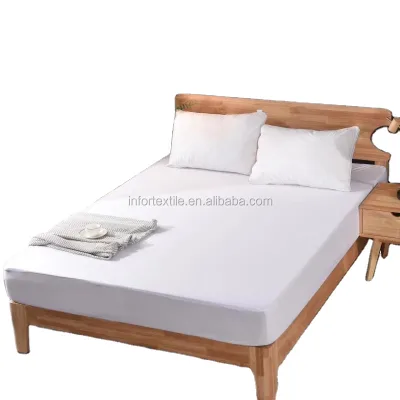
Comprehensive Sourcing Guide
Strategic Sourcing Guide for Mattress Protectors
The global market for mattress protectors has evolved from a niche hygiene product into a critical component of facility management for hotels, hospitals, and residential sectors. For B2B procurement professionals, sourcing these items requires a granular understanding of material science, manufacturing capabilities, and supply chain logistics. The following guide synthesizes observed market data and technical specifications to provide a disciplined framework for evaluating suppliers and selecting products that meet rigorous operational standards.
Technical Specifications and Material Composition
The foundation of a high-performance Mattress Protector lies in its material composition and construction techniques. Market observations indicate a divergence between woven and knitted technologies, each offering distinct advantages depending on the application. Knitted products, often constructed from 100% polyester, are frequently associated with a softer hand feel and enhanced breathability. These are commonly found in "All Season" applications where thermal regulation is paramount. Conversely, woven variants may offer different structural integrity, particularly when paired with specific backing materials.
A critical technical differentiator is the waterproof membrane. High-confidence data points to the use of 100% TPU (Thermoplastic Polyurethane) waterproof membranes and TPU lamination as standard features in premium units. This technology provides a barrier against liquids while maintaining air permeability, a feature explicitly listed in several product profiles. The absence of noise is another vital specification; buyers should verify that the protector features a "Silent When Turning Over" performance characteristic, as traditional PVC coatings often generate disruptive rustling sounds.
The GSM (Grams per Square Meter) range is a primary indicator of durability and thickness. Observed data suggests a viable market range of 220GSM to 500GSM. Products within the lower end of this spectrum, such as those at 220GSM, are often designed for specific applications like crib sheets or lightweight covers, while higher GSM values indicate heavier, more robust protection suitable for high-traffic commercial environments. The pocket depth is another essential specification; successful products are engineered to fit mattresses up to 18 inches in height, with some models offering adjustable ranges from 15cm to 40cm to accommodate varying mattress profiles.
Compliance, Certification, and Safety Standards
In the B2B sector, particularly for healthcare and hospitality, compliance is non-negotiable. While specific certification statuses like OEKO-TEX are noted in background data, procurement teams must verify current, active certification documents rather than relying on general market assumptions. The product features list highlights several critical safety attributes that serve as proxies for compliance: Anti-Bacteria, Anti Dust Mite, and Hypoallergenic properties. These features are essential for environments requiring strict hygiene protocols.
Buyers must scrutinize the "Standard" field in supplier specifications. While some products offer "Customized" or "Custom Design" standards, others adhere to specific size and weight benchmarks, such as a standard crib size of 52"×28" (132×71cm) with a GSM of 220gs. When evaluating suppliers, procurement officers should request test reports that validate the "Flame Retardant" claims, as this is a recurring feature in the observed data. Additionally, the "Food Grade" and "pH" neutral attributes mentioned in product features suggest a level of chemical safety that should be verified through third-party laboratory results before bulk ordering.
Cost Drivers and Pricing Dynamics
Understanding the cost structure of mattress protectors is essential for budget forecasting. The observed listed price range in the market spans from $1.50 to $16.00 USD. This wide variance is driven by several factors, including the complexity of the waterproof membrane, the GSM weight, and the level of customization. Products featuring advanced features such as "Cooling," "Noiseless" performance, and "Enclosure air layer" technology typically command prices at the higher end of this spectrum.
Minimum Order Quantity (MOQ) is a significant cost driver. The market data reveals an MOQ range of 10 to 500 units, with specific instances of 10 Set and 50 Set thresholds. Lower MOQs may result in a higher unit cost due to the fixed costs of production setup and logistics, whereas higher volume orders often unlock economies of scale. Buyers should also consider the packaging requirements; options such as "PVC+Carton," "Export Carton," or "Single PVC Zipper Bag + Outer Box" can impact the final landed cost. The origin of the product, primarily China with specific hubs like Qingdao, influences logistics costs and lead times, which must be factored into the total cost of ownership.
Typical Applications and Usage Scenarios
Mattress protectors are deployed across a diverse range of sectors, each with unique requirements. The observed usage categories include Home, Hotel, and Hospital environments. In the hospitality sector, the demand is driven by the need for hygiene, durability, and the ability to withstand frequent laundering. Features like "Disposable" options and "Anti-Pull" capabilities are particularly relevant for high-turnover hotel rooms where rapid replacement or robustness is required.
For healthcare facilities, the "Anti-Bacteria" and "Anti Dust Mite" features are critical for infection control. The "All Season" attribute ensures that the product remains functional regardless of ambient temperature fluctuations. In residential settings, the focus often shifts to comfort and noise reduction, with "Air-Permeable" and "Cooling" features becoming primary selection criteria. The "Adults" and "Babies" age group distinctions further segment the market, requiring specific sizing and safety considerations. For instance, baby-specific products often emphasize "Hypoallergenic" properties and specific crib dimensions, while adult products prioritize fit and mattress height compatibility.
Supplier Evaluation and Customization Capabilities
When evaluating potential suppliers, the ability to customize is a key differentiator. The data confirms that "Customization" is available, with options for "Customized" logos and "Custom Size" acceptance. This flexibility allows buyers to align products with their brand identity and specific operational needs. Suppliers offering "Custom Design" standards can tailor the product to meet unique size requirements, such as the "Twin, Full, Queen, King, Custom" size availability observed in the market.
The production origin is a vital factor in supplier selection. Most observed products originate from China, with specific mentions of Qingdao as a manufacturing hub. Buyers should verify the supplier's capacity to handle "Export Carton" packaging and ensure that the "Standard" production processes align with international shipping requirements. The "Technics" employed, whether "Knitted" or "Woven," should be matched to the specific performance needs of the end-user. A supplier's ability to provide samples that demonstrate the "Silent When Turning Over" performance and the integrity of the TPU lamination is a strong indicator of quality.
Quality Control and Long-Term Procurement Considerations
Effective quality control begins with the verification of washing instructions and durability. Observed data specifies a washing instruction of "60℃ Wash & Tumble Dry, No Spin," which is crucial for maintaining the integrity of the waterproof membrane and the fabric structure. Buyers must ensure that the supplier's quality assurance protocols include testing for these specific care parameters to prevent premature failure of the product.
Long-term procurement considerations involve the stability of the supply chain and the consistency of product attributes. The "GSM Range" of 220-500GSM suggests that buyers should establish clear specifications to avoid receiving products that fall outside the desired weight class. The "Packing" method, whether "Individually Packed in PVC Zipper Bag" or bulk cartons, affects storage efficiency and on-site handling.
Furthermore, the "Feature" set, including "Anti-Pull," "Waterproof," and "Flame Retardant," should be consistently validated across all production batches. Procurement teams should implement a sampling protocol that tests for these specific attributes before finalizing large orders. The "Customized" nature of the "Standard" and "Logo" allows for brand differentiation, but it also introduces complexity in quality control. Ensuring that the customization process does not compromise the core functional attributes, such as the TPU waterproofing or the air permeability, is essential for maintaining product reliability over the long term.
Summary of Key Product Attributes
To facilitate quick comparison during the sourcing process, the following table summarizes the critical attributes observed in the market data. This table serves as a checklist for buyers to ensure all necessary specifications are addressed during supplier negotiations.
| Attribute Category | Observed Specifications | Verification Requirement |
|---|---|---|
| Material | 100% Polyester, 100% TPU Waterproof Membrane | Confirm fabric blend and membrane type |
| Technics | Knitted, Woven | Verify construction method for comfort vs. durability |
| Features | Anti-Bacteria, Waterproof, Flame Retardant, Noiseless | Request test reports for specific claims |
| Sizes | Twin, Full, Queen, King, Custom, Crib (52"x28") | Match to inventory mattress dimensions |
| GSM Range | 220GSM - 500GSM | Define target weight for application |
| MOQ | 10 Set - 500 Set | Align order volume with budget and storage |
| Origin | China (Qingdao) | Assess logistics and lead time implications |
| Packing | PVC+Carton, Export Carton, PVC Zipper Bag | Verify packaging for shipping and storage |
By adhering to these structured guidelines and verifying the specific attributes against the supplied data, B2B buyers can navigate the complex Mattress Protector market with confidence. The focus on technical specifications, compliance, and supplier capabilities ensures that the final procurement decision supports operational efficiency and long-term value.
FAQs
What materials are used for mattress protectors?
Most units use 100% Polyester fabric with a 100% TPU waterproof membrane. Some models feature knitted or woven technics to ensure air permeability and comfort for all-season use.
Can I get custom sizes for these protectors?
Yes, custom sizes are available including Twin, Full, Queen, King, and specific crib dimensions. Suppliers also offer custom design standards to match unique mattress profiles up to 18 inches.
What is the minimum order quantity for bulk buying?
The minimum order quantity ranges from 10 sets to 500 sets depending on the supplier. Specific listings show thresholds of 10 sets or 50 sets for standard configurations.
Are these protectors suitable for hotel and hospital use?
Yes, they are designed for Home, Hotel, and Hospital usage with features like anti-bacteria and flame retardant properties. They also include anti-dust mite capabilities for strict hygiene environments.
How much do these protectors cost per unit?
The listed price range spans from 1.5 USD to 16 USD per unit. Pricing varies based on GSM weight, waterproof membrane type, and the level of customization required.
Do these products come with custom logos?
Customized logos are available for branding purposes on most models. Suppliers support custom design standards allowing buyers to align products with their specific brand identity.
What washing instructions should I follow?
Recommended care involves washing at 60℃ and tumble drying without spinning. This ensures the integrity of the TPU lamination and prevents damage to the waterproof membrane.