Source Mica Hand Dryer Heating Element for commercial, public, and residential use
Explore 30 verified listings for Mica Hand Dryer Heating Element options suitable for commercial, public, and residential applications. Buyers can compare specifications like power, voltage, and customization availability to find the right component for their needs.
Key considerations
Products List


High Drying Rate Deep U Loop Winding Heating Assembly Dryer Heater Element
$0.65 - $1.50
MOQ: 1000 Pieces


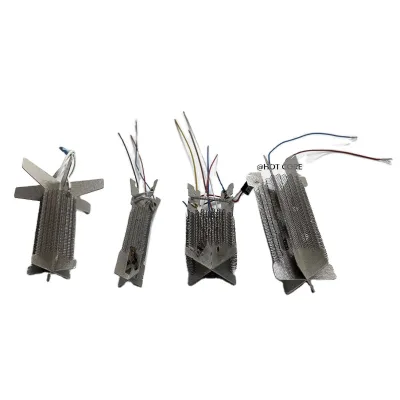
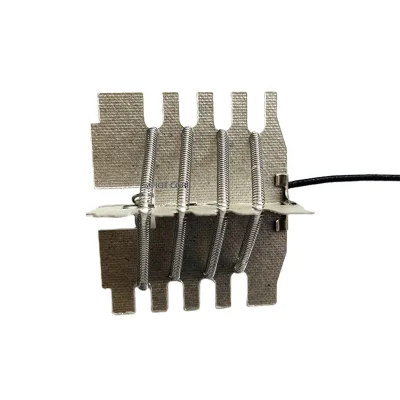
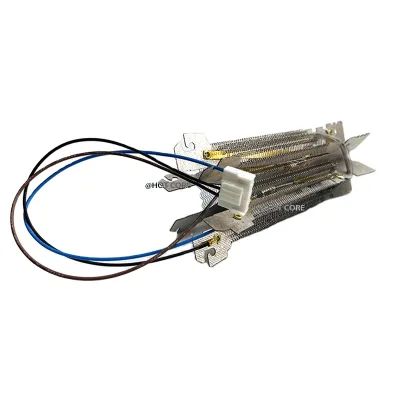
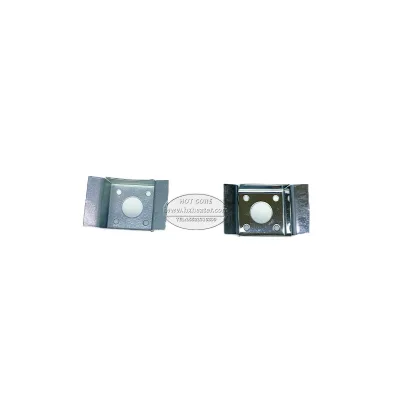
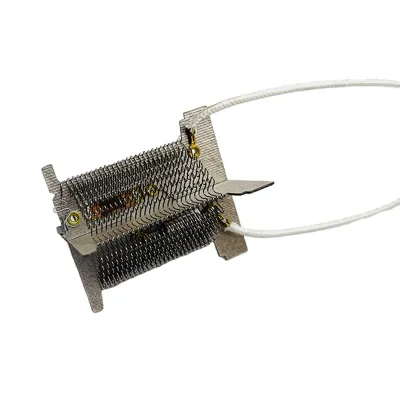


China Supplier High Temperature Electric Mica Hair Dryer Heating Element
$8.00 - $12.00
MOQ: 20 Pieces
Comprehensive Sourcing Guide
Strategic Sourcing Guide for Mica Hand Dryer Heating Elements
Understanding Component Specifications and Variability
When sourcing heating elements specifically for mica hand dryers, buyers must first navigate the significant variance in technical specifications found in the current market. The core keyword "Mica Hand Dryer Heating Element" often leads to a broader category of electric heating coils and infrared tubes, where the actual material composition and form factor can differ substantially from the traditional mica substrate. In the observed product landscape, the "Form" attribute varies widely, ranging from "Heating Wire" and "Spiral Heating Element" to "Squirrel-Cage Heating Element." This indicates that while the end application is a hand dryer, the internal heating architecture is not uniform. Some listings specify a "Round" shape, while others explicitly list a "Square" shape, suggesting that the physical footprint must be matched precisely to the dryer's housing dimensions.
The power ratings observed in the market span from 50W to 2000W, with specific high-power units reaching 2000W. This wide range implies that procurement strategies must be tailored to the specific airflow and drying time requirements of the target appliance. For instance, a unit with a "Drying Time" of 10 seconds likely requires a higher wattage density compared to a slower-drying model. Voltage compatibility is another critical specification, with observed ranges covering 100V to 240V, necessitating strict verification against the target market's electrical grid standards. Furthermore, the "Conductor Material" is listed as "Copper Clad Steel" in some instances, while other entries reference "Ni-Cr Wire" or "Silicon Carbide" for infrared tubes. Buyers must verify if the specific element utilizes a mica substrate for insulation or if it relies on alternative ceramic or plastic insulation methods, as the term "mica" in a search query may not always reflect the actual material in the supplied product.
Compliance and Certification Verification Protocols
Navigating the regulatory landscape for heating elements requires rigorous verification of certifications, as the market data presents a mix of compliance statuses. The observed product attributes frequently list "CE" and "RoHS" certifications, which are standard for electrical appliances entering the European and many global markets. However, the data also includes variations such as "CE, ISORoHS" and "CE, ISOCCC, RoHS," indicating that different suppliers may adhere to different combinations of standards. It is crucial for buyers to understand that "ISO" in the product listing often refers to specific management or product standards rather than a universal ISO9001 certification, which is listed only as low-confidence background data.
Buyers should not assume that every listed product possesses all certifications mentioned in the aggregate data. The presence of a "UL/VDE Certificate" specifically for a thermostat rated at 85 degrees suggests that safety components may be certified separately from the heating element itself. When sourcing, procurement teams must request specific test reports for the heating element's insulation resistance, dielectric strength, and thermal endurance. The "After-Sales Service" attribute of "Online Support" is a positive indicator for troubleshooting, but it does not replace the need for physical certification documentation. Buyers must verify if the "Standard Export Packing" or "Independent Safe Packing" includes the necessary compliance labels and documentation required for customs clearance in the destination country. Relying solely on the "CE" tag without requesting the supporting technical file can lead to compliance risks, especially when the product origin is listed as "China" or "Zhongshan, China," regions with varying levels of regulatory enforcement.
Cost Drivers and Pricing Structure Analysis
The cost of sourcing heating elements is influenced by a complex interplay of material costs, manufacturing complexity, and order volume. The observed price range in the market spans from $0.5 to $12 USD, a significant variance that reflects differences in material quality, power output, and certification levels. A unit priced at the lower end of this spectrum likely utilizes standard Ni-Cr wire or basic copper-clad steel with minimal insulation, whereas a unit at the higher end may feature advanced materials like Silicon Carbide or include integrated thermostats with UL/VDE certification.
The Minimum Order Quantity (MOQ) is a primary driver of unit cost, with observed ranges extending from 10 to 3000 units. Suppliers offering an MOQ of 10 are likely catering to prototyping or small-batch needs, which inherently carries a higher per-unit cost due to setup fees. Conversely, orders approaching the 3000-unit threshold may benefit from economies of scale, potentially lowering the cost per unit significantly. The "Customization" attribute is listed as "Available" or "Acceptable" across multiple listings, which introduces a variable cost factor. Customizing the "Size" to specific dimensions like 605075mm or altering the "Shape" from round to square will likely incur tooling charges and higher MOQs. Additionally, the "Warranty" period, typically listed as "1 year" or "1 Year," can influence the price; a longer warranty often correlates with higher quality control costs and better materials, justifying a premium price point. Buyers should analyze the total cost of ownership, including the potential for higher failure rates in lower-priced, non-customized units, rather than focusing solely on the initial purchase price.
Typical Applications and Functional Integration
The functional integration of heating elements into hand dryers depends heavily on the specific application requirements, such as drying speed, energy efficiency, and safety features. The observed product attributes highlight several functional configurations, including "Adjustable Thermostat" capabilities and "Wind" settings that allow for "Cold/Warm Choose." This suggests that modern hand dryers are moving towards multi-mode operation, requiring heating elements that can be precisely controlled to switch between ambient air and heated air. The "Start Mode" being "Manual" in some listings indicates that the heating element must be compatible with manual activation switches, while others may require integration with automatic sensors.
The "Installation" method, listed as "Bracket," implies a mechanical mounting requirement that must be compatible with the dryer's internal chassis. The "Air Speed" of 30M/s observed in some high-power units suggests that the heating element must withstand high-velocity airflow without degrading or causing noise. The "Drying Time" of 10 seconds is a performance metric that directly correlates with the heating element's power density and the efficiency of the airflow system. Buyers should consider whether the heating element is intended for residential use, where "Household Appliance" is the primary classification, or for commercial high-traffic environments where durability and rapid heating cycles are paramount. The "Material" of the shell, often "Engineering Plastic," must be compatible with the heat output of the element to prevent melting or deformation, necessitating a thermal analysis of the entire assembly.
Supplier Evaluation and Operational Capabilities
Evaluating suppliers for heating elements requires a focus on their production standards and logistical capabilities. The "Standard" attribute in the product data varies, with listings showing "500PCS/CTN," "1000PCS/CARTON," and "420pcs/ctn," which reflects different packaging efficiencies and potential shipping costs. The "prod_packing" attribute ranges from "Standard Export Packing" to "Carton Box Packing" and "Independent Safe Packing," indicating varying levels of protection during transit. Buyers should assess whether the supplier's packaging is sufficient to prevent damage to the fragile heating wires or ceramic elements during international shipping.
The "prod_origin" is consistently listed as "China" or "Zhongshan, China," which is a major manufacturing hub for electrical components. However, the specific location "Zhongshan" suggests a concentration of specialized manufacturers in the Guangdong province. Buyers should verify the supplier's production capacity against their required lead times, although specific lead time data is not provided in the current context. The "After-Sales Service" of "Online Support" is a baseline expectation, but buyers should inquire about the availability of replacement parts and the responsiveness of technical support teams. The "Customization" availability is a key differentiator; suppliers that offer "Acceptable" customization are better positioned to meet unique design requirements, whereas those with rigid standard offerings may limit product differentiation.
Quality Control and Long-Term Procurement Strategy
Ensuring long-term reliability of heating elements requires a robust quality control strategy that goes beyond initial inspection. The "Warranty" of "1 year" is a common industry standard, but buyers should negotiate terms that cover premature failure due to manufacturing defects. The "Thermostat" rating of "85 Degrees" is a specific performance limit that must be validated through testing to ensure the element does not exceed safe operating temperatures under load. Quality control should include sampling for "Power" consistency, ensuring that a 2000W unit delivers the specified output within an acceptable tolerance range.
For long-term procurement, buyers should consider the "Standard" packaging quantities, such as "500PCS/Carton" or "1000PCS/Carton," to optimize inventory management and reduce storage costs. The "prod_model" numbers, such as "YIDA-D09" or "YIDA-0019," serve as unique identifiers that help in tracking product versions and ensuring supply chain continuity. Buyers should establish a relationship with suppliers who can provide consistent "prod_model" availability and maintain the "Standard Export Packing" protocols. Regular audits of the supplier's quality management system, particularly regarding the "CE" and "RoHS" compliance, are essential to mitigate the risk of regulatory non-compliance. By focusing on these technical and operational details, buyers can secure a reliable supply of heating elements that meet the rigorous demands of modern hand dryer applications.
FAQs
What certifications do mica hand dryer heating elements typically have?
Most units carry CE and RoHS certifications, though some listings also include ISO or CCC marks. Buyers must verify specific test reports for insulation and thermal endurance rather than relying solely on the product tag.
Which power ratings are available for these heating elements?
Observed power ratings range from 50W to 2000W depending on the specific model and application. Higher wattage units like the 2000W variant are often paired with faster drying times and higher airflow speeds.
Can I customize the size and shape of the heating element?
Customization is available for dimensions such as 60*50*75mm and shapes including round or square forms. Buyers should expect potential tooling charges and higher minimum order quantities when requesting non-standard specifications.
What materials are used for the conductor in these elements?
Conductor materials vary and include Ni-Cr wire, Copper Clad Steel, and Silicon Carbide for infrared tubes. The specific material choice impacts durability and heat output, requiring verification against the target appliance requirements.
How is the warranty structured for these heating components?
The standard warranty period is typically one year for most listed products. This coverage generally applies to manufacturing defects, but buyers should confirm specific terms regarding premature failure and replacement policies.
What voltage compatibility do these heating elements support?
The observed voltage range spans from 100V to 240V to accommodate different global electrical standards. Strict verification against the destination market's grid is necessary to ensure safe operation and compliance.
Which packaging standards are used for shipping these elements?
Packaging options include Standard Export Packing, Carton Box Packing, and Independent Safe Packing. Quantities per carton vary, such as 500 or 1000 pieces, affecting shipping efficiency and protection during transit.