Source Mitsubishi Steel Clutch Cover for Cars, Trucks, and Tractors
Compare 30 listings for Mitsubishi Steel Clutch Cover designed for cars, heavy duty trucks, and farm machinery. Buyers can evaluate specifications, certifications, and pricing from verified manufacturers in Shandong, China.
Key considerations
Products List


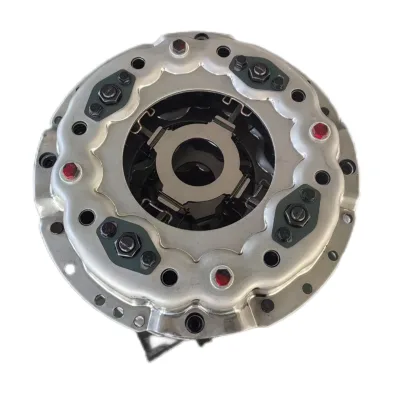


225mm Hot-Selling Clutch Cover with Truck Spare Parts Factory Sale Japanese
$10.00 - $25.00
MOQ: 1 Pieces

Factory Clutch Cover with Truck Car Auto Spare Parts Clutch Plate Embrague
$10.00 - $25.00
MOQ: 1 Pieces


Steel Clutch Cover Clutch Kits Transmission Automotive Spare Parts Clutch Assembly
$5.00 - $50.00
MOQ: 1 Pieces




Comprehensive Sourcing Guide
Strategic Sourcing Guide for Mitsubishi Steel Clutch Covers
Procuring a Mitsubishi Steel Clutch Cover requires a disciplined approach that balances specific technical compatibility with rigorous supply chain verification. The core keyword "Mitsubishi Steel Clutch Cover" points to a critical powertrain component where material integrity and dimensional precision are non-negotiable. Buyers must navigate a market where product attributes vary significantly between listings, ranging from hydraulic to electromagnetic systems, and from semi-linkage to full linkage states. This guide provides a structured framework for evaluating suppliers and products based on verified facts, ensuring that procurement decisions are grounded in observable data rather than marketing assertions.
Technical Specifications and Material Integrity
The foundation of a successful procurement begins with a precise understanding of the technical specifications. For the Mitsubishi 6D16 engine application, the clutch cover is a heavy-duty component designed to withstand significant torque and thermal stress. The primary material identified in the supply data is steel, which provides the necessary structural rigidity. However, buyers must verify that the steel grade meets the specific load requirements of their application, as the market also lists alternatives such as carbon and graphite or bronze for different clutch types.
Dimensional accuracy is paramount. The supplied data indicates specific measurements for various models, including a bolt hole circle diameter of 375mm and a mounting hole specification of 350mm. For the Mitsubishi 6D16 context, the part dimensions are often cited as 395220mm, while other heavy-duty variants may feature a 410mm clutch cover designation. The model number MFC561 appears frequently in the data, associated with standards like 350220375 mm. When sourcing, the buyer must cross-reference the OEM number 395220 against the physical dimensions of the replacement part to ensure a perfect fit.
Furthermore, the working state of the clutch cover dictates its mechanical behavior. The data presents a dichotomy in working states, listing both "Semi Linkage" and "No linkage" or "Linkage" configurations. A Mitsubishi Steel Clutch Cover intended for heavy-duty trucks or racing cars typically operates in a semi-linkage or linkage mode to manage power combining effectively. The stroke of the mechanism is another critical variable, with some listings specifying a 2-stroke operation. Buyers must confirm that the selected unit matches the hydraulic or mechanical linkage system of their vehicle, as a mismatch in working mode can lead to transmission failure.
Compliance and Certification Verification
In the automotive aftermarket, compliance is not merely a formality but a prerequisite for liability and safety. The supply data highlights several critical certifications that serve as indicators of manufacturing quality. The most prominent standard mentioned is ISO/TS16949, which is explicitly linked to both hydraulic and electromagnetic clutch classifications. This standard is essential for any supplier claiming to be an OE (Original Equipment) supplier. Additionally, the data references ISO9001 and CE certification, alongside E-Mark and RoHS compliance.
When evaluating a potential supplier, the buyer should not accept these certifications as generic claims. Instead, they must request valid certificates that specifically cover the production of steel clutch covers. The distinction between "Hydraulic Clutch" and "Electromagnetic Clutch" certifications is vital; a supplier certified for electromagnetic systems may not necessarily meet the rigorous standards for hydraulic steel covers. The data also notes a "Quality Test" attribute, implying that the manufacturer conducts internal testing. Buyers should verify the scope of these tests to ensure they cover tensile strength, thermal cycling, and wear resistance, which are critical for steel components operating under high load.
Cost Drivers and Pricing Structures
Understanding the cost structure of a Mitsubishi Steel Clutch Cover involves analyzing several variables beyond the base unit price. The observed price range in the market spans from 1 to 90 USD, a wide disparity that reflects differences in material quality, certification levels, and order volume. The primary cost driver is the material composition; steel covers with high-grade alloys and precise machining will command a premium over basic cast iron or lower-grade steel alternatives.
The Minimum Order Quantity (MOQ) is another significant factor influencing the total cost of ownership. The data indicates an MOQ range of 1 to 200 units. For small fleet operators or repair shops, an MOQ of 1 offers flexibility but may result in a higher per-unit cost. Conversely, bulk purchasers targeting an MOQ of 200 can leverage economies of scale to reduce the unit price. However, buyers must calculate the total landed cost, which includes the lead time implications. The standard lead time for these components is listed as 30-45 days. A longer lead time may necessitate higher inventory holding costs or emergency air freight expenses, which can erode the savings gained from a lower unit price.
Typical Applications and Usage Scenarios
The versatility of the Mitsubishi Steel Clutch Cover is evident in its listed usage scenarios. The data confirms applicability across a broad spectrum of vehicles, including cars, motorcycles, farm machinery, tractors, heavy-duty trucks, and racing cars. This wide range suggests that the component is available in various configurations tailored to specific power demands. For instance, a clutch cover designed for a tractor or farm machinery must prioritize durability and torque capacity, whereas a unit for a racing car might focus on weight reduction and rapid engagement.
The working mode, described as "Power Combining" or "Electricity Combination," further defines the application. Heavy-duty trucks and racing cars often utilize complex power transmission systems where the clutch cover plays a pivotal role in managing power flow. The voltage specifications, ranging from DC12V to DC24V, indicate that the component may be part of an electromechanical system. Buyers must ensure that the voltage rating of the clutch cover matches the electrical system of the vehicle. A 24V system in a heavy-duty truck requires a component rated for that specific voltage to prevent electrical failure or insufficient actuation.
Supplier Evaluation and Origin Analysis
Selecting the right supplier requires a deep dive into their operational capabilities and geographic origin. The data identifies Shandong, China, as the place of origin for these products. This region is a known hub for automotive parts manufacturing, offering a dense ecosystem of suppliers. However, the presence of a location does not guarantee quality. Buyers should evaluate the supplier's "Factory License" status, with the data noting "OE Supplier" as a key attribute. This designation implies that the manufacturer has the authorization to produce parts to original equipment standards.
The packing method is another indicator of supplier professionalism. The data lists various packing standards, including "Antirust Paper+ Plastic Bag+ Cartons," "Pallet+Antirust Paper+ Plastic Bag+ Cartons," and simple "Carton" or "Fob" (Free on Board) terms. A supplier offering robust palletized packing with antirust protection demonstrates a commitment to preserving the integrity of the steel component during transit. This is crucial for preventing corrosion, which can compromise the steel's structural properties before the part even reaches the installation site. Buyers should prioritize suppliers who provide detailed packing specifications that align with international shipping standards.
Quality Control and Long-Term Procurement
Quality control is the final barrier between a successful procurement and a costly failure. The data explicitly mentions that the products "Have" a quality test, but the buyer must define the parameters of this testing. A robust quality control protocol should include checks for dimensional accuracy against the 375mm bolt hole circle and 350mm mounting hole specifications. It should also verify the material composition to ensure the steel meets the required hardness and tensile strength.
For long-term procurement, consistency is key. The data shows a "Year" attribute of 2004, which may refer to the model year or a production batch date. Buyers should seek suppliers who can guarantee consistent quality over time, rather than one-off batches. The "Customization" attribute being available is a significant advantage for long-term partnerships, allowing buyers to tailor specifications to their specific fleet needs. However, customization should not come at the expense of standard compliance. The supplier must maintain ISO/TS16949 certification even when producing custom variants.
Comparative Analysis of Product Attributes
To facilitate decision-making, the following table summarizes the key attributes observed in the supply data, highlighting the variations buyers must navigate.
| Attribute Category | Observed Variations | Procurement Consideration |
|---|---|---|
| Material | Steel, Carbon and Graphite, Bronze | Verify steel grade for heavy-duty applications; avoid graphite/bronze unless specified for electromagnetic use. |
| Certification | ISO/TS16949, CE, E-Mark, RoHS, ISO9001 | Ensure certification covers the specific clutch type (Hydraulic vs. Electromagnetic). |
| Dimensions | 350mm, 375mm, 395*220, 410mm | Cross-reference OEM numbers (e.g., 395*220) with physical dimensions to ensure fit. |
| Working State | Semi Linkage, No Linkage, Linkage | Match the working state to the vehicle's transmission system (e.g., Semi Linkage for heavy trucks). |
| Voltage | DC12V, DC24V | Confirm voltage rating matches the vehicle's electrical system to prevent actuation failure. |
| Lead Time | 30-45 Days | Plan inventory levels to account for the standard lead time and potential delays. |
| MOQ | 1 - 200 Units | Balance unit cost savings against inventory holding costs based on order volume. |
Conclusion
Sourcing a Mitsubishi Steel Clutch Cover is a complex task that demands a thorough understanding of technical specifications, compliance requirements, and supplier capabilities. The data reveals a market with significant variation in product attributes, from material composition to working states. Buyers must rigorously verify certifications like ISO/TS16949 and ensure that the physical dimensions, such as the 375mm bolt hole circle, align with their specific vehicle models. By focusing on quality control, understanding cost drivers like MOQ and lead time, and selecting suppliers with proven factory licenses, buyers can secure reliable components that meet the demanding standards of heavy-duty and racing applications. The path to successful procurement lies in treating product attributes as observations to be verified rather than assumptions to be accepted, ensuring that every purchased unit delivers the performance and durability required for critical automotive operations.
FAQs
What certifications apply to mitsubishi steel clutch covers?
The products carry ISO/TS16949, CE, E-Mark, RoHS, and ISO9001 certifications. These standards apply specifically to hydraulic and electromagnetic clutch classifications, ensuring compliance for heavy-duty and racing applications.
Which materials are used for mitsubishi steel clutch covers?
Steel is the primary material for structural integrity, though carbon, graphite, and bronze variants exist. Buyers must verify the specific grade matches the torque requirements of their vehicle model.
How does the working state affect Mitsubishi Steel Clutch Cover selection?
Working states vary between semi-linkage, no linkage, and full linkage configurations. Select the mode that matches the vehicle's transmission system to ensure proper power combining and engagement.
Can I customize the Mitsubishi Steel Clutch Cover specifications?
Customization is available for specific buyer requests regarding dimensions or features. However, all custom units must maintain ISO/TS16949 certification and meet the original equipment standards.
What is the lead time for Mitsubishi Steel Clutch Cover orders?
The standard lead time ranges from 30 to 45 days for production and shipping. Buyers should plan inventory levels accordingly to avoid delays in fleet maintenance or assembly lines.
Which voltage ratings are available for mitsubishi steel clutch covers?
Available voltage ratings include DC12V and DC24V options depending on the model. Ensure the selected unit matches the vehicle's electrical system to prevent actuation failure.