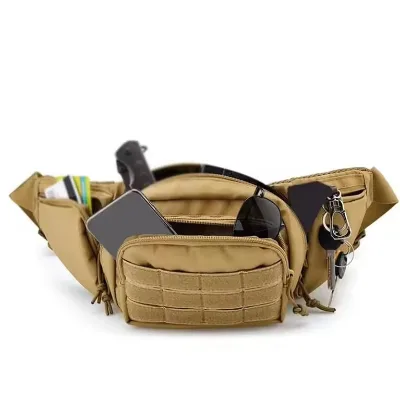
Source Molle System Tactical Waist Bag for Hiking, Hunting, and Travel
Find and compare 30 Molle System Tactical Waist Bag options from Fujian suppliers. These pouches feature 600D nylon or polyester materials, customizable logos, and OEM/ODM services for outdoor, hiking, and hunting applications.
Key considerations
Products List




Comprehensive Sourcing Guide
Molle System Tactical Waist Bag Sourcing Guide
Sourcing a Molle System Tactical Waist Bag requires a clear understanding of the specific operational environment and the modular compatibility required for integration with existing gear. The observed product landscape indicates a strong focus on outdoor applications such as hiking, trekking, and hunting, where durability and rapid access to equipment are paramount. Buyers must distinguish between general-purpose utility pouches and those specifically engineered for tactical load-bearing systems, as the latter demands precise webbing attachment points and reinforced stress points. The available data highlights a market segment that prioritizes customization, allowing procurement teams to tailor dimensions, logos, and internal configurations to meet specific mission profiles or brand identities.
Commercial viability in this sector is heavily influenced by the balance between low minimum order quantities and the complexity of custom manufacturing. While some listings suggest a low entry barrier with MOQs as low as three pieces, others indicate higher thresholds up to 600 units, reflecting the difference between sample runs and bulk production. The supply chain is predominantly anchored in Fujian, China, a region known for its textile manufacturing capabilities, yet buyers must verify that the specific supplier possesses the technical capacity to handle the specialized stitching and material treatments required for tactical gear. Understanding these commercial variables is essential for aligning procurement budgets with production timelines, which can range from 35 to 50 days after order confirmation depending on the customization level.
Product Scope and Observed Listing Signals
The product scope for molle system tactical waist bags encompasses a variety of configurations, ranging from simple utility pouches to complex multi-function systems designed for sports, camping, and travel. Observed listings reveal a diversity in materials, with 600D Nylon and Polyester being the primary choices, each offering distinct advantages in terms of abrasion resistance and weight. The 600D Nylon variant is frequently associated with Molle Pouches, suggesting a robust construction suitable for heavy-duty use, while Polyester options may appear in lighter, more fashion-oriented iterations. Buyers should carefully review the "Suit for" and "Usage" attributes to ensure the product aligns with the intended application, whether it is for professional outdoor activities like hunting or general leisure use.
Listing signals also indicate a high degree of customization availability, including options for customized logos, specific sizes, and even internal material compositions such as cotton linings. The observed color palette includes standard tactical hues like black and grey, alongside camouflage patterns, which cater to different aesthetic and functional requirements. However, the presence of varying specifications, such as different product models (e.g., 18LV19003, F21001, 202193) and packing methods, suggests that buyers cannot assume uniformity across all suppliers. It is critical to verify that the specific listing matches the required technical attributes, as some products may be designed for shopping or student use rather than tactical deployment, despite sharing similar visual characteristics.
Technical Specifications to Verify
When evaluating technical specifications, the primary focus must be on the material composition and structural integrity of the bag. The observed data points to 600D Nylon and Polyester as the standard outer materials, but buyers must confirm the denier count and weave density to ensure the bag can withstand the rigors of trekking and hunting. Additionally, the internal material, which may include cotton, should be assessed for its ability to protect contents from moisture and abrasion. The hardness rating of "Medium Soft" observed in some listings indicates a balance between flexibility and structure, which is crucial for maintaining the shape of the bag while allowing it to conform to the wearer's body during movement.
Dimensional specifications and capacity are equally critical, as the "Medium" capacity and specific dimensions like 12.55.53.5CM observed in some models may not suit all tactical needs. Buyers must verify the bearing capacity, which ranges from 3 to 10 Kg in observed listings, to ensure the bag can safely carry the intended load without strap failure or seam rupture. The shoulder style, described as "Soft Mat Double Shoulder," suggests a focus on comfort for extended wear, but this must be validated against the specific weight distribution requirements of the user. Furthermore, the waterproofing attribute, noted as "Water Resistance," requires clarification on the level of protection offered, as tactical gear often faces exposure to rain and mud.
Compliance and Safety Documentation
Compliance and safety documentation for tactical gear often involve a mix of international quality management standards and specific industry certifications. The observed listings mention certifications such as ISO 9001, BSCI, and Sedex, which indicate that the supplier adheres to recognized quality management systems and ethical labor practices. These certifications are vital for buyers operating in regulated markets like the USA, Canada, and Europe, where supply chain transparency and product safety are increasingly scrutinized. However, buyers should not assume that all listed products automatically possess these certifications; verification of the specific certificate numbers and their validity for the current production batch is a necessary step before finalizing any order.
Safety considerations also extend to the physical properties of the materials used, particularly regarding flammability and chemical content. While the provided facts do not explicitly list fire resistance ratings or chemical compliance standards like REACH or CPSIA, the presence of certifications like ISO 9001 suggests a framework for consistent quality control. Buyers should request specific test reports for the materials used, such as the 600D Nylon or Polyester, to ensure they meet the safety standards required for the intended market. Additionally, the "Water Resistance" feature should be backed by standardized test results to confirm that the bag can protect sensitive equipment from moisture ingress during outdoor activities.
Cost Drivers and Commercial Terms
Cost drivers in the Molle System Tactical Waist Bag market are significantly influenced by the level of customization and the complexity of the manufacturing process. Customized logos, specific sizes, and unique material combinations add layers of production complexity that can increase the unit price. The observed price range of 1.08 to 104 USD reflects this variability, with lower prices likely corresponding to standard, off-the-shelf items and higher prices associated with bespoke designs or premium materials. Buyers must analyze the cost structure to determine if the added expense of customization provides sufficient value in terms of brand differentiation or functional performance for their specific use case.
Commercial terms, including lead times and minimum order quantities, play a crucial role in the overall procurement strategy. The observed delivery times range from 45 days to 35-50 days after order confirmation, indicating a standard production cycle that requires careful planning to avoid stockouts. Sample times vary from 3 business days to 15-20 days, which can impact the speed of the prototyping and approval process. Buyers should negotiate clear terms regarding payment schedules, shipping responsibilities, and penalties for delays, as the supply chain for these goods is subject to potential disruptions. Understanding these commercial dynamics is essential for maintaining a reliable supply chain and managing inventory levels effectively.
Supplier Qualification and Quality Control
Supplier qualification for tactical gear manufacturers requires a rigorous assessment of their production capabilities and quality control systems. The observed data indicates that suppliers are located in Fujian, China, a hub for textile manufacturing, but buyers must verify the specific factory's capacity to handle the specialized requirements of molle systems. This includes the ability to perform precise stitching, attach webbing correctly, and apply custom logos without compromising the structural integrity of the bag. The presence of OEM and ODM services suggests that suppliers are capable of adapting to different client needs, but the extent of this capability should be validated through factory audits or third-party inspections.
Quality control measures should be established early in the procurement process to ensure that the final product meets the required specifications. Buyers should implement a clear inspection protocol that covers material verification, dimensional accuracy, and functional testing of the molle attachment points. The observed "Medium Soft" hardness and "Water Resistance" attributes should be tested against defined standards to ensure consistency across the production batch. Additionally, the packing method, which varies from single polybags to bulk cartons, must be verified to prevent damage during transit. Establishing a robust quality control framework is essential for mitigating the risks associated with sourcing from overseas suppliers and ensuring that the delivered goods meet the buyer's expectations.
Long-Term Procurement Checks
Long-term procurement checks for molle system tactical waist bags involve monitoring the supplier's ability to maintain consistent quality and delivery performance over time. As the market evolves, buyers should regularly review the supplier's adherence to the observed certifications and standards, ensuring that they continue to meet the requirements of the USA, Canada, and European markets. This includes verifying that the supplier maintains the necessary inventory of raw materials, such as 600D Nylon and Polyester, to avoid production delays. Regular audits and performance reviews are essential to identify any potential issues before they impact the supply chain.
Buyers should also track changes in product specifications and market trends to ensure that the sourced products remain relevant and competitive. The observed diversity in product models and applications suggests that the market is dynamic, with new designs and materials emerging regularly. Maintaining a flexible procurement strategy that allows for adjustments in design and material selection is crucial for adapting to these changes. Furthermore, fostering a collaborative relationship with the supplier can facilitate better communication and problem-solving, ensuring that both parties can navigate the challenges of the global supply chain effectively. This long-term approach is key to building a resilient and efficient sourcing strategy for tactical gear.
FAQs
Can I customize the logo on the Molle System Tactical Waist Bag?
Yes, customized logos are available for these pouches. Suppliers offer OEM and ODM services to accommodate specific branding needs. You can request custom designs to be stitched or printed onto the bag surface. This service allows businesses to maintain brand consistency across their tactical gear inventory while meeting specific marketing requirements.
What is the typical lead time for Molle System Tactical Waist Bag orders?
The delivery time is generally 35 to 50 days after the order is confirmed. Sample production typically takes 3 to 15 business days depending on the supplier. These timelines allow for manufacturing and quality checks. Buyers should plan their inventory replenishment schedules accordingly to ensure timely delivery for outdoor or tactical applications.
What materials are used for the Molle System Tactical Waist Bag?
Common materials include 600D Nylon and Polyester. Some variants feature cotton inside materials for comfort. These durable fabrics provide water resistance and suitability for hiking, trekking, and hunting. The choice of material ensures the bag can withstand rugged outdoor conditions while maintaining its structural integrity during daily use.
What certifications do Molle System Tactical Waist Bag manufacturers hold?
Manufacturers often hold ISO 9001, BSCI, and Sedex certifications. These standards verify quality management and ethical sourcing practices. Buyers can request documentation to ensure compliance with international trade requirements. Certified suppliers provide greater assurance regarding production standards and social responsibility in the supply chain.
What is the minimum order quantity for molle system tactical waist bags?
The minimum order quantity is typically 3 pieces. This low MOQ allows for small batch testing or sample orders. It facilitates easier entry for new buyers or those testing market demand. Higher volumes may unlock better pricing tiers, but the initial barrier to entry remains accessible for various business sizes.
Where are molle system tactical waist bags primarily manufactured?
These products are primarily manufactured in Fujian, China. The region is known for its robust textile and bag manufacturing industry. Sourcing from this location offers access to established supply chains and skilled labor. Buyers can leverage this geographic concentration to find reliable partners for bulk production and customization.