Source Organic Waterproof Foundation for face, concealer, and skin care
Compare 30 listings for Organic Waterproof Foundation featuring liquid forms, mineral ingredients, and OEM customization. Buyers can review certifications like ISO and GMPC alongside waterproof and sweat-proof performance claims for all skin types.
Key considerations
Products List


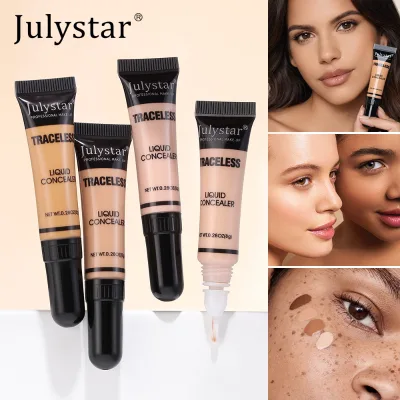


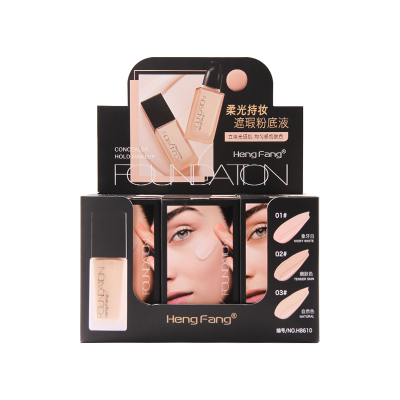


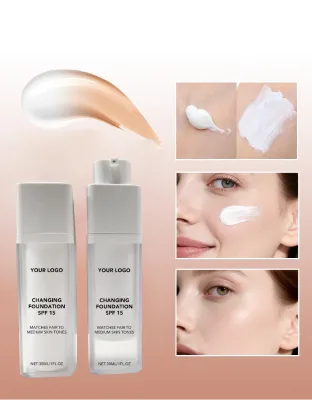
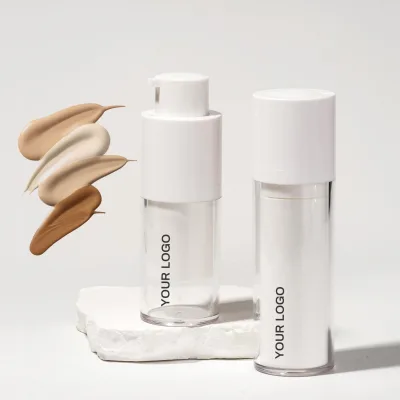



Comprehensive Sourcing Guide
Strategic Sourcing Guide for Organic Waterproof Foundation Procurement
The global B2B market for cosmetic ingredients and finished formulations has seen a significant shift toward products that balance natural sourcing with high-performance functionality. For procurement officers and brand managers seeking an "Organic Waterproof Foundation," the path to a successful supply chain requires a rigorous understanding of the intersection between botanical claims, waterproof technology, and regulatory compliance. This guide synthesizes available market data and technical specifications to provide a disciplined framework for evaluating potential suppliers. It is critical to note that while the term "organic" is frequently used in marketing, the actual supply chain data for this category often reveals a complex mix of mineral, chemical, and herbal ingredients. Buyers must navigate these distinctions carefully to ensure that their procurement strategy aligns with both their brand identity and the technical realities of the product.
Technical Specifications and Formulation Realities
When sourcing a waterproof foundation, the primary technical focus must be on the formulation's ability to resist moisture while maintaining skin compatibility. The observed market data indicates that the "Function" attribute for these products is consistently listed as "Waterproof," with some specific listings further specifying "Waterproof and sweat proof concealer" capabilities. This distinction is vital for buyers targeting active demographics or humid climates. The physical form of the product is predominantly "Liquid," which dictates the packaging requirements and the stability testing protocols necessary before mass production.
The ingredient profile presents a nuanced picture. While the search keyword emphasizes "organic," the documented product attributes list "Main Ingredient" categories as "Mineral, Chemical, Herbal." This suggests that many suppliers in this space offer a hybrid formulation rather than a strictly organic one. A mineral-based foundation typically relies on ingredients like zinc oxide or titanium dioxide, which provide natural UV protection and a matte finish, often contributing to the waterproof characteristic. Conversely, chemical ingredients may be included to enhance spreadability or longevity. Buyers must verify the specific ratio of these components. The "Ingredient" attribute also explicitly lists "Mineral," reinforcing the prevalence of mineral-based solutions in this segment.
Volume and packaging specifications vary significantly across the supply base. Observed data points to a "Volume" of 8g for certain sample or single-item listings, while other specifications reference a "Standard" of 30ml. This variance implies that buyers must define their exact volume requirements early in the negotiation process, as the manufacturing line setup differs for 8g versus 30ml units. Packaging materials are equally diverse, ranging from "Paper Carton Packing" and "Carton" to "Glasses/Plastic" containers. The "Single package size" can be as compact as 2x2x2 cm, or larger, depending on the final product configuration. The "Standard" dimensions for bulk shipping are often cited as 48x36x36 cm or 4.8x2.5x11 cm, which are critical for calculating logistics costs and warehouse capacity.
Compliance, Certification, and Regulatory Standards
In the cosmetics industry, certification is not merely a marketing asset but a prerequisite for market access in many regions. The supply data highlights a robust set of certifications associated with these products, including GMPC, ISO, MSDS, FDA, and GMP. The presence of these certifications indicates that the manufacturing facilities adhere to Good Manufacturing Practices (GMP) and are compliant with international safety standards. Specifically, the MSDS (Material Safety Data Sheet) is essential for verifying the chemical composition and handling requirements, while FDA and ISO certifications suggest adherence to quality management systems recognized in the United States and globally.
However, buyers must exercise caution regarding the term "organic." The provided facts do not explicitly confirm an "Organic" certification (such as USDA Organic or COSMOS) for the majority of the listed items. Instead, the certifications listed are general manufacturing and safety standards. The "Main Ingredient" list includes "Chemical" alongside "Mineral" and "Herbal," which further suggests that the "organic" claim in the search query may be a marketing descriptor rather than a strict regulatory status for all available products. Therefore, a critical step in the sourcing process is to request specific organic certification documents from the supplier if a strictly organic product is required. Relying solely on the "Herbal" or "Mineral" descriptors may not satisfy strict organic compliance requirements.
The "Shelf Life" is another critical compliance and quality metric. Data shows a consistent "Shelf Life" of "Three Years" or "36 Month" for many products, with some specific listings noting a "Pao" (Period After Opening) of 12 months. This discrepancy between total shelf life and period after opening is standard in the industry but must be clearly communicated to the end consumer. The "Standard" of 30ml and the "Single gross weight" of 0.04 kg also serve as benchmarks for quality control, ensuring that the product density and fill volume remain consistent across batches.
Cost Drivers and Economic Considerations
The economic landscape for sourcing waterproof foundations is defined by a wide range of pricing and minimum order quantity (MOQ) structures. The observed price range in the market spans from $0.20 to $4.19 USD per unit. This broad spectrum indicates that the final cost is heavily influenced by the complexity of the formulation, the quality of the packaging, and the volume of the order. The lower end of the price range likely corresponds to basic mineral formulations with standard packaging, while the higher end may reflect advanced waterproof technology, premium herbal extracts, or custom branding services.
MOQs are a significant factor in the total cost of ownership. The observed MOQ range is extensive, from as low as 3 pieces to as high as 12,000 units. This flexibility allows for a tiered procurement strategy. Small brands or those testing new markets can leverage the "Advantage: Accept Small Orders" feature, with some suppliers offering MOQs as low as 3 pcs. Conversely, large-scale retailers can negotiate better unit economics by committing to higher volumes. The "Service" attribute, which includes "OEM ODM Private Label," suggests that customization costs will be factored into the unit price. Customization of the formula, packaging design, and labeling will inevitably increase the cost per unit compared to buying off-the-shelf stock.
Logistics costs are also driven by the "prod_standard" dimensions. With bulk packing standards like 48x36x36 cm, buyers must calculate the number of units per container to optimize freight costs. The "Single package size" of 2x2x2 cm allows for high-density packing, which can reduce shipping expenses, but the "Paper Box, Inner Carton, Master Carton" layering adds to the overall weight and volume. Buyers should request detailed Incoterms and freight quotes to understand the true landed cost, as the base product price of $0.20 to $4.19 does not include shipping, duties, or insurance.
Typical Applications and Market Segmentation
The applications for organic waterproof foundations extend beyond simple daily wear. The "Function" attribute explicitly mentions "Waterproof and sweat proof concealer," indicating suitability for high-intensity environments. This makes the product ideal for sectors such as sports cosmetics, entertainment and film production, and outdoor event staffing. The "Effect" of "Long-lasting makeup" further supports use cases where reapplication is difficult or undesirable. The "Application" is universally listed as "Face," and the "Skin type" is compatible with "All-skin," suggesting a broad market appeal that includes sensitive skin types, provided the specific ingredient list is reviewed for allergens.
The "Color" options are diverse, ranging from "White, Pink, Beige, brown, chocolate, coffee." This variety allows brands to cater to different ethnicities and skin tones without needing to source multiple SKUs from different suppliers. The "Gender" is specified as "Female," which aligns with the traditional demographic for foundation products, though the "All-skin" claim suggests potential for unisex marketing. The "Keyword" of "Moisturizing Face Makeup" highlights a secondary benefit, positioning the product as a hybrid between skincare and makeup. This is particularly relevant for consumers seeking hydration alongside coverage, a trend that drives the inclusion of "Herbal" ingredients in the formulation.
Supplier Evaluation and Selection Criteria
Selecting the right supplier requires a multi-dimensional evaluation process that goes beyond price and MOQ. The "Brand" attribute is listed as "OEM ODM," indicating that most suppliers are manufacturers capable of private labeling. This is a positive sign for buyers looking to build a unique brand identity. However, the "Place of Origin" varies, with listings from "Guangdong," "Shanxi," and generally "China." While China is a major hub for cosmetic manufacturing, buyers should verify the specific factory location to assess the local regulatory environment and logistics infrastructure. Guangdong, for instance, is known for a mature supply chain, whereas other regions might have different capabilities.
The "Certification" list is a primary filter for supplier evaluation. A supplier offering GMPC, ISO, MSDS, FDA, and GMP certifications demonstrates a higher level of operational maturity. Buyers should request copies of these certificates and verify their validity with the issuing bodies. Additionally, the "Customization" attribute being "Available" is a key differentiator. Suppliers that offer flexible customization in terms of formula, packaging, and branding are better suited for long-term partnerships. The "Service" of "OEM ODM Private Label" confirms that the supplier is willing to engage in collaborative product development, which is essential for creating a differentiated product in a competitive market.
Quality Control and Long-Term Procurement Strategy
Quality control (QC) is paramount in the cosmetics industry to ensure product safety and consistency. The "Shelf Life" of 36 months and "Pao" of 12 months must be validated through stability testing. Buyers should require batch-specific test reports that confirm the product meets the stated specifications for viscosity, pH, and microbial limits. The "Single gross weight" of 0.04 kg and "Volume" of 8g or 30ml serve as physical benchmarks for QC checks. Deviations from these standards could indicate filling errors or formulation instability.
For long-term procurement, the "Packaging" options must be evaluated for sustainability and durability. The "Paper Carton Packing" and "Carton" options are standard, but the "Glasses/Plastic" inner packaging requires assessment for compatibility with the liquid formulation. The "prod_packing" of "Paper Box, Inner Carton, Master Carton" suggests a robust outer packaging system, but buyers should verify the structural integrity of the master cartons to prevent damage during transit. The "Standard" of 48x36x36 cm for bulk shipping should be used to optimize container loading and reduce waste.
Finally, buyers should consider the "Advantage: Accept Small Orders" as a strategic tool for market testing. Starting with a low MOQ allows for a pilot launch to gauge consumer response before committing to larger volumes. This approach mitigates the risk of overstocking and allows for iterative improvements based on real-world feedback. By combining rigorous supplier evaluation, strict quality control protocols, and a flexible procurement strategy, buyers can successfully navigate the complex landscape of Organic Waterproof Foundation sourcing. The key is to maintain a clear distinction between marketing claims and verified technical data, ensuring that the final product meets both regulatory requirements and consumer expectations.
FAQs
What certifications do organic waterproof foundations typically have?
Most products hold GMPC, ISO, MSDS, FDA, and GMP certifications. These indicate adherence to safety and manufacturing standards rather than strict organic status. Buyers should verify specific organic documents if required.
Can I order small quantities of waterproof liquid foundation?
Yes, suppliers accept small orders with MOQs as low as 3 pieces. This allows testing new markets without large commitments. Larger volumes up to 12,000 units are also available for bulk needs.
How long is the shelf life of these liquid foundations?
The standard shelf life is three years or 36 months for unopened products. The period after opening is typically 12 months. This duration ensures stability for long-term inventory management.
Which ingredients are used in these waterproof foundations?
Formulations primarily use mineral, chemical, and herbal ingredients. While some contain herbal extracts, many are mineral-based with chemical additives for performance. Strictly organic claims require specific verification.
What packaging options are available for custom orders?
Packaging includes paper cartons, inner cartons, master cartons, and glass or plastic containers. Customization is available to meet specific brand requirements. Dimensions vary from compact single units to bulk shipping standards.
Where are these foundations manufactured and what is the origin?
Products originate from China, specifically from regions like Guangdong and Shanxi. Guangdong offers a mature supply chain, while other locations provide diverse manufacturing capabilities. All listed items are made in China.
What is the price range for sourcing these foundations?
The observed price range spans from 0.20 to 4.19 USD per unit. Costs vary based on formulation complexity, packaging quality, and order volume. Customization services may increase the unit price significantly.