Source PET Plastic Shampoo Bottle for Cosmetics, Medicine, and Personal Care
Compare 30 listings of PET Plastic Shampoo Bottle options featuring screw caps, pump sprayers, and trigger sprays. Buyers can evaluate customization, MOQs, and lead times for medicine, cosmetics, and personal care applications.
Key considerations
Products List


Plastic Clear Pet Hair Oil Bottle Empty Travel Shampoo Packaging Bottle
$0.05 - $0.10
MOQ: 10000 Pieces


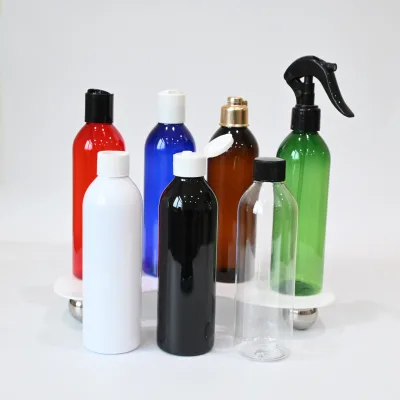

100ml/120ml Pet Plastic Bottles for Hair Care Shampoo Conditioner Travel Bottle
$0.03 - $0.30
MOQ: 10000 Pieces

Comprehensive Sourcing Guide
Strategic Sourcing Guide for PET Plastic Shampoo Bottles
Understanding Material Properties and Structural Integrity
The foundation of a successful procurement strategy for personal care packaging begins with a rigorous analysis of the material composition. In the context of the current market, the primary material observed for shampoo bottles is plastic, specifically Polyethylene Terephthalate (PET) or similar polyolefin variants. This material choice is driven by its balance of clarity, chemical resistance, and impact strength. When evaluating potential suppliers, buyers must verify that the plastic used meets the specific requirements for containing liquid formulations. The observed product attributes indicate a strong focus on "leak-proof" characteristics, which is a critical performance metric for shampoo bottles that often contain high-viscosity fluids or surfactants.
The structural integrity of the bottle is equally important. The market data highlights a variety of shapes, with "Round Bottle" being a prominent configuration. This shape offers ergonomic handling and efficient stacking during logistics. However, the procurement team must ensure that the wall thickness and blow-molding process are consistent to prevent deformation under pressure or during transport. The "Refillable" feature noted in several product listings suggests that the plastic formulation must withstand repeated handling and potential cleaning cycles without degrading. Buyers should request material safety data sheets (MSDS) to confirm that the plastic is inert and will not interact with the chemical components of the shampoo, such as sulfates or fragrances, which could otherwise lead to container failure or product contamination.
Technical Specifications and Functional Capabilities
Technical specifications form the backbone of the product definition. The observed product range includes specific capacity standards, with listings explicitly mentioning 100ml, 500ml, and 1000ml volumes. These capacities dictate the mold design and the overall dimensions of the bottle. For instance, a 100ml unit is often associated with travel sizes or sample kits, while the 500ml and 1000ml variants serve as standard retail sizes. The "Standard Carton" and "Inner Tray+PE Bag +Carton" packing methods indicate that the physical dimensions are designed to maximize pallet efficiency.
A critical technical differentiator in this category is the closure and dispensing mechanism. The market data reveals a diverse array of options, including "Screw Cap," "Pump-on," "Lotion Pump," and "Trigger Spray." Each mechanism serves a distinct functional purpose. Screw caps are typically used for simpler dispensing or child-resistant requirements, while lotion pumps are essential for viscous shampoos to ensure controlled application. Trigger sprays are generally reserved for larger volume applications or specific cleaning solutions. The "Dispenser Type" and "Sealing Type" must be matched precisely to the product's viscosity and the intended user experience. Furthermore, the "Customized Logo" and "Silk Screen, Labeling" capabilities allow for brand differentiation, but the surface finish of the plastic must be compatible with these printing methods to ensure durability and legibility.
Compliance, Certification, and Regulatory Alignment
Navigating the regulatory landscape is a non-negotiable aspect of sourcing plastic packaging for the personal care and pharmaceutical industries. While specific certification names are not explicitly listed in the provided data, the application of these bottles in "Medicine, Chemical, Cosmetics, and Beverage" sectors implies a need for strict adherence to international safety standards. Buyers must verify that the plastic material is compliant with food-grade or pharmaceutical-grade regulations, depending on the specific end-use.
The "Customization" and "OEM/ODM" attributes suggest that suppliers are capable of producing tailored solutions, but this flexibility must not compromise regulatory compliance. For instance, if a bottle is intended for the European market, it must meet REACH regulations regarding chemical substances. If targeting North America, compliance with FDA guidelines for food contact materials is often a prerequisite, even for cosmetic products. The "Global" market reach mentioned in the product attributes indicates that suppliers should have experience navigating multiple regulatory frameworks. Buyers should request documentation proving that the plastic resin and the final molded product have undergone necessary migration tests to ensure no harmful substances leach into the shampoo. Additionally, sustainability claims regarding "Refilling" and "Sustainability" applications require verification of the material's recyclability and the supplier's adherence to environmental standards.
Cost Drivers and Economic Parameters
The economic landscape of sourcing PET shampoo bottles is influenced by several key variables, primarily material costs, order volume, and customization complexity. The observed price range of 0.03 to 0.58 USD per unit reflects the significant variance based on capacity, closure type, and order quantity. Smaller bottles, such as the 100ml variants, generally command a lower unit price, while larger 1000ml bottles with complex pump mechanisms will sit at the higher end of the spectrum.
Order Volume is a primary cost driver, as evidenced by the observed Minimum Order Quantity (MOQ) range of 1000 to 10,000 pieces. The data shows specific MOQs of 1000, 5000, and 10,000 PCS. Buyers must align their inventory strategy with these thresholds to achieve optimal pricing. Ordering below the MOQ often results in significantly higher unit costs or may not be feasible at all. The "Customization" aspect, including coloring, printing, and logo application, introduces additional cost layers. While the "Samples" are listed as free or low-cost (1-5 PCS), the tooling and setup costs for custom molds and printing plates are typically amortized over the production run. Therefore, larger orders dilute these fixed costs, making the unit price more competitive. Buyers should also consider the "Lead Time" of 15-20 days, which impacts cash flow and inventory planning. Rush orders may incur premium charges, so aligning production schedules with the standard lead time is crucial for cost efficiency.
Supplier Evaluation and Service Capabilities
Selecting the right supplier requires a holistic evaluation of their operational capabilities and service offerings. The data indicates that suppliers are located in "Zhejiang, China," a major manufacturing hub known for its plastic packaging industry. This concentration of suppliers offers a competitive market but necessitates rigorous due diligence. Buyers should assess the supplier's ability to handle "OEM/ODM" requests, which includes not just the physical production but also the design and engineering support required for custom molds.
Service capabilities are highlighted by the "24 Hours Online Services" and "Free Samples in 7 Days" attributes. These features suggest a commitment to customer support and rapid prototyping. The ability to provide samples quickly allows buyers to validate the product quality before committing to a large order. However, the "Lead Time" of 15-20 days must be realistic and reliable. Buyers should verify the supplier's production capacity to ensure they can meet demand during peak seasons without delays. The "Packing" methods, such as "Standard Carton Box" or "Inner Tray+PE Bag," are also indicators of the supplier's attention to detail and logistics expertise. A supplier that invests in protective packaging demonstrates a lower risk of damage during transit. Additionally, the "Global" market presence suggests that the supplier has experience with international shipping and documentation, which is vital for cross-border procurement.
Quality Control and Long-Term Procurement Strategy
Ensuring consistent quality is paramount in the procurement of shampoo bottles. The "Leak-proof" and "Refillable" features observed in the product listings are quality claims that must be validated through rigorous testing. Buyers should implement a quality control protocol that includes visual inspection for defects, pressure testing for leak integrity, and drop testing for structural durability. The "Customized Logo" and "Printing" quality should also be scrutinized to ensure that the ink adheres properly and does not smear or fade over time.
For long-term procurement, establishing a strategic partnership with a reliable supplier is more beneficial than a transactional relationship. The "Customization" and "OEM/ODM" options allow for continuous product evolution, enabling buyers to adapt to market trends and consumer preferences. The "Sample" availability of 1-5 pieces facilitates iterative design improvements. Buyers should also consider the sustainability aspect, as the market is increasingly demanding eco-friendly packaging. Verifying the recyclability of the PET plastic and the supplier's commitment to sustainable manufacturing practices can enhance brand reputation. Finally, maintaining open communication channels, supported by the "24 Hours Online Services," ensures that any issues regarding production, quality, or logistics can be resolved promptly, safeguarding the supply chain's stability.
Comparative Analysis of Product Attributes
To assist in decision-making, the following table summarizes the key technical and commercial attributes observed in the market for PET plastic shampoo bottles. This comparison highlights the variability in specifications that buyers must navigate.
| Attribute Category | Observed Variations | Procurement Consideration |
|---|---|---|
| Capacity | 100ml, 500ml, 1000ml | Match capacity to product formulation and retail strategy. |
| Sealing Type | Screw Cap, Pump-on, Trigger Spray | Select based on viscosity and user dispensing needs. |
| MOQ | 1000, 5000, 10000 PCS | Align order volume with budget and storage capacity. |
| Customization | Logo, Coloring, Printing, OEM/ODM | Verify compatibility with printing methods and lead times. |
| Lead Time | 15-20 Days | Plan inventory cycles to accommodate production schedules. |
| Origin | Zhejiang, China | Assess logistics costs and supply chain reliability. |
| Packing | Standard Carton, Inner Tray+PE Bag | Ensure packaging protects against damage during transit. |
| Features | Leak-proof, Refillable, Custom Logo | Validate performance claims through sample testing. |
By carefully analyzing these attributes and adhering to the guidelines for material verification, compliance, and supplier evaluation, buyers can secure a reliable supply of high-quality PET plastic shampoo bottles that meet both functional and commercial objectives.
FAQs
What is the minimum order quantity for these bottles?
The minimum order quantity ranges from 1000 to 10000 pieces depending on the specific model. Buyers should check the exact MOQ for their selected capacity, as some listings require 5000 or 10000 units to qualify for standard pricing and production slots.
Can I get a customized logo on the bottle?
Yes, customized logos are available through silk screen printing or labeling services. Suppliers offer OEM and ODM options including coloring and printing, allowing brands to personalize the round bottles for their specific cosmetic or personal care product lines.
How long does it take to receive samples?
Free samples are typically available within 7 days of request. Buyers can usually receive 1 to 5 pieces for evaluation, which helps verify the leak-proof features and dispensing mechanisms before committing to a larger production order.
Which sealing types are available for these plastic bottles?
Available sealing types include screw caps, pump-on closures, lotion pumps, and trigger sprays. The choice depends on the viscosity of the liquid, such as shampoo or lotion, ensuring the selected dispenser provides the desired user experience and leak-proof performance.
What are the standard capacity options for these bottles?
Standard capacity options include 100ml, 500ml, and 1000ml sizes to suit various retail needs. These volumes are designed for applications ranging from travel kits to standard personal care products, with dimensions optimized for standard carton packing efficiency.
Where are these plastic shampoo bottles manufactured?
These bottles are manufactured in Zhejiang, China, a major hub for plastic packaging production. The location supports a global market reach, with suppliers offering standard lead times of 15 to 20 days for production and delivery to international buyers.
Are these bottles suitable for medicine and chemical storage?
Yes, the bottles are designed for use in medicine, chemical, cosmetics, and beverage applications. The plastic material offers chemical resistance and leak-proof integrity, making them suitable for storing various liquids while maintaining product safety and sustainability through refillable designs.