Source Portable 3D Face Scanner with Scalp Analysis Handle for Salons, Spas, Clinics
Compare 30 Portable 3D Face Scanner with Scalp Analysis Handle units from verified suppliers. These devices offer scalp detection, high-resolution imaging, and versatile applications for home and commercial use with customizable options; compare the available evidence and request quotations based on your requirements.
Updated
Key considerations
Products List
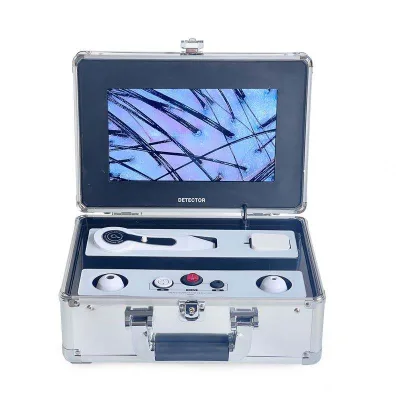

Wholesale Portable 3D Ai Face Recognition Skin Analysis Scanner for Salon
$900.00 - $1600.00
MOQ: 1 Pieces

Portable 3D Facial Skin Analyzer Feature Scanner Analyzer Skin Diagnostic Machine
$1450.00 - $1700.00
MOQ: 1 Pieces


Advanced 3D Facial Scanner for Professional Skin Analysis and Assessment
$1450.00 - $1650.00
MOQ: 1 Pieces
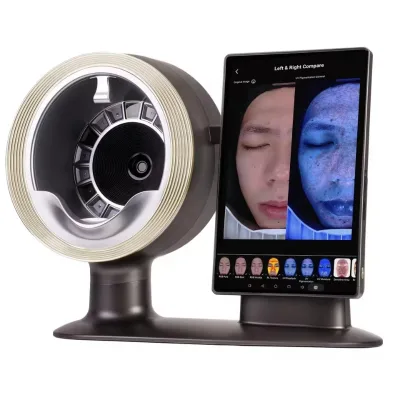



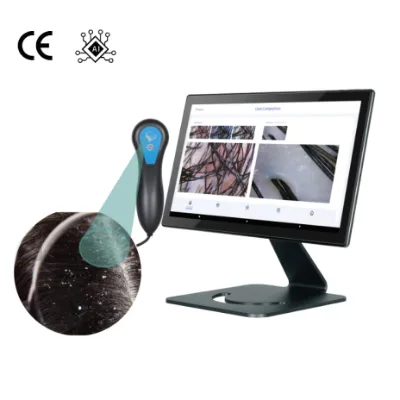


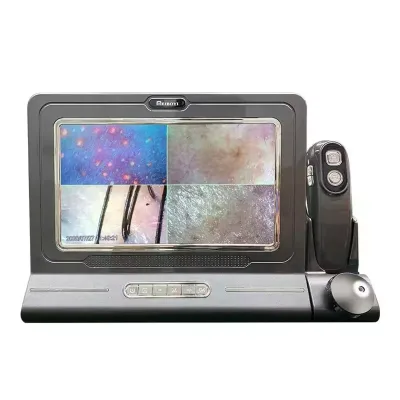



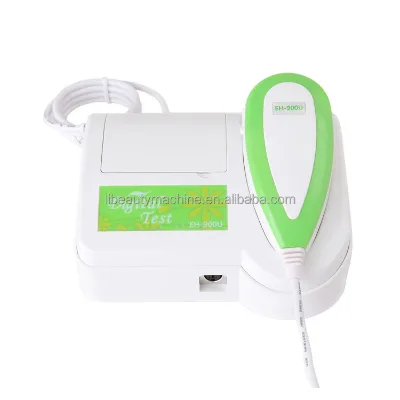

Mirror Skin Analysis Machine Professional 3D Face Skin Scanner Skin Analyze
$1200.00 - $1500.00
MOQ: 1 Pieces
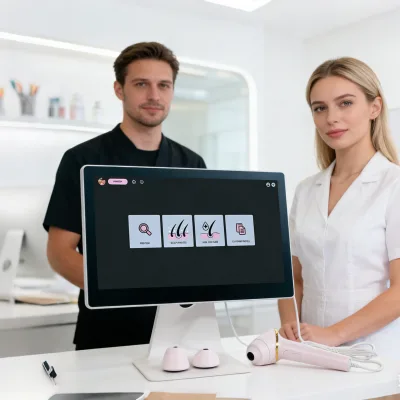
Comprehensive Sourcing Guide
Portable 3D Face Scanner with Scalp Analysis Handle Sourcing Guide
Buyers searching for a Portable 3D Face Scanner with Scalp Analysis Handle are typically evaluating multifunction diagnostic imaging devices that combine facial skin analysis with dedicated scalp and hair follicle examination. These products occupy a niche between clinical dermatology equipment and salon-grade consultation tools, and the listings observed for this category are heavily concentrated among suppliers in Guangdong, China, where desktop and portable configurations are both offered.
The purpose of this guide is to structure the procurement decision around verifiable facts rather than marketing language. Because these devices pair imaging hardware with analysis software, buyers must validate specifications, compliance documentation, and after-sales arrangements at the sourcing stage. The sections below outline the scope of observed listings, the technical and regulatory checks that matter most, and the commercial and quality-control practices that protect a purchase over its full lifecycle.
Product Scope and Observed Listing Signals
Observed listings for this product family present a wide spread of configurations and price points, with observed listed prices ranging from USD 89 to USD 10,500. That spread signals a genuinely heterogeneous category: entry-level handheld scalp viewers sit at one end, while full analysis systems with integrated screens and professional software occupy the premium end. Common listed models referenced across these products include SA12, ST06, Q1, ZK-MINI9020, and KH-skinny, and buyers should treat each model number as a distinct configuration to be quoted separately rather than assuming interchangeable capability.
The application scope stated across listings is consistent: these devices are marketed for both home use and commercial use, with salon and home application explicitly named. Product names such as "Hair Follicle Face Skin Analyzer" and keywords like "hair analyser" confirm the dual face-and-scalp function. Portable and desktop types both appear, and several listings note that customization is available. Buyers should therefore begin by mapping their own deployment scenario—fixed salon workstation versus mobile consultant—before comparing specific models.
Technical Specifications to Verify
Resolution and imaging quality deserve first scrutiny. Observed listings reference a resolution of 1024*768 and pixel figures ranging from 50 pixels on basic scalp handles to 3600W pixel sensors on higher-end analyzers, a gap that directly affects diagnostic usefulness. Screen options of 13.3 inch or 21.5 inch appear in the listings, and computing specifications such as 6GB RAM, 64GB storage, and a Windows operating system are stated for some models. Buyers should request sample images captured by the exact unit configuration they intend to order, not demo footage from a different model.
Electrical and physical parameters also need written confirmation. Listed input ratings span 100240VAC and 110230 VAC ±10%, with output power stated as 0-100W and one listing showing 45W power draw—figures that matter for international deployment. Plug types listed include US, CN, UK, EU, JP, ZA, and IT variants, so buyers should specify the destination market's plug standard in the purchase order. Physical attributes to confirm include color (silver, black, or customized), portability class, package dimensions such as 39X30X22 cm, and gross weight around 2.8 kg for portable units.
Compliance and Safety Documentation
Regulatory evidence should be collected before any deposit is paid. One observed listing states certificates of CE/ISO13485/ISO9001/RoHS, which, if genuine, would cover European market access, medical-device quality management, general quality management, and hazardous-substance restrictions. However, buyers must treat such claims as unverified until certificate copies are obtained and checked against the supplier's legal entity name, the exact product model, and the issuing body. A certificate for one model does not transfer automatically to a customized variant.
Beyond certificates, buyers should request a documented declaration of conformity and clarify which safety standard version each certificate references, since requirements evolve. If the device will be positioned for anything beyond cosmetic consultation in the buyer's own market, additional local registration or notification obligations may apply, and the importer—not the manufacturer—usually bears that responsibility. For electrical safety, confirm the power supply adapter carries its own independent approval appropriate to the destination country, because adapters are frequently the component regulators examine first during market surveillance checks.
Cost Drivers and Commercial Terms
The observed price band from USD 89 to USD 10,500 means the buyer's configuration choices drive nearly all cost variation. Screen size (13.3 inch versus 21.5 inch), sensor pixel count, software sophistication, and whether the unit is portable or desktop all move the quote significantly. Customization availability noted in listings can add tooling or setup charges, while MOQ observations show a minimum of 1 unit across listings, which favors sample-first procurement: buyers can validate one unit before committing to volume, avoiding the risk of a large order based on unverified performance.
Commercial terms should be fixed in writing beyond unit price. Confirm what packing applies—observed options include special export packing, carbon box, and flight portable packaging—since inadequate packing for a 2.8 kg precision device can generate transit damage claims. Verify the Incoterm, whether shipping includes the correct destination plug type at no surcharge, and whether software licenses or analysis-subscription fees recur after purchase. Payment milestones should be tied to inspection checkpoints, such as pre-shipment photo or video verification of the exact serial-numbered unit being shipped.
Supplier Qualification and Quality Control
Supplier qualification in this category starts with an entity-level check. Because listings point to Guangdong, China as the place of origin, buyers can reasonably request a business license, verify export history for beauty or analysis devices, and confirm whether the supplier manufactures or trades. For devices claiming certificates such as CE or ISO13485, ask whether testing was performed in-house or by a third party, and request the scope documents. Customization capability should be validated with evidence—photos of previous custom projects—rather than accepted from a listing flag.
Quality control should combine remote and, where volume justifies it, in-person checks. For each production batch, define an inspection protocol covering: cosmetic condition, screen function, handle connector durability, image-capture quality against a reference standard agreed with the supplier, and accessory completeness against the packing list. Observed after-sales provisions—online support and video technical support—should be converted into defined response-time commitments in the contract. A retained golden sample from the approved pre-production unit gives both parties an objective benchmark for resolving disputes about image quality or finish on later shipments.
Long-Term Procurement Checks
Warranty structure is the anchor of long-term value. Observed listings state a 1-year warranty, with one specifying 1 year for the main machine and 3 months for spare parts—a distinction that materially changes the cost of ownership for handle cables, connectors, and adapters that typically fail first. Buyers should clarify in writing what the warranty covers (parts, labor, return shipping), how defects are proven remotely, and whether replacement spare handles and power supplies can be ordered separately after the warranty period ends, given the proprietary nature of scalp-analysis handles.
Finally, plan for continuity and supportability. Software-driven analyzers on a Windows platform require clarity on operating-system updates, software upgrade paths, and whether analysis data remains accessible if the supplier relationship ends. Reorder consistency matters too: confirm that reorders will match the approved sample in sensor, screen, and firmware, and document the agreed configuration by model number (such as SA12, ST06, Q1, ZK-MINI9020, or KH-skinny) and date. Buyers who maintain a written specification file—including packing dimensions such as 655558 cm or 504567 cm where applicable—can switch or requalify suppliers without renegotiating every detail from scratch.
FAQs
What screen sizes are available for the Portable 3D Face Scanner with Scalp Analysis Handle?
The device offers 13.3-inch and 21.5-inch screen options to suit different operational needs. These displays support high-resolution analysis for hair follicles and skin conditions. The portable design ensures flexibility in both salon and home environments. Users can choose the size that best fits their workspace constraints while maintaining clear visualization of scalp health data.
Can the Portable 3D Face Scanner with Scalp Analysis Handle be customized for branding?
Yes, customization is available for this equipment to meet specific business requirements. Buyers can request tailored features or branding elements to align with their salon identity. The manufacturer supports personalized configurations to enhance professional presentation. This flexibility allows businesses to integrate the tool seamlessly into their existing service offerings and marketing strategies.
What certifications does the Portable 3D Face Scanner with Scalp Analysis Handle hold?
The product holds CE, ISO13485, ISO9001, and RoHS certifications. These credentials ensure compliance with international safety and quality standards for medical and cosmetic devices. The certifications provide assurance of reliable performance and regulatory adherence. Buyers can trust the device meets rigorous manufacturing protocols for professional use in various global markets.
How much RAM and storage does the Portable 3D Face Scanner with Scalp Analysis Handle have?
The system is equipped with 6GB of RAM and 64GB of storage capacity. This configuration supports smooth operation of the Windows-based software for skin analysis. The ample memory ensures efficient processing of high-resolution images and data. Users benefit from responsive performance when analyzing detailed scalp and facial features during consultations.
What warranty is provided for the Portable 3D Face Scanner with Scalp Analysis Handle?
The main machine comes with a one-year warranty for peace of mind. Spare parts are covered for three months to ensure continued functionality. This warranty structure protects the investment against manufacturing defects. Buyers receive reliable after-sales support, including video technical assistance, to maintain optimal device performance throughout the coverage period.
Where is the Portable 3D Face Scanner with Scalp Analysis Handle manufactured?
The device is manufactured in Guangdong, China. This region is known for its advanced electronics and medical device production capabilities. The origin ensures access to high-quality components and skilled manufacturing processes. Buyers can rely on the established supply chain infrastructure for consistent product quality and timely delivery.