Source Pultrusion FRP Cable Ladder Tray for power, industry, and mining
Find 30 Pultrusion FRP Cable Ladder Tray options from Hebei manufacturers featuring high strength and corrosion resistance. Buyers can compare customized sizes, colors, and surface treatments for electric power engineering and heavy industrial applications.
Key considerations
Products List
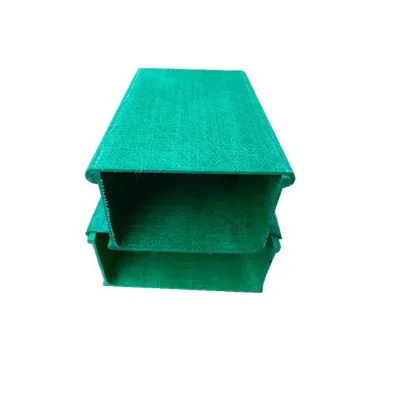


Commercial Building Industrial Fiberglass Reinforced Plastic Ladder FRP Cable Tray
$2.60 - $3.60
MOQ: 100 Pieces


FRP Cable Tray and Perforated Cable Tray Manufacturer Supporting System
$1.00 - $300.00
MOQ: 10 Pieces


China Manufacturer FRP Fiberglass Composite Cable Tray FRP Ladder Cable Tray
$4.20 - $4.90
MOQ: 100 Meters


FRP Fiberglass Reinforced Plastic Cable Tray Cable Ladder Cable Ladders
$112.89 - $237.59
MOQ: 1500 Sets


Fiberglass Reinforced Plastic Ladder Type Durable Cable Tray for Electrical Equipment
$112.89 - $237.59
MOQ: 1500 Sets
Comprehensive Sourcing Guide
Strategic Sourcing Guide for Pultrusion FRP Cable Ladder Trays
Understanding the Core Technology and Material Composition
The foundation of a reliable cable management system lies in the manufacturing process and the specific material composition. For the core keyword "Pultrusion FRP Cable Ladder Tray," the defining characteristic is the pultrusion process. This continuous manufacturing method involves pulling fiberglass rovings through a resin bath and then through a heated die to cure the resin, resulting in a profile with consistent cross-sections and high fiber-to-resin ratios. This technique is distinct from other molding methods like Resin Transfer Molding (RTM), which is also observed in the market for similar products, but pultrusion is particularly noted for producing long, straight sections with superior mechanical strength along the length of the profile.
The primary material identified in the supply chain for these trays is Fiberglass, specifically Glass Fiber Reinforced Plastic (GFRP). The market data indicates that the fiber type is consistently GFRP, often referred to as FRP. The resin matrix typically utilizes high-performance thermosets, with some specific listings mentioning Diphenyl Ether FRP, a formulation chosen for its thermal stability and chemical resistance. The resulting product is characterized by high strength, light weight, and corrosion resistance, making it an ideal alternative to metallic solutions in harsh environments. The surface treatment is frequently described as smooth, though some variations offer frosted or customized finishes. It is critical for buyers to distinguish between pultruded profiles and those made via RTM, as the mechanical properties and dimensional tolerances can differ significantly between the two methods.
Technical Specifications and Customization Capabilities
When evaluating pultrusion FRP cable ladder trays, buyers must scrutinize the technical specifications provided by potential suppliers. The standard offering includes customized sizes and dimensions, reflecting the flexibility inherent in the pultrusion process. The product is available in various configurations, including models with holes and models without holes, catering to different ventilation and load-bearing requirements. The structural type is generally categorized as a "Tray" or "Ladder," with specific model names such as "FRP Cable Ladder Fiberglass Cable Tray" and "champion fiberglass cable tray" appearing in supplier catalogs.
The thickness of the material is a critical specification. While some listings specify a standard thickness of 3mm, the general market trend supports customization to meet specific load-bearing needs. The product is often supplied in single-item units, though bulk packaging in boxes is available for larger orders. Color options are extensive, ranging from standard green to customized colors, allowing for integration into facility color-coding schemes. The surface treatment can vary from a standard smooth finish to fire-retardant coatings, which are essential for applications requiring enhanced safety compliance.
Buyers should verify the exact dimensions and hole patterns required for their specific cable load calculations. The "customized support" section of supplier capabilities often includes OEM and ODM services, enabling the creation of bespoke profiles. However, the availability of these customizations may impact the lead time, with some suppliers requiring a separate delivery date submission for customized products. The product origin is predominantly Hebei, China, a region known for its manufacturing capacity in composite materials.
Compliance, Certification, and Industry Standards
Navigating the regulatory landscape is a vital step in sourcing FRP cable trays. The supplied data indicates that suppliers often hold ISO certification, and some listings explicitly mention CE certification. These certifications are indicative of a manufacturer's adherence to quality management systems and European safety standards, respectively. However, buyers must be cautious not to assume that every listed product automatically satisfies specific performance standards like ASTM E84 (flammability) or UL 568, as these are listed in the background knowledge but not confirmed as active certifications for every item in the search results.
The industry standards referenced in the context include GRP (Glass Reinforced Plastic) as a general standard for the material type. For heavy industrial manufacturing applications, the product must meet rigorous safety and durability requirements. The "FRP Cable Tray Industry" is noted as Heavy Industrial Manufacturing, implying that the products are designed to withstand demanding conditions. Buyers should request specific test reports for fire resistance, tensile strength, and chemical resistance, rather than relying solely on general certification claims. The warranty period observed in the market is typically one year, which serves as a baseline for supplier confidence in product longevity.
It is essential to verify if the supplier can provide third-party testing results for specific standards relevant to the buyer's region, such as UL, ASTM, or IEC standards, even if the general listing only mentions ISO or CE. The presence of a "Fire-Retardant Coating" suggests that fire performance is a key feature, but the specific rating (e.g., Class A, B, or C) must be confirmed through documentation.
Cost Drivers and Procurement Economics
The pricing for pultrusion FRP cable ladder trays exhibits a wide range, observed from $0.20 to $100,000 USD. This vast disparity is not indicative of a single product but rather reflects the spectrum from small, single-item components to large-scale, custom-engineered projects. The Minimum Order Quantity (MOQ) ranges from 1 to 1500 units, offering flexibility for both small pilot projects and large infrastructure deployments.
Several factors drive the cost of these systems. First, the degree of customization is a primary cost driver. Standard sizes and colors are generally more economical, while custom dimensions, specific hole patterns, or unique resin formulations (such as Diphenyl Ether) will increase the unit price. Second, the surface treatment plays a significant role; adding a fire-retardant coating or a specialized color finish adds to the manufacturing complexity and cost. Third, the volume of the order directly impacts the unit price, with higher volumes typically yielding better rates due to the efficiency of the pultrusion process.
Buyers should also consider the "Selling Units" structure. Since many suppliers list "Single item" as the selling unit, the total cost for a large project will be the sum of individual unit costs plus packaging and logistics. The "Box Pack" is a common packaging method, which adds a layer of protection but also contributes to the overall weight and shipping volume. When evaluating cost, it is crucial to look beyond the unit price and consider the total cost of ownership, including installation ease, maintenance requirements, and the expected lifespan of the tray system.
Typical Applications and Performance Requirements
Pultrusion FRP cable ladder trays are engineered for specific high-performance applications. The primary use case identified is "Electric power engineering," where the trays support heavy electrical cables in power plants, substations, and industrial facilities. The material's inherent properties make it particularly suitable for environments where corrosion is a concern, such as chemical plants, marine facilities, and wastewater treatment plants. The "Environmental Protection" usage tag highlights their suitability for sensitive areas where metallic corrosion could lead to contamination or system failure.
The "Heavy Industrial Manufacturing" sector is another key application area. In these environments, the trays must support significant cable loads while resisting chemical exposure, moisture, and temperature fluctuations. The "High Strength" feature is critical here, ensuring that the ladder structure does not deform under the weight of the cables. The "Light Weight" attribute is equally important, as it simplifies handling and installation, reducing labor costs and the need for heavy lifting equipment.
Furthermore, the "Antimagnetic" and "Dustproof" features make these trays ideal for sensitive electronic environments where electromagnetic interference (EMI) or dust accumulation could disrupt operations. The "Corrosion Resistance" ensures long-term durability in harsh chemical environments, outperforming traditional steel trays in many scenarios. Buyers should match the specific tray features, such as the presence or absence of holes and the type of cover (with or without), to the specific environmental and load requirements of their project.
Supplier Evaluation and Quality Assurance
Selecting the right supplier is paramount to ensuring the quality and reliability of the FRP cable ladder trays. The market data reveals a landscape of "Industry Professional Factories" and "Professional Suppliers," suggesting a competitive environment with specialized manufacturers. Key indicators of a reputable supplier include the ability to provide OEM and ODM services, which demonstrates technical capability and flexibility. The presence of a "1 Year Warranty" is a standard benchmark, but buyers should inquire about the terms and conditions of this warranty, including what constitutes a defect versus normal wear and tear.
Quality control should be a central part of the supplier evaluation process. Buyers should request documentation on the manufacturing process, specifically confirming the use of pultrusion for the main structural components. The consistency of the fiber-to-resin ratio is critical for mechanical strength, and suppliers should be able to provide data on this ratio. Additionally, the surface treatment process, whether it is a smooth finish or a fire-retardant coating, should be verified for uniformity and adhesion.
The "Customized Support" capability is a strong indicator of a supplier's ability to handle complex projects. However, buyers must ensure that the supplier has the necessary equipment and expertise to maintain tight tolerances during the customization process. The "FRP Cable Tray Manufacturer" and "Cable Tray Manufacturer" titles in the listings suggest specialization, but buyers should verify the specific experience of the factory in producing cable trays for the intended industry, such as electric power or heavy industrial manufacturing.
Long-Term Procurement and Lifecycle Management
Long-term procurement considerations extend beyond the initial purchase price and delivery date. The "FRP Cable Tray Delivery Date" for customized products often requires a separate submission, indicating that lead times can vary based on the complexity of the order. Buyers should plan their procurement schedules accordingly, allowing sufficient time for manufacturing, quality assurance, and logistics. The "Customized Support" and "OEM/ODM" capabilities suggest that long-term partnerships with suppliers can lead to optimized designs and reduced costs over time.
Maintenance and lifecycle management are also critical. The "Corrosion Resistance" and "High Strength" features of FRP trays generally result in lower maintenance requirements compared to metallic alternatives. However, buyers should establish a maintenance schedule that includes regular inspections for physical damage, UV degradation (if exposed to sunlight), and chemical compatibility. The "1 Year Warranty" provides a baseline for initial quality assurance, but the long-term performance depends on the quality of the resin and the manufacturing process.
In conclusion, sourcing pultrusion FRP cable ladder trays requires a comprehensive understanding of the technology, specifications, and supplier capabilities. By focusing on the core attributes of pultrusion, verifying certifications, and evaluating the total cost of ownership, buyers can make informed decisions that ensure the reliability and longevity of their cable management systems. The flexibility of the pultrusion process allows for a wide range of customizations, making it a versatile solution for diverse industrial applications.
FAQs
What material is used for pultrusion FRP cable ladder trays?
The primary material is Fiberglass, specifically GFRP, often formulated with Diphenyl Ether for thermal stability. Some listings also mention Aluminum Alloy or GRP variants, but the core pultruded structure relies on high-strength fiberglass resin composites.
Can these trays be customized for specific project dimensions?
Yes, customization is available for size, dimensions, and colors to meet specific engineering needs. Buyers can request custom hole patterns, with or without covers, and specific thicknesses like 3mm, though lead times may require a separate delivery date submission.
Which certifications do manufacturers typically hold for these products?
Manufacturers often hold ISO certification, and some listings explicitly mention CE certification for European safety standards. While GRP is a common material standard, specific fire ratings like ASTM E84 are not confirmed for every item and require verification.
How does the pultrusion process affect product strength?
The pultrusion process pulls fiberglass through a resin bath and heated die, creating profiles with high fiber-to-resin ratios. This results in superior mechanical strength along the length of the profile, making the trays ideal for heavy industrial and electric power applications.
What is the typical warranty period for FRP cable trays?
The observed warranty period in the market is typically one year. This serves as a baseline for supplier confidence in product longevity, though buyers should verify specific terms regarding defects versus normal wear and tear for their specific order.
Are fire-retardant coatings available for these cable trays?
Yes, some products feature a Fire-Retardant Coating to enhance safety compliance in demanding environments. The surface treatment can vary from a standard smooth finish to specialized coatings, but the specific fire rating must be confirmed through documentation rather than assumed.